

Eva Ní Shúilleabháin tweetz:
A challenging mountain view. A very natural photo of Benwisken (Binn Mhaoiscin) which is located in Ballintrillick (Béal Átha an Trí Liag) village in County. Sligo. Photo by Andrew Gilmartin…



Eva Ní Shúilleabháin tweetz:
A challenging mountain view. A very natural photo of Benwisken (Binn Mhaoiscin) which is located in Ballintrillick (Béal Átha an Trí Liag) village in County. Sligo. Photo by Andrew Gilmartin…


Mark Keogh, founder of Wild Summits
Ever wanted to climb the cliffs of Dalkey Quarry?
Sleep beneath the stars in the Wicklow Mountains?
Or hike the lakes of Glendalough?
Mark Keogh writes:
I was told that you guys are helping out small businesses by posting our gift vouchers. I have these super delicious vouchers (pics 1-3) that I just got printed out and picked up yesterday.
I had just set up my company Wild Summits and left my full time job as I was getting booked up for my “Weekend Expedition” trips. With this covid-19 I had to refund everyone.
Anyway I’ve put together these vouchers in the hope of generating some income for the business.
I have three types available: Introduction To Rock Climbing: €65; Wicklow Weekend Expeditions: €75 and Night Hike: €25.
Treat a friend or loved one to a Wild Summits Experience. We will send you the gift voucher and you fill in the message box with your personalised message.
So give someone something to look forward too. We need the good vibe.
Irish-made gifts in isolation to broadsheet@broadseet.ie marked ‘Gifts In Isolation’

From left: James Monaghan , Martin McCauley and Niall Connolly after their arrest in Colombia in 2001
Yesterday.
Bogota, Colombia.
Via Colombia Reports:
Colombia’s war crimes tribunal has granted amnesty to three former IRA members who had been sentenced to prison for assisting the now-defunct FARC rebel group in bomb-making.
Irishmen Martin John McCauley, Niall Terrence Connolly and Seamus O‘Muineachain received amnesty after the court ruled that — even though they weren’t members of the FARC — their crimes were directly related to the armed conflict.
The former IRA members were arrested in 2001 and sentenced to 17 years in prison in 2004 on fraud charges. By then, they had already fled to Ireland, the Prosecutor General’s Office announced.
Theywere the last remaining foreigners with pending prison sentences for crimes related to Colombia’s armed conflict after a 2016 peace deal between the FARC and former President Juan Manuel Santos allowed the release of dozens of foreign members of the former guerrilla group.
Colombia grants amnesty to former IRA members as part of peace process (Colombia Reports)

Last night.
Headford Road, Galway.
The queue for Supermac’s Drive-thru following a partial reopening.
Via Red Rachel


45 TDs, with only 27 in the ‘regular’ Dáil seats, two more in the civil service ‘bullpen’ beside the Taoiseach, two in the Distinguished Visitors Gallery, and 14 sitting around in the mezzanine/division lobbies. https://t.co/WpGuNjmt7j
— Gavan Reilly (@gavreilly) April 23, 2020
This morning.
Seating arrangements for today’s Dáil sitting.
Bags the bullpen.


An homage to François Josef Bosio’s sculpture ‘Cupid With a Bow’ (1808) by Spanish street art duo PichiAvo for the 2020 Wonderwalls Port Adelaide festival in southern Australia.
The original, famously, had no bow. PichiAvo lined up the Roman god with an ‘arrow’ in the form of an existing horizontal conduit on the wall.
Previously: Classical Graffiti

Minister for Housing Eoghan Murphy and Taoiseach Leo Varadkar speaking to journalists outside the HSE Dublin Covid 19 response hub in Granegorman, Dublin yesterday
More fear porn?
This morning.
Ahead of the Dáil sitting from noon today when statements will be made on the economy, health and education, The Irish Times,reports on a ‘jaw-dropping’ memo sent to cabinet on the next phase of the pandemic
In a note sent to the Cabinet from the Department of the Taoiseach this week, Ministers were told that while the initial stage was “both swift and unprecedented, and was experienced by everyone together and in a relatively unified spirit”, this may change as the long-term effects come into play.
“This includes unemployment, reduced income, increased debt, closure of businesses, reduced educational opportunities, restrictions on movement and social interactions, and ultimately the loss of loved ones.”
The note, the tone of which was described as “jaw-dropping” by sources, outlined the challenges ahead, such as the difficulty of opening some sections of the economy and not others, reducing income supports and tightening procedures for those entering the country, as well as opportunities.
Save yourselves, etc.


Dublin city centre (top), Rathfarnham and Kimmage yesterday
Conor Murphy writes
The campaign is by creative agency Pluto and space donated by Ad Tower. They very smartly separated the chimneys to adhere to social distancing….
Pics Phil Mara, Gnik, and David McGovern
Save Poolbeg


From top: The Ombudsman and Direct Provision: Update for 2019; Ombudsman Peter Tyndall
This morning.
Ombudsman Peter Tyndall has again voiced his concerns about the direct provision system.
He said that the “highly contagious nature of the COVID-19 virus has highlighted how unsustainable it is to have three or more people, who are not from the same family, living in the same room for a significant amount of time”.
He was speaking after the publication of his annual commentary on his experience of dealing with complaints from those in direct provision. It’s the Ombudsman’s third commentary since it was confirmed that his Office has jurisdiction to investigate complaints from people living in direct provision.
From the foreword:
While this commentary is about the work of my Office during 2019, given the circumstances I think it is appropriate that I should refer to the Covid-19 crisis. In my view the crisis, and in particular the highly contagious nature of the virus, brings into sharp relief just how unsuitable and unsustainable it is to have three or more people in the same room as is the case in many Direct Provision centres, particularly those being used on an emergency basis.
I acknowledge how quickly the International Protection Accommodation Service (IPAS, formerly RIA) of the Department of Justice and Equality has moved to address the practical difficulties the onset of Covid-19 has presented. I also appreciate how hard IPAS staff have been working to keep the residents of centres as safe as they can be within the physical constraints of the accommodation portfolio that IPAS currently provides.
It is those physical constraints of the current accommodation centres, rather than how IPAS acts towards residents, that cause me most concern about how applicants for international protection in the Direct Provision sector are treated. I deal with this point in more detail later in the commentary.
The most significant change by far is the increase in the number of applicants for international
protection being temporarily placed on an emergency basis in hotels, guesthouses and bed & breakfast accommodation.I have commented before that I consider emergency Direct Provision facilities to be unsuitable for anything other than short-stay accommodation. In my view having people in hotels or
smaller facilities, which by definition are not designed to meet the needs of international protection applicants, is even more unsuitable and is just not a sustainable way to accommodate people seeking protection from often dangerous situations in their countries of origin.In this context I highlight what I see as the risk of a two-tiered system becoming embedded within the Direct Provision sector.
I comment on what my staff have seen themselves and heard from residents on their visits to emergency centres, how they have interacted on the sector with IPAS, and what progress has been achieved.
I also highlight the benefits in IPAS moving towards a capital investment approach to procurement of accommodation rather than continued exclusive reliance on sourcing privately owned premises for additional accommodation spaces.
The report can be read in full here
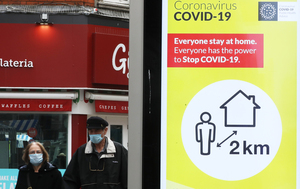
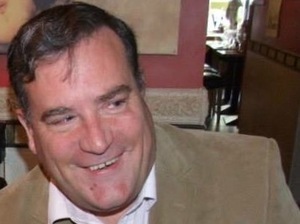
From top: Dublin city centre yesterday; Dan Boyle
I’m writing this on Earth Day. It’s the fiftieth anniversary of the first holding of the event. It is a wistful anniversary. The past five decades, despite increased awareness, has seen rapid denigration of the global environment.
The coming fifty years offer what may be our final opportunities to stop this rot. To stem the poisoning. To halt the madness.
At this mid point between awareness and action we find ourselves living in the most surreal of circumstances. The cacophony of what we have been encouraged to believe was normal life, has been silenced.
That silence, laced though it is with fear, provides pause for thought. For some there will be comfort in going back to what was. But we can’t.
Going back to what we had been doing is a return to insanity. That type of madness that Einstein described, in doing the same thing again and again while expecting a different result.
We need to better define what it is we mean by necessity. What is it that we need?
We are learning, in the most contrived of the situations, that there is much that we can do without.
In the near future advertising agencies will use all their sophisticated tools to convince us otherwise. When they do we should remind ourselves of the words Mick Jagger has been singing for the past fifty five years, that its all about “some useless information supposed to fire my imagination”.
And he went to the London School of Economics.
Of most need of reinvention is the science of economics itself. An entire new set of questions need to be asked. What is value? What are its inputs? How do we recognise such inputs? How do we ensure such inputs are used proportionately?
The old ways are gone, or at least they need to be banished. Our current indicators of success are flawed. In truth they are dishonest. They come nowhere near measuring our individual or collective well being.
As economics is currently structured it cannot put prices on many things of real value, and thus does not want to believe such things have value.
A child’s smile, a parent’s anecdote, a friend’s concern, can never be placed into any equation determining Gross National Product. And yet each contribute significantly to any sense of well being.
Over the past two centuries of economic prosperity, what we have defined as progress has come at a price. We have largely ignored this price because we have chosen not to define it.
The price has been mostly borne by the making available of environmental inputs as being cost free. To put this in more familiar financial terms, we have accumulated an environmental debt more acute and more deep than any monetary debt we have obsessed over.
Unlike the repayment of monetary debt, in meeting our environmental debt we benefit from doing things differently, which are better for being different.
A popular meme on the internet is a cartoon of a climate change conference, where a presentation is being made listing the changes needed to bring about a greener World. One delegate turns to another and asks “What if it’s a big hoax and we create a better World for nothing?”.
This is where we are at now.
Dan Boyle is a former Green Party TD and Senator and serves as a Green Party councillor on Cork City Council. His column appears here every Thursday. Follow Dan on Twitter: @sendboyle