

From top: Maslow’s hierarchy of needs; Heber Rowan

Stories. We love to hear them. We love to watch them, digest them and get enthralled by them in whatever format they present themselves to us.

Some are fictions we are able to discern as real or not. Say Harry Potter or a Stephen King novel. Some are the kind that makes us question our very reality. In some ways, that’s good.

Art is all about expressions of the world differently, it can teach you a new way of reconciling a problem in your life or dealing with emotional pain. Great. Good.

Stories are a currency that defines our behaviours. The ones you believe are the ones that you often find close to your own sense of comfort or cynism about the wider world.

In a sense, you believe in the logic of them and get attracted to the characters going against the conflict that they find themselves within. You are compelled to find out more, you want to find out what happens in the end.

A powerful story takes us away from reality.

In an era of information from the internet, those stories can make our understanding of what is real and what is not, harder. It can become easy to forget what is in need of further questioning or probing because the story you read or the facts that present themselves in a particular pattern are compelling.

We can lose track of our own systematic doubt or the application of Occam’s razor to the issue or story. That matters.

When we find something that makes us think we are empowered and respected for having our opinions, we feel validated and empowered. That matters for society as a whole as fundamentally we want to feel esteemed by our community.

It is how, in a sense, laws are upheld by public consensus or how we agree that the sky is, in fact, blue and not green. It is one of the higher needs in Maslow’s hierarchy.

When our emotions are high, we will often let go of our critique of the stories we find every day and allow ourselves to get taken in by them. It could be to rationalise, ‘despite him beating me, I know he still loves me’ in an abusive marriage or to entertain a snake oil cure as an answer to an acute illness you can’t cure.

Fear and love are powerful forces on the spectrum of human emotions. They drive what information we accept or not.

The power of fear?

When our world becomes enraptured by a ubiquitous state of fear from a global pandemic, we are more at risk of believing an exotic explanation for it because we are in a state of fear.

Emotions aside, it is also because we as human beings we have a natural ability to spot patterns in nature. That is great for understanding that prints in a forest may lead you to the deer you hunt but it is not a great ability to reconcile the overload of information in a world where we are saturated with information online daily.

Many have said that and it will be said again. So, forever bar the human race becoming emotionless like Vulcans as depicted in the science fiction series, Star Trek. Our emotions will make us believe in extraordinary things.

Rational irrationality ?

That being said, it is important to consume stories, they are entertaining and informative for us all. We like the escapism of Lord of the Rings or the thought that a magical world not unfamiliar to our own, could exist such as in Harry Potter. The boy living under the stairs could indeed, be magical.

Yet, the important thing is that when we look at those stories, we hold them in context. That we suspend our disbelief appropriately for the right amount of time to enjoy the flow of the story. Sometimes that doesn’t happen in quotidian life.

Emotions are pesky things that make us different individuals and behave differently.

Within the context of the Covid19 crisis, there is a lot of conspiracy talk circulating online. Many are compelling in a way the end of a thriller of a John Grisham novel can be. International espionage, manipulation of information, social engineering and the movement of trillions of dollars globally. Dam interesting and compelling.

We like figuring out puzzles in the world around us, to account for the whys and hows of forces in our lives that we can’t easily rationalise. For millennia, we were unable to figure out why the winds came one day and the rain the next.

We created stories to understand them to bridge the gap between our emotional reactions to the trauma of experiencing a flood or famine with our ability to logically understand something. It’s in our nature.

Life will change in the post Covid19 world. No doubt. There are many aspects of that forthcoming change we can reasonably predict like increased remote working among office workers or a medium-term decrease in demand for leisure cruises internationally.

How we trust our sources of information and maintain a healthy level of critique when death becomes less of an abstraction going forward, is the change that really matters.

The information floodgates are open.

Journalism is changing, advertisements for publications are down dramatically as the marketplace for information has become more competitive from the internet. How do people balance their fears and maintain a healthy level of disbelief will determine how the future manifests.

To believe that the Covid19 virus was created in a lab by the Chinese or some cabal of the world’s pharmaceutical companies is a compelling story. It tells us what we fear or want to know, that some people are making money and that there is a greater explanation for why terrible and dramatic things are happening.

As emotional beings, we might overlook uncomfortable facts in the process that those who ‘let us in’ on these great truths are doing so for want of power and validation in the wider world.

Also money. Heavens let’s not forget the money.

Yes, pharmaceutical companies make enormous profits and have vested interests in maintaining their businesses but they also provide benefits to the world by eradicating different diseases.

We look at stories of profiteering companies starting lawsuits after people in Italy 3D printed ventilator valves and think, ‘that’s plain wrong’.

Yes, there are unethical companies out there and yes there is a lot we can be genuinely resentful of such as expensive drugs only having a marginal benefit of 2–3% over a placebo.

However, in becoming angry at those situations, we can lose sight of the bigger picture. That the 2–3% of those drugs can make a world of a difference to those who need it and that scientific progress is incremental at best.

Rarely do we find cures or solutions to issues within one attempt. It can take years, decades of ‘standing on the shoulders of giants’ for science to deliver results we universally respect and accept without question.Continue reading →

Fianna Fáil leader Micheál Martin speaking to the media at Leinster House last month

This morning.

Fianna Fáil leader Micheál Martin was interviewed on RTÉ’s Today With Seán O’Rourke.

It followed Mr Martin and Fine Gael leader Leo Varadkar yesterday publishing a framework document to facilitate negotiations for the formation of a coalition Government with other parties or TDs.

How did that go?

Meanwhile…

This afternoon.

On the plinth at Leinster House…

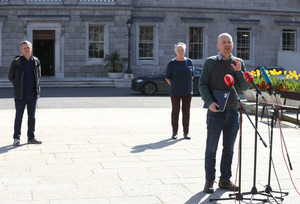
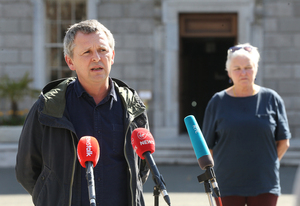
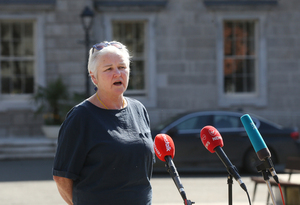
Rise TD Paul Murphy (top), People Before Profit TDs Richard Boyd Barrett and Bríd Smith (above) address journalists…

Yesterday: It Took A Pandemic [Updated]

Rollingnews

UPDATE:

‘sup?

This morning.

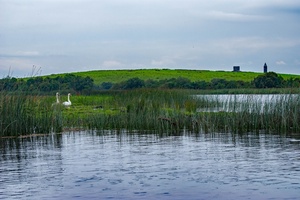
Enniskillen, County Fermanagh.

Fermanagh Museum writes:

Here’s today’s calming water photo from the waters of the Erne. Water has a calming effect so if you need a little calm today,[click to] open it full size & look at it for a little while. Trust me, it helps Keep safe & well. And please stay home…

At a protest against the homeless and housing crisis on Dublin’s O’Connell Street last November

Meanwhile…

Over 1,000 more beds created for emergency accommodation – DCC (RTÉ)

From top: Four Courts in Dublin; John Waters; Gemma O’Doherty

Last night.

It was reported that Gemma O’Doherty and John Waters, representing themselves, went before Mr Justice Mark Sanfey in the High Court yesterday to challenge laws brought in by the State amid the pandemic.

In judicial review proceedings against the State and the Minister for Health they want recently enacted legislation to be declared null and void.

Aodhan O’Faolain, in The Irish Examiner, reported:

Mr Waters told the court that the legislation was “unconstitutional“, “improperly enacted,” and “very flawed“.

He said the challenge was brought on grounds including that the laws were brought in by a caretaker Government, by a Dail where the number of TD’s present in the chamber when the vote took places was limited.

He said he was further concerned that the legislation was enacted by the outgoing rather than the incoming Senate, which he says it should have been.”

…The judge, who said that the court was only concerned about the legality of the legislation challenged and not about any policy taken by government, directed that the journalists’ application for permission to bring the challenge be made on notice to the State respondents.

The judge adjourned the matter for a week, when it is to be mentioned before the court.

Gemma O’Doherty and John Waters bring court challenge to Covid-19 restrictions (The Irish Examiner)

Covid-19 restrictions challenged in High Court (RTÉ)

Journalists tell High Court coronavirus laws ‘unconstitutional’ (The Irish Times)

Previously: Locking Down Our Civil Liberties

RollingNews

From top: Latest update on the Department of Health’s Covid-19 dashboard; Dublin Coroner Dr Myra Cullinane

This morning.

The latest Department of Health figures show that, as of April 15, there were 444 Covid-19 deaths in Ireland, 290 associated with residential settings, including 245 in nursing homes.

Last week, the department confirmed that when calculating its death toll, the department counts “any death that involves a positive Covid-19 test” and any person whose remains test positive for Covid-19 during a post-mortem.

This would appear to suggest that any person who has tested positive for Covid-19 will be listed as having died from Covid-19 regardless of the actual cause of death

Further to this…

This morning Paul Cullen reports in The Irish Times that the Dublin Coroner Dr Myra Cullinane has warned that “not all Covid-19 deaths are being reported as required by law“.

Mr Cullen reports:

…Dr Myra Cullinane has written to medical staff in hospitals and other locations who are responsible for completing death certificates saying they must comply with the requirement to report “any death in the context of proven or suspected” Covid-19 to her office.

Her warning comes amid concern over possible under-reporting of deaths from the virus, particularly outside hospitals. Analyses of online death notices in recent weeks have suggested a level of excess mortality not captured in official figures.

…In her letter, Dr Cullinane reminds medical staff of the requirement under the Coroners Acts to report virus deaths. She adds: “It has been drawn to my attention that such reporting is not taking place in all cases.”

Meanwhile, earlier on RTÉ’s Morning Ireland…

Broadcaster Dr Gavin Jennings asked Dr Siobhán Ní Bhriain, National Lead for Integrated Care with the HSE, if she’s “sure that all deaths for Covid-19 or suspected in care centres and in nursing homes are being reported as Covid-19 deaths“.

Ms Ní Bhriain replied:

“I couldn’t say with absolute certainty, Gavin, that they are being reported as such. I do, we do wonder, if at the early stages of the disease, when we didn’t suspect it was Covid, there may have been a couple of deaths that occurred early that would not have been typically Covid in terms of symptoms.

“But we have a review system in place to look back over all those deaths reporting, that were reported. And we will be reviewing that.”

Listen back to the interview in full here

Some Covid-19 deaths are not being reported, coroner warns (Paul Cullen, The Irish Times)

Related: 881 patients in acute hospitals with Covid-19, 448 suspected cases (RTÉ)

Previously: Counting ‘Every Death’ That ‘Involves A Positive COVID-19 Test’

Meanwhile.

More than nine in 10 people [in the UK] dying with coronavirus have an underlying health condition, figures from the Office for National Statistics show.

The ONS looked at nearly 4,000 deaths during March in England and Wales where coronavirus was mentioned on the death certificate.

In 91% of cases the individuals had other health problems.

The most common was heart disease, followed by dementia and respiratory illness.

On average, people dying also had roughly three other health conditions.

Coronavirus: Nine in 10 dying have existing illness (BBC)

‘sup?

Last night (6.52pm).

A White-tailed sea eagle tends to her newborn at Glengarrif Nature Reserve, County Cork.

Update:

This morning.

The first feed!

Glengarrif Nature Reserve

This morning.

Confirmed COVID-19 cases in the Republic of Ireland.

Meanwhile…

There are 881 patients with Covid-19 in acute hospitals, as well as 448 suspected cases, according to new figures obtained by RTÉ News.

A Health Service Executive acute hospitals operational report shows that the hospitals with the largest number of confirmed cases are in Dublin, where Beaumont Hospital has 143 cases, the Mater 87, St James’s Hospital 81, Tallaght 81 and St Vincent’s University Hospital 69.

Among the children’s hospitals, there are two confirmed cases at Temple Street and one case at Crumlin.

881 patients in acute hospitals with Covid-19, 448 suspected cases (RTÉ)

Via Fergal Bowers

Broadsheet.ie