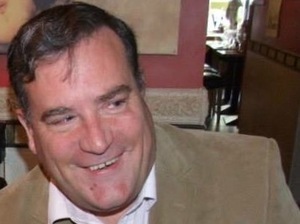

Fine Gael TD Patrick Donovan

This afternoon.

The Dáil’s Business Committee will meet at noon, while the Dáil will meet with a much reduced number of TDs at 2pm to discuss health and social protection matters concerning the coronavirus.

Further to this…

Meanwhile…

And on the plinth…

Rollingnews

This morning.

At a press briefing in Government Buildings, Tánaiste Simon Coveney was asked how long the “cocooning” restriction will continue.

He said:

“As you know the Government takes its advice from the chief medical officer [Tony Holohan] and his team and the national public health emergency team but I do think people do need to realise that these restrictions may go on for some time.

“I think it’s wrong to put a timeline on it. We’ve set an initial period [until Easter] but I think that it may well be that we will need to go beyond that initial guideline but again that will be a decision taken with the best public health advice that we can get.”

The “cocooning” phase affects people over 70 and those who are medically vulnerable.

They are not allowed to leave their homes and are to have no interaction or minimal interaction with other people. It’s currently scheduled to remain in place until Easter Sunday, April 12.

Previously: “There’s No Fate But What We Make For Ourselves”

This morning.

The Central Statistics Office writes:

The COVID-19 Crisis has had a significant impact on the labour market during March 2020.

Unadjusted Live Register total stands at 205,209 for March 2020.

Seasonally adjusted Live Register total for March 2020 was 207,200, up 24,400 from February 2020.

In the last week of March 2020: 283,037 people were in receipt of the Pandemic Unemployment Payment and 25,104 persons benefitted from the Temporary COVID-19 Wage Subsidy Scheme.

Press Statement Live Register March 2020 (Central Statistics Office)

CEO of the HSE Paul Reid; text tweeted by Mr Reid last night

This morning.

RTÉ broadcaster Audrey Carville told Morning Ireland listeners that due to a global shortage of material used in laboratories to carry out coronavirus tests, called reagent, just 1,500 tests are being processed a day in Ireland – leading to a significant delay in test results.

Despite this, the deputy chief medical officer Dr Ronan Glynn last night said the Irish health authorities are still aiming to carry out between 10,000 and 15,000 tests within the next two weeks.

Also last night the CEO of the HSE Paul Reid tweeted a plea for the public to bear with the HSE as it sought to “fix this”.

His tweet followed the HSE apologising to those waiting for test results. This apology came after a nursing home resident who was tested for Covid-19 on March 23 died on Tuesday night. Their test result had not come through by the time of their death.

Further this this, Mr Reid spoke to Seán O’Rourke on RTÉ this morning that the HSE was chasing around the world for reagent.

From their discussion…

Seán O’Rourke: “It would appear, Paul though that perhaps the answer to that particular problem with the reagent is under our noses in the Irish pharma companies. According to the Irish Times, and we’ll be talking to one of their representatives in a little while, that can actually be done here in Ireland?”

Paul Reid: “Yeah, well, when I did, which is being quoted, the message I sent out last night, which was asking the public to bear with us because there will be a few strands to the solution for this which we were working throughout the night on and it’s a combination of, firstly, we have secured, literally overnight, the capacity to transfer some of the queue that we have for testing to a very, reputable international organisation based in Europe.

“And that will start to address the queue that we already have. That’s the first solution that we have.”

Later

Reid: “The industry is telling us the increase that they have seen and the [global] demand for these reagents has gone up by over 1,000% in the last few days.”

O’Rourke: “Yeah but did we not have first move or advantage? We woke up to this thing at least we were told we were ahead of the game, ahead of those other countries, certainly the United States?”

Reid: “We were and we have been and we continue to be in terms of our testing volumes that we’re doing and we want to stay there and it is a very difficult one for us and we are working on those, three solutions, three very different solutions – getting some of it tested abroad, some supply of kit from China that will take a week to ten days to come through, with some risk associated with it, and equally, in negotiations, right throughout today, right throughout all yesterday, calls later with Irish pharma companies, to see the capacity of their supply to significantly ramp up and help us with this really national crisis.”

O’Rourke: “What’s your best guess or best estimate, this is about more than guessing obviously, for where we will be at in the numbers being tested and with those tests analysed say a week from today?”

Reid: “Well exactly where the minister said, is where we all want to get to. We want to get to those testings of about…between 10,000 and 15,000 per day. It’s not going to happen overnight so I want to be very clear with the public. We’re at currently completed tests in the labs about 2,600 per day so we’re not going to get to that number over a week or ten days. But with the three interventions that I’ve just described that we’ve put in place, we will significantly ramp up but it will take us longer.

“We had always said it would take us longer to get 15,000 per day so that will take time. But over the next ten days we’re working around the clock to really break this issue.”

Listen back in full here

Meanwhile…

Also on Morning Ireland this morning, Professor Paul Moynagh, head of the Kathleen Lonsdale institute for human health at NUI Maynooth, also told Ms Carville that serological testing – a test for antibodies for coronavirus which would indicate a person has previously had the virus – is going to be a “really important tool” that will go “hand in hand” with the other tests being carried out.

He said such antibody testing would be initially very useful for healthcare workers, as it may lead them to securing protection from the virus and allow them to return to work.

Asked if such testing is already being carried out, he said: “That is just being evaluated. My understanding is that it is being evaluated at the moment. A number of other countries are evaluating it. The UK, I know, is evaluating this.”

He added that they would have to be “robustly tested” and said “certainly, it’s going to be a really important arm in terms of the testing regime in the country”.

Meanwhile…

Listen back to Morning Ireland interview in full here.

Rollingnews

Behold: the NMoto BMW R7 85th Anniversary Commemoration Limited Edition – a heavily customised BMW R nineT with around 150 custom fabricated body parts including platinum-plated panels with pink gold trim, a Louis Vuitton leather saddle and a Cartier clock set into the gas tank.

Each bike requires 4000 hours of construction. Only ten will be made and yours (because you’re a true American patriot who likes German motorcycles with French saddles and clocks) will cost around €227,000 (plus shipping).

hiconsumption

Sunset at Portmarnock, Dublin 13

Ramblings on a park bench overlooking the sea

On a bench by the sea
A man watches waves rise
and dissolve back into the ocean
like humans on earth

His breath condenses
And thoughts rise and dissolve in his mind
As electro-chemical signals pulse through neural networks
Creating pathways in his crackling brain

We are made of recycled matter
that was once a part of other plants and animals
And we comprise ever changing configurations of cells
Through which life and energy flow

This cellular pulse is part of a worldwide continuum
Guided by a common genetic code
Which connects us to the entire history of life
And back to the fusion of hydrogen and helium
At the dawn of time

We are interdependent and belong in the world
And like roots and trees
We are open interfaces
Between inner and outer ecosystems

Thus we are dependent upon essential living viruses and bacteria
That continually permeate our porous skin
And live within and upon us

And we are dependent too upon the delicate symbiotic interplay
Of nature’s self sustaining systems
As forests, rivers, oceans, glaciers and soil
Nourish and maintain us

Photosynthesis is the yang of respiration
Trees and plants recycle our exhaled carbon breath
And we take in air, food and water
And expel energy in heat and waste

Uniquely we also transcend our biological nature
Sharing a world of meaning and value
As waves of sound and electromagnetic energy
Link our neural networks with others

And we have created a virtual web
Where it can be unclear where one mind ends and another begins

And there is a complex physical web
Of industry, technology and systems
As lines, grids, routes and roads
Connect humanity like the veins and arteries of a vast central nervous system
Of cooperative global endeavour.

Our achievements are immense

But civilisations and species have risen and fallen throughout history
And verifiable science shows that we are approaching a crest
Of irreversible tipping points
And the signs are all around
In habitat decline, species loss, melting ice sheets, acidic oceans
Disappearing coral reefs, desertification, tropical deforestation
Water shortages, forced relocation, civil unrest and refugees

Perhaps Ozymandias wears a sharply cut suit
And speaks smoothly of the necessity of the way things are
But if we don’t turn the tide
We risk drowning or being stranded on the shore
For in depleting natural resources
And polluting the earth, the water and the air
We destroy ourselves

The system shock of a global viral pandemic
Has laid bare our fragility and contingency
But it has also shown that new mindsets, behaviours and paradigms are possible

We can broaden our perspective
To see our common humanity in nature
And through global collaboration and solidarity
Decarbonise and regenerate
Rewild and replenish
And use the abundance of natural energy
In the sun, wind, waves and earth

The future of humanity depends upon it
And although it might be unlikely
It’s worth fighting for

But It’s a lot to be thinking about
For a man who’s breath quietly ebbs and flows
On a bench by the sea

Fran Cassidy

Pic by Fran

Denis O’Brien in Haiti in 2010

Rating agency Fitch is expressing the view that Caribbean telecoms giant Digicel may be unable to repay debt due this year, even as it gets a 30-day grace period for interest payments on US$2.9 billion worth of debt.

Expressing the view that, “this debt is not expected to be repaid”, Fitch points out that the default will stem from heightened uncertainty related to the novel coronavirus disease (COVID-19) pandemic.

Meanwhile…

Via The Irish Times:

Businessman Denis O’Brien’s heavily indebted Digicel revealed on Thursday that it is looking for creditors to write off $1.7 billion (€1.55 billion) of what they are owed, as the phone group has been left with an unsustainable debt file following years of earnings decline.

The move would reduce Digicel’s total debt by almost 25 per cent from $7 billion currently.

Denis O’Brien’s Digicel seeks $1.7bn debt write-off (The Irish Times)

COVID-19 pressures Digicel (Jamaica Gleaner)

Meanwhile,…

Actavo?

Yesterday.

Covid-19 Step Down facility, Citywest, Dublin.

Clive Woods tweetz:

“Denis O’Brein’s company???”

Yesterday: Conference Call

Previously: A Step Down


From top: Cork County Council meeting on March 23 with representatives practising social distancing; Dan Boyle

There should not be a pecking order in these things. Most of us are in awe of the work being done, and the risks being faced, by our healthcare workers.

Similarly those workers in food retail, often the lowest paid of workers, have exhibited how essential they are to us in a time of crisis.

I would like to give a particular shout out to public sector workers. The latest phase of the shutdown has seen the suspension of over the counter services at City and County councils.

The public still can, and will, be met through appointment. Services are being prioritised but with the intent to see them being delivered to meet the growing need.

Many public sector workers are not particularly well paid either. They may possess a greater job security than other workers, but at times like these their importance to the social contract comes to the fore.

Local authority workers sometimes suffer from poor perception from the public. The individual at the counter is seen as the bureaucracy. An impediment to prevent progress, indifferent to all things human or humane.

As an elected councillor I have long known this to be a lazy stereotype, but stereotypes have been known to stick.

What has surprised me has been to see elected representatives being listed as essential workers.

When I think of the three categories of workers I’ve listed here I’m glad that there isn’t a pecking order, because none of us public representatives would come anywhere close to what these workers are doing and achieving.

If there was a category of being of potential use then we might sit more comfortably there. Those of us who meet, sit and talk, occasionally to think, can feel especially useless at times of crisis.

By necessity decision making channels become more narrow, responsibility become better focused on those with specified expertise.

There is a role in ensuring that resources are made available and seeing they are being fairly distributed.

The actual role is to act as a conduit to connect those who wish to help with those who have a need.

This week I had the opportunity of linking of someone providing quantities of a much needed product, for free, with a group providing a service to those most in need.

My role was peripheral, the least important part of a chain that included two hugely important social actors – the generous provider of the product, and the service provider giving service to those in our society who are excluded far too often. It was good to be able to make a contribution, however small.

We seem to be rediscovering things that have been hidden deep within ourselves. A sense of us. A willingness to abandon much of what we had treasured but have since found to be useless in a crisis.

There will be conversations after this. These will be critical in tone and raised in expectation. There will be much to repair, socially as well as economically. But there is also much that we can leave behind.

Like those false of Gods of consumerism who have let us down badly when our need has been greatest. We have learned that the simplest of pleasures can represent the greatest of wealth.

I don’t want to be a hero. I don’t ever expect to be one. We are well served with the heroes we have.

Dan Boyle is a former Green Party TD and Senator and serves as a Green Party councillor on Cork City Council. His column appears here every Thursday. Follow Dan on Twitter: @sendboyle

Piv via Cork County Council

Broadsheet.ie