

MORE to follow.



MORE to follow.

Am just gutted for all the brilliant journalists at Times Ireland. Some of the best reporters in Ireland work (and got a start there). They broke a huge number of seriously important stories and their business & sport coverage were consistently excellent.
— Ken Foxe (@kenfoxe) May 21, 2019
Awful news about the Times Ireland edition. The excellent team of journalists and editors achieved so much in a short space of time. This is a bad day for journalism in this country. https://t.co/PKalHwgMrK
— Christine Bohan (@ChristineBohan) May 21, 2019
RTÉ News understands staff were told at a meeting today that all but three positions at the paper were to be made redundant and that those three jobs had to be reapplied for.
A print version of the Times Ireland was launched in June 2017 after a digital-only launch in 2015. The publication will return to a digital-only edition. The Sunday Times in Ireland will be unaffected.
The Times Ireland to cease print edition (RTÉ)
Meanwhile…
The Times Ireland edition will carry on as a digital edition, The Sunday Times will carry on as is. Very sad day for some good friends and colleagues, but it is not closing down.
— Jason O’Neill (@JasonONeillST) May 21, 2019


Oh.
This just gin.
The Drinkaware Index 2019 report found that nearly 75% of people believe drinking to excess is part of Irish culture.
Over a third of under 25s say they binge drink on a weekly basis and most drink alcohol as a coping mechanism.
It also found that 44% of adults drink alcohol on a weekly basis.
Hic.
One in five adults classified as a hazardous drinker – report (RTÉ)

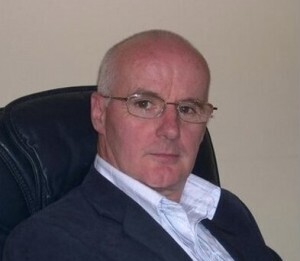
From top: Irish Times’ Pat Leahy; Anthony Sheridan
The standard of political analysis within Irish journalism is disturbingly poor. There is one simple but very troubling reason for this.
Most journalists are loyal members of the establishment and as a consequence refuse to even acknowledge never mind actually write about the dark, underlying reality that lies at the heart of Irish politics.
The dark reality is that the three centrist parties, Fine Gael, Fianna Fáil and Labour, are not separate political parties struggling to attain power in order to implement policies for the greater good of Ireland and its people.
The dark reality is that these three parties constitute a corrupt political class that, for the most part, works to enrich itself and those who support its agendas.
The economic catastrophe and consequent extreme austerity inflicted on the people of Ireland by this ruling political class since 2008 has resulted in very serious damage to its credibility and as a consequence to its power.
Labour has been virtually wiped out by an angry electorate while Fianna Fáil and Fine Gael have been so damaged they have been forced into a coalition of desperation where they are engaged in a life or death struggle for political dominance.
The establishment media plays a major role in propping up the power of this corrupt political class. Journalists do this by simply ignoring political corruption altogether or by retreating into a parallel reality.
A recent article by Irish Times journalist Pat Leahy provides us with a good example of how establishment journalists ‘analyse’ politics from within this parallel reality.
In the article Leahy is making the point that the Left in Irish politics is not serious about achieving its political goals. They prefer talking to doing, he says. He goes on:
If power is impossible without compromise and personal sacrifice, they prefer the empty dance of politics without the prospect of power.
This, of course, is a ridiculous conclusion. But such silly opinions are not unusual among journalists like Leahy because, while they must be able to see the rot in the political system, they are not, for whatever reason, prepared to expose it.
Clearly, Leahy doesn’t realise that the three centrist parties are a political class masquerading as separate entities.
We witness his ignorance by his use of the term ‘go figure’ when describing how Fianna Fail and Fine Gael can operate on any point of the political spectrum without apparent scruple.
Political parties of integrity and principle do not do this. They avoid associating with parties of opposite ideologies altogether or lay down very strict conditions for any coalition deal.
A single ruling political class, particularly one infected with the disease of corruption, has no scruples about moving to any position on the politcal spectrum if it suits its purpose.
That’s why, for example, the Labour Party had no difficulties in collaborating with Fine Gael’s extreme right-wing austerity policies.
Leahy further demonstrates his ignorance of the political landscape by asking the following question:
What, exactly, is the difference between the Labour Party and the Social Democrats apart from the fact that they cannot get along together at a personal level?
The answer, of course, is that the Labour Party is a loyal member of the corrupt ruling class. The party sold out on its socialist principles and political integrity in 1992 when Dick Spring went into coalition with the criminal politician Haughey shortly after [accurately] describing Haughey and Fianna Fail as ‘a cancer on the body politic’.
The Social Democrats, on the other hand, represent the complete opposite of what Labour has become. The Social Democrats came into existence as a direct result of exposing corruption within the ruling class.
The party’s leadership know very well that they would be signing their political death warrant if they were to associate themselves with any of the parties that constitute the corrupt political class.
It is incredible and deeply disturbing that a journalist such as Leahy, who is considered an expert on political analysis, is not aware of this obvious political reality.
But, as I said at the beginning – the standard of political analysis within Irish journalism is very poor.
Anthony Sheridan is freelance journalists and blogs at PublicEnquiry.
Top Pic: Dalkey Book festival


Behold: the 1962 Ferrari 250 GT SWB Berlinetta (as opposed to this one) – indisputably the finest car of its day and arguably the best front-engined V12 the company ever made.
This vehicle is one of 40 exclusive steel-bodied versions made during the final production run.
Fully restored and certified by Ferrari Classiche in 2010, it comes up for auction this August with a reserve estimate of between €7,000,000 and €9,000,000.

Enjoy you art al fresco?
Via @Skerries:
The third annual Dublin Plein Air painting festival is a seven day event bringing artists from all over Ireland and the world to scenic Fingal and Farmleigh House in the Pheonix Park.
The outdoor painting festival runs from the 17 to 23 June and will host paint outs (as above), workshops and daily competitions.
Workshop tutors include the best of Irish and foreign plein air artistic talent and include Una Sealy – RHA , Kate Kos, Vicki Norman , Greig Neal – AURA, Dave West, Blaise Smith – RHA
This is the ideal opportunity for artists to learn from the masters and as with the previous years the focus is enjoying Fingal’s beautiful scenery, making friends and painting outdoors.
Top Pic: Dublin Plein Air Festival 2018

This afternoon.
Kilmacurragh, County Wicklow
Theresa Green
She must be a plant.
Leaf it out.
Etc.
Earlier: Don’t Forget Your Shovel
Somebody has it in for Jamie Oliver pic.twitter.com/pWgDUzXObJ
— Kates (@beingjourno) May 21, 2019
Ah here.


Adorably death-defying shenanigans with trials rider Danny MacAskill and his friends’ daughter Daisy.
Previously: Gran Finale
