

Cork airport this morning.
Only 98c off for the two?
Some neck.
(Thanks Niall Gubbins)



Cork airport this morning.
Only 98c off for the two?
Some neck.
(Thanks Niall Gubbins)


A series of portraits of the grand symmetry and ornate splendour of Budapest’s theatres by Hungarian photographer Zsolt Hlinka.
Above: Nemzeti (The National Theatre); the State Opera House; the Thália Theatre; the Madách Színház musical venue and the Új színház (New Theatre).


Behold the NV T-Holder (€33 + shipping) – garter belts to prevent a chap’s shirt popping out the top of his pants.
You’ll never tuck again.
Or maybe you will.
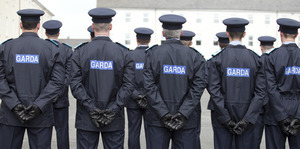

From top; New Gardai pass out at Templemore College; The late Justice Adrian Hardiman
Further to the fallout from the Maurice McCabe revelations….
Before his death last year, Supreme Court judge Adrian Hardiman delivered a stark assessment and warning about An Garda Síochána.
‘Legal Coffee Drinker’ writes:
In 2015, a majority of the Supreme Court in Director of Public Prosecutions Vs JC IESC 31 reversed a long standing rule of evidence prohibiting the prosecution from adducing evidence which had been obtained as a result of an unconstitutionality by the Gardai.
Examples of evidence excluded under this rule over the years have included property obtained under an unlawful search of a dwelling house or a confession made by an accused during a period of unlawful detention.
According to the majority of the court, the exclusion of unconstitutionally obtained evidence interfered with the truth-finding functions of the court and also showed a lack of regard for the constitutional rights of victims.
They felt that unconstitutionally obtained evidence should be admitted where the unconstitutionality was as a result of ‘inadvertence’.
Adrian Hardiman delivered a strong dissent, largely based on concerns regarding abuse of the investigatory process by the administration of justice.
His judgment stands as a remarkable and unprecedented criticism of the operation of the Gardai and the Department of Justice.
Not only did he state that “over the past twenty five years there had “been a considerable number of deeply disturbing developments both in relation to the Garda Síochána itself and to the arrangements for its oversight… expressly acknowledged in impressive and authoritative sources”, but he then went on detail these developments in full.
Justice Hardiman stated:
“[T]here have been two Tribunals of Inquiry, each presided over by an eminent member of the judiciary, which have each reported in a profoundly disturbing manner, The first report of the Morris Tribunal, published in 2004… related to bogus explosive finds by gardaí in County Donegal.
The report observed that garda culture: …generally militates against open and transparent cooperation with investigations both internal and external and manifests itself in a policy of ‘don’t hang your own’ ”
This was said in a context of Gardaí “planting” explosives and then “finding” them.
This last phrase quoted “don’t hang your own” came from evidence to the Tribunal by Garda Martin Leonard, a Garda Representative Association official, who said:
“It is the nature of the gardaí, we don’t name the names – we don’t want to get anybody into trouble in the Garda Síochána internal matters… we do our best to make sure – we are not going to be hanging our people”.
Almost ten years later, in December 2013, the report of the Smithwick Tribunal stated:
“I regret to say… that there prevails in An Garda Síochána today a prioritisation of the protection of the good name of the force over the protection of those who seek to tell the truth. Loyalty is prized above honesty”.
In the next section of his judgment, headed ‘Wall of Silence’, Justice Hardiman summarised the experiences of the Morris Tribunal as follows:-
“… the Tribunal was faced with gardaí who were determined to hide the truth of what happened. They made statements to their superiors which were in many instances minimalist in their detail and failed to give a fully truthful account; in a number of instances the statements were a complete fabrication.
It was disturbing to find a deep seated reluctance to concede that a colleague had acted incorrectly or wrongfully or that the complaints made by the detainees were true – the wall of silence was maintained
.Unfortunately this approach extended to and was encouraged by senior officers in this investigation and in the overall approach adopted by An Garda Síochána to external complaints.”
He quoted further from the report of the Tribunal as follows:
“The State must act honourably and honestly in its dealing with plaintiffs in these circumstances. It cannot do so if it is told lies and half truths by the gardaí. This must stop.
Senior officers in An Garda Síochána must show leadership in this regard. The difficulties are linked to difficulties faced by ‘whistle blowers’ who wish to tell the truth but fear the consequences from their colleagues or for their careers…”
Justice Hardiman then went on to consider the 2014 report of the Smithwick Tribunal, which described itself as:
“staggered by the amount of indiscipline and insubordination it has found in the garda force. There is a small, but disproportionately influential, core of mischief making members who will not obey orders, who will not follow procedures, who will not tell the truth and have no respect for their officers.”
In particular, Justice Hardiman quoted from the Smithwick Report, regarding Tom Curran:-
“Tom Curran retired as a senior officer of An Garda Síochána, and he struck me as an officer of the utmost integrity. I would have thought he is as deserving of the support of the Garda Commissioner as any other former officer.
However, it seems to me that because he was giving evidence of which An Garda Síochána did not approve, such support was not forthcoming. I regret to say that this suggests to me that there prevails in An Garda Síochána today a prioritisation of the perfection of the good name of the force over the protection of those who seek to tell the truth. Loyalty is prized above honesty.”
He also referred to the following statement by Judge Smithwick:
“I am drawn to the conclusion that a number of the garda witnesses before this Tribunal, including former and current senior gardaí were not fully forthcoming in their evidence to me. … I accept that any individual witness may not recall, or for some reason may never have encountered, the unease to which I have referred; the evidence of any one individual witness may therefore be truthful.
What I find difficult to accept, what I cannot accept, is that so many of the garda witnesses from whom I have heard do not recall or have never encountered such unease. Regrettably, this suggests that there is an ingrained culture of prioritising loyalty to the good name of the force over the legal, moral, and ethical obligation owed to give truthful evidence to this Tribunal”.
In the next section of his judgment, headed ‘A Pot of Inquity’, HJustice referenced the case of Frank Shortt, which he described as “an appalling example of a deliberate garda conspiracy to perjure an innocent man into prison for no better reason than to enhance the careers of certain gardaí.”
Mr Shortt had been the victim of disreputable conduct and an abuse of power on the part of two garda officers, namely a superintendent and a Detective Garda.
They both engaged in a conspiracy to concoct false evidence against the plaintiff which in turn resulted in perjured garda evidence being given at his trial for allegedly permitting drugs to be sold in his licensed premises in Co. Donegal in 1992. That perjury procured his conviction by a jury.
According to Justice Hardiman:
“What followed as a consequence for the plaintiff was a tormenting saga of imprisonment, mental and physical deterioration, estrangement from family, loss of business, public and professional ignominy and despair. Furthermore, as the learned High Court Judge put it, “the plaintiff was sacrificed to assist the career ambitions of a number of members of the Garda Síochána….
….despite the injustice of his situation Mr Shortt finally obtained an order setting aside his conviction from the Court of Criminal Appeal… when the DPP, for reasons that were never disclosed to that Court, consented to such an order. Finally, in July 2002, the Court of Criminal Appeal certified that he had been the subject of a miscarriage of justice.”
Justice Hardiman shared the view previously expressed by the Court that what had happened to Mr Shortt could not be
“bracketed as a couple of bad apples in the proverbial barrel. The misconduct penetrated the system of law enforcement too deeply and persisted over too long a period to be discounted in such a fashion.
Concrete independent evidence of the wrongful conspiracy against Mr. Shortt only emerged in the course of an official garda investigation into affairs in Donegal.
The matters concerning Mr. Shortt may only have been a rather small part of that investigation but the lack of immediacy or action in response to the evidence which emerged concerning his trial does raise questions as to whether there is some complacency at different levels in An Garda Síochána with regard to the exacting standards of integrity which must at all times be observed by its members.
The cavalier manner in which those two members set about concocting evidence and subsequently persisted in trying to cover up their misdeeds, not entirely out of sight of other garda members, displayed a worrying confidence on their part that they could get away with it”.
Justice Hardiman’s particular concern was that “no steps were taken from within the Garda Síochána, or from within the broader State structures, to remedy the grave wrong done to Mr. Shortt”.
In particular, in the run up to Mr Shortt’s trial, a number of gardaí, including the Superintendent, worked at improving the statement of evidence by the Garda who was ultimately found to have given perjured evidence against Mr Shortt.
According to Justice Hardiman:
“The Superintendent wrote in his own handwriting on the draft statement various suggestions or instructions for changes, absolutely without regard to whether or not they were true…
…it was a marked feature of the case that the Garda and the Superintendent were in fear of each other because each knew that the other had information which could destroy his career.
The Garda kept the original version of his statement as altered by the Superintendent and told his wife that giving him the statement with the handwriting on it was the most stupid thing the Superintendent had ever done.”
He added:
“Quite apart from the reports of the two Tribunals mentioned, there have in very recent days been a number of new and contemporary controversies affecting An Garda Síochána. Many of these arise from the revelations or allegations of a whistle blower, Sergeant Maurice McCabe. It is no exaggeration to say that, in the course of this last calendar year, Sergeant McCabe has become a household name.
There have been demands from the Garda Representative Association that these allegations should be resolved by an independent body as soon as possible because of the reputational damage that gardaí are incurring.
There has been much public debate as to whether an independent garda authority should be established to oversee the Gardaí and this matter does not appear to have been finally been decided upon as yet.”
Justice Hardiman concluded:
“it appears to me that very serious problems of garda culture and practices have been revealed by Tribunals headed by two distinguished members of the judiciary and by the garda whistleblower, and have been expressly acknowledged by members of the Government.
It would appear to me absolutely extraordinary, and very damaging to the very concept of due process of law, if, with these matters outstanding and awaiting resolution, this Court were to take a step which would considerably loosen the application of the law of the land, and indeed on the Constitution itself, to members of An Garda Síochána and to provide a positive incentive for them to ignore it…
….Against this indisputable factual background, the decision of the majority will virtually preclude judicial supervision of the force publique, will make available to public servants with enormous powers over ordinary citizens a defence of carelessness or inattention, and will exalt already empowered public officials into a virtually impregnable position.”
Justice Hardiman continued to express his concerns regarding the admission of unconstitutionally obtained evidence until his death in March 2016.
DPPVs JC judgements and Determinations (Courts.ie)
Previously: How Did he Get Here? (Maurice McCabe timeline)
Rollingnews


‘sup?
Donal Moloney writes:
One of the personal projects I’ve been exploring over the last year or two is the romance we have with horses in Ireland.
Whether it’s a horse fair in Ballinasloe, a hunt in Meath, racing on the sand at Laytown, harness racing in Portmarnock, one thing that always seems to be consistent is that we do love our horses.
Recently I decided to check out the Dressage scene. The athleticism, agility and beauty of these animals is amazing. Here’s a few shots I did last week. at a private residence in Kildare…
Donal Moloney Photography (Facebook)
Previously: Donal Moloney on Broadsheet.

Free next Thursday?
My Lovely Horse writes:
We would be only deelighted if you could promote our Game of Thrones quiz please, happening in MVP [Clanbrassil Street, Dublin 8] next Thursday night. All in aid of My Lovely Horse Rescue. So basically, watch telly to help horses. :)

All the noms in ONE place..
Ronan Kealy writes:
I’m a bit of movie buff and enjoy doing some video editing now and again on the side. I have just created an Oscar montage of all the movies nominated in all of the categories (except Docs/Foreign and Short Film – I was under time constraints ) for this year’s awards. I just thought it would be something fun and relevant. It ends with the titles of each of the Best Picture Nominees ( 9 in total)….
In fairness.

Staying in tonight?
Melanie O’Connor writes:
In tonight’s episode of First Dates Ireland pun loving Briain Óg is back looking for a second chance at love, former air hostess Maeve arrives for a flirt-off with personal trainer Alex, Dub Emma meets the man of her dreams, Corkman, Bryan (above} and Lady Gaga fan Sunil drops his poker face for cheeky Wes from Ballymun.
First Dates Ireland tonight on RTÉ2 at 9.30pm.

From left: Clare McLaughlin, Niamh Briggs, Ireland Women’s head coach Tom Tierney, Nora Stapleton and Alison Miller at the Pool Draw for the Women’s Rugby World Cup 2017 in Belfast City Hall last November
Too many caps.
Not enough integration.
An open letter by frustrated supporters of the women’s game.
To whomever cares,
When we were returning to Ireland after the women’s Rugby World Cup in France in 2014, we were exhausted but so excited about the future of women’s rugby in Ireland.
We had beaten New Zealand, the first International team in Irish history to do so. We eventually lost to England in a tough semi final but anyone who was in Marcoussis that day knows the feeling of anticipation and expectation that lay ahead of this team.
Ireland had been underestimated by New Zealand and even by some of their fans but they over-delivered and it lead to one of the greatest days in Irish sporting history.
Naturally after a World Cup a team goes through a transition period, Philip Doyle retired as head coach of the team and Ireland’s most capped players, Fiona Coughlan and Lynne Cantwell stepped down along with Siobhan Flemming, Laura Guest and Grace Davitt. However the future was bright for the Irish team, Niamh Briggs was named in the team of the tournament (Scrumqueens) and took over the captaincy from Fiona Coughlan.
Alison Miller who scored one of the most famous tries of the tournament was coming into her own and a wealth of players who had stood up at the world cup were ready for the next challenge.
From the first game of the 2015 6 Nations to the Italy match two weeks ago 32 new players have been capped under Tom Tierney and the management team, ie. 32 new caps in 16 games since the 2014 World Cup.
And to put that into context, during Philip Doyle’s last four years as Irish Head Coach, 21 new players were capped across 4 seasons, including 1 World Cup and 4 6Nations tournaments. 14 of those 21 caps came in the first two years of the World Cup cycle.
Not only did this give the players time to gain invaluable test match experience it also allowed them to develop and implement structures while building effective partnerships on the pitch.
New caps and inconsistencies in positions means that with three competitive games to go before the World Cup, it appears the management team still do not know who their best 23 are.
Four different scrum-halves have been used, three different 10’s – Nora Stapleton, Nikki Caughey and Sene Naoupu who played there against England in the November International in 2015. If they do indeed pull Sene Naoupu from this weekend’s squad against France, Ireland have no experienced 10 in the current set up to call upon should Nora Stapleton pick up an injury. Nikki Caughey remains the most realistic option and we would be surprised not to see her included this weekend but she has not played since being dropped after the Autumn International against Canada and wasn’t even listed in this year’s 6 Nations squad that was named back in January. With out-half such a key position, our lack of depth and over reliance on Stapleton is worrying.
Six hookers have been utilised with the potential for this to increase to seven depending on who is selected to cover for the injured Jennie Finlay this weekend. Meanwhile, two capped Irish International hookers are playing club rugby on a weekly basis – Zoe Grattage (Highfield) and Gillian Bourke (UL Bohemians) who has over 50 caps to her name and whose club are currently sitting on top of the AIL League.
Since 2015 the management team have used 8 different centre partnerships – Sene Naoupu a stalwart in the 12 position has played with 5 different 13’s outside her – how can an effective partnership be developed with so much change? Nine different wingers have started the last 16 test games while he has also capped eight different props – Ailis Egan and Lindsey Peat being the only two consistently called upon.
However it wasn’t until the Autumn Series in 2016 did we see the most inconsistency from the Irish camp. We were setup to play England, Canada and New Zealand, the top three teams in the world, an ambitious series however you want to look at it. In the England game three players received their first cap’s for the women’s team. But this is what Autumn Series are for isn’t it, trial and error? For Canada there were 10 changes to the side that lost to England and two new caps again. And finally New Zealand, the first matchup since our historic victory, again saw ten changes from the team that lost to Canada. We finished the series 0-3.
At this stage, we were less than 12 months away from a Rugby World Cup and it appears that the Irish management team really has no idea who their best 15 are, because your best 15 are those whom you should have sent out to take on the 3 top ranked nations in the World. It should then be up to new players to break into this squad and rightfully take a position.
So following this we now have a wealth of players capped for Ireland, but what has this given us? There are a large number of players with 2/3 caps to their name, with very limited time on the pitch, who were brought in for a match here and there and then released back out to the extended squad to continue with the International S+C programme with no clear information from management on whether they are still in the plans for the looming World Cup.
Would it not have been more beneficial to integrate players gradually into the team whilst having them surrounded by experience? Tierney may argue that he has developed a wider pool of experienced players but are players with 2/3 caps and limited playing time really experienced players? Would it not have been more effective to cap fewer players and give those involved more playing time? If the argument is that there are not enough competitive internationals to test players then why has the IRFU not developed the inter-pro series further or started an U20’s side like England and France?
While all this is going on we need to remember that the women’s 15’s set up in Ireland is still non-professional, these players are still in college or working Mon-Fri and training in the morning, evening and at the weekend. These players are sacrificing their personal life for the women’s game. And in our opinion are not getting the same level of commitment from the union in return for their inputs.
If the current rumours are true and the team is to lose three starting players ahead of the crucial clash against France, a team they will also face in this years World Cup, it is just another way of telling the players in the 15’s setup that they are not going to be given the opportunity to have a consistent build up to the World Cup in Dublin and Belfast this August. In 2016 the focus was on 7’s, and this is perfectly acceptable, the squad were chasing qualification for the Rio Olympics. This year Ireland are hosting the world’s biggest competition in 15’s rugby and they are still not been given the support of the union to fairly compete at the tournament. Anthony Eddy, an internationally recognised 7’s coach, has a clear plan for the 7’s development but unfortunately we have not seen the same approach for the 15’s game.
Accountability is a term often used by coaches, be accountable for your position, for your player, for your job. We would like for Tom Tierney, Anthony Eddy and the management team to be held accountable for the inconsistencies that are rampant within this setup. We want someone from the IRFU to clarify how less than three years after beating the world champions and with just 6 months remaining before hosting the World Cup and 32 new caps later how we are just narrowly beating Scotland, a team who we have not lost against since the 2006 World Cup.
IRFU, Eddy and Tierney, please do not underestimate us like New Zealand underestimated Ireland on the 5th of August in Marcoussis in 2014. Please do not think that we, as a nation, are happy for you to throw away our chances of reaching a World Cup final on home soil. Please do not think that we, as Irish supporters, do not expect to win every match that Ireland step out to play.
And please do think about how seriously we support the women’s game in Ireland and how much we want to see it grow and flourish in the weeks, months and years to come.
Anyone?
Has 15’s In Ireland Been Kicked Into Touch? (Women’s Rugby In Ireland)
Ireland Women may lose three players to Sevens team for France game (Irish Times)
Women’s rugby on Broadsheet.ie
Pic via IrishRugby.ie
