Staying in September 22?

Violet Gibson – An tÉireannach Mná a Lámhach Mussolini (The Irish Woman who Shot Mussolini) gets its inaugural TV screening on TG4.

Featuring Olwen Fouéré as Violet.

Barrie Dowdall Producer said

“After the radio documentary The Irish Woman Who Shot Mussolini (2014) produced by my wife Siobhán Lynam, won a Gold Award at the New York Festivals World’s Best Radio Programmes, I decided to adapt the story as a Documentary Feature Film for theatrical release

“I was fascinated with Violet’s story from the very beginning. I wondered how might this distinguished woman have altered the course of world history if her pistol hadn’t jammed. I thought if she was a man she would be celebrated as a heroic visionary with a statue erected in her honour.”

Violet Gibson – An tÉireannach Mná a Lámhach Mussolini on Wednesday, September 22 at 9:30pm on TG4.

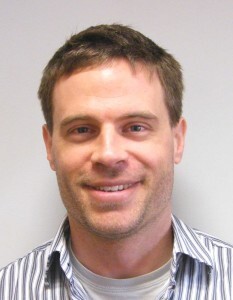
From top: Belvedere College, Dublin; Julien Mercille

Our government is now moving into a new strategic phase to address the Covid pandemic. I concede, on the plus side, it is very simple. The strategy is called “personal responsibility”. It is a significant shift.

Up until now, the government had set public health regulations for the whole country to protect the population against Covid, and NPHET guided the national response. But this will soon be over. And we will then all rely on “personal judgements” and “personal protective behaviours” in order to achieve “protection at a personal level”, quoting the government strategy.

It is all personal, which is another way of saying that the onus is now on you to ensure your protection against a virus that has not gone away, despite the optimistic mood.

Welcome to the land of personal responsibility. A land where the strong and responsible who get up early survive.

First, under the new regime, it will be up to individual children to use their “personal judgement” and conduct a “personal scientific assessment” of Covid levels in a classroom, and then conduct a “personal statistical analysis” about transmission risks. On that basis, 6-year old children can decide whether they should wear a mask or not, and hope that other children will reach the same personal conclusion.

But why, you may ask, wouldn’t the government direct all schools to endorse mask wearing for children, so that they and their families and teachers are all automatically protected? Surely that would be more effective than hoping that hundreds of thousands of children will voluntarily coordinate their mask wearing practices?

The government’s response is simple: Unfortunately, this is no longer possible, because we live in a regime of “personal responsibility”, which must be developed from a young age.

Second, under the new regime, parents will have to individually engage schools to ensure that they have enough HEPA filters and CO2 monitors and adequate ventilation standards. Whatsapp groups will prove useful, and parents can conduct online searches in order to know what are the requirements for ventilation for specific rooms. If they persist, they may get into email contact with ventilation engineers who could assist them in this respect.

But, you may wonder, why wouldn’t the government provide the requisite equipment, set those standards, and deliver on them through its oversight of the education system?

Because we live in a regime of “personal responsibility”.

Third, workers will also need to conduct their “personal assessments” of the risks in their workplace. They will need to discuss (individually) all related matters with their employer. Millions of such conversations will take place and if they are all responsible and well-informed, Covid will be held in check. The same applies to procedures if you are a close contact, a symptomatic or asymptomatic positive case, or if you require a test, or if you are wondering whether rapid testing or PCR testing is most appropriate, or a combination. All this should be determined through “personal conversations” with your employer.

But, you may wonder, why wouldn’t the government set strict industry standards guided by science and in dialogue with employers and unions at the national level?

It’s because we now live in a regime of “personal responsibility”.

Fourth, you will also soon be able to go to restaurants without a Covid certificate. That means that you will need to carefully check the premises before entering, and go around tables to ask all other customers if they have received a vaccine within the last six months, and perhaps ask them for a proof to ensure they’re not lying. Then you can conduct a “personal assessment” of whether the waiting staff is also vaccinated, and make a “personal decision” as to whether you want to eat there or go back home.

But, you may ask, wouldn’t it be possible to have some sort of national vaccine certificate system so you spend more time eating than assessing the premises?

No, because we now live in a regime of “personal responsibility”.

In summary, as you can see, it is all very simple. Government doesn’t have to do anything, and we’re all individually responsible for our well-being.

But, you may ask: is this a clear sign that government is cravenly abdicating its responsibilities, turning a cold blind eye to people’s suffering, and revealing its lack of empathy for the most vulnerable?

Rest assured – absolutely not. We now live in a regime of “personal responsibility”. Therefore, by definition, the government does not have to be responsible—you do. And if you get infected, it is not the government’s fault—it’s yours.

Julien Mercille is associate professor in the School of Geography at University College Dublin and member of the Independent Scientific Advocacy Group (ISAG).

RollingNews

Here’s How.

The current affairs podcast presented by William Campbell (above) looks at a recent survey about sexual consent from NUI Galway that claimed 29 per cent of female, and 10 per cent of male students have been raped during their time in college.

William writes:

Did the media gullibly swallow false statistics from the Sexual Experience Survey done by NUIG’s Active Consent Unit? Did the Active Consent Unit break academic ethics standards in the report? I Investigate.

Listen here


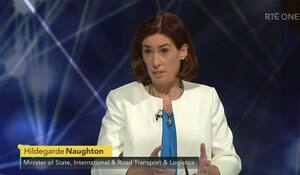
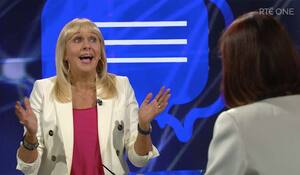
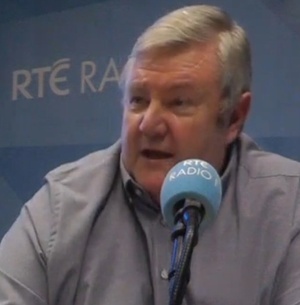
From top: Hildegarde Naughton and an exasperated Miriam O’Callaghan on last Thursday’s Prime Time on RTÉ One; Eamonn Kelly

Confidence in the Crony System

This week’s confidence/no-confidence votes in Simon Coveney seem less about Coveney and more about confidence/no-confidence in the old ways of doing things.

The taoiseach seems to be sub-consciously aware of this, since he has accused Sinn Féin of playing “Old style opposition politics”. As opposed, presumably, to the new style agreeable opposition politics mentioned on RTÉs Prime Time the week before last, and discussed here last week.

A new style of agreeable politics that sees a Fianna Fáil taoiseach threaten Fianna Fáil TDs with suspension should they fail to vote confidence in a Fine Gael Minister accused of cronyism.

May we all live in interesting times.

Meanwhile, on Newstalk, FG Minister Colm Brophy was making the case for it being a waste of talent for Simon Coveney to resign, an argument never made by FG/FF when arts funding is cut, or people are denied access to Third Level education due to economic constraints, or the best and the brightest graduates are expected to emigrate rather than stay at home and compete with favoured cronies.

Please Stop Talking

One of the highlights of the week came when Miriam O’Callaghan on Prime Time, wading through a blizzard of accusation from Hildegarde Naughton directed at Pearse Doherty, framed on a big screen somewhere in Donegal, finally surrendered to exasperation and politely asked Hildegard to please stop talking.

Hildegard was relying on an old argument strategy, where you win by simply making so much noise that no one can hear the opposing view. In the blizzard of Hildegard’s words there was a denial that Katherine Zappone knew about the job on March 3.

There was also an accusation that Doherty was impugning the reputation of a senior civil servant, for reasons that were lost in the thick undergrowth of smokescreen verbiage, and it was into this that Miriam O’Callaghan, like a firm parent, finally asked Hildegard to please stop talking, allowing Pearse Doherty to return once again to the crux of the matter, that the entire Zappone appointment was a case of cronyism in action.

This is a proposition that many people are reluctant to accept, despite the fact that every soc/pol student in Ireland for the past 40 to 50 years has been informed, with stats, graphs and comparative academic musings, of this unfortunate and undeniable aspect of Irish cultural life, where the habit has leeched into all other systems.

Information

Prime Time also looked into another aspect of the political class that has been uncovered as a result of the Zappone case, the fact that so much official government business is “informal”, leaving no record, and that official texts are routinely deleted, which is the modern equivalent of the missing hours from Nixon’s tapes.

Prime Time also reported routines within government where possible problematical papers are marked for destruction should anyone ever request them. A solution to journalistic Freedom of Information requests that must surely have been borrowed from an episode of Yes Minister.

It is possible in all this that Simon Coveney, as Hildegarde Naughton has it, is an honourable person, and that he was simply conducting himself in a normal fashion by the lights of those old understandings, seeing absolutely no wrong in arranging a political posting for a crony. Because this is the way it has always been done.

In this sense, cronyism is an Irish political tradition, almost a conservative approach to public life that has likely arisen in the wake of generations of mass emigration. The best, arguably, always emigrated, while the mediocre friends of friends ruled the roost, owned the houses, rented the flats, sold the beer and so on. They’ve had it their own way for so long that they think cronyism is normal.

The Zappone story is not just about the Zappone appointment, or whether or not Simon Coveney is a good guy. I’m sure he is. The story is more about the unmasking of a political system of who you know, not what you know. About the example being set for how things are done, and the standards that are acceptable at official level in how appointments are made and how official documents are managed.

Spoilsports

The brightest are no longer emigrating. Instead, they are looking straight back at this sham of a crony show and they are not amused. A generation far too copped on to be taken in by those old spiels that once worked so well on what was essentially a rural peasantry.

But the real giveaway of a government out of touch with basic democratic ideas is that many of the ministers, including the taoiseach, genuinely appear to believe that the opposition are “spoilsports”, and not a valid democratic opposition to an entrenched conservatism. As if the mistakes of government are the fault of an opposition for pointing them out.

Because behind Hildegarde Naughton’s attempt to talk over Pearse Doherty lies the unspoken belief, essentially class-based, that some people have the right to speak and others the duty to listen. And that’s a problem in a republic. That’s an aristocratic attitude, concealing a litany of class-based expectations and sense of entitlements.

Owning Up

What the Zappone case has shown, is that the days when influential politicians could simply slip cronies into advantageous positions without being held to account are now over.

In this regard, the confidence vote in Coveney then becomes not a show of loyalty, as Micheál Martin appears to believe it is, but rather a denial that anything untoward has occurred. Ultimately, the confidence vote is a denial that the crony system even exists, despite all academic and anecdotal evidence to the contrary.

This ongoing denial and refusal to own up to such a glaring case of cronyism as the Zappone case, really is the worst form of political gaslighting on a fair-minded public, always more than patient with the often-dismissive attitudes of their comfortable political representatives and their equally comfortable media apologists.

Eamonn Kelly is a Galway-based  freelance Writer and Playwright. His weekly round-up appears here every Monday.

Previously: Eamonn Kelly on Broadsheet

From top Minister for Foreign Affairs Simon Coveney (right) is facing a vote of no-confidence in the dáil over his handling of a UN envoy job to Katherine Zappone (left); Derek Mooney

Johnny Carson famously called Oscar night the time when Hollywood stars put aside their petty rivalries and brought out their major rivalries.

So it is with Motions of No Confidence. Oppositions set aside the boring business of holding ministers and governments to account to solely focus on scoring big political points.

Just like the Oscars, motions of confidence are about ritual and theatricality. This applies to both sides – opposition and government.

Opposition politicians who hope one day to become government ministers act outraged and appalled. Governments ministers, who were once opposition hopefuls, accuse their rivals of base cynicism and partisanship.

The script writes themself. Scroll back through no confidence debates of the past 50 years and you see the same formulaic lines pop up each time, just mouthed by different actors, few of Oscar-winning standard.

I am being a tad unfair here as I am lumping all no confidence motions together. Though they are procedurally the same, there are two grades of no confidence motion.

The first, and most serious, is the motion of no confidence in an entire government. Losing one will bring a Government down. It has happened twice: in 1982 and in 1992.

There have also been examples of where the prospect of losing a confidence motion has prompted a Taoiseach to head to the park and request a dissolution. This happened in the 1930s and the 1940s, twice in the 1950s and again in 1987. The November 1994 collapse of the Reynolds government almost qualifies. Though the confidence motion was tabled and never debated – as the Labour party left government – there was no dissolution or election.

The second type is the motion of confidence/no confidence in a particular minister. These are designed to cause maximum discomfort with minimal election risk. They are useful in helping an opposition party garner attention by putting the embarrassed minister in the spotlight and forcing unhappy government backbenchers, especially from other parties, to publicly back him/her.

But they are blunt tools, with many downsides.

Rather than focusing the public’s attention on the merits or specifics of the policy dispute, debates fast descend into four legs good, two legs bad style slanging matches.

The opposition drive to paint the miscreant minister as the most reckless public office holder since Caligula is met by an opposition chorus that the minister in the dock is a modern-day Albert Schweitzer, beneficently dispensing joy, and inner peace upon anyone they meet. The net result is another media process story about political personality clashes.

More counter productively for the opposition, the motion can also permit the government to draw a line under a problem by saying the matter has been debated to exhaustion and that all that can be discovered, has been discovered.

How many of us recall last November’s confidence motion in Leo Varadkar?  Very few I would suggest.

While we recall the allegation that Varadkar, as Taoiseach, leaked confidential Government information to a friend in April 2019, any detail we have comes not from the confidence motion, but from the two-hour question and answer session the week before.

The confidence motion itself threw up nothing new. All it achieved was to allow the issue slide down the media agenda. It also killed off the prospect of raising the matter in the Dail again for at least six months, as Dáil Standing Order 68 says:

“No member shall re-open a discussion on a question already discussed during the preceding six months.”

Though the same Standing Order does allow the Ceann Comhairle some discretion in applying a shorter period.

As yesterday’s lurid and unnecessarily salacious Sunday Independent headline reminded us, almost one year later and the Garda Síochána criminal investigation has yet to be concluded and a file sent to the DPP.

Though Minister Coveney’s allies may not appreciate the linkage or association, this week’s Sinn Féin motion of no confidence in him has some echoes of last November’s one in his colleague.

This week’s motion is not expected to yield any new information. And, just like last November’s effort, it follows an intense parliamentary interrogation that left several key questions unanswered.

Make that two 2-hour sessions. Minister Coveney needed a second round of questioning at the Foreign Affairs committee to repair some of the damage caused by his first shambolic appearance.

Though Coveney has addressed some questions, others remain. These concern his approach to retaining records of texts and his interpretation of what constitutes a job offer. He has also left the Tánaiste with questions to answer.

The first set relate to what he believes constitutes lobbying and how his office treats Freedom of Information requests. The second set concern to his role as Fine Gael leader and his party’s approach in government to collective responsibility and cabinet confidentiality.

For example, has the Tánaiste briefed the Taoiseach on the discussions he had with the Fine Gael minister believed to be behind a damaging Government leak? Indeed, has the Taoiseach, who has ultimate responsibility for the conduct of Cabinet meetings, followed up on these discussions?

Ironically, opening the November 2020 motion of confidence in the Tánaiste, An Taoiseach Micheál Martin said:

“The Tánaiste has acknowledged his error… Lessons have been learned all round and Ministers realise such situations should not occur during this Government.” [my emphasis]

But it did happen again. Within three months of the Taoiseach uttering these words Fine Gael ministers were demonstrating how little they had learned and were back to acting as if this was a single party Fine Gael government and Martin was a non-executive chairperson charged with presiding over some unimportant board meetings.

Now the Taoiseach, who seems incapable of chiding Fine Gael ministerial miscreants, is threatening members of his own party by telling them that anyone who does not back Minister Coveney in the vote will face greater penalties than Minister Coveney ever will.

You would have hoped that even uttering these words would have triggered some sense memory in Mr Martin’s brain that he is also the leader of Fianna Fáil.

Seemingly not. He is yet to acknowledge that it was the Fianna Fáil members of the Foreign Affairs Committee, particularly Deputies Cowen and Lawless and Senators Ardagh and Wilson, who conducted the most productive questioning of Minister Coveney.

So, seeing that it was his Oireachtas party colleagues who did so much of the heavy lifting in ensuring Ministerial accountability, might it not be wise move for a Taoiseach, who told the Dáil on Feb 15, 2017 that:

“…every Deputy elected to the Dáil has a duty to do everything possible to make the Dáil work. We reject the idea that the only roles we can play are to support Government in everything or oppose it in everything.”

To follow the sound logic of that approach and request Minister Coveney to come before a Fianna Fáil back bench committee and give them the assurances they need to publicly vote confidence in him?

This should not be done without political threat. It should not be an appear before us or else we shaft you, but rather the reasonable action of an equal partner in government. A partner’s whose thrust has been undermined by Fine Gael gameplaying.

Lest you fear I have gone all Pollyanna; I think Sinn Féin’s confidence motion is ill-judged. Not because I want to see Coveney get away with his laissez-faire approach, but because I fear we will see last November’s history repeat itself.

As I believe Sinn Féin’s move ill-considered, it follows that I think Fianna Fáil TDs would play into the Shinners hands by voting against Coveney, or even abstaining, no matter how aggrieved or angry they feel.

The leaderships of Fine Gael and Sinn Féin are busy playing brinksmanship politics while the Taoiseach is preoccupied with the trappings of office. Meanwhile there are just a few grown-up politicians around the place. Most do not hold high political office – for now, but it is to them we must turn to get through the next few months.

Derek Mooney is a communications and public affairs consultant. He previously served as a Ministerial Adviser to the Fianna Fáil-led government 2004 – 2010. His column appears here every Monday. Follow Derek on Twitter: @dsmooney

Rollingnews

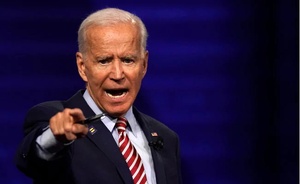
US Republican governors, lawmakers and pundits have blasted President Biden’s vaccine mandate as a major governmental overreach
There are Trump fans who swear they do not
Want to be dosed with a vaccine shot
But President Joe
Has mandated them so
They’ll fight back with all that they’ve got

John Moynes

Getty

Broadsheet.ie