In case you missed it.
Shockiní for weather person Caitlín Nic Aoidh on last night’s Aimsir Láithreach On TG4. The station celebrated its 20th birthday last night.
In fairness.
GRMA: An Poke



In case you missed it.
Shockiní for weather person Caitlín Nic Aoidh on last night’s Aimsir Láithreach On TG4. The station celebrated its 20th birthday last night.
In fairness.
GRMA: An Poke

Enjoy live music?
Broadsheet’s music department (editor: Mike McGrath Bryan) has teamed with Nialler9, adding a weekly Cork gig listing to Nialler’s already-extensive Weekly Dublin Gig Guide.
So… y’know.
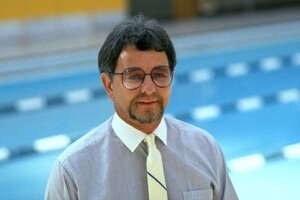
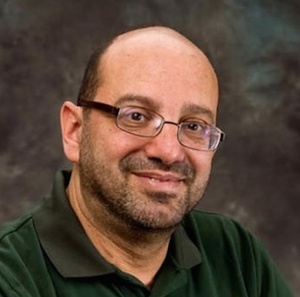
Former Irish swimming coach George Gibney; and journalist Irvin Muchnik
Readers may recall American journalist Irvin Muchnick’s efforts to obtain the US Department of Homeland Security’s immigration file on former Irish swimming coach George Gibney.
Gibney was charged with 27 counts of indecency against young swimmers and of carnal knowledge of girls under the age of 15 in April, 1993 – but sought and won a High Court judicial review in 1994 that quashed all the charges against him.
Mr Muchnick hopes the immigration file will shed light on how Gibney was able to get a visa, and then a green card, to live in the States, given the previous charges against him.
Readers will also recall how some partially redacted documents from the immigration file, previously released to Mr Muchnick, have already showed that Gardaí gave Gibney a certificate of character – issued on January 20, 1992 – to support his application for an American visa.
According to the Murphy Inquiry – which was set up to look at abuse in swimming in 1998 – a parent from a club other than Trojan Swimming Club, where Gibney coached, was told by an assistant coach of Trojan in November 1991 that the gardai and the ISPCC were informed of the allegations in relation to Gibney.
But, later, the ISPCC said it had no record of any such complaint in 1991 or in 1992. And, the Murphy Inquiry states the first record on the Garda file is dated December 15, 1992.
On Friday, Mr Muchnick argued for the release of the documents before Judge Charles Breyer, a Senior United States District Judge of the United States District Court for the Northern District of California.
The hearing followed a May hearing, during which Judge Breyer said he would review in camera (privately) disputed documents from George Gibney’s US Citizenship and Immigration Services file, and render a decision.
Further to this…
Mr Muchnick writes:
At the conclusion of a hearing lasting nearly an hour, United States District Court Senior Judge Charles Breyer said he would shortly issue a “tentative” order in which he will likely require the Department of Homeland Security to release publicly additional portions, at least, of the 20 documents from George Gibney’s immigration records that remain under dispute.
During a spirited discussion with my attorney Roy Gordet and the assistant U.S. attorney James Scharf, Judge Breyer made it clear, without tipping his conclusions, that he has serious reservations regarding some of the privacy exemptions that continue to be claimed in this Freedom of Information Act case.
The judge said he will forward to the government highlighted sections or entire documents that he believes should be disclosed, and will harden his tentative order into a fully enforceable one only if the two sides remain at an impasse over particular details. Counsel agreed that this will be a good penultimate step.
I hesitate to report on or characterize the court’s remarks throughout the hearing, for I do not want to compromise the order that is forthcoming and I do not want to substitute my interpretation of them for the simple and full-context publication of the transcript (which I hope to do shortly).
However, it was clear that Breyer understood the pertinent history and controversy over the sex crime allegations against Gibney. And it was especially clear that the circumstances and disposition of Gibney’s 2010 U.S. citizenship application could have considerable impact on the judge’s upcoming decision with respect to exactly what will be revealed.
Four law student observers — three from the University of California-Berkeley and one from Hastings College of Law in San Francisco — were in attendance.
Early in the hearing, Judge Breyer invited me up to sit at the counsel table with Gordet, and later thanked me for my role in bringing legitimate public curiosity over the Gibney matter to this head. I greatly appreciated both gestures as we await what the court now will order the government to produce.
Previously: George Gibney’s Green Card


A lovingly shot, fairly hypnotic portrait of robotic assemblies creating tiny spring components and wire doodads.

From today’s Irish Times.
(Thanks Don Reilly)

Tomorrow night.
Outside the Kildare Street entrance to Dáil Éireann, at 7pm.
The Not On Our Watch campaign are holding a vigil to coincide with a Dáil debate on the group’s call for Ireland to welcome 200 unaccompanied children from the refugee camp, The Jungle, in Calais northwest France.
The campaign writes:
Ireland’s response to the unprecedented global displacement of men, women and children as a result of numerous wars has been almost non-existent. The French government recently demolished most of The Jungle however almost 1,500 children remain in precarious circumstances in the camp. The Irish government must represent the wishes of it’s people, 800 of whom last year offered to give a home to unaccompanied refugee children.
Not On Our Watch, backed by the Irish Congress of Trade Unions, many NGOs including the Irish Refugee Council, the Children’s Rights Alliance, the Immigrant Council of Ireland and Sister Stan Kennedy have called on the Irish government to immediately act to help 200 of those children and relocate them to Ireland.
We are calling for people to please attend at the Dáil (Kildare Street entrance) and bring your children along. Our supporters are asking their children to make “2♥♥” signs and to hold them up for the politicians to see as they enter the Dáil for the debate. As it will be dark we also ask you to bring candles. It is important that our children know that we did not let unaccompanied refugee children down – Not On Our Watch.
Thanks Gary Daly
Meanwhile…


Justice Minister Frances Fitzgerald and Independents4Change TD Clare Daly in a meeting of the Joint Committee on Justice and Equality on October 5
On Wednesday, October 5, the Minister for Justice Frances Fitzgerald appeared before the Oireachtas Joint Committee on Justice and Equality to discuss the UN Summit on Refugees and Migrants.
This was before the demolition of the makeshift refugee camp in Calais, France.
From the meeting, Ms Fitzgerald had the following exchange with Independents4Change TD Clare Daly…
Clare Daly: “… we get nice statements and lofty aspirations but the reality on the ground is rather different. We have heard a great deal from the Government about the thousands we are taking in, how the numbers are far beyond any commitments given and so on. The reality is, as the Minister of State, Deputy [David] Stanton, said last month, 486 people have been resettled in Ireland, 69 of whom came from Greece while none has come from Italy. The figure includes one unaccompanied minor. This is despite the Minister’s public commitment that this would be a priority area.
I hate talking about numbers because we are talking about human beings, each of whom has to endure a horrendous journey to get to these outposts of Europe. They bring the legacy of a life almost annihilated. It is not even clear to me what the figures are. For example, the Minister of State, Deputy Stanton, said previously that of the 4,000 only 2,622 persons would be relocated from Italy and Greece, while the others would come on the family resettlement programme. That is deeply troubling given the manner in which we are implementing that programme already. For example, I am aware of a Syrian who lives here with Irish friends and who has been trying to relocate some of her family to Ireland under family reunification provisions. Such has been the concern of some friends in Ireland that they have travelled to Greece to assist this woman to be reunited with her family. They have been through extreme trauma. Anyway, they have been unable to do what they set out to do.
The stories from the people on the frontline do not back up the points made to the effect that it is a bureaucracy operated by the Greeks and Italians and it is all their fault. Moreover, they do not correspond to Deputy [Alan] Farrell’s version to the effect that no one wants to come to Ireland anyway. That is not what Irish volunteers are saying. They have been in Greece and Lebanon. To a man and to a woman the story they come back with is that no one there is aware of Ireland.”
“There is zero recognition of Ireland as a destination. Irish volunteers have gone to every camp in Lebanon. They have seen hardly any presence of Irish people there, albeit they are not there all the time. They have interviewed people with the help of interpreters. In the case of each of the sites, the people there simply did not know about Ireland, the type of country it was, whether they would be welcome or anything like that. Deputy Wallace and I went to Calais. Given the geography and given that Ireland is a small country, many people do not realise that Ireland is an English-speaking country. However, language is one of the key reasons the people in Calais want to go to England. They do not realise how the system works.”
“The approach taken to family unification has been adversarial rather than a sensitive or sympathetic approach. I put it to the Minister that she has considerable latitude in this regard. Ultimately, the decisions are taken by the Minister and she has discretion. Why does she not intervene and exercise that discretion?”
“The Minister has made public statements to the effect that addressing the question of unaccompanied minors would be a priority. This is a real area of concern, especially given the decision of the French Government to shut down “the jungle” later this month and the fact that France has said it cannot accommodate more than 250 of the unaccompanied minors there. There is potential for hundreds of children to be lost and unaccounted for.”
“I want to know what we are doing in that regard. What accommodation is available for these children? We have tried to pursue this with Tusla and we have asked how the agency is dealing with these matters. The Minister has spoken publicly of the extraordinary and generous offers by the public of accommodation and taking on children. All of that is true but it is not being processed. Where are the log-jams in that placement? For example, Tusla has said it has vetted three people for foster care arrangements.”
“I and others have said publicly that we would be happy to put ourselves forward to care for an unaccompanied minor and to be vetted and so on. If we were to publicly advertise these schemes I believe there are large numbers of Irish people who would be willing to participate and it could happen at no extra expense to the State. It could alleviate the trauma those children are experiencing. Why not establish a temporary consulate and humanitarian visa scheme? We could bring some of those children here. They are in imminent danger.
“I am conscious of the time and I would like to discuss this more. We have not done enough and there are things we could do if we had the will. It would be great if we did something to stand out in terms of our dealings with the hot spots. For example, there are 18 places for unaccompanied minors at the moment. That is completely and utterly inadequate when it comes to the assessment of facilities here. There should be at least 100 places. Berlin, which has a population of 3.5 million people, has 900 residential places for unaccompanied children. We need to do far more. I am embarrassed and ashamed as an Irish person because of how little we have done. I do not think it is bureaucracy or that people do not want to come to Ireland. They know where it is and if we went out and promoted ourselves, there are many who would take the arm off you for the right to come.”
Frances Fitzgerald: “The Deputy is questioning the commitment of Ireland to respond to refugees but she must understand that we are part of the international response. We are working with an international and European response and we have given a commitment to bring in refugees. The Deputy is not alone in her feelings and every one of us who sees the work our Naval Service is doing and the plight of unaccompanied minors, wants to respond as fast as possible. We all care and want to do the very best we can.
The Deputy is wrong about a number of things. We have people on the ground and Ireland has the fourth or fifth highest staff numbers working on our current response. Calais is not included in our resettlement programme.
Daly: “I did not say it is.”
Fitzgerald: “It raises hugely complex issues. According to Greek figures and in terms of numbers taken for resettlement up to 28 September 2016, Lichtenstein is ahead of us, as are Norway, Luxembourg, Austria, Finland, Iceland and Malta. However, we are not a frontline country with people arriving on our shores. However, we are absolutely committed to taking the numbers I have outlined within the structures of the EU. It has been a slow start and I regret that but it is outside my control or that of Government. Nevertheless, the procedures are in place and staff teams from the Department of Justice and Equality are going out to refugee camps to identify people. We are working with Greece to ensure that people know Ireland is an English-speaking destination. The numbers are increasing now and will rise very significantly.
“We have only dealt with several hundred to date but those people have come into our emergency reception centres, they have received English language training and have been put in contact with local services. They have moved out to communities across Ireland and they are now beginning the integration process. There is an absolute commitment to meet the targets we set.”
“I take the Deputy’s point that the scale of this is appalling. We must ask if there is more we can do and also what else we could be doing. We are open to reconsidering the numbers next year but our first commitment is to take the numbers we said we would take within the EU scheme. We have spoken to the Greek authorities about identifying young, unaccompanied minors. Deputy Clare Daly has the numbers for Calais but we are not working in Calais.
“We are, however, working with the Greeks to identify young unaccompanied minors. Some significant issues arise in respect of unaccompanied minors. The first one of these is identifying them and many of those who were initially identified as unaccompanied minors were actually 19, 20 or 21. This is a problem that is recognised by all groups carrying out assessments in Greece.”
“I have spoken to the CEO of Tusla and that organisation has a commitment to take unaccompanied minors. We are in the process of identifying them and we want to do the very best for them. We believe the best thing would be to have foster homes for them but there is a shortage of foster carers in Ireland at the moment. We must do everything we can to encourage more people to become foster parents. I am advised that unaccompanied minors will begin to arrive shortly and will be placed in foster care.
“The Deputy said that nothing had been done in terms of a public response but that is incorrect. I chaired a meeting on Monday at which the Red Cross was represented. That organisation has worked with all the people who have offered pledges and it has identified people who are willing to supply housing. Some very difficult issues arise in the context of pledges which come in from the public.”
“It is not the role of this committee to go into huge detail on them but the Red Cross has done very significant work in the past number of months with people who have given pledges, many of whom offered accommodation for three months or a year. We need to consider the sustainable issues around that and where refugees go afterwards. They will be citizens at that point, actually, but the question remains of where they go when their accommodation ceases to be available after a year or so. Local authorities were also at the meeting on Monday and they are giving a very significant response, as evidenced by the numbers who have already gone through the emergency reception centres. Insurance issues arise and there are health and safety issues.”
“The Red Cross has now got to the point where it can say there are a certain number of houses available for the refugees who are coming in. A total of 640 have been supplied already and I think the figure for pledges from the public is approximately 160. The Red Cross is working assiduously with the Department and other stakeholders to make sure that, as refugees arrive, they will be in a position to utilise those pledges. The Deputy is wrong to say that the work is not being done. The work is being done by the Red Cross. There is a huge amount of detail in this work. It is one thing for the public to respond to what they saw on the beaches of southern Greece but it is quite another thing to put in place a system whereby we can use the pledges we have received.”
“The churches are also involved in offering accommodation and that is also being worked through with the church representatives. I held a meeting with them and the Minister of State at the Department of Justice and Equality, Deputy Stanton, is doing a huge amount of work in this area. There has been a slow start, not to our resettlement programme but to our relocation programme. People are now arriving every month, however, in increasing numbers.”
“This will test the systems and we will have to make sure that our education system and our health system respond locally to the needs of the refugees. These needs are complex, as anybody who has met Syrian refugees in this country or any group of families will know. Young men who have spent four or five years in refugee camps and are now trying to rebuild their lives have very complex health needs. We have met the Departments of Health and Education and Skills to ensure we have a proper response to all these issues.”
“I understand the Deputy’s frustration and that she wants to do more but the work is under way and we will meet our commitments. We are meeting them now in an accelerating way. The Deputy also asked about family reunification, for which people who arrive here are eligible. Many of the 4,000 who are arriving are families and a ratio is built into the system for applications made for family reunification on the part of people whose families are not with them.”
Daly: “I wish to correct the record on one point. People can be doing things but getting nowhere and that is the point I am making. I am not saying that people are doing nothing but I am saying that the Irish presence in the camps is not visible enough, in Greece or in Lebanon. I do not say there is no one there but they are not advertising Ireland. I am not saying, either, that no work was done. However, we have to look at the outcome of the work. We have 10% of the committed numbers. That is all we have taken.”
Fitzgerald: “There is a reason, as I have explained.”
Daly: “If one takes the Red Cross, well over 800 people made offers but now we have 160, which shows there is a roadblock. Many people made offers for unaccompanied minors. It is not just that there are not enough foster carers. There have been no advertisements to seek them.”
“I have no hesitation in saying the relocation and facilities provided for the small number who got here under the scheme are excellent. I could not fault a single thing with the manner in which the people have been treated when they got here. However, the issues are the numbers are not getting in and there are roadblocks which need to be removed.”
“Irish people working in Calais have done an assessment of the situation. We have given a report on this to the Tánaiste and Minister for Justice and Equality and the Minister for Foreign Affairs and Trade. While we are not compelled to do anything, we can consider it for humanitarian reasons and circumstances.”
Fitzgerald: “There is one correction I want to make. There are 383 currently active accommodation offers which include 280 shared accommodation properties. The balance consists of self-contained properties. This is on the Irish Red Cross side.”
“Deputy Daly claims there are barriers. Some of these are international. No country can take people in without some vetting. There are issues with vetting in Italy, for example. I have explained the international context. Within these constraints, we are working to ensure our pledges are met as quickly as possible.”
“The information I gave to the committee highlights the fact we have the background work done. I am glad the Deputy acknowledged our facilities are excellent. The experience of the couple of hundred refugees who have come here has been very good. The agencies are responding and the numbers will accelerate. The barriers have not been in Ireland but in the hotspots. This is about getting the vetting process working effectively and efficiently. Next time I report to the committee, there will be many more numbers involved.”
Watch back here
Transcript: Oireachtas.ie
Previously: ‘Wouldn’t Hassan’s Children Flourish Here?’
Related: FG’s Regina Doherty says taking Calais minors a ‘no-brainer’ (Kitty Holland, Irish Times)




Behold: the Inkas Hudson APC – the world’s favourite 4×4 workhorse transformed into a vehicle of law enforcement, state oppression, zombie management or whatever swivels your gun turret.

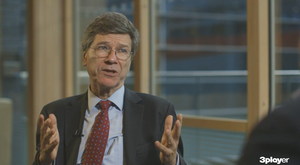
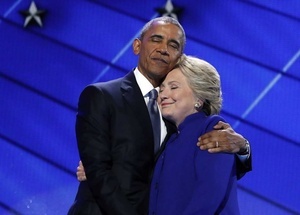
From top: David McWilliams interviewing CEO of Clear Ink Margaret Ward; economist Jeffrey Sachs on TV3’s Agenda; Barack Obama and Hillary Clinton
On Sunday morning.
On TV3’s Agenda, hosted by David McWilliams.
Mr McWilliams first interviewed Margaret Ward, CEO of Clear Ink, a communications agency, founder of Women on Air, and member of the RTE Board, before interviewing economist Jeffrey Sachs, who was also presidential candidate Bernie Sanders’ foreign policy adviser during his bid to get on the Democratic ticket.
From the interviews…
David McWilliams: “Hillary Clinton was meant to be home and dry by now but the FBI announcement that on Friday that they would be launching a new investigation into her use of a private email server has turned this election, yet again. Joining me to discuss what this means for the election which was always tight, and now looks to be tighter still, is journalist Margaret E Ward who also sits on the RTE board. Now Margaret, looking at the headlines – Sunday Times: Hillary at war with the FBI. The Indo here: Clinton’s campaign in chaos. What does it all mean?”
Margaret Ward: Well, it’s almost unprecedented, actually, what’s happened. So 11 days before the election, the FBI director [James] Comey came out and said that they’ve discovered some new emails, even though the Hillary Clinton email scandal investigation had been closed and although she was found to be extremely careless, that she was not found to have done anything wrong. So, he did this against his superiors in the Department of Justice who said it is tradition that we do not interfere and make any announcements 60 days before an American election because it might be seen as political interference…11 days, and now it’s 11 days. So, he’s kind of gone rogue here a little bit, we have to question why, especially because the FBI doesn’t even have a warrant for the contents of the email. He doesn’t even know what’s in it?”
McWilliams: “So, are you seeing a Trump-esque conspiracy? Cause normally, it’s Trump who talks about conspiracies.”
Ward: “It’s very strange because he was asked, you know, ‘why are you doing this now?’ and he said, ‘well, I’m afraid that something would leak’. But I mean all we know is that Anthony Weiner who was married to Hillary Clinton’s advisor Huma Adedin. These were emails found on his email server, on his email account, that’s all we know. We don’t know what’s in them so it’s very, very strange – you have to question what’s going on.”
McWilliams: “So, in terms of the next 11 days, what does it mean. I mean the papers are saying Clinton, not in freefall, but her lead was 7%, it’s now 2% and that’s before this.”
Ward: “Well I mean it’s scary. Any scenario that shows Trump ending up in the White House is terrifying frankly, you know, I mean there’s just for so many reasons, both domestically and internationally, we’re all in big trouble if somebody like Donald Trump goes into the White House.”
McWilliams: “Trump has been exposed and exposed and exposed and exposed, you know, we all know that. But, to a degree, Clinton has maybe given a slightly easier ride? Would you think? Because people are so against Trump.”
Ward: “An easier ride? She’s been attacked by the Republican party for the past 20 to 30 years. I mean this has been a concerted attack, talking about her emails, talking about her Benghazi, talking about Libya, everything that’s been shown to have no basis in fact whatsoever. She’s probably been the most investigated candidate in American history, as well as being the most highly qualified to be president. So you really have to wonder what’s going on here.”
Following on from his interview with Ms Ward, Mr McWilliams broadcast a pre-recorded interview he conducted with economist Jeffrey Sachs.
While introducing the interview, Mr McWilliams outlined the following:
“Because the media, in general, has been so anti-Trump, the darker side of Hillary Clinton has not been aired as would be typical in a presidential campaign. Until this weekend’s revelations, she has got a pretty easy ride. The Trump campaign has repeatedly tried to paint her as a career politician who is not only corrupt but far too close to Wall Street. And, indeed, these ties run deep. In 2013, she was paid $675,000 to make just three speeches for Goldman Sachs – the contents of which were revealed by Wikileaks, including an admission by Clinton that ‘you’, and I quote here, ‘need to have a public and private position on policy‘ and, this year, her top three donors in her campaign were all incredibly rich hedge funds.”
He then played the interview:
Jeffrey Sachs: “There are a lot of worries. The Clintons relationship with Wall Street is well known and a matter of big concern. The Clintons support, over the years, for the various wards that have been disastrous for the United States and for the world – in Iraq and Syria, in Libya. Big concern. And so, while right now there is a kind of feeling among the democrats, that don’t talk about any of these issues really, I know, as a fact and for good reason, that the day after the election, politics is really going to start. Because are we going to have a progressive administration, which I think we urgently need in the United States that Bernie Sanders represented or will we have what, you know, the very wealthy people around Hillary want – which is a kind of continuation of the status quo that is so unequal right now, that it gave birth, in essence, to Donald Trump. Everybody has put aside the debates on Hillary, say Bernie Sanders campaigning for Hillary Clinton everyday right now but what is he saying: he’s saying ‘I’m campaigning because we must defeat Donald Trump’.”
McWilliams: “And then?”
Sachs: “And then, as soon as the election is over, I think we’re really going to go after politics. Now, it’s always possible, I would be absolutely thrilled to be surprised and to be pleasantly surprised that Hillary Clinton surrounds herself with the progressive thinkers who want change who want to try and bring change about but I know people around her and they’re not supporting her, the powerful voices, many of them are not supporting her on that basis – they’re supporting her on the basis of…”
McWilliams: “On keeping…”
Sachs: “This would be a status quo government or, on foreign policy, even a more hawkish…”
McWilliams: “I’m going to go to foreign policy in a minute but I think it’s very important that we elucidate this Clinton/Wall Street connection.”
Sachs: “Absolutely. Bill Clinton made an alliance with Wall Street and it’s even personified by Robert Rubin.”
McWilliams: “Whose Treasury secretary..”
Sachs: “Robert Rubin, of course, Treasury secretary, under Clinton, but before that, he came straight from Goldman Sachs – not my side, part of the family – but came from this major investment bank. Bill Clinton brought the investment banking world, this rich and not very honest world, into the Democratic party, into power. And in 1998 and 1999, engineered the deregulation of the financial markets – especially the end of Glass-Steagall…”
McWilliams: “That was almost payback time. Wall Street expects something. If you go to bed with them, you have deliver something..”
Sachs: “And I think, by then, the schmooze factor was so strong that it wasn’t a reluctance on Clinton’s part, it was this is the natural bonne amie – these are our friends. Our friends are Wall Street. And the Walls Street/Democratic party connection became very powerful. I remember when President Obama was a candidate, Obama, in 2008. And I got a call from a senior campaign official after the Lehman Brothers bankruptcy, and the explosion and crisis, I said ‘don’t sit down with Wall Street right now’. And the next day, there was Obama, candidate, with Robert Rubin – because that was an alliance and when you look at who populated the Obama White House, almost everybody was an acolyte of Robert Rubin or an associate of Robert Rubin. So, where does Hillary Clinton stand? I think by family tradition, by campaign financing, she’s exactly in the Bill Clinton line. Inequality has risen so much in the United States. Wall Street played so many games – they have paid tens of billions of dollars in fines. Of course, for them, it’s a little slap on the wrist, it’s not even the money of these big honchos around them, it’s the shareholders’ money, it’s not even the CEO funding. And that’s her crowd. Her crowd is, by nature, that alliance with Wall Street but it can’t go on this way. If it does, she will break the party as soon as she becomes president – there will be…”
McWilliams: “And there will be a left coming up, under a Sanders-type?”
Sachs: “There will be with Elizabeth Warren, with Bernie Sanders and with many, many democrats. Either a faction that is overt opposition to a president Hillary Clinton or even the emergence of a new party which I think is absolutely possible now as well.”
McWilliams: “In foreign policy, are you worried about Hillary Clinton?”
Sachs: “Hillary Clinton voted for the Iraq War and when she was Secretary of State, under Obama, she was constantly a voice for military approaches. She was a, the voice which convinced a reluctant president and an absolutely opposed Secretary of Defence that the US should go into the Libya misadventure, basically to topple Muammar Gaddafi and it left a disaster which has contributed to Europe’s refugee crisis, and a lot more. She was a major voice in Syria, for scaling up, for no fly-zones. Her rhetoric is, she’s been a major voice I should add in one more important thing that’s also poorly understood and that is that one of the tripwires that regenerated the Cold War with Russia was a 2008 invitation by Nato to Ukraine and Georgia – that they should apply for membership. Anybody that knows Russian history should have known, ‘don’t go there’. To say that Nato would go smack up against the Russian border – and not only in Ukraine which was, for Russia, the way of invasion of forces constantly in Russia’s history, but also through the Caucasus, through Georgia, should have told people, ‘don’t do that, a little self control, please, so that we don’t provoke a reaction’. Now my view is that is is a lot of what then transpired with Putin saying, ‘I’m not going to let Sevastopol – our naval base – flip over to a Nato naval base, are you kidding? We’re not gonna lose the Black Sea’ and I think that this is a lot of what stirred the Ukraine crisis. Where was Hillary Clinton on this? Always pushing for Nato expansion and very enthusiastic about showing how strong we are and how tough we are and the rhetoric during this campaign has been, by her, has been very anti-Russia, Putin is the great evil and taunting Trump as Putin’s puppet which is absurd because Trump is just a jerk, who has a lot of money and was able to wangle the unhappiness into where he is. He’s not Putin’s puppet in this but this anti-Russian, stirring of the pot, is it a political game or is it something we’re gonna see the day after. And when you look, where are all those neo-cons that pushed us into Iraq, they’re in Hillary’s corner right now. Doesn’t mean she’s with them but they’re with her. And they’re all saying: we support Hillary, we can’t support Trump and we don’t know where this is gonna come down.”
Watch back in full here


Oh.
Why can’t a man grow a fun moustache for the benefit of his fellow man?
John Gallen bristles:
I thought this was a bit rich coming from Feminists of Dublin on the first day of Movember, and one day after Breast Cancer Awareness month. How many gimmicks have been seen from Feminism in raising awareness over the years…. more than you can shake a stick at?
There are so many gimmicks around breast cancer awareness they have to write about how to avoid them and donate effectively.
Yet, when a men’s movement on raising awareness of cancers that kill more men than breast cancer kills women… it’s gimmicky… why so damned hypocritical, why not practice what they preach?
The anecdotes in those tweets, and the “I feel” or “seem” perspective rather than facts is beyond any self awareness …the hypocrisy, the disdain, the pettiness is laughable.
The attempt at distinguishing men’s mental health issues from women’s and how the tweeter employs competitive victimhood (it’s a modern-feminism thing) in how the awareness of these is raised is just shocking…
FIGHT!
UPDATE:
Feminists of Dublin writes:
I’d like to reply, – pass this on to John Gallan if you wish, he doesn’t seem to want to talk to me over twitter.
Actually I’d like you to take it down as I now will probably have to deal with a bunch of abusive tweets but I’m betting you won’t.
So lets look at the lovely message john wrote:
” I thought this was a bit rich coming from Feminists of Dublin on the first day of Movember, and one day after Breast Cancer Awareness month. How many gimmicks have been seen from Feminism in raising awareness over the years…. more than you can shake a stick at? There are so many gimmicks around breast cancer awareness they have to write about how to avoid them and donate effectively.”
‘m actually not a fan of breast cancer awareness month, I think it a silly gimmick where far too little money goes to actual breast cancer research and people don’t talk enough about how to self exam. Pink T shirts don’t save lives. medical advances do. I actually have have a lot of family history of breast cancer. Its very likely in my future.
“Yet, when a men’s movement on raising awareness of cancers that kill more men than breast cancer kills women… it’s gimmicky… why so damned hypocritical, why not practice what they preach?”
well firstly I never advocated for breast cancer awareness month, I haven’t tweeted about it whatsoever. I kind of ignore it. So I don’t see how I, as an individual am a hypocrite for some someone else does?
“The anecdotes in those tweets, and the “I feel” or “seem” perspective rather than facts is beyond any self awareness …the hypocrisy, the disdain, the pettiness is laughable.”
I chose to tweet some of my personal thoughts, and made an effort to clarify I was not saying this was some kind of feminist gospel . The disdain is completely imaged by John it seems. My entire point was that Movember doesn’t raise as much money as it could.
The attempt at distinguishing men’s mental health issues from women’s and how the tweeter employs competitive victimhood (it’s a modern-feminism thing) in how the awareness of these is raised is just shocking…
Its odd how when I pointed out how a campaign for men’s mental health separates itself from women’s mental health issues I am accused of being guilty of doing just that?
Its a perfectly valid observation, the movemeber website even talks about how it its literally on the website that they believe they need to distinguish men’s health issues from women’s (in mental health, I get that prostates are a whole other story)
I’m ultimately disappointment that my unassuming tweets are being reposted on the site frames as some kind of anti-men attack.
I kind of expected better.