

Today’s Irish Examiner letters
Seán Daithí ÓChonaill wonders:
I’d say you’re some craic at parties, Frank.



Today’s Irish Examiner letters
Seán Daithí ÓChonaill wonders:
I’d say you’re some craic at parties, Frank.


A short film featuring BMX star Kriss Kyle doing his thing on an indoor course of coup d’oeil set pieces that took six months to design and put together.
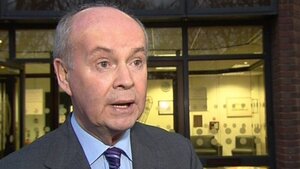

From top: Pat Carey and Justine McCarthy
Last week’s story in the Irish Independent, concerning child sex abuse allegations and the subsequent resignation of former Fianna Fáil minister Pat Carey as the party’s director of elections, was discussed by the newspaper panel on RTÉ Radio One’s Marian Finucane show yesterday.
The panel included Eoghan O’Neachtain, director of Henaghan Communications and former Government press secretary ; Herve Amoric, of France 24; Justine McCarthy, of The Sunday Times; Noel Whelan, barrister and Irish Times columnist; Michael Colgan, artistic director at Gate Theatre; John O’Brien, former detective chief superintendent and national head of both Interpol and Europol and financial analyst Cormac Lucey.
From their discussion…
Justine McCarthy: “I think this story raises very important and big questions for us as journalists. You know, what should be reported and what shouldn’t. And there are very strong opinion columns in today’s papers. In my own paper, Conor Brady has one and he, of course, is worth reading having been the editor of the Irish Times but also having been the chairman of GSOC. He says this case is about as tentative as can be. He’s making the argument that Pat Carey, as we now know, is the person that the allegation seems to have been made about.”
Marian Finucane: “But we don’t know.”
McCarthy: “No but it seems, because of his resignation, he says he doesn’t know himself. This is now the basis on which the stories are being written, that it is him because of his resignation. He hadn’t been interviewed by the guards, he hadn’t been contacted. But worse, he was never contacted by the Irish Independent, seeking a comment from him before they published this story.”
Finucane: “But they didn’t publish the name. It said it was the minister, a former minister. Actually, I thought at one stage there was a rumour, floating around, that it was a minister from the Midlands, a former minister.”
McCarthy: “There was a mention of the Midlands all right and that, it seemed to indicate the Midlands. But no the name, as the Sunday Business Post says, the name was being circulated amongst politicians and journalists by eight o’clock on Wednesday morning. It was inevitable…”
Finucane: “Yes, but how, who, where, why, what? Do you know what I mean? If he hadn’t been approached, and in his statement he said because people were ringing him for a comment, that it dawned on him that it was he, but that he’s absolutely declaring his innocence and I don’t think the gardaí have approached him.”
McCarthy: “No they haven’t because it seems to be, at the very outset of the process, that the complaint was only recently made. Now it would be natural that the guards would do the investigation of the complaint before they would then, in a case like this, approach the person the allegation has been made about. But I find it extraordinary that whether they were naming the person or not that they did not attempt to contact the person the allegation was made about in order to see was that person prepared to be identified, did that person want to give a response? It’s a basic journalistic exercise and yet his story appeared as the main story on the front of a national paper on Wednesday, I don’t see any justification for it being reported at this stage. And Maeve Lewis, of One In Four, has made the very valid point that this has also potentially caused damage to complainants of sexual abuse because they will look at this and say, ‘well if I go to the guards with my statement, is this going to be on the front page of the Irish Independent next week?’.”
Finucane: “Yeah but I mean we, it is presumed but it is not proven that it came from the gardaí.”
McCarthy: “If you read the reports carefully, it’s quite clear that the information is not coming from the complainant. The expressions used like, ‘it is believed that she first made a statement..’. You know it’s clear the complainant is not talking to them and unfortunately I think this is very typical of a certain media attitude to child sexual abuse stories. It’s almost as if there was a point of fatigue reached and then it turned into a very sensationalist attitude and the consequence of that is that very serious questions about the whole issue are not being addressed. Like how to deal with convicted abusers? How to rehabilitate them into society? These questions are not being dealt with at all because, something which really is quite a voyeuristic, titillating and scurrilous piece of journalism is getting so much exposure.”
Later
Cormac Lucey: “I don’t think papers set out in the public interest, I think they’re commercial entities, under huge pressure, declining coverage and I think that gives rise to the question of whether, given what Noel has said about how this coverage may prevent any prosecution from ever happening whether some tightening up of the law is required…”
Finucane: “In which case, everyone a loser, in which case, everyone a loser…”
Lucey: “Correct. But whether the existing sub judice rules need to be expanded somewhat to protect the possibility of a trial in a story like this, to prevent newspapers…”
Talk over each other
Noel Whelan: “…of not reporting that somebody was the subject of allegations of this type, until such point as they were brought before the District Court and the charges were brought before them.”
McCarthy: “Cormac, you’re a colleague of mine but I’m just, I think that is really unfair that remark you made. Journalists produce newspapers, journalists write stories, journalists become editors and they make the selections and I think to ascribe their motivations as being commercial, making commercial decisions is really unfair.”
Finucane: “But they are under pressure for circulation.”
McCarthy: “To say that to create a public interest motive is in general, in general practice…”
Lucey: “When I get up I do not start, ‘what is in the public interest?’. I think, what do people want to read? How can I write something that will be insightful…”
McCarthy: “You’re writing about something that is in the news generally. We’re talking about the selection of news stories and public interest is, it is a litmus test that’s used by good journalists and by good editors. That’s why this story is so particularly egregious.”
Lucey: “The law does not need to be changed for good editors and good journalists. The law needs to cover all editors and all journalists. And there’s a real danger, as Noel has described here that neither somebody who has been accused or somebody who has made an accusation will get their day in court and will be able to get some kind of closure.”
McCarthy: “This rebounds on every journalist, whether you work for the Independent group or not because it chips away at our credibility and at what we do for a living. Now the Irish Independent ran an editorial trying to justify, not just justify the story, but try to make out it was now the victim of what was called, shoot the messenger response, and there is no way that this story was in the public interest.
The motivation for this story was the fact that there was a well-known person involved. It was not about child sexual abuse. There are plenty of stories about child sexual abuse where the system has broken down, where the victims have not had their rights to justice vindicated that could be covered by the paper but they were not sexy stories. And those stories are not being covered and that is one of the biggest, most serious consequences of this kind of journalism.”
Listen back in full here
Previously: ‘Mr Carey Does Not Know If The Allegations Relate To Him’

A possible insect.
The most sinister of all insects.
(Thanks Emma-Jane Dempsey)

Simon Fagan – Lost To The Deep
Andrea Wilkinson writes:
Last night the Cork Film Festival awarded Simon Fagan’s video (above) Best International Music Video. Lost To The Deep was animated by Berlin native Eric Tiedt and is the first single off Simon’s forthcoming sophomore album Gilded Bird.
Although from Navan, Simon has been based in Berlin since 2011 where he teamed up with Nina Hynes producer Fabien Leseure. Together they have spent two years writing and recording the songs that would make up Gilded Bird. Lost To The Deep was recorded in Berlin’s iconic Funk Haus Studios.


The Echigo-Tsumari Art Triennale Arts Festival in Japan is a 50-day event that happens every three years, linking 200 villages across 19,000km² of mountainous terrain in Nigata, Japan.
160 artists all working to a single unified theme, to wit, ‘humans are part of nature’.
This year sees the publication of a book, showcasing the 800 artworks created since the festival began in 2000. The organisers pride themselves on the deliberately sprawling nature of the event (at which it’s virtually impossible to see all the art) describing it as an “absolutely inefficient approach deliberately at odds with the rationalization and efficiency of modern society.”
Excellent.
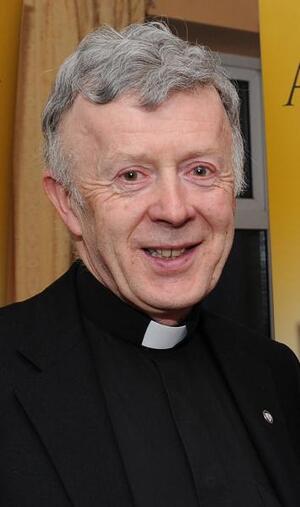
Michael Neary, the archbishop of Tuam
Michael Neary, the archbishop of Tuam,, says that we have mainly church-run schools because parents want it that way (“Parents must ensure the ethos of Catholic schools is maintained, says archbishop”, November 11th).
I would suggest we have predominantly church-run schools because parents have virtually no choice in the matter.
If the church is so sure of its position in the debate, then surely there would be no objection to asking the people of Ireland what they want, democratically, rather than dictating ever more from the pulpit. A vote to decide the matter once and for all would seem a reasonable proposition.
Vincent Hearne,
Nabinaud,
France.
Patronage and schools (Irish Times letters page)
Pic: Tuam Herald

Marc, of YouthTuber, writes:
“We got some Irish kids to taste coffee for the first time…”


