


‘sup?
This afternoon.
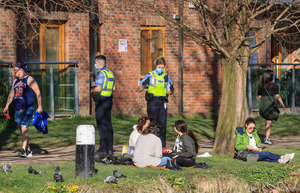
Herbert Park, Dublin 4.



This afternoon.
Covid response critic Ivor Cummins discusses The Sunday Times report yesterday that Mayo coroner Patrick O’Connor (top) believes death figures reported by Nphet “do not have a scientific basis”.
Mr O’Connor, a public information officer for the Coroners Society of Ireland, told the paper
“In reality, a lot of people have terminal cancer or multiple serious co-morbidities. People can die from Covid or with Covid. I think numbers that are recorded as Covid deaths may be inaccurate and do not have a scientific basis.
“When a person is suffering from a number of medical conditions which will or may lead to their death at some short time in the future, if they are unlucky enough to be infected by the Covid virus, that is recorded as the principal cause of death.”
Meanwhile…
Study of COVID-19 deaths claimed by NPHET/data.gov.ie https://t.co/rwDnOntPlO
— Kieran Morrissey (@KieranMorrisse5) April 19, 2021
Covid deaths data skewed by other illnesses, says Mayo coroner (Sunday Times)


Behold: airglow. Whatnow, sez you? Airglow. Atmospheric air glows all of the time, but it’s usually hard to see. A disturbance like an approaching storm, however, can cause noticeable rippling in the Earth’s atmosphere – a phenomenon seen here as a giant repeating rainbow. But why? To wit:
These gravity waves are oscillations in air analogous to those created when a rock is thrown in calm water. The long-duration exposure nearly along the vertical walls of airglow likely made the undulating structure particularly visible. OK, but where do the colours originate? The deep red glow likely originates from OH molecules about 87-kilometers high, excited by ultraviolet light from the Sun. The orange and green airglow is likely caused by sodium and oxygen atoms slightly higher up. The featured image was captured during a climb up Mount Pico in the Azores of Portugal. Ground lights originate from the island of Faial in the Atlantic Ocean. A spectacular sky is visible through this banded airglow, with the central band of our Milky Way Galaxy running up the image center, and M31, the Andromeda Galaxy, visible near the top left.
(Image: Miguel Claro (TWAN); Rollover Annotation: Judy Schmidt)

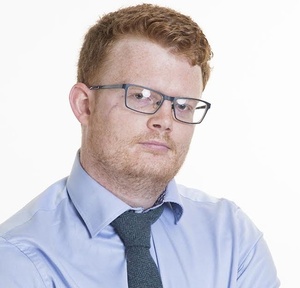 From top: A March 2021 parliamentary question and answer on Election observations; Heber Rowan
In 2020, I noticed that there were over fifty different parliamentary questions on many separate occasions about Ireland’s overseas election monitors. These volunteer roles were seen as non-essential and were stopped during the lockdown on public health grounds. The questions on it continue this year, I think we should ask why that’s the case and what it says about our system of parliamentary questions.
Election monitoring
Election monitoring internationally is about ensuring that elections are conducted fairly and according to the democratic norms of fairness and the rule of law. Monitoring is an important study into the process of the election. It can highlight the strength of independence in civil society and the freedom of the press.
The reports of an election being fair or not has implications for international diplomacy and trade. Least of all, it can form part of local acceptance of a transfer of power and was even noted as a consideration in the 2020 US election. Indeed the objectivity of some observation missions has been critiqued in the past, though it is fair to say that in general, monitoring is trusted and respected. Ireland’s monitors take part in EU and OSCE missions all over the world.
Now, it is reasonable to say preventative measures need to be put in place to protect the health of the experts and volunteers. The easiest way of doing that would be to stop them from travelling altogether and prevent COVID-19 from spreading further across international boundaries. When one considers the use of mandatory quarantine in place in some countries, it makes some sense that monitoring will be held back.
However, during the lockdowns essential work did continue in a variety of industries and domestically volunteers took part in COVID-19 testing centre assistance for example. Many people donated their time and energies for great causes for the benefit of all. However, international volunteering ended.
While for a time the denial of observation missions struck me as a signal that reviewing the democratic accountability of elections in other jurisdictions was a luxury, not a necessity… I could see the point on health grounds temporarily. Though it concerns me the longer international travel is curtailed.
All of it reminds one of the importance of understanding declared values versus revealed action. Action speaks louder. International cooperation is at the heart of how countries make their independence respected via adherence to democratic norms. It should resume sooner rather than later with the appropriate testing systems in place if it is deemed as essential to international relations.
With so many parliamentary questions on the same issue asked I am boggled. Either many members of the Irish parliament have the same opinion on this matter as mine or they are being lobbied by those on the monitoring panel seeking observation missions at elections. I’m inclined to believe it is the latter. While the costs are a day to day part of the running of a democracy so many on the exact same question is alarming. Let’s not forget that each question can effectively cost hundreds of euro to obtain an answer for and some TDs have been criticised in the past for asking an inordinate amount of questions.
That said, many questions being asked show that the TDs are very active for their constituents and are proactive in their approach to policy development. Though with so many on the same issue… perhaps another solution could be found?
Heber Rowan is a Sligo native with a passion for politics. He works in public affairs and enjoys listening to and narrating audiobooks. He can be found on Twitter and occasionally blogs on Medium.com.
Image: KildareStreet

Aer Lingus desk at departures in Dublin Airport, 2011
Kevin writes:
The end of last night’s episode of RTÉ One’s Reeling in the Years focused on the resumption of emigration, particularly of young people, from Ireland as the great recession continued in 2011. I wrote this poem back then when I overheard someone bemoan the fact that their hairdresser had moved to Canada…
Inconvenience: A History
When the housing market went further south
than the East Antarctic Ice Sheet,
my chiropodist climbed Croagh Patrick
to consider his property portfolio
and never came back down.
The toe nails on my left foot
are not expected to recover.
My hairdresser abandoned
me for the scalps of Alberta, Canada.
It’s been one bad hair month
after another four successive quarters,
which reminds me of the time
our landscaper, Seamus, got skinned
alive and driven around
in the passenger seat of a taxi
by a breakaway UVF faction.
The Rhododendrons were not
themselves after that.
Tragic, almost, as the night
the truck pulled up to take
our family tailor, Shmuel,
to the train and
Birkenau. Trapped in the nightmare
from which we’re all
trying to wriggle free, I went about my
business as usual
in desperate need of a decent suit.
Don’t riot.
Write.
This morning/afternoon.
The Irish Council for Human Rights [a non-governmental, non-profit organisation founded last year] writes:
The next vote to extend the Health (Preservation and Protection and Other Emergency Measures in the Public Interest) Act 2020 must take place before June 9.
If it is not extended, all restrictions around freedoms (with the exception of mandatory quarantine upon entry into the state) will cease.
We therefore have a window of eight weeks inside which to lobby TDs to vote against the extension of Part 3 of the Act.
If we are successful, this would mean that on June 10 all businesses and churches could legally reopen, you will no longer be legally required to wear face coverings, the Gardai will no longer be able to question you under this Act as to your movements, limits will no longer apply to weddings or funerals and you can once again visit with family and friends without fear of being arrested and jailed.
As part of this campaign, we have reviewed the voting records of all TDs for the past seven months in order to determine which TD’s would seek to preserve your fundamental freedoms and which TD’s would seek to exercise more control over your family, your business, your health and your life. Please click here if you would like to review this spreadsheet of information – noting that your TD’s do not expect you to be armed with this information.
You will note that the spreadsheet stipulates which TD’s we recommend that you lobby (noting that recommended TDs are colour coded in green and yellow). For each of the TDs we are recommending you lobby, we have prepared individual letters which specifically addresses each such TD’s voting record (please, therefore, do not use the same letter for every TD).
We would also encourage you to edit the letter to address any specific concerns or experiences you have encountered over the past 12 months arising from the erosion of your freedoms.
This campaign has the single biggest chance of reversing the erosion of fundamental freedoms in the shortest space of time, but to stand any chance of success, we need thousands and thousands of people to write to their TD’s today and to persevere over the next eight weeks, until an assurance is secured that they will vote not to extend Part 3 of the Act.
Click here to download letters.

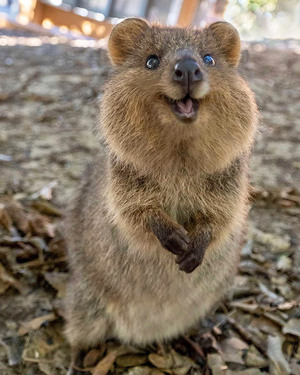


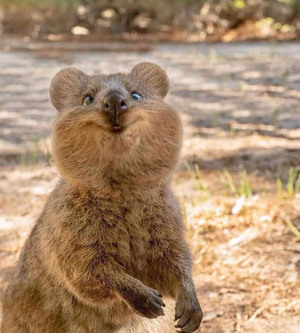


The short-tailed scrub wallaby, also known as the Quokka.
Spreading the love online since 2013.
Previously: Don’t Worry, Be Quokka

Post-Party – Wasting Time
Their time has come.
Insert hand-clap emojis for the new single by Dublin guitar enthusiasts Post-Party who entertain us with a high energy, hi-octane blast of pure adrenalin and six-string riffery.
The band’s Colin Peppard directed and edited the promo.
The band write:
“The last year has given us the opportunity to really build up on our skills in other areas such as filmmaking. We shot the music video for ‘Wasting Time’ with each of the band members shot individually, in separate locations. The editing process was tedious but we got there in the end and I don’t we don’t think we could be happier with the result.
“There’s a strong parallel between the nostalgic feeling in the song and the VHS footage, which is why we decided to shoot with one of our parent’s old Sony hand-cams. There was a bittersweet contrast between the VHS and Digitally-shot footage, creating a stage of colours on which we performed the single.”
Nick says: Get the Party started.

This morning.
Harry Street, Dublin 2.
Liam C writes:
Ya couldn’t make it up! Cash only for pints. Hardly ideal re covid nor Revenue…
Earlier: Scoops
