



Hello you.
This afternoon.
Blackrock, County Dublin.
Stephen Stewart writes:
Thís is a small statue on a small island in Carysfort Park, Blackrock. I was hoping one of your readers may know the background story of the statue, how it came to be on the island? how he lost his arms..?
Anyone?
Meanwhile…

Sunday.
Glasnevin Cemetery.
Fluffybiscuits writes:
Those in Eternal Slumber having Sweet Dreams?


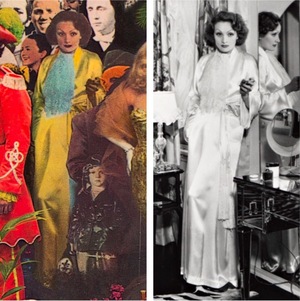
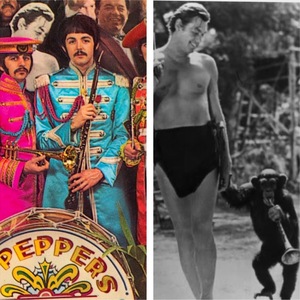
While the people featured in the iconic cover art collage of The Beatles’ ‘Sgt. Pepper’s Lonely Hearts Club Band’, are all well documented, Chris Shaw went one step further and tracked down all the source imagery. To wit:
The collage was designed by Peter Blake and his wife Jann Haworth, and the cut-outs were assembled in Michael Cooper’s London photographic studio. Michael and his team toiled hard to construct the ‘cast of extras’, using a mix of photos sourced from the BBC Hulton Picture Library, images from private collections, waxworks and personal artifacts, including a gnome owned by Ringo Starr
Ask Not
at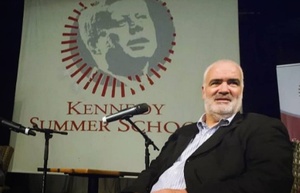

From top: Noel Whelan; From Whence I Came; The Kennedy Legacy, Ireland And America (Merrion Press)
This afternoon.
From the people behind the annual Kennedy Summer School:
From Whence I Came is a brand new collection of 15 specially-commissioned essays looking at the legacy of John F Kennedy and the politics of Ireland and the United States – co-edited by Dr Brian Murphy, a lecturer at the Technological University Dublin, and Dr Donnacha Ó Beacháin, Associate Professor of Politics at Dunblin City University.
Contributors include Cody Kennan, former Obama speechwriter, Kerry Kennedy, President of the Robert F. Kennedy Human Rights organisation and Tad Devine, former senior adviser to Bernie Sanders.
Published by The Merrion Press, all royalties will go to the Community Hospital in New Ross, as the book is published in memory of the late barrister and political advisor Noel Whelan, who hailed from New Ross and co-founded and ran the Kennedy Summer School there. Noel died in July 2019 aged 50.

Gulp.
This morning.
The Hellfire Club, Montpelier Hill, Dublin Mountains.
*shudder*
Thanks Karen Morgan


From top: Lockdown critic, British Lord Jonathan Sumption; David Langwallner
The central Shakespeare play on law and legalism is ‘Measure for Measure’. The Duke of Vienna has unwisely left, as custodian of the state, Angelo, a religious maniac. The engine of the play is that the Duke does not leave Vienna but disguises himself as a monk in order to ascertain what is happening in his Kingdom.
From a Renaissance thought perspective, the true ruler or judge was not the most holy or zealous of men, but one in whom reason and moderation existed. The law, the play implicitly argues, must not be a terror or enforce a terror.
Former UK Supreme Court justice and vocal lockdown critic Lord Jonathan Sumption, in his Trials Of the State (2019), advised well that, above all, a judge should be moderate. Legal training, he argues, conditions moderation.
I agree with Sumption that legislation is being introduced which is terrifying people and conditioning compliance, but has he the historical self-reflexiveness of understanding his own culpability? Perhaps this former adviser to the Conservative MP and Cabinet Minister Sir Keith Joseph – a formative influence on Thatcherism – is on the road to Damascus. Or at least the garden of Gethsemane?
In the light of the Coronavirus epidemic, though, for the good, he has sagely warned about the long-term restriction on liberty in The Times initially and then other outlets.
Of course there is a liberal consistency or, at least, a neo-liberal consistency to his approach, in that he complains, even in his pre-virus book, about the disproportionate interference by the state into the private lives of others.
With police officers restricting movement and enforcing self-isolation, or potentially intruding on privacy and, for that matter, restricting and fining travel and enforcing quarantines and measures being increased in a draconian fashion to deal with migrants and indeed returning nationals. we have all the indicia of a slippery slope to the creation of a police state if that is not where we are now. Certainly in Ireland.
Even in the UK, the ostensible land of liberty and the faerie queene, which Sumption, the great wizard of humanism, a kind of white haired legal Willie Wonka represents, where liberties were historically taken seriously, we find the emergence of transhumanism alongside unchecked executive authority.
If you mosaic all of Sumption’s writings recently together we see a sense of apprehension and dread foreboding of entrenched and embedded extremism with pandemics and variants of the same to come. In a sense the state of exceptionalism or perpetual emergency which the German jurist Carl Schmitt warned against continuing indefinitely. A state of siege.
Lord Sumption, in effect, sees a return to serfdom and the imposition of mechanisms of compliance and control which are in increments creating a form of Chinese capitalism, or I would argue, corporate totalitarianism. The negation and destruction of freedom. The return to serfdom, as his mentor Hayek pointed out, was not socialist serfdom but corporate compliant serfdom.
All of this is the context of The Plague which has been vastly overstated and bears at best a distant resemblance to the catastrophe of previous plagues he and I argue.
There is a famous book by The Portuguese novelist Saramago called Blindness (1989), where a blindness epidemic takes sway and blindness becomes a communicable disease. The effect is an escalated sense of panic as individuals are quarantined and dehumanised.
Human nature descends to Hobbesian force and brutality. The concept of due process or fairness of legality or the rule of law or human rights goes out the window. Inept authorities make mistakes. Asylums are created for those quarantined and descend into murder and chaos. An armed clique gains control.
Albert Camus in his seminal The Plague (1947) uses the historic plague affecting Oran to emphasise the need for humanism, engagement, heroism and community in difficult times and, above all, the rule of law, as Sumption is to some extent doing.
History is, in fact, littered with far more destructive plagues. The most famous exported by the Mongol warriors was the Black Death which devastated Europe in 1347 or more recently, its nearest comparator, the 1918 Flu. It is a noticeable matter that more people died in that epidemic in the immediate aftermath of the First World War then the entire war itself, some 50 million.
Of course the reason for such mass deaths then was a lack of vaccination and the overall ratio of death and infection was considerably higher than in the Coronavirus. So why the massive overreaction and the imposition of control and compliance creating dehumanisation?
There is no question but that the rate of death to infection is nowhere near as high as those pandemics and there is no sense in arguing it presents an existentialist threat. Survivability is probable, absent an underlying health condition, and age or the luck of the draw, the bend of the river and the twist of faith, if you believe in that sort of thing.
Sumption, as an ostensible Thatcherite, also should notice the Inequality as small businesses are being destroyed with wealth channeled to transnational corporations and vulture funds.
Human dignity is also, he should empathise, difficult to maintain when you wait on a trolley in a hospital corridor with an undignified death on the horizon and suggesting, as Sumption has, that a Stage 4 cancer patient’s life is worth less than a healthy person is really outrageous, and a sentiment he did not endorse when a judge.
One senses the beginning of a reversion to a medieval standard of justice. One also senses that deep down the noble King Lear-Lord Sumption is revealing less than he has demonstrated and that he is speaking and writing, if not in forked tongue, at least in code.
Maybe representing the Russian billionaire Roman Abramovich woke him up, a giant from his slumber, and gave him – shall we say – a certain knowledge base. Who knows? Not me? One can attempt to decode the code but much of it is guesswork, cryptography and surmise though I have a fair idea of what he is really saying.
David Langwallner is a barrister specialising in public law, immigration, housing and criminal defence including miscarriages of justice. He is emeritus director of the Irish innocence project and was Irish lawyer of the year at the 2015 Irish law awards. His column appears here every Tuesday and Friday. Follow David on Twitter @DLangwallner
Byrne Notice
at
Killarney-based chef Paul Treyvaud
I have decided I am opening my restaurant July 1st no matter what. That gives them 4 months to sort out everything. I’ve done everything I’ve been told to do. 55k came in from uk with that variant, now over 1500 from Brazil.
The problem is no longer us. It’s an incompetent Gov
— Paul Treyvaud (@PaulTreyvaud) February 22, 2021
February 22.
I don’t know what to say to the thousands of people that have gotten in touch with me over the last 24 hours with absolute incredible support. I never expected my tweet to blow up like it did
I’ll be on @TodaywithClaire just after 10am today talking about it.
Tune in
— Paul Treyvaud (@PaulTreyvaud) February 23, 2021
This morning.
I don’t believe this. They have just cancelled me due to being ‘double booked!’
I turned down so many media requests after giving them an exclusive today.
Forgive for thinking of the conspiracy theory but a tweet that has garnered this much public support & now pulled? https://t.co/uqs784ZHHF
— Paul Treyvaud (@PaulTreyvaud) February 23, 2021
Later this morning.
Good times.
Earlier: Done Deal
Meanwhile…

This afternoon.
Via Independent.ie:
Christine McTiernan is arguing she has the constitutional right to earn a living and should be allowed to operate despite businesses being closed under Level 5 restrictions.
C&N Beautyroom in Balbriggan opened to clients today and the phone was engaged for most of the morning. Gardai are currently at the premises.
Ms McTiernan said: “…my common law rights to provide for my family cannot be overturned. I would like to take the opportunity to thank everybody for their support.”
Thanks John Smoke


The Ryan Brothers (above), from left: Liam (cello), Cormac (viola) and Peter (violin) with unidentified passer-by
This morning.
The launch of the 2021 Feis Ceoil at Dollymount Strand, north county Dublin.
Celebrating its 125th anniversary, the Feis Ceoil will be online due to government restrictions with 136 competitions streaming (at link below) from March 15-26.
Photocall Ireland
Save Poolbeg


A celebration of fail for telecoms giant Etisalat by Helsinki-based commercials director Nalle Sjoblad.




A striking yellow King penguin spotted near a small island in South Georgia in 2019 by Belgian photographer Yves Adams.
Believed to be the first documented example of the condition in penguins, the atypical colouring is caused by leucism, which reduces melanin, allowing the penguin’s natural yellow pigment – normally reserved for mating displays – to dominate.