

Tag Archives: Denis O’Brien

celticimagecatherinemurphy

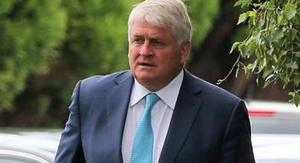
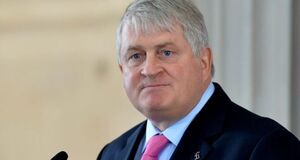
From top: Celtic Media logo; Denis O’Brien, Catherine Murphy

In the dâil yesterday, Social Democrat founder Catherine Murphy challenged Taoiseach Enda Kenny on the sale of Celtic media Group to Denis O’Brien-controlled INM.

Celtic Media owns seven regional titles, including the Anglo Celt, the Meath Chronicle, the Offaly Independent, the Westmeath Examiner, the Westmeath Independent and Forum, a bi-weekly paper for south Meath.

Catherine Murphy: “Last week, the Competition and Consumer Protection Commission approved the acquisition of the Celtic Media group by Independent News and Media, INM. It is now up to the Minister for Communications, Climate Action and Environment, and presumably the Cabinet, to accept or reject this acquisition. Earlier this year, a report authored by Dr. Roddy Flynn of Dublin City University identified the concentration of media ownership in Ireland as a “high risk”. That was echoed earlier this year in a European Commission report, which found that the position in Ireland was the subject of the highest level of concern and identified a lack of legal barriers as an issue. Nessa Childers MEP held a conference earlier this year at which Dr. Flynn’s findings were reported. More recently, Lynn Boylan, MEP, commissioned an EU Parliament report, the findings of which expressed similarly grave concerns regarding the media landscape in Ireland.

It is difficult to understand how an agency involved in consumer protection could approve the proposed acquisition, particularly in a sector that has the potential to undermine our democracy.

INM publishes the Irish Independent, the Sunday Independent, the Evening Herald, the Sunday World and the Belfast Telegraph. It has a 50% stake in the Irish Daily Star and controls 13 paid-for regional weekly newspapers. If INM’s acquisition of the Celtic Media group goes ahead, it will control 28 regional titles across the country in addition to the national titles I have mentioned.

The radio sector is also relevant in this context. Communicorp, which is owned by the same majority shareholder as INM, controls Newstalk, Today FM, 98FM, Spin 103 and Spin South West, or approximately 20% of the entire radio market. Although I appreciate that print and broadcast media are different, it is essential for the cross-ownership of INM and Communicorp to be considered in tandem.

As the Taoiseach knows, the Competition Act 2002 does not allow competition restrictions on media ownership to be retrospective. This raises further questions about the permitting of the proposed acquisition. If there is already a problem with the over-concentration of media ownership, why would the Government make that situation worse?

That is the obvious question. While media concentration is an issue in its own right, the ownership of such a large proportion of our print broadcasting and digital media by someone who has consistently used the courts to create a chilling effect on journalists and other media outlets has to be questioned in the most serious terms.

The person to whom I refer, Denis O’Brien, was the subject of adverse findings in the Moriarty tribunal, as the Taoiseach is aware. This media acquisition is clearly against the public interest. It is essential that vested interests are not once again placed ahead of the public interest. Will the Taoiseach oppose this acquisition?

Given the changing nature of media, does he support the National Union of Journalists’ call to initiate a public commission on the future of the media to examine ownership, editorial control, employment standards including pension rights and measures to protect editorial independence?

Does he believe State supports may be appropriate to ensure there is diversity of media ownership across all platforms?

Enda Kenny: “No, I do not support the call mentioned by Deputy Catherine Murphy. This report was commissioned by Lynn Boylan MEP and was based on a legal opinion from two firms based in London and Belfast, both of which primarily work in the field of human rights. The report seems to have been prompted in part by the 2015 report of the Centre for Media Pluralism and Media Freedom, a centre based in Florida and funded by the European Commission, which was published in March 2016.

I think everybody can agree that a free and pluralistic media is an essential component of a modern democracy. The report mentioned by the Deputy is being examined by the Minster for Communications, Climate Action and Environment on the basis of his responsibility for media plurality.

I understand he is to answer questions in the House tomorrow on that. In addition to operating the media mergers regime provided for in the revised Competition (Amendment) Act 2012, the Department of Communications, Climate Action and Environment engages with the European Commission and the Council of Europe on all issues relating to media freedom and plurality.

It is also important to say that many of the issues and conclusions raised in the report were debated in the House during the passage of the Competition and Consumer Protection Act 2014, which revised the Competition Act 2002. As the Deputy is aware, the 2014 Act gives the Minister for Communications, Climate Action and Environment the power to block any media merger that is deemed likely to be contrary to the public interest in maintaining the plurality of media in the State.

Therefore, I do not see any reason for the setting up of a commission of inquiry into the matter. The Act did not give the Minister the power to act retrospectively or to assess a media business in the absence of a proposed merger, as to do so would be to interfere with the property rights enshrined in Article 43 of Bunreacht na hÉireann, which would raise a myriad of legal complexities.

Simply stating that it is legally possible to do so does not address any of the legal complexities involved and does not recognise the effect such a move could have on freedom of expression and investment in the sector.

In fact, the report itself recognises this is an extremely difficult area that would raise issues regarding property rights, market effects, procedural fairness and freedom of expression considerations.”

Murphy: “I am not entirely sure what to make of that response. The Constitution certainly does include a section on property rights but all rights have to be balanced and, indeed, the section in the Constitution is balanced by a second section which deals with the common good.

Essentially, the point I am making is that there is no reason for the Government to make matters worse where there is already a demonstrated difficulty with the excessive concentration of media ownership.

Why would it do that when retrospection is not permitted, according to the Taoiseach, although I believe that is open to challenge in the courts?

To take the position in rural areas, which I do not need to describe to the Taoiseach, the more concentrated media ownership gets in rural areas, the less informed people are going to become. What is proposed is that the current CEO of Celtic Media would become the managing director of all 28 INM regional titles.

This would mean the possibility of cross-selling of advertising and the possibility that people in rural areas will not be able to go into Eason’s, for example, and pick up alternative newspapers. The retrospection aspect is one that must be taken very seriously. What is the Taoiseach’s view of this acquisition of the Celtic Media group?”

Kenny: “I misinformed the Deputy in that the Minister is not here tomorrow due to the climate business in Marrakesh and the Minister for Education and Skills has a swap arrangement for tomorrow. Obviously, the most important of the considerations involved is the potential impact on media freedom if a Minister effectively has the power to break up a media business at any time. That could also have a severe impact on investment in the sector.”

Murphy: “What is the Taoiseach’s view?”

Kenny:“The issue was well debated here during the proceedings relating to the Act of 2014. The assertion that there are no representatives being appointed to the MSI-MED committee and none of the independent experts on that body are based in Ireland is misleading.

That committee is a sub-committee of the larger steering committee on media and information society and there is a principal officer of the Department who sits on it as well. Given that all these matters were discussed already in the context of the review of the Act, the Minister does not see what a commission of investigation or inquiry into this would be based on.”

Róisín Shortall: Does the Taoiseach agree with the merger now?

Kenny: “He does not have the power to act retrospectively on this, as I have pointed out.”

Good times.

Previously: Same Old Firm

Transcript via Oireacthas.ie

 

90432865DenisOBrienDec15_large

Report on the Concentration of Media Ownership; Media ownership report launch, from left: Barrister Caoilfhionn Gallagher, Jonathan Price, KRW Law, Gavin Booth, Sinn Féin MEP Lynn Boylan, in Cliff Townhouse in Dublin; Denis O’Brien

Further to the Report on the Concentration of Media Ownership in Ireland, commissioned by Lynn Boylan, Sinn Féin MEP on behalf on the European United Left/Northern Green Left (GUE/NGL) group of the European Parliament

A statement has been issued this afternoon by James Morrissey, on behalf of Denis O’Brien, in response to the report.

Redacted writes:

The Report on the Concentration of Media Ownership in Ireland makes for very interesting reading.

At the outset it is worth noting that it is self-described as “An Independent Study Commissioned by Lynn Boylan MEP on behalf of the European United Left/Nordic Green Left (GUE/NGL) Group of the European Parliament.”

An “independent study” commissioned by a leading member of Sinn Fein? Hardly.

The two most important controlling entities in the Irish media landscape are the national State broadcaster, RTE, and an individual businessman, Denis O’Brien” this Report states.

Yet there is no focus on RTE in the context of:

– The largest media entity in Ireland

– The only entity involved in TV, radio and print

– Revenues subsidised by licence fees amounting to €178.9 million

But then this ‘independent study’ was never intended to be a report on the concentration of media ownership in Ireland.

Sinn Féin is very diligent and adept when it comes to pushing its agendas, overtly and covertly.

After a disappointing General Election, An Phoblact [sic] went on the attack:

“State broadcaster came in for severe criticism as it slashed Sinn Fein’s coverage following a poll… which showed the party gaining ground… and for two days the voices of Sinn Fein were banned from the airwaves in a bizarre episode that was reminiscent of Section 31 and state censorship.” (March 7, 2016)

And on the eve of the Budget, Sinn Fein TD, Eoin O’Broin declared:

“Budget Day is all about choices. For decades, Fine Gael and Fianna Fail, have looked after the big guy – whether that be Denis O’Brien or Apple.”

I am absolutely convinced that the contribution that Apple has made in this country is unquantifiable in financial and social terms. What about the thousands of young women and men who did not have to emigrate and who got a chance to work, live and raise families in Cork?

I have said that Apple should not be punished for its tax arrangements in Ireland. Sinn Féin’s stance on Apple has been, I believe both anti-enterprise and anti-Irish.

“Sinn Fein has been waiting with some relish for the EU verdict,” wrote Pat Leahy in The Irish Times (August 30, 2016) “and leaped into action:  ’Give us back our money’ demanded MEP Matt Carthy. For good measure, Sinn Fein finance spokesman Pearse Doherty also called for a public inquiry into Apple’s tax arrangements.”

This report states that I am chairperson of Communicorp, as has various individuals including Dr. Colum Kenny, Dr. Roderick Flynn and Caoilfhionn Gallagher, legal firms Jonathan Price (Belfast) and KRW Law (London) and media organisations including The Irish Times and TV3.

It maybe [sic] a rather inconvenient truth, but I am not.

I suppose why let the facts interfere with the agenda and the messaging…

Is the media objective when it is talking and writing about itself? The media industry in Ireland is in decline. This decline has been ongoing for many years and it threatens and [sic] industry that has served this country exceptionally well, providing high levels of employment and spawned a number of writers who have deservedly achieved international acclaim.

Independent News & Media (INM) was days from forced closure back 2011.

Over €2 billion in shareholder value had been lost and the shares had collapsed from €27.30 to 41 cents as a previous board had racked up unsustainable levels of debt. I became am [sic] a substantial minority shareholder in INM (I am not on the board).

I am the owner of Communicorp which like RTÉ, TV3, The Irish Examiner and The Sunday Business Post operates in a very challenging environment. I understand The Irish Times is currently considering various funding options.

I believe that some media companies will not survive this decade without radical structuring including substantial funding.

I was surprised, for example, that RTÉ (and others) did not seek any comment from me on the ‘Report on the Concentration of Media Ownership in Ireland’ in the interests of balance and objectivity.

But maybe the powers that be in Montrose felt that they had been given a ‘free pass’ in the report that they chose just to quote from it?

I do not believe the Irish media is objective in relation to matters relating to itself. The prime reason is survival. Every media executive and journalist knows that the future of traditional media is bleak. It makes one entity undermining another easier to justify.

Sinn Féin/IRA certainly got the report they paid for. The cost of this report won’t have have bothered them too much.

They collected €12 million over 20 years in the US (Irish Times, March 7, 2015). The IRA is reported to have €400 million in global assets (Irish Times, August 29, 2015).

Brian Feeney, author, has suggested that a way should be found to stop “Sinn Féin people saying the IRA has gone away when self-evidently it hasn’t.”

The report references the words ‘chilling effect’ and the law in the same sentence. I bow to Sinn Fein’s superior knowledge on these topics.

Maybe instead of commissioning reports Sinn Féin would commit just some of its vast resources and support an ailing industry – become a fully-fledged broadcaster and publisher and create some jobs for a change?

Statement via Joe Leogue

Thud.

Meanwhile…


Previously: High Concentration

Morrissey And Mar’

aaeaaqaaaaaaaakfaaaajgjim2vhzgi1ltcwndutnddlny1intnmlwixnze5otvmm2q1ma

Further to yesterday’s publication of the Report on the Concentration of Media Ownership in Ireland – commissioned by Sinn Fein MEP Lynn Boylan – and advance copies being given to the Sunday newspapers at the weekend…

Fintan O’Toole, in The Irish Times, writes:

Yesterday’s Irish Independent carried no word of the media ownership report. The Sunday Independent did deal with it, but by way of comment rather than reportage. Liam Collins opened his Zozimus column on page 12 with a reference to “Yet another tiresome blog on the ‘worrying lack of plurality’ in the Irish media from that paragon of British liberalism, Roy Greenslade.”

Greenslade, who is professor of journalism at City University London, had posted a piece on his Guardian blog drawing attention to the report.

It is, of course, entirely legitimate for Collins to find Greenslade’s writing on the subject tiresome – that’s a matter of opinion.

What’s striking, though, is that the only account of the report that readers of the Independent titles received on Sunday and Monday was through an attack on another reporter whose views were discounted in advance because he is, of all despicable things, a paragon of British liberalism.

Those readers would have no idea what the report actually says. The substance of Collins’s take on it, indeed, is that no one should bother reading it.

… The essential point, however, is that the sum total of the information presented on this event in the Independent papers on Sunday and Monday was to the effect that Shinners, Brits, liberals and socialists (a range of targets for contempt to suit every taste) have produced a tiresome document that you, the reader, don’t need to know about.

Fintan O’Toole: Why some papers are ignoring a report on Irish media (The Irish Times)

Previously: High Concentration

screen-shot-2016-10-24-at-16-06-21

screen-shot-2016-10-24-at-16-15-51

The cover of the Report on the Concentration of Media Ownership in Ireland and Denis O’Brien

This afternoon.

Sinn Féin MEP Lynn Boylan has published a Report on the Concentration of Media Ownership in Ireland, which she commissioned on behalf of the European United Left/Nordic Green Left group of the European Parliament.

It was written by lawyers in Belfast and London.

Ms Boylan’s report follows a report in March – about media plurality and ownership in Ireland by the Centre for Pluralism and Media Freedom, led by Dr Roderick Flynn of Dublin City University.

From the report:

Ireland has one of the most concentrated media markets of any democracy. Accumulation of what has been described as “communicative power” within the news markets is at endemic levels, and this, combined with the dominance of one private individual media owner in the State, creates what the Media Reform Coalition has described as “conditions in which wealthy individuals and organisations can amass huge political and economic power and distort the media landscape to suit their interests and personal views”.

The two most important controlling entities in the Irish media landscape are the national State broadcaster, RTÉ, and an individual businessman, Denis O’Brien…

…First, Mr. O’Brien has initiated a large number of sets of proceedings since 2010, including 12 cases against media organisations in relation to their coverage of his business affairs. Analysis stretching back almost two decades, to 1998, suggests that Mr. O’Brien has regularly made threats of legal action, and instituted legal proceedings, against journalists and media organisations.

Any wealthy individual bringing such a large number of claims seeking to restrict press coverage of their business dealings would raise concerns regarding freedom of expression and the potential for such litigious profligacy to have a ‘chilling effect’ on newsgathering and reporting in the public interest. However, when the wealthy individual in question is also the “largest owner of private media in the State,”  those concerns and risks are substantially increased.

The Report’s authors are aware of suggestions that there are legal bars to any such action being taken, but we reject any suggestion that it is not legally permissible to address the status quo and that tackling the current concentration of media ownership is impossible given the importance of property rights in the Irish Constitution and/ or the European Convention on Human Rights (ECHR).

On the contrary, our conclusion is that there is, in principle, no such legal bar. A retrospective mechanism could indeed be permissible under the Irish Constitution, EU law, and the ECHR.

…The devil is very much in the detail, and these are difficult issues. What is now needed is a careful review of the detail, and, accordingly, the Report recommends that the Government establish a cross-disciplinary Commission of Inquiry.

Read the report in full here

Rollingnews

trump

90388837

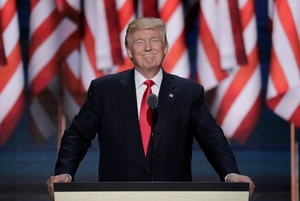
From top: Donald Trump and Denis O’Brien

In fairness.

Mark Malone writes:

….What’s even more striking, no media outlet even offers a hyperlink in its own self censoring coverage to the actual press release itself.

The press release [at link below] As we can see, none of it is original content, or even amounts to any sort of political analysis. Its simply copy paste of pieces, mostly uncontested facts already written online. Much of it from within Ireland.

Irish media outlets might consider their choice not to link or include any specifics outlined within ( eg O Briens donating to the Clinton Foundation whilst getting contracts from the US state department for mobile phone contract in Haiti) as pragmatic.

That I’m afraid is internalised logic, which any observer can see is based on internalising a fear of O Brien’s power and justifying something political as a business decision. And that’s a much bigger news than any copy paste job Trumps team fires out.

Trump’s Press Release re Denis O Brien in full (Mark Malone, Soundmigration)

Follow The Money (Donald Trump/Mike Pence)

Trump attacks Clinton over links to O’Brien (RTÉ)

Previously: Meanwhile, In The No Spin Zone

Pics: Getty, Rollingnews

Meanwhile…

redacted

US Republican Party strategist Karl Rove discusses Denis O’Brien, Digicel and Haiti on Bill O’Reilly’s show on Fox News during an item on Hillary Clinton and the Clinton Foundation..

Seems fair and balanced.

FIGHT!

Meanwhile: More Clinton Shenanigans In Haiti (Wall Street Journal)

Meanwhile…

Screen Shot 2016-08-02 at 16.11.56Screen Shot 2016-08-02 at 16.33.10

From top: Senior Counsel for Denis O’Brien, Jim O’Callaghan (right), at Dublin Castle for the  Moriarty Tribunal in 2010 and Denis O’Brien

Mark Tighe, in The Sunday Times at the weekend, reported that Persona – which is suing the State and Denis O’Brien over the awarding of the mobile phone licence to the businessman in 1996 – has been allowed a “leapfrog appeal” to the Supreme Court.

It follows the High Court ruling in April that Persona – run by Tony Boyle and Michael McGinley – could not use funds from a third party, Harbour Litigation, to fund its case.

Mr Tighe reported:

The High Court ruled that Harbour had no direct interest in the case so its funding of Persona would breach the laws of champerty, a criminal offence.

Both the state and O’Brien opposed Persona’s attempt to appeal directly to the Supreme Court.

In O’Brien’s legal submission, signed by two senior counsel including Jim O’Callaghan, Fianna Fail’s spokesman on justice, it was denied that Boyle and McGinley needed financial assistance to run the case.

… Since the Court of Appeal was established in 2014 to handle a backlog of appeals from the High Court, the Supreme Court has restricted direct appeals to only those issues of “public importance” and cases with “exceptional circumstances”.

The state had argued Persona’s appeal did not concern a matter of general public importance.

Both O’Brien and the state also argued there was no urgency to the case, which involves allegations that Michael Lowry, as communications minister, improperly awarded the licence to O’Brien’s consortium 20 years ago.

In its determination the Supreme Court, comprising the chief justice Susan Denham, William McKechnie and Elizabeth Dunne, said in light of constitutional principles of access to the court and access to justice, they considered Persona raised issues of general public importance.

“This application is one where there is in essence a single legal issue of general public importance which transcends the interests of the parties before the court in these proceedings, namely the application of the doctrines of maintenance and champerty,” it said.

“As the application may involve the issue of access to justice, and access to the courts, it is a matter of significant importance. The court is satisfied it is a case where leave to appeal may be granted from the Court of Appeal.”

… The Persona appeal will now go into a case management process before the formal Supreme Court hearing.

O’Brien case leaps to Supreme Court (The Sunday Times)

Pics: Laura Hutton/Sasko Lazarov (Rollingnews)

Screen Shot 2016-07-28 at 15.05.44

https://www.youtube.com/watch?v=7LYRUOd_QoM


Clinton Cash.

A new documentary based on Peter Schweizer’s highly controversial book, Clinton Cash: The Untold Story of How and Why Foreign Governments and Businesses Helped Make Bill and Hillary Rich.

So, it has a bit of a slant.

Himself (at 25 minutes)…

Much has alrerady been disputed by Digicel and The Clinton Foundation, in all fairness.

FIGHT!

Also alternatively and alternatively.

Thanks Deidre

000885bf-531

Screen Shot 2016-07-20 at 12.18.25tom hunerson

From top: IBRC logo; Senator Michael McDowell; Tom Hunerson

Yesterday.

In the Seanad.

Senators discussed the Commission of Investigation (Irish Bank Resolution Corporation) Bill 2016 which is at its second stage.

This is the Cregan commission which is examining sales of assets by State-owned IBRC, including the sale of Siteserv to Denis O’Brien €45.4million, while Siteserv owed Anglo €150million.

During the Seanad discussion, Senator Michael McDowell said the following:

As Senator Diarmuid Wilson stated, this commission of investigation arises mainly out of the Siteserv controversy. It is notable that on 25 April 2015, the former chairman of IBRC [Alan Dukes] stated that the board had rejected a Department of Finance proposal to appoint a senior civil servant to the board on the basis that such an appointment would be unsuitable.

In the same article in The Irish Times, he stated a Mr Woodhouse had been kept out of discussions regarding Siteserv because he personally handled Mr Denis O’Brien’s relationship with IBRC. He stated a different executive in IBRC, Mr Tom Hunersen, had handled the Siteserv transaction.

This is worrying because, three years earlier, a posting (in comments) appeared on the broadsheet.ie website suggesting Mr Aynsley, Mr Hunersen and Mr O’Brien were socialising together at the time when the transaction in case was taking place.

It is also worrying that Mr O’Brien was reported in 2014 by The Irish Times as having made a major investment in a Massachusetts-based IT firm in which Mr Hunersen was one of the moving parties. The former chairman of the IBRC claimed Mr Woodhouse had stepped aside from this transaction.

He seems to have re-emerged recently in the context of the story in The Irish Times that many Members of this House read last week. Again, the question arises as to whether there is a connection between him and Mr O’Brien.

A more fundamental question arises as to who is organising the campaign of intelligence-gathering of Mr [Mark[ Hollingsworth, the so-called journalist engaged in coming to Members of this House, among others, and passing himself off as one seeking to identify the source of leaks about Mr O’Brien’s dealings with IBRC. These are very serious issues.

This matter is particularly relevant because, according to the story in The Irish Times, a major British security firm was the recipient of the material collected by Mr. Hollingsworth in Dublin.

We heard later, according to evidence given in the High Court, that a USB key appeared on the desk of Mr O’Brien and that he, for the first time, discovered the material that Mr Hollingsworth was privy to in Dublin.

The use of an English security firm in this respect is not a new phenomenon in Ireland. We should remember also that there was elaborate industrial espionage and surveillance in the context of the takeover of the Independent News & Media group at the time between the O’Reilly interests and the O’Brien interests, if I may use that term.

In that case, newspaper reports indicated that 11 operatives operating from a Dublin hotel were engaged in fairly extensive surveillance of the then managing director of Independent News & Media and that it was eventually determined that an English espionage firm or intelligence-gathering firm called Esoteric lay behind that.

Surprisingly, Independent News & Media, which later came under the control of Mr O’Brien, largely speaking, has been unable to work out who commissioned that investigation.

I am also worried in another respect. It was reported in the media that Irish Water had concluded an extensive contract with a company in the Isle of Man [Another 9 or A9 Business Recovery Services] chaired by Mr Leslie Buckley and, in which, Mr Denis O’Brien was a large investor. He is described in its publicity material as a leading Irish entrepreneur.

The function of that company is to advise Irish Water against the hacking of its sites. It appears the main business of this company in the Isle of Man, which is owned by Mr O’Brien and chaired by Mr Buckley, an associate of Mr. O’Brien, concerns computer security and countermeasures against computer hacking.

Although no particular figure was put on the computer security services of Irish Water, it is interesting that it was suggested in the media at the time that, over five years, €1.2 million was spent on this kind of activity on the part of Irish Water.

One must bear in mind also that at least one of the newspapers controlled by Mr O’Brien has, since the emergence of the dispute about water charges and the legislation we considered in this House some days ago, run a fairly heavy campaign, with many editorials and articles, on the subject of Irish Water. This is a serious matter.

I will finish on two points. Last week in a different context, although Mr O’Brien had a walk-on part in it, the Ceann Comhairle, as Chairman of Dáil Éireann, publicly queried whether it would be necessary to introduce a system of fines to strengthen the powers of the Chair to prevent the abuse of Dáil privilege.

This House has its own Standing Orders, its independence and its own Committee on Procedure and Privileges.

As a member of that committee, I do not believe Members of this House are disposed to abusing their privilege at all, nor do I believe the use of financial penalties to preserve the privacy of important people the Irish political and economic environment should be permitted by this House. I do not believe we should go down that road. It is for the other House to make up its own mind on fines for its Members.

We must remember that these Houses are the defendants in a court action brought by Mr O’Brien. He has sued the institutions of this State. He has also sued individual Members of these Houses on occasion and has threatened to do so on many more occasions.

Free speech is very important. As far as I am concerned, the Cregan commission is dealing with just one set of issues, the activities of the IBRC, only some of which involve Mr O’Brien or companies connected with him.

However, there are other major issues to be borne in mind arising from the Moriarty report, which found Mr O’Brien had indirectly channelled the guts of €1 million to former [Fine Gael] Minister, Deputy [Michael] Lowry, after the awarding of a telecommunications licence to him.

It found that elaborate efforts to deceive the Moriarty tribunal had been made, including the falsification of letters to cover up the involvement of the relevant parties. I wish all speed and every success to the Cregan commission.

I welcome this legislation. Members have an obligation to be fair but not to be entirely impartial but it is important that these issues be dealt with in a process that is fair and impartial and, above all, has the means of establishing the truth, because the Irish people do deserve the truth.

Transcript via Oireachtas.ie

Previously: The Journalist Who Came In From The Cold

Timeline To A Killing