Tag Archives: Gemma O’Doherty

Screen Shot 2016-05-13 at 17.38.45

[soundcloud url=”https://api.soundcloud.com/tracks/263927803″ params=”color=ff5500″ width=”100%” height=”166″ iframe=”true” /]

You may recall the trailer for Gemma O’Doherty’s forthcoming documentary Mary Boyle: The Untold Story.

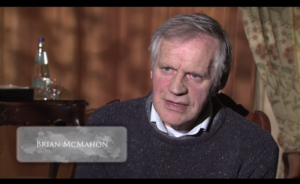
The trailer featured Bryan McMahon who was arrested and questioned for the disappearance of Mary Boyle.

The questioning occurred while he was serving a two-year sentence in Portlaoise Prison for the sexual assault of a young boy and for the indecent assault of the boy’s brother.

Last Friday Mr McMahon spoke on Ocean FM’s show North West Today – which was presented by Niall Delaney – about how he came to be a suspect in Mary’s disappearance.

Journalist Gemma O’Doherty also took part in the interview.

Niall Delaney: “Can we got back to, it was last year? You were arrested?”

Bryan McMahon: “2014.”

Delaney: “2014, sorry, two years ago, what happened exactly Bryan?”

McMahon: “Yeah, I was serving time, two years in fact, in Portlaoise for indecent assaults levelled against me by a member of the Garda Síochána and his brother. They levelled the charges against me, however…”

Delaney: “You were convicted in that case?”

McMahon: “I was..”

Delaney: “You were sentenced to two years I think.”

McMahon: “Convicted and sentences to two years with a year and a half for remission. And the gardaí arrived, I thought, you know, all I had to do now was just do my sentence, regardless of whether I fought my case or not. You know, I wasn’t able to fight my case with regards to the indecent assault because I wasn’t able I was just completely stressed out and weak, too weak. I was disappointed by the fact that the barrister and my solicitor said that the DPP, I pleaded not guilty to the first case and the second case, they said they want, now they want a guilty plea and I wasn’t able. I wasn’t able to pull myself together.”

Delaney: “OK.”

McMahon: “You know, however, the gardaí, however, arrived in January 2014…”

Delaney: “And you’d just been released from prison at this stage, is that right?”

McMahon: “No, I was still in…”

Delaney: “You were still in…”

McMahon: “I was still in prison, that’s right and they said that they wanted to interview me in relation to the disappearance of Mary Boyle, from her home. And I just thought, you know, that they just wanted to eliminate me from the enquiries and I thought nothing more about it. And how and ever, they came back again in July of that year and they said that they discovered that there was a lot of inconsistencies in my statement. Sure I didn’t actually make a statement at all. All they were doing was piecing together where I was and so forth. And these inconsistencies, one included the fact that they weren’t able to find out, through records in Finner Camp (?) as to where I was on that particular day but I explained very clearly to them that I was partial to the drop and that I was incapable of going out on any search.”

Delaney: “OK, well let’s put this in context. You were in, a member of the Irish Army, based in Finner Camp, near Ballyshannon, around that time, back in 1977.”

McMahon: “That’s right.”

Delaney: “Ok, so, when you were first questioned about Mary Boyle’s disappearance, obviously, you were surprised but you weren’t surprised because there was a Ballyshannon connection, isn’t that right?”

McMahon: “That’s right, it didn’t surprise me at all at least because I knew that everybody who had that connection with that area would be inevitably interviewed, you know, to…”

Delaney: “So there were inconsistencies they say, even though you say you didn’t give a statement but there were inconsistencies in your story.”

McMahon: “That’s right, yeah, that’s right.”

Delaney: “In what way?”

McMahon: “Well I think they only just said that as, you know, as a matter of fact, you know, I don’t think there was any, there was no grounds behind it, you know, because I know for a fact, it was just a few little pieces of information that I provided to them.”

Delaney: “Yeah.”

McMahon: “And then they said then that the Irish Army’s records stated that I was on annual leave but, in actual fact, I wasn’t on annual leave, I was on what was called a week’s patrol leave, where you do a week’s patrol on the border or for another other call, you could be called out for any other reasons, prison escorts which were on the agenda at the time. This patrol leave meant that I was on a week’s patrol and I was then off for a week’s patrol and when you’re off on a week’s patrol, when you’re off, as it were, you were free from duties but, nonetheless, you were still on standby in the event of something taking place.”

Delaney: “Ok and do you remember Mary Boyle’s disappearance and that incident? Is it clear in your memory?”

McMahon: “Oh it is of course, it’s very clear in my memory, yeah.”

Delaney: “Did you know the Boyle family? You knew…”

McMahon: “No, I didn’t know the Boyle family. I didn’t know the Boyle family who lived, Charlie, I believe was her father’s name, who lived down in some part of the lower end of Donegal. I only knew her mother who lived in Cashelard.”

Delaney: “OK.”

McMahon: “And her mother’s brothers and sisters.”

Delaney: “OK, so in July 2014, you were arrested, is that right?”

McMahon: “I wasn’t arrested then until October…”

Delaney: “October.”

McMahon: “2014.”

Delaney: “And the gardaí weren’t happy with aspects of your story so you were arrested – tell us about that.”

McMahon: “They arrived at the prison early in the morning and they wavered a document and they informed me that I was now being arrested under such and such an act, in relation to the kidnapping and disappearance of Mary Boyle from her home and at that very moment I thought I was just going to have a complete breakdown. And I just turned around and said to the prison officer in charge of that particular duty, I said to him, ‘no’, says I, ‘that’s not true’. I said, ‘I didn’t have anything whatsoever to do with her disappearance’ and I didn’t turn to the guards to say it because I had an inclination that something was amiss here, something wasn’t right. And then they said they were taking me to Mullingar, or the prison officers said, ‘you’re being taken to Mullingar for questioning’. Now I was very disappointed about that fact because I believed they shouldn’t have sent me with these three detectives to Mullingar, they should have provided me with a prison escort.”

Delaney: “OK.”

McMahon: “To and fro from Mullingar.”

Delaney: “You were quite upset by this?”

McMahon: “I was very, very upset, I actually thought I’d never recover from it and I was very, very unwell the whole way up to Mullingar.”

Delaney: “Yeah.”

McMahon: “And they just took this all very, very lightly of course, you know, and kind of, more or less, told me to pull myself together.”

Delaney: “And were you very worried?”

McMahon: “I was very, very worried, I was very worried because I said, ‘this is the last straw in my life’. I said, you know, I said, ‘I’ll never recover from this, I said the whole world, I thought in my own mind, would turn completely against me. Now I’m being convicted of killing a child, an innocent six-year-old child. So however, anyway, we arrived at the Mullingar Garda Station and they tried to contact a solicitor that I nominated and that solicitor wasn’t available, that solicitor actually was out on holidays abroad somewhere. And then it was up to them to nominate a solicitor from the local area in Mullingar, to which they did. And I was very satisfied with her. Except for one matter that I was questioned was she, she brought the two detectives who were interviewing me in the interrogation room out into a corridor. Now I was very disappointed about that, that this was done underhanded, I should have been informed of what that represented but she didn’t.”

Delaney: “You spent 48 hours in custody Bryan, is that right?”

McMahon: “That’s right, yeah. And, furthermore, on that evening, when they retired from questioning me, the doctor was called in and I suffer from a chronic ailment and I’m on medication constantly for this ailment and the doctor came in and, lo and behold, he forgot the medication. I thought that was an absolute disgrace because I thought it was another method of weakening me, my whole system down, I was weak enough as it were, as it were, you know.”

Delaney: “OK, well obviously, there was that Ballyshannon connection but was there a direct link do you think or was part of the reason your arrest the fact that you did serve time in prison for indecent assault.”

McMahon: “This would be the case, no doubt, that these people that levelled these allegations against me, that that was partially the connection but I don’t think so, I think this was only just an excuse.”

Delaney: “You still have, well I’ll come back to you about the Mary Boyle case in a moment, I want to bring Gemma O’Doherty in, whom we spoke to earlier in the week. Gemma, good morning to you again.”

Gemma O’Doherty: “Good morning, Niall.”

Delaney: “Thanks for joining us. You’ve interviewed Bryan as part of your documentary which will be aired shortly, we were watching the trailer about it. What do you make of Bryan’s arrest and his detention and questioning?”

O’Doherty: “Well there are so many aspects of this case that have shocked me since I took it on about a year and a half ago but probably Bryan’s whole involvement in it is one of the most disturbing aspects because we are looking at the appalling vista of a citizen being framed by our police force for the murder of a six-year-old child. I’ve got to know Bryan McMahon and what he hasn’t told you about is how in the early days of his childhood, as a young boy, he was put into a foster home in Cashelard where he was physically abused by a woman who has been deemed unsuitable to look after children and as a result of that and other care, well so-called care, that he received at the hands of this State, he received a compensation from the Redress Board. Bryan was a very vulnerable citizen, having endured that abuse, how he has come out the other end of it, I do not know, but he has, and he’s got on with his life. And another very shocking aspect of this is the fact that the chief suspect in this case, the man that Ann Doherty, Mary’s identical twin, believes is responsible for her sister’s rape and murder has never been arrested by An Garda Siochana and this is the person that senior officers, who were the first on the scene, believe was responsible, why has that man, never to this day been arrested and why has another individual who had absolutely nothing to do with the child’s murder been arrested? These are all questions the public have a right to know about.”

Delaney: “Bryan, you had a difficult past, as Gemma pointed out, you…”

McMahon: “Well it was difficult but now, when I realise that the terrible suffering that Mary Boyle endured, apparently in the last moments of her tender life, it makes me feel very wimpish to start complaining about the journey that I went on, you know? It was my journey, I suppose, in comparison to Mary’s, was very piecemeal, I would imagine.”

Delaney: “Why are you still interested in the Mary Boyle case. A lot of people who would have undergone the experience that you had to go through would say, ‘well, that’s the end of that. I don’t want to ever hear about that case again. I don’t want to be involved. I’ve been questioned, I wasn’t charged, it’s just a bad memory in my mind’. Why do you still, why are you still interested in the Boyle case?”

McMahon: “Yeah because I’m the very man now who’s the number one suspect in this case.”

Delaney: “Do you still think you’re the number one suspect?”

McMahon: “Oh I am without a doubt. Well, for example, the other day, the gardai arrived at my door, they were there in the morning but I didn’t make it out to the door on time because there’s no bell on the door and they requested a DNA sample from me. I got a shock when I heard that because I knew that this was not right and even, because, for the simple reason being there was a DNA sample taken from me in the interrogation room in Mullingar and I’m not sure that the man who took the sample was qualified to do so. He was one of the detectives involved in the investigation and, you know, whilst I recorded all this stuff but I was unable to speak out, my mind about it, in relation to that and then these detectives on the 9th or 10th of May there past, it was afterwards then they provided me with a document in relation to that sample.”

Delaney: “Some will say they’re doing their job, they’re trying to get to the bottom of this very disturbing case. A young girl went missing, has been missing since 1977.”

McMahon: “Yeah, they may be doing their job certainly but I’m the man that’s still in the forefront of their mind and I’m very disappointed at this point in time that two years have elapsed and the Garda Commissioner has never come into the scene on this matter. Now I would hope that the Garda Commissioner would now, sooner than later, come in, in other words, if you like, to rescue me.”

Delaney: “That’s the way you see it: you need rescuing?”

McMahon: “That’s how I see it Niall and there’s no other way around it. And when I arrived back that evening, from Mullingar, the 48 hours interrogation, the doctor, Dr McFadden was very, very concerned for my well being and brought me in immediately, requested that the prison officers bring me in immediately, very early in the morning which is unheard of in the prison and ask me if I was OK. And she also told me, she said, ‘Well Bryan, you know, I have been in contact with a friend of mine who has a connection, who has a connection with Charlie Doherty, or Charlie Boyle, and they had said that Bryan McMahon is no way involved in this whatsoever. And she says you can be reassured on that matter, Bryan.”

Later

Delaney: “Bryan, I mentioned earlier, in the early 1980s, you were, you ran this amusement arcade in Sligo, isn’t that right? Called the Jam Pot which many people will remember.”

McMahon: “That’s true, Niall, that’s true and it was at that point in time, in fact, that I was recovering from alcohol for years of alcohol abuse. I just got as it were, an inner knowing with regard to my dilemma and I just stopped drinking there and then and I went to Alcoholics Anonymous for quite a number of years and I got great support there and met a lot of friends there. But still, and I must say, truthfully, that my personality was very badly distorted, you know, from the formative years of my life, I carried that with me to this day, I can’t change the person who I’ve become my personality, until the day I die, will always be…”

Delaney: “And was that you think part of the reason why you ended up in court for indecent assault of two young boys?”

McMahon: “That I’d say, no, I’d imagine, I would imagine that this whole set-up was starting to build up a momentum and I believe that it started after I received that sum from the Redress Board. Because it’s very, very ironic that shortly after I received the money, two gardai arrived on my door and informed me that I was being arrested on suspicion of indecent assault.”

Previously: Mary Boyle’s Untold Story

img_2698
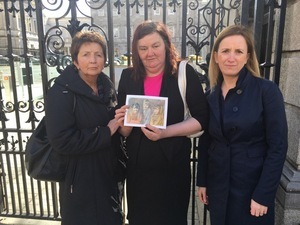
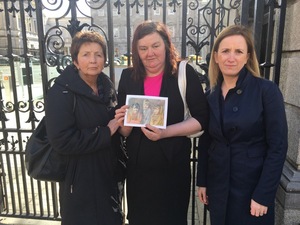
From left: Margo O’Donnell, Ann Doherty, Mary Boyle’s twin sister and Gemma O’Doherty before meeting Fianna Fáil leader Micheál Martin last month

Ahead of a forthcoming  independent documentary on Ireland’s longest missing child case.

Ann, Margo and Gemma urged Martin to initiate a Dáil debate on the serious allegations about the Garda handling of the case, and to support their call for an inquest into Mary’s death.

A Fianna Fáil spokesman said after that “All of the claims made to Deputy Martin have been forwarded to An Garda Síochána and the Garda Ombudsman”, despite the fact the women have no faith in either of these organisations…

Margo said to me after the meeting: “We would have got nowhere with this if it wasn’t for Gemma. She’s the only one who looked at this and saw there is a case to answer here, for justice for that wee girl.”

….The establishment does not like Gemma O’Doherty.

Her former employer, the Irish Independent, made her compulsorily redundant in August 2013. This happened in the aftermath of her investigation into the Garda wiping of penalty points brought her to the front door of the home of former Garda commissioner Martin Callinan.

Editor in chief at Independent News and Media, Stephen Rae, called her a “rogue reporter”. She was made redundant a few weeks later.

Her investigative instincts appear to have been vindicated, however, and Callinan retired in March 2014 because, he said, “recent developments were proving to be a distraction from from the important work that is carried out by An Garda Síochána”.

Gemma received an abject apology at the resolution of her defamation suit against Independent News & Media in January last year. The organisation and Rae acknowledged “the exceptional work of multi-award winning investigative journalist Gemma O’Doherty” and accepted she had “acted at all times in a professional and diligent manner”.

I have heard political advisers say of her: “She just won’t let it go.” In other words, she’s not easily fobbed off.

What she sees in the Mary Boyle case is political interference in a Garda investigation into the death of a child, and she just won’t let it go.

…It’s time to stop fobbing her off. It’s time a “wee girl” called Mary Boyle got justice.

Mary Boyle’s disappearance and the 40-year fob-off (Kitty Holland, irish Times)

Previously: Mary Boyle case on broadsheet

This morning.

Mary Boyle’s sister Ann Doherty (centre) with friend Margo O’Donnell and journalist Gemma O’Doherty  on their way to meet Fianna Fáil leader Micheál Martin to discuss Garda allegations that a Fianna Fáil politician interfered in the Garda investigation into Mary’s disappearance.

Mary was six years old when she vanished on her grandparents’ remote farm near Ballyshannon, Co Donegal on March 18, 1977.

Previously: Mary Boyle’s Untold Story

Pic: Gemma

Screen Shot 2016-04-24 at 11.09.48
https://www.youtube.com/watch?v=LtN19gKGY1Y&feature=youtu.be

The trailer for a forthcoming documentary, Mary Boyle: The Untold Story, written and directed by investigative journalist Gemma O’Doherty, about the disappearance of Mary Boyle in Donegal in March, 1977.

It includes interviews with retired sergeant Martin Collins and former detective inspector Aidan Murray (top) who recall a phone call made by a politician to gardaí, during the investigation into Mary’s disappearance, and how the phone call led to certain people not being arrested or questioned.

Mr Murray remembers how, during one interview, he “suddenly got a wee nudge” from his superior officer and was effectively told to “ease off” while questioning a man.

Mary Boyle: The Untold Story will be available in full in the coming weeks.

Previously: Mary Boyle on Broadsheet.ie

To Journalists

Update: Listen to Gemma discuss Mary Boyle The Untold Story on Highland Radio [April 30]

gemma

Gemma O’Doherty at the University of Limerick last week


The opening address at last week’s Journalism In Times Of Crisis conference at the University of Limerick was given by Gemma O’Doherty.

Gemma was fired from the Irish Independent while investigating the quashing of then Garda Commissioner Martin Callinan’s penalty points.

Gemma told the conference:

“I’d like to thank Henry Silke and University of Limerick for organising and hosting this important conference. Reporters who work at the coalface of investigative journalism in Ireland need the support of our colleagues in academia, especially when it is so lacking within the media itself.

These are very difficult times for journalism in Ireland.

Those of us who investigate corruption in public office make ourselves and our sources extremely vulnerable to those in power who would intimidate us, monitor our activities, threaten our safety and try to silence us.

In return, we receive almost no support.

We work in an era where a culture of fear and timidity stalks many of our newsrooms. It has bred a generation of journalists who behave less like dogged agents of the public interest and more like compliant diplomats and spin doctors constantly looking over their shoulders and towing the party line.

They have forgotten or chose to ignore the true function of our still noble vocation: to hold power to account, to comfort the afflicted and afflict the comfortable, to defend the public’s right to know, to seek the truth and report it.

In this new media landscape where many Irish journalists can no longer do their job without fear or favour, the greatest loser is democracy. A robust, independent, adversarial press is the lifeblood of a functioning democracy and a free society.

In Ireland in 2016, we have nothing close to that.

When Enda Kenny came to power in 2011, he promised a new era of integrity, accountability and transparency. But as a journalist, when you ask questions of a state press office, you hit a brick wall, more often than not.

I would argue that press freedom and the ability of the media to hold power to account is more compromised today than at any other time in the history of the state.

This has no doubt contributed significantly to the crises we have in policing, health, housing and water services.

This new era of cowering journalism has come about largely, but not only, because so much of the media has been allowed to fall into the hands of so few.

The fact that many of us now refer to the biggest owner of Irish media as ‘Redacted’ speaks volumes. One big voice has far too much power and prominence in our small country.

Not all media moguls exert the chilling effect that some do over their newsrooms. I spent most of my 17-year career at INM working for Tony O’Reilly. He invested in decent journalism and good writers. He understood newspapers, and while he was not perfect, by and large he left editors to get on with it.

And then there is Denis O’Brien.

Denis O’Brien, who attempted to bring in a so-called journalists’ charter that challenged the right and duty of reporters to engage in adversarial journalism.

Denis O’Brien who was reported to the United Nations for making legal threats against journalists.

Denis O’Brien who last year managed to silence most of the Irish media from reporting a speech in our parliament.

Denis O’Brien who threatened to sue a website whose sole purpose is to engage in satire, that most precious form of free speech.

Is it healthy for democracy that someone who takes such an interest in silencing our right to speak be in control of so much of our media? I don’t think so.

I don’t make any distinction any longer between RTÉ and the O’Brien-owned media. If anything, I would hold more disdain for the state broadcaster because it is failing its public service remit so blatantly and really does deserve the name it is more commonly known as on social media: ‘RTEBIAS’.

It seems to disregard the fact that it is accountable to the public who pays so that it may exist.

There are so many examples of this, it has almost become the rule rather than the exception.

We saw it in its often farcical coverage of the general election which undoubtedly affected the final poll; in its bizarre reporting of the Mairia Cahill case, Slab Murphy and the Special Criminal Court; in its failure to cover allegations about Finance Minister Michael Noonan and his role in the foster care scandal; in its refusal to cover cases of gross corruption in our garda force including the cover-up of children’s murders.

There is no doubt that a culture of institutionalised complacency now dominates RTÉ where some presenters earn more than David Cameron and Barack Obama, and certain journalists see themselves as celebrities, appearing on the cover of Hello-style magazines and red carpets in designer dresses.

When they are not interviewing each other, they’re rolling out the same clique of voices and seeking to rehabilitate people who’ve been disgraced in the public eye.

At the time of my firing, I was immersed in many stories about corruption and wrongdoing in the criminal justice system. I was working with bereaved families whose loved ones had been killed in violent circumstances.

These families were alleging grave wrongdoing in the gardai but when they approached certain journalists in establishment outlets, they said their cases were not being taken on board and they got the cold shoulder.

In most cases, their stories were compelling but the families were left with a sense of abandonment that the very people who should have given them support failed them.

In doing so, they also failed the public interest.

One of the cases I’m investigating is that of Mary Boyle.

Ireland’s youngest and longest missing person was six when she was murdered during a visit to her grandparents’ remote farm in Donegal in 1977.

The authorities have failed to bring the chief suspect to justice amid allegations of garda corruption and political interference in the case.

In March, her twin sister Ann and I visited the US Congress to lobby for justice for her as that door has been firmly shut here.

Despite countless requests to RTÉ to cover this important visit, they refused to inform the public about it over the airwaves.

Was this out of fear that it might bring the Phoenix Park into disrepute and shine a light on corruption in the gardai? One has to wonder.

So what is the effect of an obedient, cowardly media on society?

Joseph Pulitzer once said that a cynical, mercenary press would in time produce a people as base at itself.

There has certainly been an attempt by some segments of the media to dumb down the population, and when citizens start to challenge authority and engage in dissent, they refuse to report those challenges fairly.

A vivid example of that has been the bizarre coverage of the Irish Water movement and the so-called ‘sinister fringe’.

[This] week, a journalism conference in Kerry will be opened by Noirin O’Sullivan who has presided over a litany of scandals in her time as Garda Commissioner. Joan Burton and Frances Fitzgerald are among the other speakers. That really says it all.

We need to smash the cosy cartel that exists between the press, power and the police in this country because it is so damaging to the public good.

I would like to mention some notable exceptions in the Irish media who do try to prioritise the interests of democracy in their journalism: The Sunday TimesIrish Examiner, Irish Daily Mail and Irish Times, and, of course Broadsheet and Phoenix.

But trust in media is understandably on the wane because the public know that so many of the issues that matter most to them are being skewed or ignored.

However, there is a bright side to all of this. This is a very exciting time to be a journalist.

As many traditional newsrooms become more focused on protecting plummeting revenues and their friends in power, investigative journalists are finding new ways to tell stories and release information and high quality content into the public domain by cutting out the middle man.

The internet has been our greatest resource in this regard.

In my own area – corruption in the criminal justice system – we have seen how documentaries like ‘Making A Murderer’ can have such a huge impact and do a lot of public good in the process.

Publicly-funded investigative websites are beginning to challenge old media where editors hold off running stories for fear of upsetting the establishment and denying the public their right to know.

Here in Ireland, a team of our finest investigative reporters have set up a new website called Righttoknow.ie to push for transparency and accountability in public life.

We must embrace this change and realise it is for the betterment of our profession and society.

But we also need to start looking at our media colleagues and asking how the journalists of the future will protect the public interest. Will they be boat-rockers who challenge authority and dig until they get answers? Will they have the tenacious rat-like cunning that proper editors once demanded of their reporters? Will they chase yarns as if their lives depended on it?

Hopefully all of the above but it is the job of our universities to nurture those characteristics in them.

I’ll finish with the words of Joe Mathews, a former reporter with the LA Times, when he spoke about how the public interest was so endangered by the crisis in journalism.

‘Much of the carnage of the ongoing media industry cannot be measured or seen. Corruption undiscovered. Events not witnessed. Tips about problems that never reach anyone’s ears because the ears have left the newsroom. With fewer watchdogs, you get less barking. How can we know what we will never know?’

Our profession is on its knees, but it is worth fighting for. We have a duty to fight for it. We need to stand up for courageous journalism whose primary focus is the public interest.

We need to read it, to buy it, to support it, because without it, the health of our democracy will remain in terminal decline.”

Previously: Meanwhile In Limerick

Are You A Journalist?

Women in media conference (sponsored by The Irish Times, April 15 – 17)

CUMdAVMXIAARX-d

Solicitor Darragh Mackin, Margo O’Donnell, Taoiseach Enda Kenny and Mary Boyle’s sister Ann Doherty in Government Buildings last November

Mary Boyle’s twin sister Ann Doherty is travelling to Washington this morning for a series of meetings with Irish-American politicians, lobby groups and organisations – to speak about the 1977 disappearance of Mary in Ballyshannon, Co. Donegal.

During the visit, Ms Doherty is expected to call for the resignation of Justice Minister Frances Fitzgerald and Garda Commissioner Nóirín O’Sullivan.

Journalist Gemma O’Doherty, who will travel with Ms Doherty, writes:

The visit is the latest step in Ann Doherty’s battle for justice for her six-year-old sister, which has taken her to the parliaments of Stormont, Brussels and Westminster.

Ms Doherty will inform members of the United States Congress that Mary’s killer is being shielded by An Garda Siochana and that a politicians interfered in the investigation shortly after the murder, ordering that certain people were not to be considered suspects.

During their visit to Washington, they will visit Capitol Hill to meet US congressman Brendan Boyle whose father comes from Donegal, former Congressman and lawyer Bruce Morrison, best known for his work on the Irish peace process and immigration reform, and other members of the House of Representatives.

They will also attend a number of St Patrick’s Day engagements and meet the Taoiseach, Northern Ireland First Minister Arlene Foster, Deputy First Minister Martin McGuinness and the Irish ambassador Anne Anderson.

They will brief the Centre for Missing and Exploited Children and the Ireland Fund about the case, as well as a number of organisations lobbying on justice issues.

‘The key purpose of this trip is to open Irish-America’s eyes and the US authorities to the wide scale corruption in the Irish police and the criminal justice system,’ said Ann Doherty.

‘There are many horrific cases of cover-up by the gardaí in the Republic that Irish-Americans and anyone who cares about Ireland need to know about. The police have protected my sister’s killer for almost 40 years.

‘For most of my adult life, I have known who murdered Mary. He is walking around Donegal today, immune from prosecution. Instead of arresting him, the gardai have targeted me, and others who have stood up for Mary’s right to justice, in what can only be called an insidious campaign of intimidation.’

Ann Doherty met Enda Kenny in November 2015 but says the situation has deteriorated further since their meeting and she feels let down by him.

Mr Kenny was given information about the murder in 2011, which he admitted recently in Dail Eireann that he passed to the gardai but failed to follow up.

In December, Ann asked An Garda Siochana for a search of a location in Donegal where she believes Mary’s remains may be.Her request has been ignored. She has also been denied the right to an inquest into her late sister’s death.

‘The gardaí have sufficient evidence to bring her killer to justice, but to do so will reveal a sordid cover-up by police and politicians,’ said Ann.

‘No country can call itself a democracy when its police force perpetuates the cover-up of a child’s rape and murder. That is why the rest of the world must know about Ireland’s record when it comes to policing, justice and protecting its children.’

Mary Boyle on Broadsheet

silchester

Silchester Crescent, Silchester Park, Glenageary, Co Dublin

Journalist Gemma O’Doherty is researching a number of unsolved Irish murder cases including the killing of Raonaid Murray.

Following a post on an overlooked suspect in the 1999 murder earlier this month, people, including friends of the teenager, contacted Gemma to share their concerns about this person and the first Garda investigation.

Gemma writes:

Some time ago, I was approached by an individual who gave me information about the murder of Raonaid Murray.

When we met, I was immersed in a number of alleged Garda corruption cases, most of them involving bereaved families battling for justice over violent deaths of relatives that they believed had been covered up.

The information I was told was disturbing and would cause public revulsion if it turned out to be true.

When I first started to probe the case, I was instantly struck by what seemed to be a veil of silence shrouding it. A bright teenager was murdered in one of the most affluent parts of Dublin yet nobody seemed to want to talk about it.

Raonaid, the youngest daughter of a school principal, had just completed her Leaving Certificate in the Institute of Education in Dublin when she was killed.

The circumstances of her murder were mystifying. She wasn’t sexually assaulted. She wasn’t robbed. Her killer was almost certainly known to her yet the person is still on the loose.

The Garda investigation had been littered with inexplicable oversights which included the failure to carry out a search of the escape route the perpetrator most likely took.

When I began my initial inquiries some doors were politely closed in my face at the mention of her name. There seemed to be a sense of relief that the killing had been all but forgotten. Some close to the case told me to mind my own business.

I tracked down certain people I was told might hold answers to the many inconsistencies in the case but they clammed up when approached.

For many months now, I have been scrutinising allegations of police malfeasance in the case, and have little doubt that many aspects of the investigation are too bizarre to fall into the category of calamity or error.

I came into contact with others who had deep concerns about Garda behaviour in the case and aspects of the investigation that didn’t add up.

Their concerns centred mainly on one individual they claimed was dismissed as a person of interest early on. They wanted to know why.

Since writing about the suspect, some of Raonaid’s closest friends have come forward with testimonies of their experience with officers in the aftermath of her murder.

They claim information they offered about what might have happened was sometimes ridiculed and dismissed, leaving them disillusioned that there was any real determination to bring the killer to justice.

Some believe they were targeted for ‘petty drug use’ and that ‘disrespect and insensitivity’ were shown towards Raonaid and their huge loss at her death.

One of her closest friends, who spoke in anonymity, called the investigation ‘farcical, unprofessional and insulting to Raonaid’s memory.’

She recalled:

“When the murder happened, we just went into complete shock. But our anguish at losing her was deepened because of the way the guards behaved towards us.”

“They seemed to dismiss things we said, and appeared at times not to be pursuing avenues you would think might be explored.”

“When they talked about us and Raonaid, it seemed they were implying that she was easy with men and that our lifestyle was a sordid, delinquent one, as if that somehow had a bearing on what had happened, regardless of the fact that it wasn’t remotely true to start with.”

“This struck me not only as rude but also a counter-productive way to garner potentially useful information from grieving teenagers. They seemed to also focus in on small-time drug cases they tried to uncover during the investigation which was irrelevant and a deterrent for those who may have wanted to talk to them about the case.”

I have received more information which corroborates these and other claims made by  Raonaid’s friends. These sources confirm allegations that the Garda investigation failed to seek potentially vital evidence from key witnesses about a potential suspect in the murder.

They are concerned at the fact that they have never been interviewed about the person, and that gardaí never approached them for statements, even though they would have been obvious sources of information.

There are claims the person is allegedly being shielded by some people known to them and senior elements within the gardaí.

They say this individual suffers from ‘chronic anger’ and that has had a life littered with violent episodes. Since Raonaid’s death, this person has been involved in a number of unprovoked assaults.

Lawyers along with a victims’ rights group are currently assessing the option of taking an action to the European Court in Strasbourg, arguing that Article 2 of the European Convention on Human Rights – the right to an effective, prompt and impartial investigation – has been breached.

They believe that Raonaid has been deprived of her constitutional right to justice.

They are also determining whether people who did not act on knowledge about the murder, because they may have been protecting the killer, could face prosecution for perverting the course of justice and withholding information.

Enda Kenny has been made aware of these developments but has has not responded

A series of questions about the case sent to Garda Commissioner Noirin O’Sullivan also remain unanswered.

Last week, without my permission, the Garda Press Office gave my contact details to an officer who has been on the case for many years.

I was disturbed after a phone call with him, which was, in my opinion, an attempt to intimidate me from investigating the case further.

This is now the subject of a GSOC complaint, one of several I have had to make in recent years though I hold little faith in it being upheld.

More than a year ago, I went to see Raonaid’s parents Jim and Deirdre Murray but they told me they did not want to discuss the case with me, and to contact the Gardaí.

I will publish more details on this case soon.

Gemma O’Doherty

Previously: An Overlooked Suspect

2015-03-28_iri_8173451_I1

Raoinaid Murray

Gemma O’Doherty writes:

A key suspect in the murder of Dublin teenager Raonaid Murray has been shielded for almost 17 years due to Garda misconduct during the original investigation, a source close to the case has alleged.

The suspect knew the 17-year-old student well and had a personal grudge against her, the source claims.

Raonaid was repeatedly stabbed just metres from her home in Silchester Park, Dun Laoghaire, Co Dublin on September 4, 1999.

Her body was found by her sister minutes after the attack, which took place around midnight. The murder weapon is believed to have been a kitchen knife.

The original Garda investigation was crippled by a litany of ‘mistakes’ which many say point to a cover-up.

It has come to light that ever since her killing some gardai had evidence that the suspect knew her well.

Raonaid was not the victim of a sexual assault or theft.

The alleged motive for the attack centred around a personal disagreement between her and her attacker, the source asserts.

The suspect was prone to violent outbursts and has since attacked at least one other female.

It is alleged the individual has never been questioned properly by An Garda Siochana for Raonaid’s murder and was treated leniently in the early stages of the investigation.

After the killing, a relation of the suspect expressed serious concerns about their involvement but no action was taken.

Unusual behaviour by the individual in the period after the murder, and beyond, was also ignored.

The person subsequently came to the attention of gardai in relation to other matters.

New evidence has also emerged aboutthe behaviour of the lead officer in the original investigation, Detective Inspector Eamon O’Reilly

His failure to investigate vital evidence in the days after the murder provided the key suspect with immunity from investigation, claims the source, who adds that suspicious activity by other individuals who knew the suspect was ignored.

It is also believed that a house the suspect attended on the night of the murder was never adequately searched despite a number of unusual events that took place there.

A Cold Case review of the case, which began in 2008, identified several mistakes in the original investigation including the revelation that no search of the killer’s potential escape route was ever carried out.

Now in their 30s, the suspect lives periodically in Dublin. They are prone to aggressive outbursts, takes medication for violent mood swings and has assaulted at least one other woman. The individual has also been in psychiatric care.

Pic: An Garda Síochána

Raonaid-Murray-scene-190115117

Raonaid was the daughter of Deirdre and Jim Murray, a principal in a local boys’ school. She had two older siblings Daniel and Sarah.

She had just completed her Leaving Cert when she was killed and was hoping to study Arts in UCD.

An avid reader who loved poetry, her dream was to become a professional writer.

At the time of the murder, she was working in a clothes shop called Sally West in Dun Laoghaire Shopping Centre and was preparing to repeat the Leaving Cert at the Institute of Education on Leeson Street.

On the night she was killed, she finished work at 9pm and went for a drink with a friend in Scott’s Bar, a short walk from her home.

She left at about 11.20pm, and was planning to go home and change before going to a night club.

When she got to Silchester Crescent, a laneway close to her home, she was heard having a row with a person she knew. Witnesses heard her telling the person to ‘Fuck off’ and ‘Leave me alone’ before letting out a loud scream.

As she tried to drag herself away, the killer continued to attack her until she could no longer walk and collapsed. She died at the scene.

Claims several years ago that a blood-marked kitchen knife was found on the rooftop of an abandoned building very near the murder scene have never been formally verified by Gardai.

Gemma O’Doherty


18806-robert-black-the-serial-killer-is-due-to-be-sentenced-on-thursdaymaryboyle

Robert Black and Mary Boyle

Robert Black, who was serving 12 life sentences for the murders of four schoolgirls in the Eighties – three in Britain and one in Northern Ireland – has died in Maghaberry Prison in Co Antrim.

In reports about his death today, several Irish media outlets have linked Black to the unsolved case of Mary Boyle – who was six years old when she vanished on her grandparents’ farm near Ballyshannon, Co Donegal on March 18, 1977.

Journalist Gemma O’Doherty – who has previously reported on Broadsheet that Mary’s twin sister Ann Doherty believes she knows Mary’s killer, a person who is still alive and living in Ireland; and that there was political interference in the case – spoke to Jonathan Healy on Newstalk’s Lunchtime about this reported link.

Ms O’Doherty’s interview comes a month after Ann wrote to and asked the Garda Commissioner Nóirín O’ Sullivan to search particular sites that she believes may contain her sister’s remains. Ann’s requests have gone unanswered to date.

Jonathan Healy: “Have you any idea Gemma, how Robert Black and his name became linked to the disappearance of Mary Boyle?”

Gemma O’Doherty: “I don’t actually and it’s a very sinister, has been very sinister through the years, that his name was linked to the case. And certainly Ann Doherty, Mary’s identical twin is very disturbed, yet again, by these allegations being made by certain quarters that he had anything to do with the murder of her six-year-old sister. It is the case that Ann believes, and more importantly a number of very senior officers who were working on the case at the time, that Mary was murdered by somebody known to her. Mary Boyle did not know Robert Black.”

Healy: “And this crept in over the years because let’s face it, Robert Black was a particularly nasty individual, he was jailed for a number of crimes, and was linked to a number of other disappearances and suspicious deaths in and around the British Isles. Could it just be the case that because he was nasty and because Mary’s case was unsolved people put two and two together and came up with five?”

O’Doherty: “Well they certainly did come up with five but I think we need to bring your listeners back to 1977 when Mary was visiting her grandparents’ extremely remote farm outside Ballyshannon. Just four miles from the border with Fermanagh, this part of the country was one of the most heavily policed at the time, there were at least three permanent Garda checkpoints operating 24/7 because this was the height of the Troubles in northern Ireland and on the northern side, the RUC and the British Army had a number of units there which were operating permanently. The possibility of, I believe this individual drove a van, the possibility of him coming through the border when there was such a heavy police presence, it’s actually laughable if it wasn’t so serious. Really people need to know the landscape that we’re talking about. The nearest wrote was a long distance away and it’s just inconceivable had anything to do with it. There were three cars accounted for on the day, that were in that immediate area and they have been ruled out. The evidence points in a very clear direction and it’s certainly doesn’t, and never did, point in the direction of Robert Black and it is very disturbing.”

Healy: “You have spoken to Ann today, on the back of these reports, how has she reacted to this name being linked with the disappearance of her sister?”

Doherty: “Well, Ann, through the years, you know it’s almost been 40 years and she’s been trying to find her little sister, her identical twin. She has suffered hugely through the years, she has taken on very serious forces in this State and stood up against them and she’s suffered hugely and I would ask, on behalf of my profession, that they think about her today before they make allegations that they cannot possibly support. But it’s not only Ann we should be talking about today, we should be thinking about Mary Boyle who is our youngest missing citizen. I believe, and so does Ann and so does a number of officers, that she was brutally raped before her murder and we also believe that her rapist and murderer is still at large in this country and is a danger to other children and that is what is key about this case.”

Healy: “You have been involved in this campaign for a while, you’ve been working with Ann and Margo O’Donnell who has also made statements to the gardaí, they’ve met with the Taoiseach as well, they’ve tried to progress this, they have had I suppose, in getting through doors, some success, but are they confident today that the authorities are taking a fresh look and a serious look into Mary’s case?”

Doherty: “Well there’s no evidence to suggest that. It’s almost a month since Ann and her lawyers requested that two new sites in the immediate vicinity of Ballyshannon be searched and their requests have been dismissed, they’ve been ignored, they haven’t received any sort of reply. Ann is pushing forward for an inquest, Mary Boyle deserves and inquest and it is hoped that the truth will come out in an inquest because, certainly, she and other officers who are close to the case and who worked on it at the time have no faith in An Garda Síochána in relation to this case.”

Listen back in full here

Related: Convicted child killer Robert Black dies in prison (RTE)

Previously: Mary Boyle And Political Interference

Pic: STV

Thanks Paddy