



Yearly Archives: 2016

Bruuuuuce on the Late Late!
Yay.
From London.
Oh.
Gareth Naughten writes:
For the first time in almost 30 years, The Late Late Show is leaving the country for an interview with ‘The Boss’, Bruce Springsteen. The Late Late Show very rarely leaves the RTÉ campus, let alone the country, and it has been many years since a guest was interviewed outside of Ireland. The last time is believed to have been when Gay Byrne travelled to London to interview Hollywood star Jane Fonda in 1989….
Host Ryan Tubridy said:
“For one night only, The Late Late Show is making a small detour to London for a very special guest. This is very unusual, and not something we do very often, but when The Boss comes calling, you just can’t say no. It is a first in my time as host of The Late Late Show and we hope that people will roll with it because we felt he was someone worth chasing. The Irish people have a particular love of Bruce Springsteen, and him for us, and people will see that in the interview”
*kicks telly*
The Late Late Show, RTÉ One, Friday at 9.35pm
Pic: CBS

IMLÉ – Album launch and video for single Críochfort
What you may need to know…
01. Last time we checked in with Gaelgóir funk/hip-hop outfit IMLÉ, they’d been doing well with single Fún Orm and preparing for their debut full-length.
02. The aforementioned is now complete, and releasing via Gael Linn this month.
03. Streaming above is the video for new single Críochfort, featuring the Hot Zombie collective, and directed by the band’s Fergal Moloney. On the song’s subject matter, the band writes:
Tá neart faoin saol seo le bheith dóchasach faoi. Déanann Críochfort plé ar an gcaidreamh casta atá againn mar dhaoine leis an domhan. Tá rudaí diúltacha agus dearfacha ag baint leis, ach sin cuid den tsaoil ina maireann muid.
04. The band launches the record next Thursday at the Bello Bar in Dublin (formerly the Lower Deck), with more national dates to follow.
VERDICT: Subtly groovy stuff that doesn’t really fall neatly between any set of pews musically. Adoption of the mother tongue is but one aspect of IMLÉ’s sound.
Brexin
at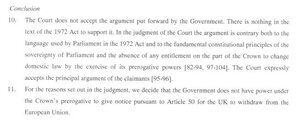
I now fear every attempt will be made to block or delay triggering Article 50. They have no idea level of public anger they will provoke.
— Nigel Farage (@Nigel_Farage) November 3, 2016
Oh.
Meanwhile…

U.K. Government Loses Brexit Lawsuit Over Article 50 Vote (Bloomberg)


From top: Dublin Tenants’ Association campaign; Dr. Michael Byrne
The Dublin Tenants’ Associatio this week starts a campaign for rent certainty,
Dr. Michael Byrne writes:
If ever there was a timely campaign, this is it.
As is well known, rents have increased nationally by 40% since 2011. In urban areas, especially Dublin, rent increases have been far in excess of this. The sector itself has expanded by 65% since just 2011 and up to 1/3rd of households will be life long renters.
This is nothing short of a radical transformation of our housing system. Renting, including long term renting, will now be the norm for a large and growing section of Irish households.
Following the crisis in 2008 mortgage lending in Ireland collapsed by around 90%. In subsequent austerity budgets, capital funding for social housing fell by 80%, as did output in the sector.
With both of the other housing tenures in free fall, it was perfectly clear that only one thing could happen: a massive increase in the rented sector and a consequent increase in rents.
After years of chaos and the emergence of a full blown homelessness crisis the government has decided it might be a good idea to do something about the rental sector; the National Strategy for the Rental Sector will be published this December.
The Secure Rents campaign is thus perfectly timed to pile on the pressure and force Minister Simon Coveney to take seriously the task of regulating rents, providing security of tenure for tenants and making the rental sector one fit for life-long living.
One of the biggest obstacles, however, is the chorus of actors arguing that since rent increases are driven by a supply shortage we should not be focusing on regulating rents but instead on increasing supply.
This argument has permeated public debate to the extent that at Coveney’s recent stakeholder consultation for the National Strategy, in which I participated, the two words heard most frequently were ‘landlord’ and ‘incentive’.
There is a real danger that the pseudo-economics of ‘supply’ will eclipse the pressing need to introduce root and branch reform and finally give tenants something approaching equality with home owners and social housing residents.
So let’s pick apart the argument here. There is not enough supply of housing, especially in urban areas. This is a fact. We therefore need to increase the supply of housing and we need to do it quick. This is also a fact.
But this where we need to watch out for a sleight of hand. It goes like this: if rent increases are driven by supply shortages then an increase in supply will drive rents down. This is where the pseudo-economic comes in.
What shapes the cost of rent is not supply in and of itself, but the relationship between supply and demand. For increased supply to bring down rent prices it would have to increase to such an extent that it would overtake the chasm which has opened up between supply and demand in recent years.
But more importantly, supply would also have to increase faster, significantly faster, than demand is increasing. This is where we have to look at the ‘demand side’ factors which are seldom discussed.
The concentration of economic activity in Dublin and other urban areas has intensified over recent years and will continue to intensify – this means more rural to urban migration and more demand for housing in our cities. People are living longer, piling further pressure on housing demand.
And finally, but importantly, household formation patterns are changing – people are living in smaller and smaller households. In short more people concentrated in cities, living longer and in smaller households.
We also have to take in the labour market aspects of all this. On the one hand wages and employment are likely to grow somewhat (as seen in the spate of recent strikes) adding to housing demand.
At the same time, however, secure employment contracts (and thus mortgages) are harder to come by in our ‘gig economy’ and the labour force is more mobile (moving from job to job and place to place much more frequently than in the past). This more mobile work force will become home owners much later, if they can afford to do so at all.
There is simply no way that enough private rented housing is going to come on stream in the next five to ten years to catch up with and overtake the demand side factors discussed above, and therefor rents will continue to increase.
This is why regulating rents is vital – it is the only way to halt the crisis of unaffordability in the rental sector and the tidal wave of homelessness it has unleashed.
To argue that regulating rents won’t sort out the supply problem is to miss the point entirely. It’s a bit like saying umbrellas are useless because they don’t stop it raining. While it’s true that they don’t, they do stop you getting soaked. Likewise, rent certainty won’t increase supply on its own, but it will protect tenants from the worst consequences of the supply problem.
There are many options to increase housing supply which don’t involve trampling all over tenants’ rights.Let’s hope the National Rental Strategy includes some.
But please don’t tell me these measures will mean I won’t have a rent increase of between 10% and 50% over the next few years. Because that is pseudo-economics – it’s an argument based on market ideology, not market logic.
The only way we can guarantee small and predictable rent increases is to regulate them.
Dr. Michael Byrne is a lecturer at the School of Social Policy, Social Work and Social Justice in UCD and participates in the Dublin Tenants Association Follow Michael on Twitter: @mickbyrne101
Previously: Michael Byrne: You Might Want to Sit Down For This

Abortion protests in Dublin in 1992 during the X Case
Paul Cullen writing (In the Irish Times) about the increasingly inevitable repeal of the Eighth Amendment, opines that:
“…discussion is being dominated by the strident voices on the two ends of the spectrum, each group deeply attached to absolutist views on the subject”.
This all-too-common refrain suggests a false equivalence: that those who actively oppose abortion and those who actively support its availability are direct polar opposites – “absolutist views” – on a finite spectrum.
The usual conclusion of this question-begging cliché is that the most desirable or moral position may, or even must be some nebulous midpoint on the scale – a supposed “moderate centre ground” or the like.
This is the kind of fallacy that might lead one to argue that since some people are for slavery and some against, a little slavery is surely best.
Further, the anti-abortion position can be defined with some considerable measure of confident objectivity as absolutist or extreme by reference to clinically verifiable best medical practice, international human rights’ norms and opinion polling. (Support for an all-out abortion ban has hovered around 10 per cent in recent Irish polls).
The same cannot be said of the pro-choice position. It is therefore not good enough to suggest, by implying a false dichotomy, that since the anti-abortion position is absolutist, so too, ipso facto, is the pro-choice position.
John Cale,
Cork Street,
Dublin 8
‘Strident Voices In Abortion Debate (Irish Times Letters)
Rollingnews

A documentary about Ireland’s longest-running ice-cream van.
Writes Colin Brady:
For anyone who grew up in South Dublin, or who have kids or even grandkids in the area, there’s one face (and sound) you’ll always be happy to come across.
For the last 49 years Mr.Ripple has been playing the same old tune around Dublin, to the excitement of kids and for the memories of generations.
Mr Ripple is a short documentary following ice-cream man John Taylor during one of his daily rounds. Originally working the mines in Wales, he moved to Dublin around 50 years ago and started selling ice-cream.
At 75 he’s still driving each day with his route taking him to around areas in South Dublin, making him (presumably) Ireland’s oldest ice cream man.
Mmf.
Previously: Cone in 60 Seconds

The twelfth annual Eirtakon anime, sci-fi and gaming convention opens tomorrow in the Croke Park Convention Centre.
Announced a few weeks back as the final installment of the event, organisers have a bit of a New Orleans funeral planned for the Irish anime fandom’s cornerstone event.
Writes Helene Duffy:
Eirtakon expects over 4000 people from all over Ireland will come together for the weekend to celebrate anime, manga and Japanese culture. This year you can meet international cosplay and anime guests, listen to cultural panels, take part in cosplay and gaming workshops, play your favourite board games or compete in the huge range of console tournaments.
During the convention you will also have the opportunity to watch dozens of hours of anime screenings, watch or participate in the Cosplay Blind Date, and shop till you drop in the biggest artist’s alley and trader’s hall ever seen at an Irish convention.
Guest appearances this year include Doom/Wolfenstein creator John Romero, Ghost Recon/Dragon Siege artist Brenda Romero, and voice actors Luci Christian (One Piece, Gunslinger Girl) & John Swasey (Borderlands 2, Halo, One Piece), while musical events include the Irish Video Game Orchestra and the Taiseiyo Taiko Drummers.
Subarashii.
Tickets on sale now.

From top” Donald Trump supporters last month; Dan Boyle
Instead of addressing the reasons why anger has been produced, the successful political strategy now seems to be to ride this anger.
Dan Boyle writes:
For about fifty years not a lot has changed in the art of electioneering in Ireland. Most campaigning revolved around the after mass speech from an open deck lorry.
It was during the 1973 Presidential election that American style electioneering was introduced here with gusto. The late Seamus Brennan, then General Secretary of Fianna Fáil, felt that campaign needed some pizazz.
Balloons, streamers, buttons, printed t-shirts, even campaign songs were introduced to entice voters on whom the ever more faded oratory of the past was failing to move.
The 1977 General Election campaign, the one for every voter in the country election, completed this transformation. From then on everything American had to be adopted.
It has led us since to the politics of the lowest common denominator. One feature of this has been government by focus group. Killing any initiative, discouraging any out of the box thinking. If it couldn’t be approved by the marketing gurus with their groups of guinea pigs, it wouldn’t be worth running with.
This in turn has led to the rush to the centre, and with that the bunching of political parties to the point of being virtually indistinguishable from each other.
Bunching in the centre, and the near total reliance on focus groups, has increased the distance between the governed and the governing. Who needs informed consent when the straws in the wind can be gleaned through the best in up to date political technology?
At least that has been the theory. The distance created by the politics of the focus group has generated huge reservoirs of anger, an anger which may become the next trend US electoral trend we are about to follow.
Instead of addressing the reasons why anger has been produced, the successful political strategy now seems to be to ride this anger. Echo its incoherence. Never to verify its veracity.
Always to play upon difference. Vilify, demonise, objectivise, criminalise and especially dehumanise anyone who dares to speak, much less think otherwise. Dumbed down Trumped up politics. It’s coming our way soon.
It isn’t though a formula that is unique to the US. We are seeing it in the behaviour of the Brexiters, Le Pen in France, Wilders in The Netherlands, AfD in Germany and The Freedom Party in Austria.
However it is in the US now that we are seeing it at its most ugly, most blatant, and to its most obvious logical conclusion.
Conclusion is what will follow. But neither should we succumb to the political snobbery of upholding some Platonic ideal of restricting voting to those deemed to be educated enough. Informed consent through mass democracy is still our only hope.
Life isn’t simple neither should democracy be.
Dan Boyle is a former Green Party TD and Senator. Follow Dan on Twitter: @sendboyle

It seems that the prospect of Trump
Is causing a stock market slump
As he screams “Build a wall”
His own profits fall
And I hope that this gives him the hump.
John Moynes
Pics: CNN