The first six episodes from season 6 of Game of Thrones neatly summarised in Graphics Interchange Format by Eran Mendel.
More episodes (spoiler alert) here.



The first six episodes from season 6 of Game of Thrones neatly summarised in Graphics Interchange Format by Eran Mendel.
More episodes (spoiler alert) here.


From top: Gavan Reilly and William Campbell
William Campbell, host of Irish current affairs podcast Here’s How, meets nimble-thumbed Today FM political correspondent Gavan Reilly, of cherubic looks and prodigious tweetage.
William sez:
British politicians – even on the Leave side – were clearly unprepared for what would happen after the success of the Brexit vote, but what about Irish politicians?
TodayFM’s political correspondent Gavan Reilly considers are we 1) Caught on the hop? 2) Scheming to take advantage of England’s Difficulty? Or 3) secretly enjoy the schadenfreude?
FIGHT!
Listen here

This afternoon.
Spotted in Cork city (location unspecified).
Anne writes:
Throwing off the shackles one junction box at a time…
PROC?


Paddy R wites:
I managed to take these pretty cool pictures (if I do say so myself) at Castlepalooza during Caribou’s set. I’m not on any of that social media poo but I feel they should be shared.
Fair play though, in fairness.
Why in God’s name should a politician elected by Germans dictate the nature of the border between Dunndalk and Newry?
— David McWilliams (@davidmcw) July 13, 2016
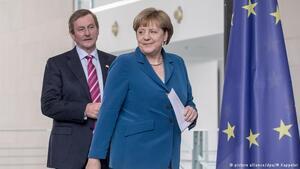
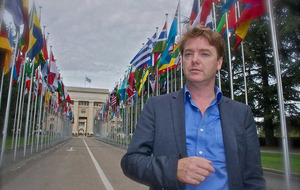
From top: Enda Kenny and Angela Merkel in Berlin yesterday; Economist David McWilliams and his tweet this morning
This morning, economist David McWilliams spoke to Seán O’Rourke on RTÉ Radio One.
They discussed Taoiseach Enda Kenny’s visit to Berlin, to meet German Chancellor Angela Merkel and their talks on the implications of Brexit on the Common Travel Area (CTA) between Ireland and the UK.
Mr Williams explained that while other EU countries should have an interest in Ireland and Britain’s CTA arrangements, they should not have a ‘commanding or a deterministic position on it’ and that Ireland should confidently assert this position.
To make his point he recalled the Dublin Regulation, which was signed in Dublin Castle in 1990, and essentially meant any asylum seeker who arrived from outside the EU had to apply for asylum in the first EU country they reached – placing the biggest burden on Italy and Greece.
Mr Williams suggested that this regulation, in a way, allowed the EU to avoid collective responsibility when it comes to responding to asylum seekers.
The interview opened with Mr O’Rourke asking Mr McWilliams about the tweet he posted this morning (above) concerning Mr Kenny’s meeting with German chancellor Angela Merkel.
Seán O’Rourke: “What prompted you to ask that question?”
David McWilliams: “Well because it struck me, it has struck me over the last six or seven years, Seán that, you know, the whole deal with the European Union that there will be a more European Germany, that’s the essence of the EU, going back to 1957. That Germany would be disciplined and would become a more European country. And, since the crisis of six or seven years ago, what we’re seeing really is what could be described as a German Europe, rather than a European Germany.
And it strikes me as kind of unusual, and a little bit undemocratic that a border between Ireland and Britain, we would have to go over to Germany to seek permission really, in a way as to which way we are going to negotiate. Now I know, the facts on the ground Seán, and we have signed Treaties and this is the implication of that. But it does seem to me a little bit odd that our leader has to go to Germany to seek permission, it seems, or to be given the green light, to have a discussion with Britain on a border between Ireland and Britain in a free labour movement area that has been free, not since 1920 Seán, since about 1420.”
Talk over each other
McWilliams: “I remember, even as a kid in the 1980s, at the height of the Troubles, going to the UK and yes, we had to show passports at Hollyhead but there was always a sense that Irish people could vote in Britain, if we lived there for a while, and this sense that somebody else is going to come in and, in a way, set the terms or conditions, particularly somebody who’s voted by a different electorate seems to me a little bit…”
Sean O’Rourke: “Yeah but here’s the point, David. I mean maybe you’re not being entirely fair to the Taoiseach. Because it’s not about looking for permission, it’s looking to build alliances. I mean he has President Hollande coming here next week and, you know perfectly well that under EU rules, we’re not in a position to now to do separate trade deals with the UK, it has to be done by the European Union, of which we are a part. And surely it makes sense, as you would in any political situation, to try to get people on your side?”
McWilliams: “Of course it makes sense to get people on your side but it would seem to me rather illogical and rather apolitical with a capital P, to have a situation where the border between two parts of Ireland needs to be mediated by people in France? I really don’t think this is actually a particularly logical way to go. And nor is it good for the people either on the south side of the border, or the north side of the border.”
“So, again, I suppose what this is exposing are these deep fissures in, these kind of chasms within the EU, where the pooling of sovereignty Seán, which is probably a good idea, OK, leads to complications and incompatibilities when specific issues come up which absolutely pertain to certain countries, over and above.”
“And I’ve always said that it would be illogical for the negotiations between Ireland and Britain, which they will be, to be dictated by the concerns of Poland or Lithuania or Latvia or other countries. And I suppose that goes to the essence of the problems of the EU now. Because, as you get bigger, Seán, you cannot mask over the cracks in a way in which you hope to do so. So, as you get bigger you’re always going to have these regional differences so therefore, for example, the relationship between Russia and Lithuania, which is existential to Lithuanians, is probably of no real consequence to us.”
O’Rourke: “Yeah but, again coming back to our border issue. Yes, it is the border between the Republic of Ireland and Northern Ireland but it’s also the border between the EU, or will be, and a non-EU country. Now that’s why the Lithuanians and the Poles and the French have an interest in the…”
McWilliams: “They have an interest, no doubt, but they should not have a commanding or a deterministic position on it. And you and I must agree on that, Seán?”
O’Rourke: “Yes, but I suppose it’s part of a wider, it’s part of a wider EU context in which trade arrangements are made and also regulations about the movement of people. And nobody has yet, maybe you’ve come across it, or maybe you’ve got your own idea, come up with post-Brexit, the solution to the problems?”
McWilliams: “If you look at the Dublin Treaty. The Dublin Treaty was manufactured in Dublin Castle which is a way of stopping…”
O’Rourke: “This is immigrants now?”
McWilliams: “Precisely. But what it was a way of saying was, geographical certainties and geographical facts are as they are and, therefore, one of the ways in which you deal with immigrants is you’ll actually deal with the place where immigrants first arrive. Ok?”
“So that is a great way of the EU fudging collective responsibility for immigrants, putting it on the shoulders of those who have borders. So there’s a very clear precedent, Seán, you and I know this, for arrangements, consensual arrangements, and ideas that actually take into consideration the facts on the ground which are geographically, we have a border with Northern Ireland which happens, very soon, to be a non-EU country.”
“So, this notion that we are in some way handless going into negotiations and there is no precedents or flexibility and you might call them fudges, I might call them flexibilities are what I would say, logical arrangements, seem to me to be a little bit a) ideological for Eurocratic fanatics and b) illogical for people who deal in the real world of politics. ”
O’Rourke: “So is the answer then to, if you like, dilute the influence and the role of the European Union. I mean like..”
McWilliams: “Well absolutely, absolutely, absolutely. The influence and the role of the European Union is going to be so ludicrous as to demand border posts with the UK when both Ireland and the UK suggest not to do so. Well then clearly it must be diluted.”
Listen back in full here
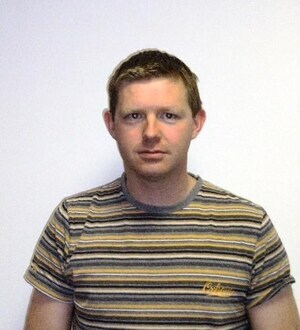
Eamonn Moran
You may recall how, in April, Glenn Fitzpatrick launched a new blog, The Young Celts, as a means to allow Ireland’s younger generation discuss and debate matters affecting them.
Eamonn Moran, a 37-year-old IT worker and economics blogger, is a new contributor on the blog.
He writes:
The concept of age inequality is not a new one but the deliberate calculated ways powerful elites have instigated deliberate policies and have allowed multi-fronted, highly coordinated financial attacks as part of a more general push for inequality is relatively new in many parts of Europe, Ireland included.
These policies were copy and pasted from US policies in operation since the 70’s and which have been extremely successful in their goals of economic inequality, of which age inequality is an important factor. The economic downturn in 2007 set these policies into overdrive in Ireland.
Some of these methods include the increase in precarious work, zero hour contracts, increased use of unpaid internships, increased use of government internship schemes, coercing trade unions to abandon the principle of solidarity for younger members, reduced social welfare provision rights based on age, higher rent payments, higher barriers to home ownership and lower standards of social provision.
When added to the traditional pre-existing symptoms Ireland exhibits during economic downturns, such as focusing societal protections only to certain powerful sections of society and justifying this by saying young people have the option of emigration, we get a dangerous concoction that has driven increased age inequality at a speed that might surprise even more liberal economists.
What are the consequences of this? If there is an increased level of inequality upon people in their twenties and early thirties what will be the consequences for them and for society as a whole?
Some of the consequences for young people are fairly obvious, between 250,000 and 300,000 of them have left (most who were forced out of economic necessity) the country since 2007.
How will that effect demand in our housing market if 300,000 potential first time buyers are no longer in our economy? We are supposed to be in growth again at the moment but yet in the most recent figures the numbers of mortgages taken out was actually lower for April 2016 than for April 2015.
There is a dramatic demand in this country for economists and politicians to learn from the 2007 crash to stand up and be counted next time around. If they do, they can serve two important functions.
Act as a counterweight to insiders from their own short-term desire for self-interest which actually prolongs the downturn and also help Ireland, dramatically reduce the scourge of forced emigration.
That is a prize worth far more than our shameful adding of the half pence to the pence cowardice of the previous downturns.
It’s impossible to understand the reasons and methods of Irish age inequality without first looking at why and how it is happening internationally.
Modern neoliberalism which seems, in retrospect, to have been little more than a vehicle for increased inequality in advanced economies was developed in the Chicago Schools and first implemented in the United States, but has been copied to a greater or lesser extent in almost all post industrial countries more recently.
The main consequences of the economic crisis of 2008 on many countries in Europe has been an acceleration of the resetting of the ground rules by neoliberal elites to increase this economic inequality.
There are many fronts/forces on which this objective is being fought. The reducing of social welfare protections in general, the reduction of the percentage of people who are represented by trade unions.
The erosion in public services paid by central taxation which are then replaced by customer payment models which insist on individualised payment regardless of means.
This reduces the need for wealthier citizens to pay as much tax for the current level of services. The burden is spread more among the lower paid. When will broadening the tax base mean something more than taking more from those who have least in order to reduce tax burdens on those of wealth and those who earn more?
Even more importantly increasing inequality damages the social fabric of society. Reducing the idea of society and national interest and replacing it with a more individualised, consumer-driven vision (remember Irish Water’s pamphlet where they outlined one of their core branding objectives was to turn citizens into consumers) from where each individual is measured almost entirely on their ability to earn as much as possible. Those who are poor are losers who deserve their fate.
There is an attack on the concept of solidarity so younger people no longer expect same pay for same work and the massive increase of non/low paid internships. The increase of zero hour/ precarious work practices.
A deliberate move is being made all over the advanced economies to make work more precarious.
Alan Greenspan (the former Chairman of the US Federal Reserve) said that worker productivity increased in the US economy as job security reduced. There had been a systematic attempt to reduce job security across the American economy that he believed was helping him grow the GDP of the country faster.
This was before the crash of 2007. He was advocating the increasingly widespread policy of deliberately using fear of people losing their jobs to make lower-paid precarious workers do more for less.
It’s a policy that has been copied more recently all over Europe. Yet no one ever speaks openly about it. Young people are baring the immediate brunt of this policy as people who are already employed have better contractual rights with stronger protections.
Age inequality is an important ingredient of a more general drive neoliberal elites are using in achieving their objectives of increasing the power and wealth of the 0.1%.
Stoic older countries of central and northern Europe seemed to genuinely base more of their economic policies on basic fundamentals of economic principles in their whole national interests and have been slower to embrace the neoliberal methods. However they too are facing pressures from undemocratic European institutions such as the ECB and the European treaties themselves.
Those Northern European Countries still seem to have a genuine sense of social democracy as opposed countries of the southern Europe, such as Italy, Spain and Greece. Ireland seems to share many of the characteristics of the southern countries, large pre-tax income inequalities and an instinct to protect certain citizens rather than spread the pain more evenly during recessions.
This short-term instinctive desire to circle the wagons is counterproductive and economies which do spread the burden more evenly among their citizens actually have shorter, less deep downturns.
Some decisions taken by the upper echelons of the trade union movement since 2008 have also been damaging to younger people. The unions agreed with government to reduce working conditions for new entrants in exchange for not reducing pay and conditions of existing members. What fools they were.
How did they expect to abandon the core union principle of solidarity and expect to be able to represent their members into the future when increasing numbers of their members would be seen as second-class workers doing exactly the same jobs.
Their current cries that the pay restrictions were imposed are baseless. As if the unions had suddenly lost the capacity to ballot the members. These agreements were made to protect the pay of older union members.
One of the key issues for young people in Ireland at the moment is mental health yet very few people are talking about the connection between the increase in the mental health problem and the decrease in the economic realities of young people in a world that promises so more than ever before.
I would encourage youth mental health organisations to deal with the physical and economic, as well as psychological reasons, that can lead to poor mental health. This is not to take away from the very real psychological problems some people with mental health problems are dealing with.
One of the main reasons I believe that vested interests have been able to get away with being protected is that the small number of youth representative bodies are timid in their criticisms of government.
The reason for this is obvious, they are dependent on those same governments for funding – funding that is in shorter supply during the time their voices were needed most, between 2008 and 2012.
I don’t believe that the vast majority of people over 35 are deliberately actively trying to discriminate against younger people but there is a small minority of policy makers who are making it in older people’s interest to discriminate in their own short-term interests.
It’s a clever move but I would encourage people over 35 and trade unions to resist the short term gain and look at the longer term imperative of maintaining solidarity.
This was one area where both SIPTU and the Luas drivers let themselves down badly recently in their eventual agreement with Transdev.
In the eventual agreement, new drivers’ starting salaries will be lower than those of existing drivers, despite the drivers having blocked a deal on these grounds earlier.
Similarly all new entrants to the public sector were and are similarly disadvantaged. I would encourage younger trade unionists to create more noise to stand up to the actions of union leaders that will damage the long term prospects of the very unions themselves.
Those union leaders will have retired when the fruits of all of this land on your desks.
Manufactured consent of age inequality in modern Ireland (The Young Celts)
Previously: Second Generation
Thanks Glenn