Yearly Archives: 2016

hidden

Sure where, etc.

Ger writes:

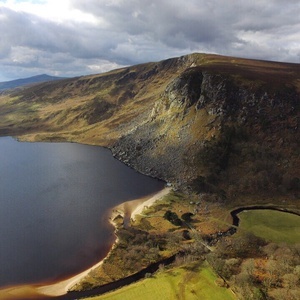
Hi, I recently set up a website Eirescape.com where I plan to find the best hidden gems in Ireland. Is there any chance you could share it with your readers to see if they have any tips. It’s only recently set up and is not done so to make money but to share what our island has to offer…

Anyone?

Also: Name that gem above anyone?

Eirscape.com

seanwhelan

Sean Whelan, RTÉ Economics Correspondent

Further to yesterday’s claim by Irish Water that it would cost ‘up to €7 billion’ to abolish Irish Water…

RTÉ Radio One’s economics correspondent Sean Whelan went over the figures with Cathal Mac Coille on Morning Ireland.

Cathal MacCoille: “Our economics correspondent Sean Whelan has been looking at the figures involved. Morning, Sean. First of all, let’s take a look at something very short-term. Say, they scrapped, or put a freeze on payment of water charges for a year. How much would that cost?”

Sean Whelan: “Well Irish Water were hoping to get around €270million from domestic bills. They say they’re going to raise about €111million by the end of this third billing quarter and when they added the fourth everyone, because not everybody is not paying, they’re going to fall short of that but you’re talking well in excess of €100million, maybe €150million that they might collect. But, in terms of their own accounts, if you stop water charges for a year, you’re down €270million, so they’d have to come back, looking to the exchequer for that sum, for one year.”

MacCoille:
“Now, what about five years, which is the Fianna Fáil proposal, in other words nobody pays any bills for five years and then you start paying?”

Whelan:
“Well then you multiply that by five and add a small bit for inflation I guess and you’re looking at up around €1.5/6billion in lost revenue to the company which would then have to be made up by Exchequer funds, in other words, taxpayers’ money. There’s also, I should stress, a cost involved in doing, stopping the billing thing because they’ve built up a billing system which they’ve spent a lot of money doing. There’s a couple of hundred people in Micheal Martin’s constituency employed in the billing process – what happens to them? They’re on a contract basis, outsourced from the company but there’s uncertainty about that. There’s a cost in shutting down a billing operation like that and there’s also a cost – and quite a considerable cost in starting up a billing operation again because it’s a large machine. It takes time to crank up. It takes time to crank down. And cranking it up again would be even more costly.”

MacCoille: “So the rough cost of a freeze for five years would come to what?”

Whelan: “€1.6billion in lost revenue terms…”

MacCoille:
“And..”

Whelan: “Plus the costs of shutting down and restarting the billing network, you’re talking in the tens of millions there.”

MacCoille:
“All right. Now the big option which is abolishing Irish Water completely and replacing it with some kind of State service or handing it back to local authorities. Something the Taoiseach ruled out but anyway, it’s up in the air. If you’re to abolish the whole thing, what charges the semi-State company, everything, how much would that cost?”

Whelan:
“Well this is where it starts to get very costly and I suppose contentious in how you allocate the costing there. The Irish Water, one of the justifications for it, it would drive down the cost of doing business through efficiency gains, rather than having 31 local authorities trying to process the investment, you have a single authority. They claim that they can drive down the costs by about €270million a year, that’s another €1.6billion which they say comes in efficiency gains over the next five years.”

MacCoille: “I suppose you could say that if you had a section of the Department of the Environment or some State service, they could do it aswell?”

Whelan: “Well what’s the difference? You already have a company there, a structure. Are you going to set up a new quango from scratch? How much is that going to cost? What kind of disruption is there going to be in transferring across? Remember there’s going to be a lot of legality involved here. They’ve transferred the assets and liabilities of local authorities into a new corporate structure. That took time, money, hassle, expense. Trying to disaggregate those various bits of the company would not be easy. And you’ve got two components here in settting up Irish Water. You’ve got all the capacity and capabilities of the local authorities that were doing the water management but you’ve also got an entirely new set of capacities that only exist within a single entity, Irish Water. So either you get rid of that and that’s where you’re going to lose these, these efficiency gains…”

MacCoille:
“We’re running out of time. €7billion was the Irish Water estimate. Is that right?”

Whelan:
“It’s well, you add those two figures together and you’re up to €3billion, €3.2billion, then there’s the cost of a straightforward shutdown which is €100million on top of that and then there is the potential loss of an investment programme which is around €5billion which is planned. Now one of the things that the company says you need to be careful about is the track record of State investment in capital. We’ve seen, in the last six or seven years, the capital budget was cut to shreds in order to free up money to spend on current spending. So, paying social welfare, paying wages for teachers and guards and all that sort of thing, takes priority in spending. If we want to invest and we do need to invest, having it at the mercy of politicians, deciding on a whim, also if they, if there’s pressure to spend things, they can always spend on the things you see, like hospitals…”

MacCoille: “We’re right out of time. €7billion, right or wrong?”

Whelan:
“It’s close to that, it’s close to that. I’m not sure it’d be fully €7billion, the company make a fairly convincing case that it would be quite substantial and it would have to be found somewhere else.”

Listen here

Alternatively..

The Uncomfortable Truth About Irish Water (Stephen Donnelly TD)

Meanwhile…

90320253

Dublin City Council Chief Executive Owen Keegan

You may recall how new lobbying laws came into effect last September.

The new legislation puts an onus on lobbyists to register on lobbying.ie. It aims to allow members of the public see who’s lobbying whom.

Further to this, journalist Lois McGrath, of Dublin Inquirer, compared and contrasted the diary of Dublin City Council CEO Owen Keegan – obtained under the Freedom of Information Act – with the companies and organisations that registered themselves as having lobbied Mr Keegan.

The information from the two sources didn’t match.

Ms McGrath reported:

“Most of the meetings he had with companies and organisations were not logged on the lobbying register. (But just because people from organisations met with Keegan, or scheduled meetings with Keegan, doesn’t necessarily mean that they lobbied him.)”

“Some of the meetings that caught our eye were with Panda, JCDecaux, Deloitte, the DCU Governing Authority, Arup, Big Belly Smart Bins, Ann O’Dea of Inspirefest, the Holocaust Education Trust Ireland, SSE Airtricity and Diageo.”

“Representatives of three of those organisations responded to our queries before we published this article: the company behind Big Belly bins, Deloitte and Diageo. And all three said they had not lobbied the chief executive.”

Who’s been lobbying Dublin City Council’s Chief Executive? (Dublin Inquirer)

Leah Farrell/Rollingnews

90411166904111449041116890411171

G’wan the boyos.

This afternoon

Members of Fianna Fail’s parliamentary parties including new TDs meet to discuss potential coalition options.

From top: Sean Haughey; Jackie Cahill, Eamon Scanlon; Willie O’Dea, Billy Kelleher and Michael Moynihan.

Ecstatic Dáil bar manager (out of picture).

Leah Farrell/Rollingnews

Meanwhile…
9041125690411253904112529041122690411229

This afternoon.

Leinster House, Dublin

From top: Fine Gael TDs Mary Mitchell O’Connor, Kate O’Connell and Regina Doherty arriving for the party’s parliamentary group meeting; Taoiseach Enda Kenny with newly-elected Fine Gael TDs.

Poor Simon.

Leah Farrell/Rollingnews

zzig11
https://youtube.com/watch?v=p9zxNer6kbE

‘zup?

Zig and Zag’s new show kicked off on Tuesday on tykes’ channel RTÉ Jr. CBBC are also  broadcasting the new series, voiced and written by Mick O’Hara and Ciaran Morrison.

Now residing in the town of Burbia, new Zig and Zag shenanigans include ice-cream cloning, becoming art darlings and general messing like it’s 1990.

No Zuppy as of yet, though.

Yet.

Streaming on RTÉPlayer.

90382846dan

Top (from left Labour’s Brendan Howlin, Joan Burton and Ged Nash last year: Dan Boyle

His predictions were almost spot on.

Time then for some schadenfreudin’.

Dan Boyle writes:

I wouldn’t be the gambling type. At least not with money. It could be argued that on more than a few occasions I have let my fate up to the Gods.

I have, however, welched on one bet. Made in the dying embers of what is now the government before last, it was the Labour Party’s Brendan Howlin.

We were in the Members Bar of Leinster House. I was expressing the hope that The Greens might return two TDs in the form of Trevor Sargent and Eamon Ryan. Not a hope says the bould Brendan dancing with glee already then on our yet to be dead corpse.

There was something in the sheer nastiness of his approach that goaded me into accepting a challenge I shouldn’t have. I subsequently never honoured the bet, fearing the sadistic glee in which it would have been received.

The Germans have a word for it. I can’t lie and say I haven’t felt a least some of that enjoyment from the Labour Party’s current predicament. It is though an enjoyment mixed with a small degree of sympathy.

The decent members of a proud party were sold myths about ‘saving the country’ by those who wanted to hold office just one more time. I have choked on the irony of listening to many Labour spokespersons talk about, despite knowing their party was being damaged, that the national interest came first.

When Greens were making the same arguments in 2011 it was Labour representatives who were doing the most baying.

There has also been an element of Stockholm syndrome in merging with, then becoming unidentifiable with, their coalition partners.

The Fine Gael failure has been just as marked. There are many reasons why Fine Gael has never come out of government successfully, none of which the party will ever admit to itself.

A story John Gormley once told me, which I’ve written about before, bears retelling. Before he was in elected politics FG canvassers called to his house.

Asking them what they thought the difference between FG and FF were they advanced what they believed was the killer argument.

“I think you’ll find in Fine Gael there is a better class of person”.

The sad thing is that many of their members do believe this. This sense of priggishness, that only they have the moral fibre and character to act on behalf of the nation, is the characteristic trait most seen and least liked by the general public.

There is little likelihood the party will suddenly develop any sense of modesty yet.

It’s reward may be to remain in office but with power removed, this now placed more firmly into the hands of its errant sibling, Fianna Fáil.

Dan Boyle is a former Green Party TD. Follow Dan on Twitter: @sendboyle

foryourconsideration)
https://www.youtube.com/watch?v=bEzEzmWalmA

Don’t make him hungry.

You wouldn’t like him when he’s hungry.

Reckoner  writes:

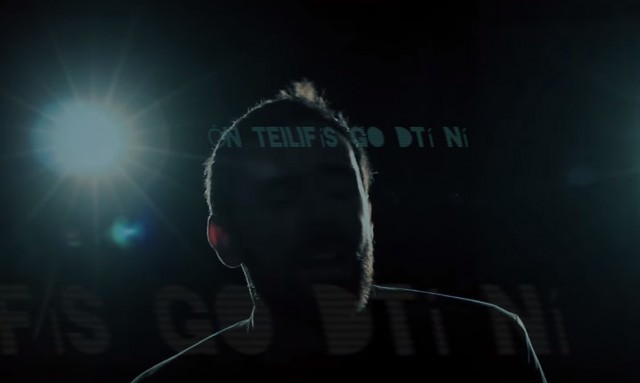
Alan Dunne and Eamonn Tutty are currently raising funds to make this unique Irish language film happen, and they would appreciate any support from Broadsheet readers who might be interested [link below].. .

An Ceann Deireanach (Indigogo)