Yearly Archives: 2017

fitzpatrickjobstown

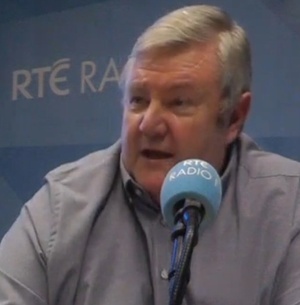
From top: Sean Fitzpatrick; Jobstown portest in Dublin city Centre last Summer

Developments in the trial of the ‘Jobstown 23’ – for the alleged ‘false imprisonment’ of then Tanaiste Joan Burton – have put the right to a ‘jury of your peers’ under threat.

Anonymous writes:

When the jury for Sean Fitzpatrick’s case was being selected, directions were given to jurors to exclude themselves if they had been strongly affected by the banking crisis, had been active in any campaigning groups, had been involved in anti-austerity protests, or had expressed themselves on social media about the banking crisis.

On that basis, juror 791 was excluded.

Now for the first adult false imprisonment #JobstownNotGuilty trial, the DPP is trying to stack the jury against the defendants. They have written to the seven defendants’ solicitors putting forward a proposed formula for excluding jurors, on an extraordinarily wide basis.

This includes excluding:

“People from the Jobstown/Tallaght area and people with such connections to the area as would give rise to a concern that they could not deal with the case impartially.”

“Persons who are active in any campaigning groups either for or against water charges (whether formal or informal).”

“Persons who have expressed themselves in public, whether on the Internet, in the print media (newspapers), broadast media (radio or television), on social media (including Facebook, Twitter, on-line comment pages of websites or newspapers or any other form of social media) or otherwise on publically available mediums, on issues concerning water charges and/or the events on the 15th November 2014….”

Ruling out people from Tallaght excludes a large working class community. Ruling out those active in campaigning groups for or against water charges would obviously exclude very few people on the pro-water charges side, but a large number of those against water charges.

It could even be stretched to exclude every member of a trade union, given that it is ICTU policy to oppose water charges.

Similarly, ruling out those who have expressed themselves on water charges publicly would disproportionately exclude those against water charges and younger people who are more likely to be active on social media.

What is being attempted is blatant – to exclude as many working class people and those against water charges.

On what grounds can it be suggested that people expressing views on water charges makes them incapable of being impartial in what is supposed to be a ‘false imprisonment’ trial?

Worryingly, the trial judge in court on Friday, March 31 described the DPP proposals as “very sensible”. A different judge, Judge Ryan, will make a decision on the proposal to exclude people from the jury on the first day of trial Monday April, 24.

The contrast with the Sean Fitzpatrick case should not be lost. Legally speaking, Sean Fitzpatrick and the Jobstown protesters are in the same position – they are defendants.

Yet in Fitzpatrick’s case, the jury was stacked in his favour. In the Jobstown case, the DPP is going all out to stack it against the defendants.

The difference? He’s a banker, they’re anti-austerity protesters.

Rollingnews

canal

Serv writes:

So a year or two ago you put up my post about the damage been done to the Grand Canal [at Mount Street bridge, Dublin 2] by the weekly markets.

I also complained to Waterways Ireland [who rent the land off Dublin City Council], asking them to stop parking vehicles and put down protective mats. They didn’t and just parked bigger vans!

So, how’s that working out for them…

Grand Canal weekly market at Mount Street Bridge axed (Irish Times)

Previously: Canal Bank Walk

coveney:varadkar

derek

From top: Simon Coveney and leo Varadkar; Derek Mooney


Former US Defence Secretary, Donald Rumsfeld spoke not just of the events themselves but of a government’s capacity to anticipate, and thus prepare, when he offered his Rumsfeld’s Rule of known and unknown knowns…

There are known knowns. These are things we know that we know.

There are known unknowns. That is to say, there are things that we know we don’t know.

But there are also unknown unknowns. There are things we don’t know we don’t know.

The latest Irish Water fiasco falls clearly into the first category.

Not only it is clearly a known known, it a well-known known. It was specifically provided for in the Confidence and Supply Agreement hammered out in Trinity College last year between Fianna Fáil and Fine Gael.

There is no sensible or grown-up reason on earth why water charges should bring down this government. Both sides have known this was coming as both sides had agreed the timeline.

This process has been heading to an obvious conclusion from the very moment the committee was established – though why they established a committee with an even number of members that could be deadlocked is another issue.

Whether we like it or not and whether it is fair or not the simple political reality is that the complete mishandling of the whole water meter/charges process by successive Ministers since 2011 means that water charges are dead.

The 2016 general election result showed that.

Contrary to what Minister Varadkar might say across the floor of the Dáil the death knell of water charges was not struck by AAA, PBP, Sinn Féin or any other leftish anti-austerity group, but rather by Fine Gael and Labour designing and implementing a water metering and charging system that cost more to run than it raised in revenue.

To use phraseology that Minister Varadkar may grasp, not one red cent of the water charges collected was used to upgrade the water system.

It was taken up with administering the collection of water charges, charges not even based on the water meters which cost over €500million to install, and the payment of the so-called ‘water conservation grants.

While Minister Varadkar works on explaining the fiasco his government made of the implementation of water charges his colleague and leadership rival Minister Simon Coveney can attempt to come to grips with one key aspect of “new politics” that seems so far to have eluded him: namely, that Fine Gael does not have a majority in the Dáil and so it cannot tell Oireachtas committees what they may or may not decide.

The Joint Committee on the Future Funding of Domestic Water Services was established by the Dáil last November, to consider the report of the Expert Commission and to report with recommendations to both Houses of the Oireachtas.

That is what it has been doing over its twenty, or so, meetings and that is what it will, all going well, finish doing tomorrow (Tuesday, April 11).

Perhaps Minister Coveney hopes he can thwart the committee’s report and so get out of the commitment given by Fine Gael in Annex II of its Confidence and Supply Agreement with Fianna Fáil thatL

“the recommendations of the Special Oireachtas Committee will be considered and voted upon by the Oireachtas within a one month period.”

Though he was not charged with its implementation in the last government, Simon Coveney owns Irish Water as a concept and a policy more than any other politician.

He is the one who came up with it back in November 2009 in his New Era policy document which promised €18 billion in investment and 105,000 new jobs.

He not only suggested the name, but also talked about “real economies of scale”. Who knew 2009 was such an age of innocence?

Within months of its launch, Michael Noonan was distancing himself from the grand promises of New Era, telling the Newstalk Breakfast Show on July 14, 2010 that:

“Simon Coveney was the author of that particular policy document and if you look at it, the figure of 100,000 jobs doesn’t appear anywhere in it; that seems to be some kind of public relations add-on that enthusiastic people attached to it.“

Both Coveney the Minister and Coveney the putative Fine Gael leader urgently need a political win somewhere.

His promise that hotel accommodation will no longer be used to house homeless families by July of this year rings hollow with the news that he hopes to achieve it by having the Dublin Region Homeless Executive take a five year lease to convert a disused hotel on O’Connell Street.

I don’t expect the Government to fall tomorrow, but the sturm und drang of the past few days on this very basic and long known known does suggest that the capacity of this Government and its agreement with Fianna Fáil to withstand a known unknown, never mind an unknown unknown is virtually nil.

If I were a screen printer I would be ordering the plastic corriboard sheeting for posters for later this year.

Derek Mooney is a communications and public affairs consultant. He previously served as a Ministerial Adviser to the Fianna Fáil-led government 2004 – 2010. His column appears here usually every Monday. Follow Derek on Twitter: @dsmooney

Rollingnews

Screen Shot 2017-04-10 at 15.44.41

What you may need to know:

1. The Marvel Cinematic Universe rumbles on; it’s the third Thor movie but we’ve kind of lost count what the total number is by now.

2. Thor and its sequel Thor: The Dark World are arguably the worst of the series so far, so Kevin Feige and the lads had a bit of a gamble on their hands for a third outing. When Guardians of the Galaxy was an unexpected (sic) smash hit, all the praise went to its comedy elements. Marvel have now doubled down on that by engaging the services of New Zealand director Taika Waititi for Thor: Ragnarok. Waititi gave us Hunt for the Wilderpeople (2016) and the vampire mockumentary What We Do in the Shadows (2014), two of the funniest films of the past few years.

3. Hard to tell whether Thor: Ragnarok will go full comedy, but that big green punchline at the end is timed well. Chris Hemsworth has shown some promise in the comedy department now and again as Thor too, including with these spoof shorts.

4. Everyone reacted well to Guardians’ rock soundtrack, so it seems now the rule is all comic book movies need to go that way. Great use of Led Zeppelin tbf. It’s fitting, unlike the truly horrific choices made in Suicide Squad. Eminem? K7? Who thought that was a good idea.

5. There’s Cate Blanchett, looking the part. A quick wiki tells us she plays Hela, ruler of Hel and Nifleheim, frequent foe of Thor in the source comics. Her schemes often involve attempting to raise the dead from Valhalla.

6. There’s Jeff Goldblum. If this wasn’t already shaping up to be a hoot, well…

7. As for the title, Ragnarok is Norse mythology’s version of the apocalypse, during which a great many natural disasters befall the world, leading to the deaths of many of its gods.

8. To be followed by Black Panther in February 2018 (directed by Ryan Coogler, whose blistering debut Fruitvale Station was followed by the improbably excellent Rocky spin-off Creed), and Avengers: Infinity War in May 2018 – rumoured to be the first ever film to touch a budget of €1billion. Before any of those we’ve got Guardians of the Galaxy vol. 2 this May and Spider-Man: Homecoming in July. Hard to keep up, isn’t it?

Verdict: Aswell as spiralling budgets, the MCU seems increasingly willing to take risks as the years clock up. There’s little to lose with the Thor franchise (see pt. 2). Pretty sure this will be ace.

Release Date: October 27th 2017