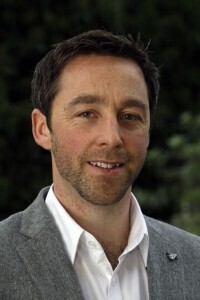
From top: Social welfare queue in Cumberland Street, Dun Laoghaire, County Dublin; Rory Hearne
Dr Rory Hearne tackles the statistics behind Ireland’s growing inequality and challenges the narrative that those on social welfare receive the majority of state benefits.
Dr Hearne writes:
In 2007, prior to the economic crash and austerity 11.8% of the Irish population (about 485,000 people) suffered from material deprivation. A decade later, and four years into a supposed economic ‘recovery’, 25.5%, over a quarter of our population (that is 1 million people) are suffering from material deprivation.
That is an additional half a million people affected by deprivation.
So how can any one seriously argue that austerity ‘worked’ in Ireland and that we are in a recovery?
In fact, for some of our most vulnerable and socially excluded groups things are even worse. Take lone parent families for example. In 2007, 35.6% of lone parent families suffered deprivation.
Today their deprivation rate is a shocking 57.9%. And while the general deprivation rate dropped from 29% in 2014 to 25.5%, the deprivation rate for lone parent families showed no significant change from 2014 (when it was 58.7%).
While our children – the future of our country – 31% of all children suffer deprivation, which is double the 2007 rate of 15.9%.
But what does suffering from material deprivation mean?
It means that an individual or household experiences two or more types of enforced deprivation from a list of eleven deprivation indicators such as being without heating at some stage in the last year, being unable to afford new (not second-hand) clothes, being unable to afford to keep the home adequately warm, being unable to afford to have family or friends for a drink or meal once a month, being unable to afford to buy presents for family or friends at least once a year or being unable to afford to have family or friends for a drink or a meal once a month.
The CSO provides a further break down of what proportion of people are affected by each of the deprivation indicators.
These show that there was in fact an increase in the proportion of people who have been unable to keep their home adequately warm in the last year, rising from 8.8% in 2014 to 9% of the population in 2015.
While 13.6% (almost 650,000 people) went without heating at some point in the last year (this is over double the rate in 2007). The most common types of deprivation experienced were an inability to replace worn out furniture (24.4%), afford a morning/afternoon/evening out (18.6%) and have family/friends over for a meal/drink (16.8%).
There are 257,000 people in Ireland (5.4% of the population) who are unable to afford to buy presents for family or friends at least once a year.
The recent Generation F’D documentary on RTÉ2 showed a father suffering the pain of looking to Christmas and being unable to buy his children presents. But among those at risk of poverty (16.9% of the population – they have an annual income below €11, 863, or 60% of the national median income), 14% were unable to buy presents for friends or family.
The inequality at the heart of the recovery is also shown by the fact that for this section of the population (approximately 800,000 people) who are ‘at risk of poverty’, there was an increase in the last year in eight of the eleven types of deprivation. But for those not at risk of poverty, there was a decline in all eleven types of deprivation.
If we look at deprivation by income decile we can also see the same pattern of inequality. 42% of the bottom income decile (they have an income less than €195 per week) suffer three or more forms of deprivation.
This is almost 13 times the rate of the top income decile (where just 3.3% suffer three or more forms of deprivation). The weekly income of the top decile is greater than €764 per week.
The figures also show the deeply unequal nature of our society and economy. They show that the top 20% get 40% of net income while the bottom fifth of our population get just 8% of all income.
Of course this doesn’t include wealth which is even more unequal. The top 20% have 73% of all wealth in Ireland in contrast to the bottom half of the population with just 5% of all wealth.
But a very interesting table, Table A 2, shows the average weekly equivalised income by decile and the composition of that income.
From this we can see that the bottom decile has a net disposable income of just €146 per week while the top decile has a net disposable income of €1,066 or 7.3 times the bottom decile.
But what’s really fascinating is that the table shows ‘social transfers’ from the state (unemployment benefits, pension, housing allowances received) received per decile and the results of this are not what you would expect.
It shows that the top decile received, on average, €164 per week in social transfers from the state. That is more than the bottom decile which received €119.99 per week in social transfers. So it shows that the state gives more to the wealthiest and highest income households than the bottom!
This challenges the narrative that it is those on social welfare receive the majority of state benefits and highlights that there is a significant welfare going to the wealthiest households as well.
In fact, the top decile pays, on average, €408 per week in tax, yet receives in social transfers (this is excluding tax reliefs etc), almost 40% of this total tax back in social transfers. So 40% of the tax being paid by the top income earners is being returned to them through social transfers.
This is very significant and challenges the argument that the top are being over taxed.
Barnardos, the children’s charity were absolutely correct in their response to the recent CSO figures to state that the “Continued lack of improvement in child poverty rates is a national scandal that requires urgent intervention.”
As they explain:
“Childhood is short, yet the experiences we have shape the adults we become and the lives we lead. Children living in poverty live life on the margins, excluded from opportunities and often unable to break the cycle of poverty. Poverty affects every aspect of a child’s life and has short and long term consequences on their development, health, education outcomes and life chances. Worryingly, children in lone parent households continue to experience poverty and deprivation at a far greater rate than children in two parent households”.
While, SPARK, the lone parent campaign group, has called on the Minister for Children, Katherine Zappone to establish an immediate task force to tackle poverty in lone parent families. They have set up a petition in response to the CSO data arguing:
“The recent CSO data shows consistent poverty in the state is 8.7%. For 2 parent families with 3 or less children this drops to 7.7% but for children in lone parent families it is 26.2%. It is fundamentally wrong that a child is almost 3 1/2 times more likely to live in poverty based purely on their family status. We know childhood poverty has long reaching effects and we owe it to all children to ensure they have a fair chance”.
Take a minute to sign their petition here
Dr Rory Hearne is a policy analyst, academc, social justice campaigner. He writes here in a personal capacity. Follow Rory on Twitter: @roryhearne