

Some Dad tweetz:
Sign on a door on Talbot Street,Dublin 1. Discrimination so it is



A customised ‘cut out and send’ donation form for ‘sheet readers.
Depaul’s ‘Shelter and Soup’ emergency appeal.
Seeking donations to provide emergency accommodation and food for people sleeping rough this Winter.
Mairead Murphy writes:
In tandem with the Shelter and Soup appeal, Depaul will continue to operate two Cold Weather Initiative hostels which provide a total of 47 beds per night for people at risk of sleeping rough in Dublin. The hostels open from 9:00pm-8:45am seven days a week and offer emergency food and accommodation for single men and women and couples who are homeless.

Yesterday
Annie West writes:
On the new @sligowalks Sruth an aghaidh an aird, Sligo . Looking over Glencar lake

Wicklow mountains above clouds/fog this morning
(Thanks Graeme Kelly)

Lian writes:
Would be grateful if you could highlight the conversation going on at #WakingTheFeminists on twitter. Huge response to the national theatre’s 2016 programme including only 1 woman playwright and 3 women directors out of 10 productions for next year.
Theatre may not be everyone’s cup of tea, but it’s a bigger conversation that that about gender equality in our society in general, not just across arts organisations. For a state-funded organisation whose mission includes representing the nation, the Abbey don’t have a great track record on identifying and dealing with its own gender-bias.
More Thoughts (and stats) on Women Writers at the Abbey (Patrick Lonergan)
Abbey Theatre celebrates 1916 centenary with only one woman playwright (Una Mullally, Irish Times)


https://www.youtube.com/watch?v=HS3X2Uj7BME
The Enigma Café bar at Cluj-Napoca in Romania whose constantly moving, Steampunk inspired, time-travel themed interior was designed by Alexandru Tohotan and Zoltan Zelenyak.

What you may need to know:
1. What just happened?
2. Mrs. Angelina Jolie Pitt directs her hubby in this chronicle of a failing marriage.
3. A belated bit of schadenfreude for Jennifer Aniston.
4. That’s the bulk of Ange’s Inside the Actors Studio showreel sorted then.
5. It looks like she’s been binge-watching Michelangelo Antonioni.
6. Broadsheet prognosis: A neorealist take on Who’s Afraid of Virginia Woolf? (1966)
Release Date: December 11.
(Mark blogs about film, TV and other stuff at WhyBother.ie)

Tomorrow night.
Mairead writes:
A Tedtastic fundraising effort for Dublin Samaritans at the Generator Hotel, Smithfield Plaza. A fun night out guaranteed and all in a good cause. for bookings contact publicity@dublinsamaritans.ie Ah go on, you will, etc.
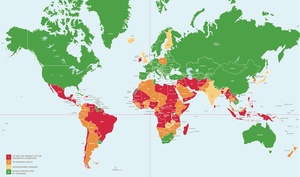
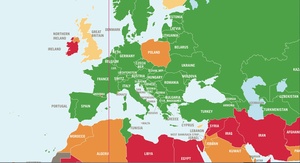
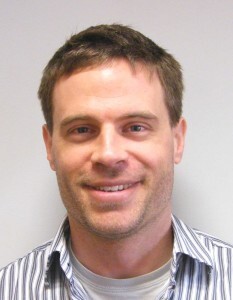
From top: Categories by The Center for Reproductive Rights of global abortion laws from most liberal to most conservative; Julien Mercille
Ireland’s abortion laws are the most restrictive among western countries and often more conservative than the developing world.
Dr Julien Mercille writes:
The abortion debate and whether or not to repeal the Constitution’s Eighth amendment has grown louder recently. It will no doubt intensify as the next general election approaches. It is a hot subject in Ireland.
One way to contextualise and clarify sensitive issues is to put them in perspective. We need to examine where Ireland stands relative to other countries. Sometimes this suggests easy answers and solutions.
The Center for Reproductive Rights (based in the US and with offices in other countries) publishes an annual world map showing the state of abortion laws globally.
As can be seen from the map (top), it divides countries into four categories, from most liberal (in green) to most conservative (in red).
Ireland is quite an exception. Among Western countries, it’s a red conservative island in a green liberal ocean.
On abortion, Ireland is thus like Africa, Latin America, and other developing countries, and actually more conservative than many. (The map shows abortion legislation but actual implementation may vary; it still provides a largely accurate picture of how countries deal with abortion).
Let’s look at the map more closely.
The most conservative countries (red) either prohibit abortion entirely, or only allow it to save a woman’s life. Ireland is in red.
Indeed, in an excellent recent report, Amnesty International stated that we have one of the world’s most restrictive abortion legislation, which “continues to criminalize abortion in cases of rape, incest and fatal or severe foetal impairment”. The law is “deeply rooted in religious doctrine”.
Human rights bodies worldwide have repeatedly maintained that “restrictive laws on abortion, including those that exist in Ireland, violate women’s and girls’ rights to life, health, privacy, non-discrimination and freedom from torture and other ill-treatment”. The recent reform of the Protection of Life During Pregnancy Act 2013 has brought no significant change.
The orange countries allow abortion to protect a woman’s life and health. Health can be interpreted as physical or mental health or both.
Next, the yellow countries permit abortion for socioeconomic reasons (when a pregnancy could lead to risks or negative consequences for a woman, broadly interpreted). In practice, many of those countries apply their laws in a liberal manner. For example, in Great Britain, the law allows abortion on socioeconomic grounds but in practice it is freely available (so it should be considered a green country).
Last, the green countries permit abortion without restriction as to the reason. Women simply decide whether to terminate a pregnancy. But most green countries still establish gestational limits on abortion, usually between 12 to 20 weeks of pregnancy. For example, in Denmark, abortion is available without restriction as to the reason up to 12 weeks of gestation. Beyond this limit, it is possible on specific socioeconomic grounds, in cases of foetal impairment, or if the pregnancy results from a criminal act like rape or incest.
In the Western world, green countries form the overwhelming majority.
What they say is something like this.
Women have a right to choose not to continue with a pregnancy, at least as long as the foetus remains unviable outside their bodies. This recognises that there are many valid grounds for women to make that choice.
Maybe a woman is a victim of rape, a criminal act. She should thus be allowed to minimize the consequences of this, including to terminate the pregnancy. To force her to carry on with this pregnancy is not justifiable.
Or maybe a woman is a victim of incest. Why should she be forced to continue with the pregnancy, and fined or jailed for not doing so?
Or maybe a woman had protected sex and the condom split or slipped. Bad luck happens to everybody and has nothing to do with being irresponsible. The green countries agree that this is no reason to force a woman to continue with her pregnancy.
Or maybe a woman finds out that she is pregnant but that for one reason or another, believes that her situation is not conducive to having a baby. In the first few weeks of pregnancy she should thus be able to end it.
Those who oppose abortion may laugh at the above, be outraged, or dismiss it entirely.
But there’s one thing to remember.
Imagine a discussion about abortion held around a table with one representative from each Western country. There would be roughly 40 people around the table. The fact is that all of them would be green, except 2-3 with a slightly more restrictive legislation. And then, there would be Ireland, off the charts in the red.
So it’s basically 1 (or 2 or 3) against 40. It’s harder to laugh now, isn’t it?
Julien Mercille is a lecturer at UCD. His book Deepening Neoliberalism, Austerity, and Crisis: Europe’s Treasure Ireland is out. Twitter: @JulienMercille

A piece of cardboard with the name and contact details of a young Syrian boy’s family that was found Sellotaped to his arm after he arrived safely in Lesbos
Bewildered Student, an Irish volunteer currently in Eftalou on the island of Lesbos, Greece, writes:
“I had to cut this off of a Syrian boy’s arm as I was helping him to change out of his wet clothes. The boy, aged around seven of eight, arrived in Lesbos late on Friday night, after the boat he was travelling came ashore without any assistance. The boy’s older brother told me the piece of cardboard contained his identification details, should the worst happen.”
Previously: A Drop In The Aegean

Jiggy – Laethanta Saoire
Bongobob writes:
Jiggy is an Irish trad band from Dublin with a difference. Mixing traditional Irish music, hip hop beats from the 1990s, and whatever else comes to mind. In this video we wanted to portray Dublin in all its true grit and character.
‘Laethanta Saoire’ is a tune that was composed in the 90s by the legendary guitarist Steve Cooney, and although Jiggy have played it many times it has never been recorded or released… until now!