

Odockatee tweetz:
Bleedin’ Rabbit. Liberty Lane, Dublin 8



Blocky recreations of first person shooter games including Portal, Skyrim, Bioshock, and Counter-Strike by filmmaker Andrew McMurry.


More to folly
Covers to broadsheet@broadsheet.ie
Thanks Kevin Cramer (Irish Examiner); Enda Bolger (Irish Sun) and Nick Sutton (UK papers)
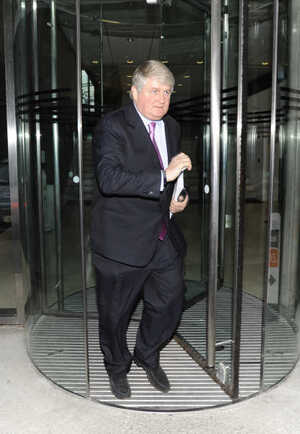
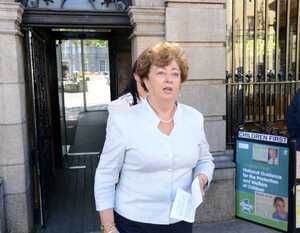
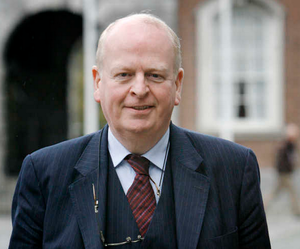
From top: Denis O’Brien, Independent TD Catherine Murphy Former Attorney General, Justice Minister and Tánaiste Michael McDowell,
Further to the ‘thing‘.
Tomorrow RTÉ and several newspapers, including the Irish Times and the Sunday Business Post, are expected go before the High Court seeking clarification on whether or not they can publish what Independent TD Catherine Murphy said in the Dáil last Thursday, in light of a interlocutory injunction awarded to Denis O’Brien – against RTÉ – on May 21.
Ahead of this, Cathal MacCoille spoke to former Attorney General Michael McDowell on Morning Ireland this morning.
Cathal MacCoille: “Good morning.”
Michael McDowell: “Good morning, Cathal.”
MacCoille: “This question that, this statement made that the Oireachtas has, to use a word not in the Constitution, has absolute privilege. Two obvious questions for every lay person listening to you, does it have absolute privilege? And should it have?”
McDowell: “Well it’s not very, very clear from the wording of the Constitution to the extent of which that privilege applies to repetition in different circumstances. Yes, the words of parliamentarians are privileged wherever their published but that doesn’t absolutely mean, and I think you have to be clear about this, that a parliamentarian can say anything they like and anybody else, in any circumstance, repeat what they said with absolute impunity. I don’t think that that extreme view is a tenable one.
But I think we’re dealing here with a very different situation. Firstly, can I just go back to what was said before the ad break there. I mean [Labour Party TD] Pat Rabbitte is correct, in one sense, when he said that no court has ruled that the newspapers cannot carry Catherine Murphy’s speech of what she said in the Dáil about Denis O’Brien and his borrowings.
No court has even attempted to deal with that issue, thus far. But a court order made between in proceedings between RTÉ and Denis O’Brien,seemed to have the potential to prevent RTE from revealing the same information that they were concerned to keep confidential, from whatever source RTÉ found it, including Catherine Murphy.
That’s the argument that Denis O’Brien’s lawyers made and it seems to me that where Pat Rabbitte says we are collectively leaping ahead of ourselves on this issue; there’s a different point to be made. Denis O’Brien’s lawyers have contacted all the media to impress upon them that it would be unlawful to publish material, including Catherine Murphy’s speech. And, I mean, Denis O’Brien’s lawyers went, for instance, to Broadsheet.ie, which is an independent news online service and threatened them and requested them to take down their coverage of her speech by seven o’clock last Friday.
So it’s Denis O’Brien who believes that this order has this effect. It’s his lawyers who are effectively issuing threats to media organisations not to cover speeches, her speech, and that is the crux of the issue at the moment. I wrote on Saturday, in the Irish Times, that media organisations had a choice. They could either take their own advice and publish what she said, or else go to the high court, which RTÉ and the Irish Times are doing and get clarification as to whether the threat that is made by Denis O’Brien’s lawyers is a valid threat, or not. And I noted that the Sunday Times yesterday published Catherine Murphy’s speech or a large portion of it and they took their own advice.
And the issue now is, was that publication by the Sunday Times, or the publication on Broadsheet, or whatever, was that a contempt of court? And the only person who can decide that, obviously a judge is the only person who can decide that, but it can only be done on a complaint made by Denis O’Brien in essence, that it amounts to a contempt of court and what RTE and the Irish Times are doing is they’re going in to seek clarification of the scope of the order that was made by the High Court in favour of Denis O’Brien against RTÉ..”
MacCoille: “Yes, essentially the position we are in now is one where most of the Irish media have acted on the basis of editorial caution, on legal advice, so therefore the position will become serious, surely, only when a court decides that, yes, Oireachtas privilege is restricted to include, for example, Catherine Murphy’s statements last week which we cannot report, again on legal advice and only on legal advice now.”
McDowell: “The reason that RTÉ and the Irish Times are taking that position, that cautious position, is because of a direct threat to them by Denis O’Brien’s lawyers, of the kind that was made to Broadsheet, saying, ‘you may not do this, it would be a contempt of court if you do it’. And I mean, let’s remember that at the heart of this is the, I believe, overweening ambition of Denis O’Brien to use the courts in this way to silence the media in covering affairs relating to himself. That’s the thing. I mean this…”
MacCoille: “His lawyers are entitled to point out what they wish about a court injunction…”
McDowell: “Oh they can and RTÉ…”
MacCoille: “…of an interlocutory injunction which they have obtained. Are you saying…”
McDowell: “They are entitled to do that, yes, Cathal, but on the other hand, it’s up to media organisations, RTÉ has taken one cautious view, the Sunday Times has taken a less cautious view. Is the Sunday Times in contempt of court? I very much doubt it.”
MacCoille: “In your view, should Oireachtas privilege overrule considerations which, for example, in Denis O’Brien’s case, of the privacy of its financial affairs?”
McDowell: “In virtually every case I believe that is the case. That is the starting point that Oireachtas, the privilege which is attached to utterances in the Oireachtas wherever published should trump the private interests of someone like Denis O’Brien in relation to business borrowings from a bank, yes I do believe that.”
MacCoille: “In terms of the likelihood and it’s obviously a very experienced and learned view in your case but it is only a view, when you say we’re in dangerous territory, do you believe it’s likely that we’ll be out of that dangerous territory and that Oireachtas privilege will be asserted and accepted by the courts when they, either in the High Court or the Supreme Court, issue rulings.”
McDowell: “Well I think there’s two things quite possible to happen. Firstly, I think the High Court might say, the High Court judge to whom this is brought before, [inaudible], ‘neither I nor the High Court has ever made an order in relation to Catherine Murphy’s speech and, therefore, the threats made by Mr O’Brien’s lawyers…’ ”
MacCoille: “Can I just interrupt you there? Because we’ve had this clarified, as you’ve been speaking. RTE did not get any letter from Denis O’Brien’s lawyers, it was simply acting on the basis of what it understood the injunction to mean.”
McDowell: “Well then that’s fine but I know that Broadsheet.ie, which went ahead and published her speech, did get such threats so RTÉ obviously are operating on the basis of their own internal legal advice and that’s fine. But the Sunday Times took a different view so…”
MacCoille: “But back to what you think, given our Constitution, do you think…
Talk over each other
MacCoille: “Do you think that the likelihood is that the freedom of a TD to speak will be accepted by the courts?”
McDowell: “I think the first thing is that the courts will probably say that the order they already made did not extend, and had no application to the situation of whether or not to cover Catherine Murphy’s speech. I’d say that will be the first position that the courts are likely to make. They haven’t ruled on that issue and their order did not deal with that particular scenario. The second thing I think a court will do is to look, and probably somebody will draw this to the attention of the court, to the reality that the speech is now in the public domain. Her speech is in the public domain and that it would be absurd and futile to order some media in Ireland not to report it or to lay down for them a rubric that would amount to contempt of court – when others are free to do it with impunity. So, I think that, on both counts, it’s quite likely that the media will not be under any court-ordered silence in relation to Catherine Murphy’s speech whenever this matter does come before the courts.”
MacCoille: “Right and just the final point, the obvious point that’s been raised by a number of people in relation to the Mary Lou McDonald case, where her colleagues on the Committee of Procedure and Privileges found that she had abused Dáil privilege but there was no effective sanction, isn’t that a fair point?”
McDowell: “Well, the first thing is that, in relation to sanctions, the Oireachtas has been fairly lax in putting serious sanctions on its members and it has never actually evolved a code of sanctions which are effective, that’s true. But, on the other hand, let’s remember, this is an important point of principle and an important point of public interest. If Denis O’Brien is correct in saying that his financial affairs are, and we can see from the Sunday Times, it’s a kind of order that those financial affairs, the size of his borrowings, etc. If he is correct in saying that this is an entirely private matter, and could not legitimately concern parliamentarians, then we have a very strange situation indeed. I believe that there was a clear public interest in what Catherine Murphy said in the sense, not of public curiosity but of public interest because it is an issue which is important in the context of the various other dealings of IBRC and it’s liquidator. And the last point Cathal, I’d like to make is, if Denis O’Brien believes he’s bringing these proceedings, and making these threats to independent news channels and the like, as a matter of principle, is this a principle that all news organisations – of which he has a commercial interest – are going to abide by in the future. Is it really the case that if INM – the Irish Independent, the Evening Herald, or whatever – find themselves with confidential information about me, you or anybody else, that he’s going to say, ‘oh no, we don’t publish those things’, or is this a case of the rich and the powerful using their legal muscle to attempt to do something which is completely incompatible with a functioning democracy. That’s my view.”
Listen back in full here
Previously: [REDACTED]’s 1.25 Interest Rate
Mark Stedman/Photocall Ireland
Meanwhile…
I personally don’t believe @broadsheet_ie was contacted because it would appear no one else was. Even Catherine Murphy hadn’t been yesterday
— Noel Dolan (@cybernoelie) June 1, 2015

A Letter received via email from Owen O’Sullivan, head of litigation at William Fry Solicitors at 6.27pm on Thursday, May 28.
This led to the following email exchange.
6.52pm, Broadsheet: “Apologies for the delay. I am John from broadsheet. I am trying to locate our legal person but I think it may be for the High and Supreme Court to decide. Article 15.12 allows all Dáil statements “wherever published” to be privileged.”
7.28pm, Fry: “Thanks for responding. All I’ll say in reply is that there is an injunction in place of which you are on notice, the terms of which are very wide and cover what could be reported about what was said in the Dail by Catherine Murphy. I await a response to the request for a confirmation regarding the article.”
7.40pm, Broadsheet: “Thank you. Just two more things. Does the High Court ruling supersede Dáil privilege? Also Catherine Murphy has stated (this evening) that the information came from sources other than the court proceedings which you mentioned.”
7.55pm, Fry: “That is for your own legal advisors.”
8pm, Broadsheet: “Fair enough. Do you have a copy of the terms of the injunction?”
8.25pm Fry: “No – but RTÉ reported on it extensively and within its terms so their reports are probably a good source for it…”
Friday 11.05am: Hosting Ireland (broadsheet’s web providers): “We have received a letter from Denis O’Brien’s solicitor William Fry regarding content on your site breaching a high court injunction. ‘As you are hosted on our network we can become responsible if we do not act on this. We request you please remove this content as soon as possible and confirm.”
11.20: Broadsheet to Hosting Ireland: “Apologies for all this. The speech is protected “wherever published” by Dail privilege in the constitution. Mr O’Brien’s solicitors say the High Court ruling supersedes the constitution but the judge never revealed the terms of the injunction.”
All correspondence concluded.
Large tay.
(Photocall Ireland)


The start of the Women’s Mini Marathon in Dublin this afternoon.

Yikes!
Photos by Simon O’Shea.
Dubliner Maria McCambridge wins Women’s Mini Marathon (RTE News)

https://www.youtube.com/watch?v=LoYUyx1z26s
What you may need to know:
1. NSFW. Just as well it’s a bank holiday so.
2. Stoner cashier Mike (Jesse Eisenberg) is targeted for elimination by the government agency that trained him as a sleeper agent.
3. American Ultra sounds like a brand of cigarettes.
4. Eisenberg can thank David Fincher for helping him ditch the Michael Cera by proxy label. Throw a bit of John Leguizamo into the mix and this looks promising.
5. This was shot in April 2014, just before Eisenberg got the clippers out to play Lex Luthor in Batman vs. Superman: Dawn of Justice (2016).
6. Broadsheet Prognosis: The Burn-Out Supremacy.
Release Date: August 28.
(Mark blogs about film, TV and other stuff at WhyBother.ie)

Max from Youthtuber writes:
“Not Child Friendly” is just one of the answers…
Previously: They Dress Like The Girl In The Hunger Games


MORE to folly
Covers to broadsheet@broadsheet.ie
Thanks Nick Sutton (UK covers); Kevin Cramer (Irish Examiner); Meliosa Fitzgibbon (Irish Daily Mail)

https://www.youtube.com/watch?v=JNRJ9Ax_76Y
Nooooooo.
He must have queued five hours for those.
A compilation of some ‘revellers’ who fell in the mud at Slane this weekend.
Mmmf.
Thanks Rob Roygg


Denis O’Brien’s spokesman James Morrissey (above) and Fianna Fáil leader Micheál Martin (top)
This afternoon.
Radio that needs to be read to be believed.
Denis O’Brien’s spokesman James Morrissey and Fianna Fáil leader Micheál Martin engaged in a pre-recorded debate with Richard Crowley for RTÉ’s This Week on the ongoing constitutional brouhaha.
Richard Crowley began by asking Micheál Martin if he believed the virtual black-out in the Irish mainstream media of Independent TD Catherine Murphy’s comments in the Dáil last Thursday represented a constitutional crisis.
Grab a tay.
Micheál Martin: “It is, I think we are in very dangerous territory where the alleged privacy right of the powerful, if you like, are coming into conflict with the constitutional right of parliamentarians to articulate matters of undoubted public interest in parliament and to have those concerns aired and reported on by the national media. I think last Thursday, as I watched the news, both on various TV channels, it was something I had never experienced before where, essentially, the media were silenced because of the litigation and because of the actions taken both in the High Court and in legal advice, to the effect that the national stations couldn’t cover what Catherine Murphy said in the Dáil. I think it’s an extraordinary state of affairs. The Dáil should be recalled to debate this because it goes to the fundamental heart and cornerstone of our democracy.”
Richard Crowley: “James Morrissey, this has been seen by some as an attempt by Denis O’Brien to silence the Oireachtas, to muzzle the press by preventing it from reporting Catherine Murphy’s statement.”
James Morrissey: “Well I agree with Micheál Martin that, as I think you said, a constitutional crisis because the courts and the Oireachtas need to respect each other. I don’t ever recall Micheál Martin bringing forward a privacy bill or anything that would help in resolving this problem and I have a greater difficulty with Micheál Martin because I recall going back to December of last year, when you, Micheál Martin, stood up in the Dáil and you said it is wrong and out of order for Deputy Mary Lou McDonald to name names in the context in which she did, in particular the individuals concerned need to know how they can get redress or, in essence, get their names cleared on the record and their reputations cleared as well. Now, I’d ask you a question: where is the difference? Is it because some of them were your party colleagues? Cabinet colleagues? So, Denis O’Brien is different is he?”
Martin: “No, the fundamental difference is that the media reported on all of that and carried everything that was said by Mary Lou McDonald verbatim on the national airwaves and in the newspapers. And I, or nobody in my party, ever attempted to stop the media from so doing and from exercising their constitutional right. And your problem, Mr Morrissey, is you’re attacking people too much. Your attitude and your response to this is to attack the person who stands up for democracy. So you attack Catherine Murphy, you call her a liar, you call her a thief and you denigrate parliament by calling it a ‘talking shop’, as you did last week. Now the first thing you should do, and the public want, is for you to apologise to Deputy Murphy for saying she’s peddling lies, for saying she got information illegally. It is extraordinary charges that you are making, attempting to bully and intimidate a parliamentarian who is held in widespread respect across the parliamentary divide. And we know that Deputy Murphy has form on this, in the sense, that through dogged pursuit of parliamentary questions and utilisation of freedom of information, she unearthed significant issues and concerns that public servants had, civil servants in the Department of Finance had in relation to the sale of Siteserv, for example, and other major transactions concerning IBRC.”
Talk over each other
Crowley: “Can we just hold it there. James Morrissey, can I just ask you to deal with a couple of points raised by Micheál Martin. You said that the document, or information, was stolen. As far as I remember you didn’t say that Catherine Murphy stole it but who, or from where was it stolen?”
Morrissey: “It was removed from IBRC.”
Crowley: “Removed? The original document, not copied, but removed?”
Morrissey: “There were documents stolen and they were amended and altered and they were presented to Catherine Murphy and what is most fascinating about Micheál Martin’s comments here, he seems to accept in totality everything that Catherine Murphy has said. So, has he seen the documentation? Or is he just relying on her version of events? You see…”
Talk over each other
Crowley: “Let him answer that..no, no, no, let him answer that because if we move on that point could be lost.”
Morrissey: “Micheál Martin, have you seen the documentation?”
Martin: “I have not seen the documentation that Catherine Murphy has seen but I accept…”
Crowley: “How do you know…”
Martin: “Sorry…”
Crowley: “How do you know that it’s correct in it’s entirety.”
Martin: “Mr Morrissey made an assertion and he was wrong in making that assertion. Now he hasn’t apologised to Deputy Murphy and he should because what I accept is, and will defend to the bitter end, is the right of Deputy Catherine Murphy to say what she said in the Dáil. She was speaking on legislation that she was introducing into the house…”
Talk over each other
Crowley: “No, Micheál I have to cut you off there, all right, look we want to get to the nub of this. James Morrissey how much of what Catherine Murphy said in the Dáil was correct and how much of it was incorrect? Did she say something that was true?”
Morrissey: “She said, most of what she said was untrue but not all of it.”
Crowley: “Not all of it. And so what she said that was true, you would have no difficulty with her putting that on the record?”
Morrissey: “Whatever she said is true she can say whatever she likes.”
Crowley: “You have no problem with that?”
Morrissey: “The most important thing though here comes back to, you see, Micheál Martin uses the word ‘powerful’. I would have thought that all citizens rank equally but he obviously doesn’t think so. I think the key issue here is when information is leaked and when it’s interfered with and when fundamental facts…”
Crowley: “I’m sorry, that’s the second time you’ve said that. What do you mean by altered, changed? Who changed it and in what way?”
Morrissey: “I don’t know who changed it but Catherine Murphy has presented as facts figures that are not correct and she has made statements that are fundamentally wrong.”
Crowley: “And are you saying that a document, in its original form, was correct in every way but that it was altered in such a way as to make it untrue?”
Morrissey: “I don’t know what documents she has but I am satisfied…”
Crowley: “How can you say they were altered then?”
Morrissey: “I am telling you that I’m satisfied that documents that she presents as being facts contain erroneous figures and numbers that simply…”
Crowley: “No, no, no, you said that they were altered. How do you know they were altered if you don’t know what documents she had?
Morrissey: “Well, I’ve seen, I’m aware of the original documentation, I’ve seen what she has misrepresented.”
Martin: “Well the bottom line then is deal with it, deal with it…”
Crowley: “Why not deal with it? Isn’t that a good point? If there is a difficulty here that some of the information is correct and some is not, why not come out an issue a full statement, clarifying what’s true and what’s not, James Morrissey?”
Morrissey: “You see I think what Micheál Martin is doing here is he…”
Crowley: “No, could you answer my question, rather than address Micheál Martin. If there is a difficulty here and some information is correct and some is incorrect, why not, why wouldn’t your side come out and clarify it by putting the truth into the public domain?”
Morrissey: “For one particular reason that Micheál Martin chooses to ignore and that is the rights of a citizen in this country to privacy in his financial matters.”
Martin: “But the bottom line here is, this is about the IBRC which is a bank that was bailed out by the taxpayer, 100%, fundamental matter of public interest which, by any definition, trumps any other issue. The public have a right to know if there are issues pertaining to how that bank operated in terms of its corporate governance, in terms of the large transactions that the civil servants and the department of finance had concerns about and which has led to an inquiry, established by the government in my view a very poor type of inquiry, that’s the context in which Catherine Murphy spoke last Thursday and she’s acting in good faith, that’s the point. That Mr Morrissey should attempt to undermine her authority…”
Talk over each other
Crowley: “Mr Morrissey…”
Martin: “Because people across the House, and this is an important point, will defend the right of Catherine Murphy to act in good faith..”
Crowley: “Even if she gets it wrong, inadvertently.”
Martin: “But of course, the whole nature of parliamentary democracy and parliamentary debate is the freedom to speak out but in terms of other issues when it’s come to the fore, if it’s dealt with efficiently, promptly and in the public domain, the Oireachtas polices the privilege it has under the Constitution. It has that basis..there is no issue to resolve here by the way, it’s very clear.”
Crowley: “All right. James Morrissey would you take the point about this being in the public interest? It’s a point made by Michael McDowell, the former Tánaiste, Attorney General and Senior Counsel, a former Justice Minister writing in yesterday’s Irish Times, he says ‘I venture to suggest that the points made by Deputy Murphy and her speech appear to be points of very significant public interest’.”
Morrissey: “Then there’s one key question and that is, why has RTÉ failed to appeal this whole matter?”
Silence
Martin: “But that’s not..”
Crowley: “We’re going to the courts next week, RTÉ is going to the court, as is the Irish Times and the Sunday Business Post.”
Morrissey: “No, I think for clarification, Richard. RTÉ had seven days in which to appeal the court order – it did not do so.”
Crowley: “We don’t have the court order yet. We don’t know yet. The document has been redacted and we have yet to get the full court order and it’s on the basis of having seen that, that an application or an appeal would be lodged.”
Morrissey: “No, I think my understanding is that the station had seven days to appeal it and has decided not appeal it.”
Crowley: “No, that’s not true. As far as I’m aware, RTÉ has until next week. But would you go back to the point, would you go back to the point of the public interest, why is this not in the public interest?”
Morrissey: ” Because the private banking affairs of an individual who borrowed money to invest in properties and businesses, employing up to 10,000 people coming out of the recession is entitled to privacy in his financial matters. Maybe Micheál Martin could tell us, because he’s never brought forward a privacy bill ever, in all his years in the House, could he tell us what different grades of citizens, of what level of privacy should apply to various people, does it apply to former Fianna Fáil ministers or does it apply to Denis O’Brien? Again Micheál Martin you have danced around the whole Mary Lou situation, which I think is very curious..”
Crowley: “We’re not going back on the Mary Lou situation, let’s just stay with Denis O’Brien.”
Martin: “The Dáil dealt with that and dealt with it adequately, the CCP met and sanctioned..”
Crowley: “Would you go back to Denis O’Brien’s privacy. Why is he not entitled to privacy?”
Martin: The bottom line here, this isn’t about a private domestic banking issue. As I said earlier, it’s about a fundamental issue pertaining to the taxpayer, of public interest where the IBRC, a bailed-out bank, it’s a State bank in essence and, rightly or wrongly, there is no question but that large transactions are, by definition, matters of public interest and, in terms of the citizen out in the street. Here’s the real heart of the matter. People are out there, turning up in courts with their mortgages and so on with potential evictions from their houses, if the charge emerges that there is a different set of rules for those higher up the scale, as opposed to the ordinary punter on the ground, then that feeds into resentment in society and very significant resentment so there’s an absolute need for transparency here…that’s all we’re saying here and what’s..”
Talk over each other
Crowley: “Sorry, Micheál, we’re running out of time, I want James Morrissey back in on that point.”
Morrissey: “Micheál Martin, does that include all the business interests in Fianna Fáil and everybody in this country that all their banking interests should be made public. If that’s what you’re saying, that’s fine and we will cooperate with that but I think you’re biggest problem here is you’re working in a selective basis.”
Martin: “No, I’m not Mr Morrissey, I’m working on the basis of the Irish Constitution which actually has, at its heart, protecting parliamentary democracy which is at the very core of our system, our…
Talk over each other
Martin: “No, Mr Morrissey, we don’t actually have one [a constitutional crisis]. I think this will be resolved because the constitutional privilege is absolute.”
Talk over each other
Martin: “Stop the bullying, stop intimidating people and trying to undermine people. Have the guts to apologise to Catherine Murphy for how you’ve treated her and also apologise in terms of your denigration of parliament which you’ve..that’s your approach, it’s wrong.”
Crowley: “Mr Morrissey, I want to ask what your course of action will be next week. Let’s presume that RTÉ and the Sunday Business Post and the Irish Times go to the High Court for clarification on this from Justice [Donald] Binchy and he says that the original interlocutory injunction does not cover, that it was intended to [RTE journalist] David Murphy’s story for RTE, it does, it was not the intention of the court to cover matters raised by Deputy Catherine Murphy in the Dáil. What then will you do?”
Morrissey: “The answer is I don’t know, that’s something that’s being considered by the legal team at the moment. But what is of…”
Crowley: “What options are open to you?”
Morrissey: “A very important part of this, as I’ve mentioned. RTE decided not to appeal the decision and it was given seven days.”
Crowley: “Ah now sorry, sorry, James. Twice, I’ve told you that no decision has been made on that because the court order has not been received by RTE and that’s a decision that will be made next week so please stop saying that RTE have not appealed this. Now, go back to what you will do, what options are open to you next week, if Mr Justice [Donald] Binchy says that Catherine Murphy’s comments are not covered by the injunction?”
Morrissey: “I’m not going to get into a hypothetical situation on that at this point in time.”
Crowley: “But would you consider separate court action?”
Morrissey: “That will be considered by Denis O’Brien’s legal team. I’m not a member of the legal team.”
Crowley: “Micheál Martin.”
Martin: “The fundamental point I’d make, I think it’s absolutely essential that you back off from this. One thing you can not do is silence the national parliament or silence the rights of Daáil deputies, whether you like what they say or dislike what they say. Constitutionally you cannot do that and nobody, and I’m talking to people across the country, they’re very upset and angry with what is going on. They do not like it. Fear stalks the land in terms of the journalistic landscape by the way, litigations left, right and centre – it’s a very unhealthy situation, there’s a very unhealthy atmosphere out there in our democracy, there’s a very simple way of resolving that and pulling back from the brink. There’s one battle that cannot be won in any republic like this and I’m a republican. The parliament cannot be undermined…”
Crowley: “James Morrissey..”
Martin: “..in any shape or form in terms of the rights that it has.”
Crowley: “James Morrissey, the Sunday Times today publishes some of the details of what Catherine Murphy said, they’re still on the Broadsheet.ie website last night, it’s on the Oireachtas website, it’s been covered by the Guardian, it’s been covered by the New York Times, it’s on the Channel 4 website, in terms of keeping this under wraps, it’s been a spectacular failure for your side and if anything, you’ve heightened the interest in it. Everybody is interested in hearing more now.”
Morrissey: “Perhaps that is the case but I think it’s also fair to say that an individual is entitled to take a course of action and whether that course of action results in success or failure, Denis O’Brien said at the very outset, at the very outset in this whole affair that he was taking this action on a point of privacy principle in relation to the privacy of his financial affairs and his banking…”
Crowley: “And his opinion or his tactic, his approach hasn’t changed, given that there is now heightened interest in the story and that, effectively, the pressure is on for him to come out and make a clarifying statement to say this is untrue and I can prove it.”
Morrissey: “Well, you see, I think the big issue here is, do you concede to pressure that’s out there or do you stand your ground and say, ‘I am a private citizen and I’m entitled to privacy in my financial affairs.”
Crowley: “And you seem to be suggesting that it’s the latter course that he will opt for, or is opting for.”
Morrissey: “That’s certainly my understanding of it.”
Crowley: “And that won’t change in the short term, as far as you’re concerned?”
Morrissey: “I don’t believe so because, as I say, I think it’s a point of principle.”
Crowley: “Was the gagging, effective gagging, of Catherine Murphy on the Dáil on this issue unintended, though a welcome consequence of the injunction against David Murphy on RTE?”
Silence.
Morrissey: “Well again I think it’s where there’s a constitutional issue. Denis O’Brien went to court…”
Crowley: “To stop David Murphy, on RTE, broadcasting a story but an unintended consequence of that has been, that it’s been interpreted as being affecting what Catherine Murphy said in the Dáil and then the reporting of what Catherine Murphy said, that was, that was hardly your intention or strategy at the time, was it?”
Morrissey: “Well I think what’s happened here is that…”
Crowley: “But was it?”
Morrissey: “A lot of information is being peddled and it’s being peddled to a lot of different people and we had no idea as who else was going to come forward with it next. It could be anybody. I mean clearly Micheál Martin obviously would have loved to have had this information for political points scoring, he could have gone into the Dáil with it but he didn’t.”
Martin: “What are you talking about?”
Morrissey: “I’m talking about…”
Martin: “I’m not saying, listen, I, my intervention this weekend is a very simple one: it’s to defend the national parliament and the right of the Dáil to exercise its constitutional rights, what I witnessed last Thursday night, I never witnessed in my life – where the national broadcaster was effectively silenced, where other television channels were silenced and you had these pathetic spectacles of senior reporters saying, we can’t talk about this, we can’t hear this. That never happened before in our country, it never happened before. ”
Crowley: “Final word to James Morrissey.”
Martin: And it’s not good enough and it needs to stop and you need to back off.”
Morrissey: “Micheál Martin has been in the Dáil and he has been a minister and he has never done anything about a privacy bill, ever.”
Martin: “Because the bottom line is I actually understand the balance between protecting society and having liberty and freedom of speech. And I actually will accept the points that have been made by former deputy and former minister Micheal McDowell in relation to that very point.”
Talk over each other.
At this point, Mr Crowley asked Mr Morrissey about a report in this morning’s Sunday Business Post which stated that Mr O’Brien advised the Government not to sell its stake in Aer Lingus to IAG.
Although the Government did give the go-ahead to sell the State’s 25% interest in Aer Lingus to IAG, it’s interesting to note that last week’s Sunday Independent featured a lengthy profile piece on managing partner of William Fry, Bryan Bourke, and mentioned how the firm – which represented Denis O’Brien at the injunction proceedings against RTE – was involved in IAG’s bid for Aer Lingus.
Crowley: “James Morrissey, before you go, one of the consequences of all of this, of course, is even greater scrutiny of Denis O’Brien and what he’s done or not done and we have the Sunday Business Post today reporting that Mr O’Brien contacted the Government several months ago to oppose the sell-off of Aer Lingus can you conform that that’s a fact and, if so, who did he speak to?”
Morrissey: “I”m not aware of who he spoke with but I know that he held very strong views that Are Lingus should not be sold because he believes it is an iconic brand and that it is a company with a great history and that it is one of the world’s leading Irish brands that has stood the test of time and, from speaking with him, I think he feels it’s regrettable that the headquarters of Are Lingus is going to end up in Hounslow.”
Crowley: “And did it have anything to do with his own business interests?”
Morrissey: “He has no aviation interests.”
Crowley: “No connection, none of his companies, either controlled or owned by him have no connection with Aer Lingus as of now and as of, and involved in transactions that might be involved, might be affected in the longer term by an IAG takeover?”
Morrissey: “He was a shareholder in Aer Lingus and, as I understand, he disposed of all of those shares in the last 12 months.”
Crowley: “And do any companies, now controlled or owned by him, do business with Aer Lingus and are those transactions that might be affected in the longer term by an IAG takeover?”
Morrissey: “None whatsoever.”
Silence
Crowley: “James Morrissey, spokesman for Denis O’Brien and the Fianna Fáil leader, Micheál Martin.”
After the interview, Mr Crowley clarified RTÉ’s position in relation to appealing Justice Donald Binchy’s original high court injunction, saying:
“RTÉ says that it has 21 days, and not seven days, to make a decision on that matter.”
Listen back in full here
Previously: [REDACTED]’s 1.25% Interest Rate
‘It’s Important People Stand Up For Democracy’
Photocall Ireland
UPDATE:
Meanwhile…the letter Denis O’Brien reportedly sent to Catherine Murphy which she has yet to receive officially.

Related: Dukes hits back as storm rages over Dáil ‘silencing’ (Sunday Independent)