
Category Archives: Misc

90421168derek

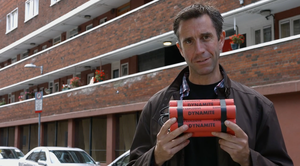
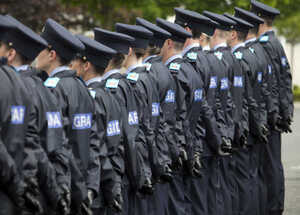
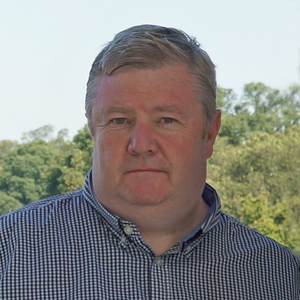
From top: passing out parade at Templemore, Garda College in August; Derek Mooney

The guards are fundamentally wrong to threaten industrial action but their deep frustration and absolute exasperation is understandable.

Derek Mooney writes:

If the Luas and Dublin Bus pay disputes are anything to go by then the choreography of future pay rows, particularly public sector ones, is likely to run as follows:

Step 1. Both sides negotiate for months without success.

Step 2. Employees go on a limited strike, inconveniencing the public

Step 3. The strike action continues for 3 – 4 weeks while both sides posture on TV and radio news shows

Step 4. Both sides then ‘suddenly’ return, without preconditions, to the negotiating table

Step 5. Employers find extra cash for pay increases they previously said was not there

Would it not be better for everyone, most particularly the public who these public services are meant to… well… serve…, if the unions and management could just skip steps 2 and 3 and jump straight to step 4?

Or, could it be that steps 2 & 3 are an essential part of the process and are needed to bring everyone to their senses or, at least, to a better frame of mind?

Has our industrial relations process developed (or, should I say ‘descended’?) to a point where, on one side, the workers need a couple of days on the picket line to let off steam and, on the other side, management need to suffer a few days of lost business, in order to create a more conducive negotiating atmosphere?

If this is the case, and it increasingly appears that it is, then we will have a bit of a winter of discontent ahead as other public sector groups get themselves geared up to dust off the picket signs and placards.

The situation is not helped by the news that the body established by the last FG/Lab government to oversee industrial relations mediation and the improvement of workplace relations and hailed at the time – by both Fine Gael and Labour Ministers – as marking a new era for employment rights and industrial relations: The Workplace Relations Commission (WRC) is just not working.

According to a recent survey conducted for the Employment Law Association of Ireland, half of the legal and industrial relations practitioners surveyed are dissatisfied with the new Workplace Relations Commission and think that the new WRC system is even worse than the much-criticised version it replaced only one year ago.

The survey’s key findings here and the Irish Examiner op-ed by the association’s chair, Colleen Cleary, both make for grim reading, though the association does identify the main problems and helpfully proposes a series of changes and reforms to make the new system work efficiently and effectively.

One group who will not likely benefit from these changes, if they are made, is An Garda Síochána as they fall outside the State’s normal industrial relations processes – and understandably so.

I fully subscribe to the principle that the Gardaí and the Army should not have a right to strike, given the significance of their roles and their importance to our safety and security.

However, if we are to ask them to surrender a very important and powerful industrial relations tool, we must also ensure that this does not weaken their ability to negotiate fair rates of pay and good working conditions.

I think the GRA are fundamentally wrong to threaten industrial action, not to mention their being possibly in breach of both the Garda Síochána Act 2005 and the Garda Síochána (Discipline) Regulations 2007, but their deep frustration and absolute exasperation is understandable.

As Gardaí see it, the State is telling them to follow a set of rules which it refuses to honour itself.

In the view of the GRA the State has not lived up to its commitments in the Haddington Road agreement as the review of Garda pay levels and industrial relations promised under that deal was never completed.

The GRA now find themselves in a negotiating no-man’s land with the Department for Public Expenditure now having responsibility for addressing many of their grievances, but the conciliation and arbitration system devised to deal with such issues is based on the Department of Justice, a department which has gone without a permanent Secretary General for two years.

Added to this are disputes and commotions which have seen a Justice Minister, a Departmental Secretary General and a Garda Commissioner resign, retire or relocate and a series of statements from senior Garda officers which suggest that all is well and everything and everyone inside the force is hunky-dory.

Is it any wonder their morale is low? And all that is before you even get to the subject of pay rates.

Kind words and high praise from Ministers and Deputies during Leaders Questions and Dáil debates is no substitute for good pay. A starting pay of €23,750 is not generous.

Yes, there is range of allowances (over 50 as far as I know) and, according to one calculation, a new Garda can probably expect to get allowances for unsocial hours etc. equal to about 25% of their salary – but that is still a low basic rate of pay.

By announcing four days of industrial action in November, the GRA has put itself on a hook which the Minister and the government must assist the GRA to prise itself off.

Mainly because we cannot have a situation where Garda go on strike, but also because this Minister has played some role, via inertia and listlessness, in creating the conditions that allowed it to happen.

Derek Mooney is a communications and public affairs consultant. He previously served as a Ministerial Adviser to the Fianna Fáil-led government 2004 – 2010. His column appears here every Monday mid-afternoon. Follow Derek on Twitter: @dsmooney

Rollingnews

i160101_192627_30845159otexttrmrmmglpict000079045824o

Garda Keith Harrison

Yesterday, RTÉ’s This Week had an item about Garda Keith Harrison who arrested a member of the drugs unit in Athlone for suspected drink driving.

Garda Harrison claims his career has been ruined by this arrest which, although not reported in the RTÉ report, took place in 2009.

Reporter John Burke explained that Garda Harrison made a complaint to the then Garda Confidential Recipient “two and a half years ago”, before making a complaint to the Garda Síochána Ombudsman Commission (GSOC).

Mr Burke said: “GSOC are still awaiting clarification on key issues relating to that investigation which is now running for over two years”.

In his report, Mr Burke played an interview he recorded with Garda Harrison’s solicitor Trevor Collins, of Galway-based Kilfeather Solicitors.

During the interview, Mr Collins said:

“My experience, on behalf of my client, is one of frustration in that he brought a complaint, originally to the Garda Confidential Recipient, almost two and a half years ago. Eventually, that was referred to GSOC and GSOC have had this complaint for two years. My client has provided all the information and complied with every request that’s been made of him by GSOC but, much to his frustration, he has been left in limbo for the last two years.

We, on his behalf, have been pressing GSOC for an explanation as to why these delays have arisen and it is correct to say that GSOC did provide us with an explanation whereby they have told us that their delay in the investigation is due to an apparent delay on the part of An Garda Síochána in furnishing them in whatever information it is they require to conclude their investigation.”

“I’m not privy to the precise details, John, I can only speak on behalf of my client. In terms of the prejudice it causes him and I was advised by GSOC that they’re still waiting for further information from An Garda Síochána.”

“…It is apparent to us that the legislation they (GSOC)  wish to rely upon, the power that they have, to investigate is not fit for purpose in that it doesn’t provide them the teeth – and I think that was the word used by Judge Mary Ellen Ring to compel An Garda Síochána to deliver the information they seek. That’s the significant point here.”

GSOC can make all the requests they wish of and for information but, at the moment, it’s for the gardaí to decide when they wish to deliver that information.”

Further to this…

Readers may wish to Sinn Féin TD Pearse Doherty’s claims about Garda Harrison in the Dáil on May 15, 2014 – a week after the then Minister for Justice Alan Shatter resigned.

He said:

More than a month ago I was contacted by a serving member of An Garda Síochána who relayed to me very disturbing allegations in regard to Garda practices in the Westmeath division but not exclusive to that division. I subsequently met with this garda and have had a number of telephone conversations with him since.

On the day that the former Minister for Justice and Equality, Deputy Alan Shatter, resigned, that garda called me and told me that as a result of that resignation he now had more faith in the confidential recipient process and was going to arrange a meeting. That meeting took place today.

Garda Keith Harrison claims that as a result of arresting a member of the drugs unit in Athlone for drunk driving, that Garda management maliciously set out targeting him while the arrested garda was afforded protection by Garda management.

He claims that a managerial review of his high work returns and practices was instigated and persons who had past interactions with him in the execution of his duties were invited by the Garda to make complaints against him.

He claims that during this period from September 2009 until March 2011, he was office-bound while the garda he arrested, who had been found with a high concentration of alcohol, was still driving official vehicles and carrying an official firearm.

Garda Harrison makes serious claims about how the drunk driving case was struck out of court on dubious rulings and how evidence relating to the case was stolen by a member of the Garda.

He also claims that a member of the Garda of officer rank stationed in the Westmeath division prevented successful prosecution of individuals in a number of cases.

On Monday, I met with Garda Harrison again. At that meeting there was also Garda Nicky Kehoe, who is another serving Garda whistleblower, and who has made serious claims in regard to the connection of a major heroin dealer in the Midlands and a senior member of the drugs unit.

Both those serving gardaí at that meeting were joined by former garda and prominent whistleblower, John Wilson, who is advising both men. I also invited our justice spokesperson, Deputy Pádraig Mac Lochlainn, to attend which he did.

At that meeting copies of sworn affidavits were given to me from both gardaí. Garda Harrison claims that he had suspicions about a member of the Garda who was working within the drugs unit who may have been knowingly allowing the sale and supply of drugs within the Athlone district and that he had raised this with management, but he claims that it fell on deaf ears.

At that meeting I was also presented with a written record of a meeting between Garda Nicky Kehoe and a civilian who has come forward in recent days who corroborates the claims that have been made by Garda Kehoe in regard to heroin dealing and a member of the Garda.

Meanwhile…

ctxmfqrxeaaelio

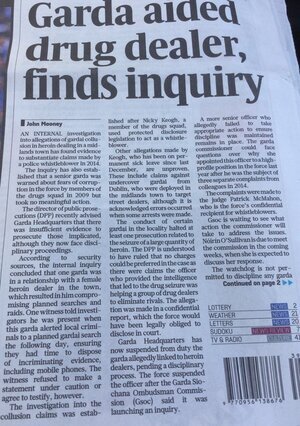
Readers may also wish to note a story which was in The Sunday Times yesterday, by John Mooney.

The article (above) concerned an internal investigation which, effectively, substantiated some of Garda Kehoe’s claims in relation to Garda collusion in heroin dealing in the Midlands.

Further to this…

Readers may also wish to recall separate claims made by another Garda whistleblower, Jack Doyle, about gardai colluding with drug dealers.

Independents 4 Change TD Mick Wallace told the Dáil on May 15, 2014:

One such story comes from a former garda called Jack Doyle. His story gained some attention around 2000. He revealed some serious drug involvement by gardaí in the Cork area and at the time the Garda authorities confirmed that undercover gardaí had been involved in the importation of illegal drugs into the State in what they described as controlled operations.

However, a spokesman said that these operations were necessary in order to bring the leaders of criminal drug gangs to justice. Garda management rejected calls for an inquiry into claims made by Jack Doyle, saying nothing inappropriate had occurred.

We got a 27-page report from Jack Doyle into the background to what went on. I will read less than a page of it. He was speaking with one of the drug runners with whom he had become acquainted:

He recounted to me how they had many opportunities to arrest the boss of the criminal gang but failed to do so. When asked why, he replied, “They have a senior garda in their pocket.” He then recounted an incident in Rosslare when he was returning with a shipment of drugs. A customs officer stopped him and was about to search his jeep when two plain-clothes gardaí commandeered the jeep and drove out of the terminal at speed, being pursued by customs officers. A high-speed chase ensued and the gardaí lost their pursuers. As a result of this incident he said he would never personally bring drugs in again.

He then proceeded to tell me about the many runs he had done, bringing in cocaine, ecstasy, cannabis and firearms. Massive amounts of drugs were coming in and quantities were allowed to get into the hands of the criminal gang. He told me how he was being well looked after financially by both the criminal gang and the gardaí.

He then went on to tell me where he had left a handgun in a wooden area in Cork. He contacted a particular detective sergeant and told him of the location, and drawing a map in the area pinpointed it. On finding the location, two gardaí threw in a number of firearms to beef up the find. He explained that the press reported it as a subversive arms find. When I asked him why they would do this, he replied, “To further their careers in the force.”

Their careers have progressed and one of them is now an assistant commissioner. He was appointed by the former Minister, Deputy Shatter, and this same individual was involved in the Boylan case which entails a very similar story to Jack Doyle’s.

Jack Doyle’s career did not progress. He turned up at his place of work one day and was told, “Jack, you’re not coming in here. You’d better go home. You’re finished, Jack. But, listen, you’ll be grand; we’ll look after your pension.” He was forcibly retired. That one of the gardaí involved is now an assistant commissioner – he could actually be the next Commissioner – emphasises how important it is that the new Commissioner should come from outside the State with a new hierarchy built around him or her as otherwise problems will not go away.

In addition, in December 2014, Mr Wallace spoke at a Banter evening, saying the following:

…[Jack Doyle] watched drugs being taken off boats and gardai supervised the offloading of them. He went to his chief superintendent and told him the story and he was told, ‘oh god, you better go to Dublin with that story’.

He went to Dublin with the story and, the following week, he told his story in Phoenix Park. He went back home the next day and he turned up for work and a guard blocked his way into the garda station and said to him, ‘oh jaysus, Jack, you don’t work here’. [Jack said] ‘what do you mean?’ [Garda said] ‘Jack, it’ll be fine, it’ll be fine, it’s all over, it’s all over but listen everything will be taken care of, you’ll get your redundancy, the whole lot.’

He never worked for the guards again. I brought that story to the Dáil twice in the last 12 months but it hasn’t, you haven’t seen it because it hasn’t been covered by the media. And there’s a lot of other stories.

There’s a number of cases where guards take, they capture drugs. We know of a case where drugs were coming in, maybe five suitcases of cocaine might come in and it would be organised to let four through, the guards would catch one suitcase with some chaps that would be heading off in one direction with the suitcase. Their leader was never caught.

And the suitcase they would catch, they would bring it and there’d be a big show and the media would be brought down to show, ‘oh, there was a big drugs find yesterday and here’s all the stuff’.

The stuff goes back in a box and fellas have come to us and told us that they were dealing in drugs, they were caught by the cops, they weren’t turned in and the cop says, ‘we’ll be back to ya’. They come back two weeks later and say, ‘here, sell this for us and bring us back the money’. There’s a good bit of that going on.

Listen back to RTÉ’s This Week item here

Previously: Meanwhile, In The Dáil

The Wrong Side Of The Thin Blue Line

Pic: Trevor McBride/Irish Mirror

hillary

Gulp.

Hillary Clinton considered drone attack on Julian Assange – report (RT)

Will WikiLeaks’ Assange delay ‘October surprise’ announcement? (Fox News)

Meanwhile…

pence-kaine

US Vice President candidates Mike Pence left) and Tim Kaine

Election analyst Shane Heneghan ponders the the next week and beyond in the US elections.

Shane writes:

The vice presidential debate is traditionally somewhat of a wild card. This year, both Veep candidates are unmistakably less visible than their running mates.

Tim Kaine who gives off the vibe of a moderately embarrassing suburban dad will probably be seeking to portray himself as having a certain amount of mettle. It remains to be seen how Mike Pence would like to be seen as but he potentially would still like to be regarded as the brains of a potential Trump presidency.

That debate will be swiftly followed by a town hall debate between the main two candidates where questions will be posed by voters. Clinton has strong form in this format.

By contrast, when Trump gets a tough question he’s known to play the ball and not the man. He may get away with that with a Fox news anchor during the primaries but a member of the public during the general election just might prove to be a slightly different matter.

In terms of predictions, at this point I would give Clinton a narrow advantage but I would be nervous about saying that loudly.

Trump and Clinton are easily the two most unpopular candidates either of the two major parties have nominated in living memory. This could lead to many things. Most obviously, a dip in turnout and spike the vote of third party candidates.

The sheer unprecedented nature of the whole thing probably means any dip in turnout could hopefully be kept to a minimum and that the real story here is third party candidates.

The Libertarian ticket has two former Republican governors who are occasionally polling in double digits. Gary Johnson of New Mexico and has considerably more experience at being a Republican than Trump and the more exposure he gets the more of the GOP base he could take away from him.

Jill Stein of the US Green Party may have a similar effect on the Democratic ticket but given her relative obscurity on the national stage, her failure to get above the margin of error in most polls and the surprisingly strong efforts of Bernie Sanders to row in behind Clinton we can expect this to happen to a much smaller degree.

Another thing worth considering on a purely hypothetical basis for the time being is a candidate winning the electoral college without winning the popular vote. This has happened on four separate occasions already- most recently in 2000 when Al Gore garnered half a million more votes than his Republican rival but was denied victory.

Is it possible that if we don’t see the massive double digit margins in formerly solid blue and red states for either candidate, if we see third party candidates eating into base votes that we may have a scenario where the winner gets to 1600 Pennsylvania Avenue despite being three million votes or more behind in the popular vote?

If Donald Trump were beaten in this fashion how would he react? More to the point, how would his more rumbustious trigger happy supporters react? It’s a recipe for trouble. If Clinton were beaten in a similar fashion she and the establishment that backs her would feel similarly aggrieved.

In theory, congress should take such a result as a signal to reform the electoral college. What we can be more sure of, however, is that they can use the result and the perceived lack of legitimacy in the short term to ignore the wishes of the President at will. Heck, they do it already to Obama- who is considerably more popular than either of these two.

Another thing that hasn’t been mentioned, and we get way ahead of ourselves when we say this but given the unpopularity of both candidates, it is surely highly unlikely that the winner in 2016 in will win in 2020 or that they will even be reselected to be their party’s candidate. No one has said this out loud that much but you can bet it’s a thought in the back of the heads of some operatives in both parties.

Follow Shane on Twitter: @shanehengehan

ct1wdlnxgaagbsd

Further to the graffiti incident at Anti-Austerity Alliance TD Mick Barry and Cork City Councillor Fiona Ryan’s office in Blackpool, Cork last week…

Mick Barry tweetz:

All male anti-choice picket of my constituency office today. Vile abuse shouted at two women who had the audacity to challenge them.

Previously: Eighters

ttip2

Further to Fine Gael MEP Brian Hayes’s recent letter to The Irish Times about an article concerning the Transatlantic Trade and Investment Partnership (TTIP)…

Brian Hayes, MEP, takes me to task for suggesting in a recent article that aspects of the proposed EU-transatlantic treaties need far better political and journalistic scrutiny than they are getting.

He is particularly insistent that the Transatlantic Trade and Investment Partnership (TTIP) has gone away forever and that the public interest EU “precautionary principle” is under no threat.
This is an extremely complacent and short-sighted view.

The central question for both the Comprehensive Economic and Trade Agreement (CETA) (almost ratified) and TTIP (whenever it makes its inevitable reappearance) is whether the EU’s guiding principle on food and safety standards will be preserved when regulatory harmonisation starts to bite.

Experts close to the policy process acknowledge that the EU, which has higher standards than the US in many areas, will have to adopt a strongly defensive stance on food safety and health issues if it is to tackle robust American interests.

There is no certainty that the European Commission is able or willing to mount a defence, since it is motivated, particularly now in hard economic times, to add momentum to transatlantic diplomacy that will seal a deal as quickly as possible and with a minimum of public fuss.

The risk for public health, however, is that key European principles will be regarded as legitimate bargaining chips in the effort to negotiate economic gain and that the end product will favour corporate interests far more than the public interest.

Through its actions at the World Trade Organisation, the US has already demonstrated opposition to EU policies in food safety and, as the European Journal of Public Health points out, has steadily pressed for adoption of a more US-centric approach to the scientific evidence that is called upon to underpin public-health rules.

We can see from the Trans-Pacific Partnership (TPP) that US interests are also pushing for a more aggressive stance in trade deals to favour the patenting of medical procedures, extending medical data exclusivity and supporting the ever-greening of patents.

Arguably the biggest threat in these treaties is that they enable multinational companies to raise legal challenges against food and public health legislation. Arbitration held in private allows corporations to bypass national courts.

Essentially it opens the way for corporate investors to scavenge for profits by suing governments, accusing them of breaking trade commitments with their own national food and health regulations.

This aspect of trade treaties is currently being activated in South America, where multinational tobacco firms are attacking cigarette control regulations in Uruguay, despite the Uruguayan constitutional court supporting its own government’s sovereign right to regulate smoking.

All of Ireland’s 15 MEPs should be well aware that the way trade negotiations are structured has been problematic for some time. This criticism has been well circulated in Brussels by various citizen lobby groups over several years.

No action has been taken to correct the glaring imbalance in the composition of EU expert groups that reflects the relative influence of corporate investors and public interest advocates.

European Ombudsman Emily O’Reilly in Brussels has been outspoken about the absence of consumer protection representatives on these expert groups that have significant influence on the way the European Commission arrives at trade decisions.

The EU and the US negotiate trade issues through a well-established dialogue process, which is designed in theory to allow consultation with non-governmental organisations. But the consultation mechanisms for business are systematically stronger than those for consumer, environmental, labour and public health advocates.

Irish MEPs should be leading the charge towards urgent reform of the internal workings of EU policy-making.

If a more transparent EU doesn’t begin to appear on the agenda pretty quickly, the current mood of alienation evident in the UK and parts of eastern Europe could begin to get a grip in Ireland too.

No amount of complacent bluster from our MEPs will save us from that.

Farrel Corcoran,
Clontarf,
Dublin 3.

Media, democracy and international trade agreements (Irish Times)

Previously: Brian’s TTIP


14434825_1095139773910336_5065362718155662242_o

In Poland.

BBC reports:

Women in Poland have gone on strike in protest against proposals for a total ban on abortion.

They marched through the streets wearing black as a sign of mourning for their reproductive rights.

Women who oppose the ban are staying away from work and school and refusing to do domestic chores, in a protest inspired by a women’s strike in Iceland in 1975.

Anti-abortion protests are being held around the country too.

Women took to the streets of the capital city, Warsaw, in a pro-choice march on what they are calling “Black Monday”.

Further to this…

People who wish to express their solidarity with women in Poland are invited to bring a candle to the Polish consulate on Eden Quay this evening between 5.30 to 7pm.

Dublin – Solidarity with Polish women on strike (Facebook)

Black Monday: Women in Poland go on strike against abortion ban (BBC)

UPDATE:

ct1pbsdwyaa5yrs

Lenny Abrahamson writes:

Huge protests happening in Poland against a full scale attack on women’s rights. They are asking for support from abroad…

screen-shot-2016-10-03-at-10-46-43

Free next Saturday?

Ruairi O’Hagan writes:

Feis Lebowski, Cork’s little Big Lebowski festival is back!

The night takes place on October 8th upstairs in the Roundy on Castle Street (near Argos for those unfamiliar). Doors will open at 8 where you can sip on a White Russian and chat to fellow Little Lebowski Urban Achievers (and proud we are of all of them).

DJ El Duderino will be dipping into his record collection to spin some tunes before the movie – and yes, there is a strict “No Eagles” policy. No Metallica either. Bunch of a**holes.

Achievers are encouraged to come dressed as their favourite character from the movie – be it The Dude, Donny, Walter, Jesus, The Stranger, Maude, Bunny, whoever. The best costume on the night will receive a very special prize, along with being crowned Feis Lebowski King or Queen for 2016.

The movie will then start at 9.30pm, where Achievers are encouraged to laugh along/quote along/sing along.

Following the movie, we’ll be giving away Lebowski-themed prizes, before DJ El Duderino takes us on home and gets everyone on the dance floor.

Admission on the door is 10 Euro (or bones, or clams, or whatever you call them) – every single penny of which will be going to the Alzheimer Society of Ireland.

Capacity is limited so come along early – we’re not pre-selling tickets and we won’t be keeping tickets on the night for anyone, so it’s first come first served.

Feis Lebowski Cork

screen-shot-2016-10-03-at-10-37-48


Thomas Quigley writes:

I bought a brand new bicycle yesterday and it was stolen from the bike cage in the underground car park of my building in the Ashbrook estate in Clontarf, Co Dublin.

It didn’t even last 24 hours. I didn’t even get to know her. I was hoping you could spread awareness in case people spot it online or in the city. Appreciate any help.

Mmf.

cliffs

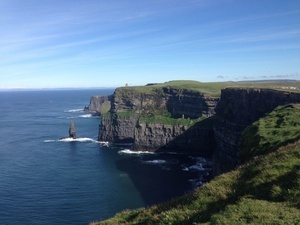
Cliffs of Moher, Liscannor, Co Clare

Joanne writes:

On a day like yesterday when I arrived at it was pea soup and you literally couldn’t see a hand in front of you and then lo and behold half hour later this (above). It was just stunning….tourists were in their element. I met 2 Japanese tourists who had come specially to Ireland to see it as they are HUGE fans of The Princess Bride  (1987) which features the cliffs. Makes a change from Game of Throners…