

Category Archives: Misc

90422150

derek

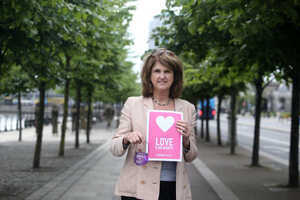
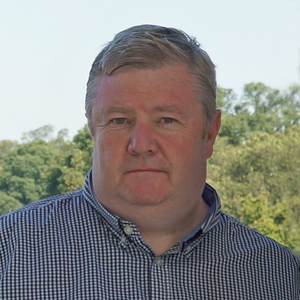
From top: Joan Burton at a candle light vigil for slain Labour MP Jo Cox; Derek Mooney

A rush to simplification and the urge for immediate commentary and analysis and you have a dangerous mix.

Derek Mooney writes:

As people struggle to come to terms with how Jo Cox MP could be so brutally and slain outside her constituency clinic, many have focussed on the coarsening of public debate and the abuse, both actual and online, aimed at politicians.

Though there has undeniably been a coarsening of public debate in recent years, we should not delude ourselves that there was once a golden age when all political discussion was genteel and free from ad hominem attacks.

There wasn’t.

Politics has always been a rough trade where vigorous and full bodied exchanges are the order of the day. Take this robust response from Frank Aiken T.D. in Dáil Éireann in July 1959, which I found while doing some research on Irish diplomatic history.

Incensed by Fine Gael claims that he was too supportive of Chinese representation at the U.N. and that he had chosen to attend a U.N. meeting instead of the funeral of Pope Pius XII, Aiken, who was Foreign Minister at the time, fumed:

He [Deputy McGilligan] is a low type who would climb on the body of a dead Pope to have a crack at Fianna Fáil.

Can you imagine the memes if someone said that today?

But blaming Social Media alone for the eroding of civility in public discourse, as some have done in recent days, is to miss a bigger point.

Of course there are armies of irresponsible anonymous online warriors out there ready to pour a stream of bile and abuse on anyone who disagrees with them or points out that their heroes have feet of clay.

They are on both the left and right. Indeed, some of the most illiberal vitriol can come from those styling themselves as liberal, but whose social media output is anything but.

There are lone wolves and there are organised hoards. Our own domestic example of the hoard are the Shinner-bots, a virtual battalion of anonymous trolls (with the emphasis on ‘anonymous’).

Within minutes of Gerry Adams being criticised online for his disgraceful ‘Django’ tweet, the Shinner-bots were insulting and lambasting anyone who dared to question the actions of the dear leader.

Their goal: smother the critics by saying and posting anything necessary to shut down the discussion and drive their opponents offline.

Sadly, politicians and journalists, particularly female, come in for equally appalling treatment on social media. The attacks on journalists are probably more pernicious, as the aim is to influence their reporting not by weight of facts and debate, but by simple bullying.

But the point to remember is that the vast majority of people do not post or talk about politics on social media. Just in the same way as the majority of the people who vote for an individual TD do not contact them by email, letter or phone.

Most people are part of what Richard Nixon (OK, not the first name to leap to mind when talking about open dialogue) termed: “The Silent Majority”, the people who are following events, but who are not protesting, speaking out or expressing their political opinions beyond the ballot box or the odd discussion at home or in the pub.

Blaming the coarsening of debate on social media alone is akin to attributing the rise of Hitler to the invention of valve radio.

It is a factor, particularly the facility for anonymous posting which certainly has helped the erosion of mutual respect in discussion, but there are other significant ones, including the dumbing down of political debate.

This dumbing down is practised by politicians and journalists alike.

In the 1968 U.S. presidential election the average candidate soundbite used on the TV evening news was 42 seconds. By the 2000 election, that had shrunk to about 7 seconds.

The trend was not limited to broadcast media. During the same period the average quote from a candidate appearing on the front page of the New York Times went from 14 lines to about 6.

We now do politics as if it was a skills test on a reality show: Your task is to set out how you will sort out Irish healthcare in 30 seconds… explain the rational for the UK remaining the EU in 140 characters.

Couple this rush to simplification with the urge for immediate commentary and analysis and you have a dangerous mix. In the days before social media, talk radio and rolling 24-hour news, politicians and journalists alike had the time to consider their responses and the space to expand on them.

Political analysis and political responses are now expected be immediate, hurried and brief. But what is the virtue of the immediate short response, be it in a radio interview or online?

If expecting a Minister to give their immediate gut response to a particular issue is now the norm, then how can we slam others for doing the same online, when they do it under their own name?

Derek Mooney is a communications and public affairs consultant. He previously served as a Ministerial Adviser to the Fianna Fáil led government 2004 – 2010. Follow Derek on Twitter: @dsmooney


Screen Shot 2016-06-20 at 13.39.20

Fiona Kennedy lives in Connemara, Co. Galway.

She has clinical depression and borderline personality disorder.

Fiona writes:

I had an article published here a few weeks back, in which I expressed my frustration at what I perceive to be the very sanitised view the general media presents to us about mental health.

Following on from this, I wrote a similar article for the Irish Times, stating:

“My concern is that the current media representation of these (mental health) issues is in danger of doing the subject more harm than good by having a really restricted focus in terms of how mental health problems manifest, who they affect, and how they are managed.”

Immediately after the articles I was contacted to do both TV and radio interviews which, after much consideration, I had to decline.

I knew that while I would get great energy from doing them, and it would possibly help take the national conversation about mental health a little further, it would also knock the stuffing out of me and the fallout for me personally wouldn’t be worth the whatever slim gain may have been made.

I realise there’s a massive irony in this – I gave out that media representations of mental health issues are very one sided, yet when given the opportunity to do something about it, I had to say no or my mental health would suffer.

On a whim, I recorded the video above.

I cannot currently give live interviews, and there’s little I can do to affect change around mental health policy in Ireland.

But, I’ve been writing about trying to manage borderline personality disorder (bpd) and depression for years, so what I can do is attempt to show you the reality behind the words.

None of these vlogs are scripted, rehearsed or edited in any way. They’re mostly recorded in my car because it feels like a really safe place to do them, if a little dull visually, and are short – generally between one and three minutes.

I tend to think a lot when I’m driving, and it helps to record my thoughts this way on a day that I may not get time to write.

What you see is how I am – I don’t usually wear make-up, and I often look extremely tired and/or spotty.

This is my reality.

I’ve never sugarcoated my writing so I’m not going to sugarcoat these.

Fiona is an Ambassador for See Change, a national movement that tries to improve attitudes towards people with mental health issues, and she blogs here

Previously: Fiona Kennedy on Broadsheet

90298346

90421920

From top: Former environment minister Phil Hogan; uncollected rubbish in Dublin’s north inner city.

He didn’t just give us water.

Seán McCárthaigh, in The Times (Ireland edition), reports:

The last government chose to maintain a fully privatised waste collection system, despite an internal report outlining the benefits of an alternative that could have involved less cost for homeowners.

Documents from the Department of the Environment, which have been seen by The Times, show that a system involving franchises for each local authority area was found to be more likely to deliver savings to customers four years ago and could have been introduced.

The model, known as “franchise bidding” would still have involved private companies, but they would have had to compete to win fixed tenders for each area in a policy change that would have given the state significant control over the process.

Despite the report’s conclusion the Fine Gael-Labour coalition ultimately backed the recommendation of the Department of Environment that it should maintain the existing structure when moving to the new pay-by-weight system, due to be introduced on July 1.

The decision, ultimately signed off by Phil Hogan, the then environment minister, allows private waste collection firms to continue competing for services in the same areas and included plans for stronger regulation.

The new pay-by-weight system has provoked controversy as private companies signalled price hikes for customers ahead of the launch date.

The decision not to opt for franchise bidding was made following outright opposition by members of the Irish Waste Management Association, which includes companies like Greenstar, Thorntons and Panda, to the franchise bidding model.

The analysis said the non-franchise Irish system of waste collection, which lets private firms compete for business, was “somewhat unique”, noting that its continuation with some extra regulation would “create a unique system of waste management in which the role of the private sector is central.”

“The near wholesale withdrawal of local authorities and the corresponding growth in the role of the private sector was not a policy goal and was not fully anticipated,” it said.

Private firms now collect 98 per cent of all household waste in a market estimated to be worth at least €250 million annually.

Government ignored report to cut waste cost (Seán McCárthaigh, The Times)

Thanks Richie

Anthropoid

What you may need to know:

1. WWII drama about a Czechoslovakian resistance plot to assassinate Reinhard Heydrich, the architect of Hitler’s ‘Final Solution‘.

2. True story, yo.

3. Spoilers: Anything that could go wrong, did go wrong.

4. Cillian Murphy and Jamie Dornan? Steady ladies.

5.
Murphy’s Brummie accent is better than his Czech accent.

6. Broadsheet prognosis: Hello Nazi.

Release Date:
August 12 (US).

(Mark writes about film and TV at ScreenTime.ie)