






MORE to folly.



MORE to folly.
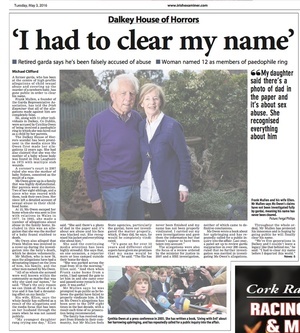
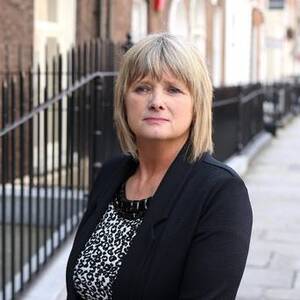
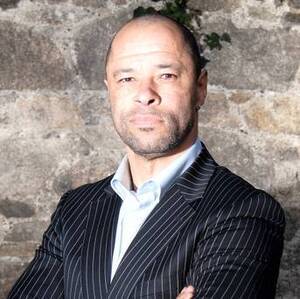
From top: Front page of today’s Irish Examiner; Cynthia Owen and Paul McGrath
In January, Cynthia Owen used Facebook to name people she said were among a paedophile ring operating in Dalkey, Co. Dublin – who abused her – in the 1970s.
One of those named was former Garda, founder of the Garda Representative Association and co-founder of Dalkey United football club, Frank Mullen.
Cynthia gave birth to a baby girl, Noleen, in 1973 when she was just 11 years old. It is unknown who fathered the child.
In 2007, an inquest jury found Cynthia was the mother of Noleen who was stabbed with a knitting needle over 40 times just after the birth. Noleen’s body was left in a lane way in Dun Laoghaire.
Cynthia told the inquest that her daughter had been conceived following rape by a number of men and that she had been murdered by Cynthia’s mother Josie Murphy shortly after birth.
Following the inquest, the then Justice Minister Michael McDowell appointed Patrick Gageby SC to review the Garda investigation into the death of Noleen. Mr Gageby found there was no reason for any more action to be taken on the matter.
Further to this, today’s Irish Examiner has published an article by Michael Clifford in which Mr Mullen says all of the allegations against him are false. The article can be read in full here.
Cynthia Owen writes:
I note the article in today’s Irish Examiner which is essentially an interview with Frank Mullen, who has identified himself as somebody who has been a suspect in this case and whose name the Gardaí have not cleared.
It is not for me to address every point Mr Mullen makes in his interview but, by his own admission, he has not been cleared of his involvement in the abuse I suffered and the murder of my daughter as a result of that abuse.
The HSE found me to be very credible, likewise the psychologist hired by the Gardaí to assess my mental health.
And also a jury of six men and six women in the inquest that identified Noleen Murphy as my daughter, who was born to me when I was 11 years old and murdered by my mother to protect the men who were abusing me and who could be her father.
I stand by every allegation I have made regarding the abuse I suffered as a child. My murdered baby girl still lies in a mass grave in Glasnevin, despite my efforts to have her returned to me for a dignified burial, her murder remains unsolved.
I have been calling for a sworn public inquiry and now repeat that call as otherwise the truth will not come out.
Michael Clifford: Frank Mullen: ‘I couldn’t leave a legacy like that behind me’ (Irish Examiner)
Previously: A Dalkey Archive
Meanwhile…
From The Examiner interview::
‘Last year, Mr Mullen’s long tenure with Dalkey United came to an end. He had been one of the founder members of the club more than 50 years ago. Among the players he mentored and remained friends with was Irish football legend Paul McGrath.’
Paul McGrath has since tweeted:
@Justice4Noleen . If what Cynthia claims is true she needs to be loved , supported and needs to get justice for her and her babies
— Paul McGrath (@Paulmcgrath5) May 3, 2016
@Justice4Noleen it’s a disgrace that my name was included in such a horrible piece by @Mickcliff
— Paul McGrath (@Paulmcgrath5) May 3, 2016
@Justice4Noleen I have not seen or spoken to frank Mullen in over 12 years.
— Paul McGrath (@Paulmcgrath5) May 3, 2016
Comments are closed (broadsheet@broadsheet.ie).
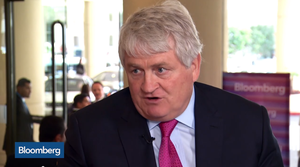
Denis O’Brien speaking on Bloomberg earlier today
Denis O’Brien did an interview with Bloomberg earlier this morning in which he talked about Digicel, the IPO which didn’t happen, Google and Facebook.
Towards the end of his interview, Mr O’Brien spoke about Irish Water.
Presenter: “A final question and this goes away from telecom, Google and Facebook, what are your views on the delays of forming an Irish Government?”
Denis O’Brien: “Well, it has been fraught, it hasn’t worked out as well as it should. I think the Government were wrong to back down on the water, Irish Water. You know they, it was the right thing, all the infrastructure is Victorian for the supply of water in Ireland, people have a lot of, they have free water in many, many cities in Ireland so it… they gave up on that and set up a commission to evaluate what they should do with Irish Water so that’s kicked in the air and down the field whereas it should have actually stayed. And the investment, you know, there’s an investment programme of between €3bn and €4bn that was supposed to go into that – that now is under question.”
Presenter: “So what parties would you like to see in power?”
O’Brien: “Well I really don’t care who’s in power but I think there needs to be stability in Ireland, I would have a concern if there’s a lack of stability that will affect foreign direct investment and, you know, it’s a time in Europe where there’s a lot of unsettling things that are happening. You’ve got Brexit, you’ve got immigration, you’ve got a very polarised Europe…”
Watch the interview in full here
Irish Billionaire O’Brien Says Government Water Climbdown Wrong (Bloomberg)
Irish Billionaire O’Brien Holding Off on Digicel IPO for Now (Bloomberg)
Preview: Denis O’Brien And THAT Siteserv Deal

Cats for c**ks?
Via AUNTIES comedy duo [Damon Blake & George Fox]:
Our new app just might fix the internet. With Sarah Donovan, shot & edited by Clark Wickstone of Domestic Walrus
Previously: A Young Man’s Fancy Lightly Turns

This afternoon
South William Street, Dublin 2
Wayne O’F writes:
Double yellow lines, footpath, on a junction…
Name that model anyone?

Enjoy gaming?
Ian of Grind gaming writes:
Myself and a bunch of my mates have just started a gaming channel [GRIND] on youtube and tyesterday we have posted up our first video (above). We are based in Galway and came up with the idea when we noticed that there wasn’t really any gaming channels that are Irish and contain Irish humour….
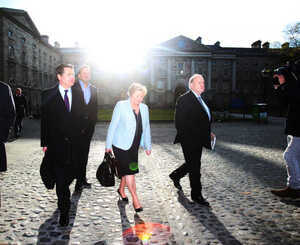
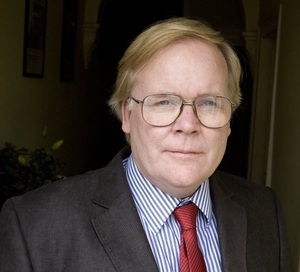
From top: Fine Gael’s government formation negotiating team, from left: Paschal Donohoe, Leo Vardakar, Frances Fitzgerald and Michael Noonan in Trinity College Dublin last week; Michael Taft
Do we really want to follow a Tory model of low-spend?
Don’t be surprised to see loss of competitiveness, poverty, inequality and poor public services dominate the headlines over the next few years.
Michael Taft writes:
We are potentially heading down a dangerous stretch of road ahead – leading us into the Ultra-Low spend zone.
In this zone, investment declines and, so competitiveness and productivity; health and education services suffer; income supports falter adding fuel to the inequality engine.
A low-service, low-waged, low-productivity future awaits.
Of course, spending a lot of money doesn’t guarantee you optimal results. But spending too little certainly won’t get you optimal results.
So how far behind are we falling? Let’s compare public spending (excluding interest – this is called ‘primary’ expenditure) in the EU-15 countries.
I’ll use the method devised by Seamus Coffey who hangs out at Economic-Incentives. He excluded elderly-related expenditure and then compared Ireland with the rest of Europe.
He did this because Ireland has an advantage here – we don’t have to spend as much on pensions and related expenditure because we have a smaller proportion of elderly.
In the EU-15, the over 65 cohort makes up 19 percent of the population; in Ireland, this cohort makes up 13 percent. 2014 is the latest year we have data for old-age expenditure.
In the following, old-age expenditure is subtracted from total primary spending. For instance, Ireland spent 37.2 percent of its adjusted GDP (adjusted per the Irish Fiscal Council’s hybrid-GDP estimate that factors in the accounting practices of multi-nationals).
It spent 4 percent on the elderly, leaving an expenditure level of 33.2 percent excluding elderly-related spending. Figures for European categories are mean averages.

Ireland ranks below all the European averages. What difference would it have made in 2014 in actual Euros and cents?
To reach the average of other EU-15 countries, we would have had to increase public spending by €6.5 billion.
The next comparison is with other Northern and Central European economies (other NCEE). This is the EU-15 excluding the poorer Mediterranean countries like Greece and Portugal. To reach this average, we would have had to spend an additional €9.6 billion.
The final comparison is with Other Small Open Economies, a category used by the IMF. These are economies with a small domestic market and a high reliance on exports. Austria, Belgium, Denmark, Finland and Sweden are in this category. This is arguably our peer group.
To reach this average we would have had to spend an additional €15.5 billion.
[Note: some will say that defence spending should also be factored in as other European countries spend more than us. This is true. In the EU-15, defence spending makes up approximately 1.3 percent of GDP; it’s 0.4 percent in Ireland. In any event, defence spending is a policy choice and, in my opinion, shouldn’t be excluded from comparisons. But if you insist, knock off about €1.5 billion off the numbers above.]
In 2014, it could be argued that we are already a low-spend economy but as I wrote here, the situation could actually be worse. I have reservations about Seamus’s method. Excluding old age expenditure not only removes the demographic driven part of overall spending, it removes policy choices.
Most other EU-15 countries spend more on elderly per capita than we do. Second, if we are to adjust for the elderly population, then we should also adjust for youth demographics. In Ireland, under-20s make up 28 percent of the population, compared to 21 percent in the EU-15.
And we are a low-spender when it comes to education. EU-15 countries spent 5.3 percent on education, Ireland spent 4.7 percent. We have a third more children than the EU-15 and spend more than 10 percent less.
Therefore, when these are factored in, I fear we will have fallen even further behind. But let’s stick with Seamus’s method. Besides, those calculations above were then and we are heading into an even worse situation. Let’s fast-track to 2021.
Here, I use the IMF estimates. There are certain assumptions we will have to make. First, that the interest expenditure throughout the EU-15 – 1.5 percent – applies to each country (it won’t but it will average out). Second, that expenditure on old age remains constant. This will almost certainly change but in all likelihood, spending will increase in Ireland faster than in the rest of the EU-15.
The 2015 Ageing Report estimates that the number of pensioners over 65 years will increase by 17.5 percent in Ireland between 2013 and 2020 compared to a growth rate of 10.9 percent.
We will still have a demographic dividend but the higher growth rate will result in higher spending. And we will have more students in 2020 while the number of students in Europe will fall. So, if anything our demographic driven spending will rise faster.
Third, we assume that 75 percent of the fiscal space will devoted to public spending, or €8 billion. So what is one possible future, based on the IMF estimates?

By 2021 spending in Ireland collapses, falling well behind other European averages.
To reach the average of other EU-15 countries in 2021 we will need to increase spending by €21.2 billion.
To reach the average of other Northern and Central European economies, we will need to spend €24.4 billion.
To reach the average of other small open economies, we will need to increase spending by an incredible €33 billion.
These should be treated as indicative as they are based on assumptions and estimates. Will other EU countries increase or cut spending? Will spending on old age rise faster or slower?
However, we do know from the Government’s own projections that primary spending will fall from 34.2 percent in 2014 to 24.7 percent of GDP between 2014 and 2021. Add in the spending from fiscal space (2.8 percent) and the fall is still substantial.
As I stated before – it’s not all about increasing spending. We need to spend more efficiently with greater accountability and transparency. But even if we were to be the most efficient spenders in the EU, we would still end up being one of the lowest.
So we have a choice.
The only other country that comes close to us is the Tory-led UK. Do we want to follow a Tory model of low-spend or a continental model?
If we want the former, don’t be surprised to see loss of competitiveness, poverty, inequality and poor public services dominate the headlines over the next few years.
But if we want the latter – a continental model – then we not only have to reject proposals for tax cuts, we need to begin a debate over which taxes we are going to raise.
And we better start that debate now, before we find ourselves stuck in the Ultra-Low Spend Zone.
Michael Taft is Research Officer with Unite the Union. His column appears here every Tuesday. He is author of the political economy blog, Unite’s Notes on the Front. Follow Michael on Twitter: @notesonthefront