
Category Archives: Misc

90414447

rory

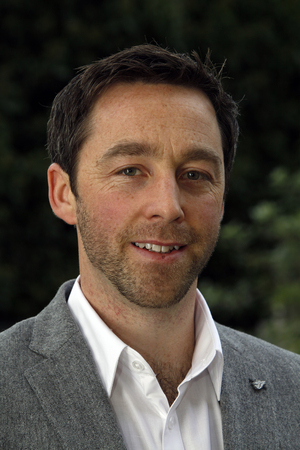
From top: Michael McDowell launching his successful Seanad campaign at the Royal Irish Academy last month; Dr Rory Hearne

Politicians might publicly agree with Seanad reform yet their inaction shows that they want to keep the status quo.

Dr Rory Hearne writes:

Most people do not trust politicians or our political institutions of government like the Dáil and the Seanad.

Too many unfilfilled promises, a consistent failure to deal with the key issues affecting people, cronyism, corruption and a failure to respect ordinary people’s wishes and concerns have left people cynical and tired of politics.

This is a major problem for our democracy which is founded on the principle of ‘rule by the people and for the people’ – all the people and not just the elite, wealthy and insiders.

Take the Seanad, for example. The Seanad is the second most important institution in our democracy, next to the Dail. It is the upper house of the Oireachtas (the Irish legislature or houses of parliament).

It does not have anything like the powers of the Dáil but Senators are part of the important ‘watchdog’ Dail committees that investigate various issues and hold state and other authorities to account, like for example the recently formed housing and homeless committee.

The Seanad can also delay laws and propose amendments to laws.

Yet only a tiny proportion of our population can vote to elect Senators. Of the 60 seats in the Seanad, the Taoiseach appoints 11 Senators, three Senators are elected from registered NUI graduates, three Senators are elected from registered Trinity graduates and the remaining 46 are elected on various ‘panels’ from local councillors, TDs and Senators.

Last week the election was held for 49 of the 60 senators. Understandably given the lack of ability of people to vote in it, it received little attention. It was unfortunate though that there was not more critical analysis by the media of this undemocratic and elitist process.

We had a referendum on the Seanad in 2013. Remember? And a majority of Irish people voted to retain it and not to abolish it. They gave a clear message that they wanted it reformed to be given more powers and for all citizens to have a vote rather than abolished.

Furthermore, an all party Oireachtas working group on Seanad Reform 2015 concluded that

“a parliamentary assembly such as Seanad Éireann whose electoral system excluded the majority of its citizens from participation lacked popular legitimacy”

They recommended opening it up to all citizens to vote.

So why has it not been reformed and why have all citizens not yet being given a vote in the Seanad Elections?

From my recent experience as a candidate in the Seanad NUI colleges election the only conclusion I can draw is that the current system suits those in power and the traditional establishment parties.

They might publicly agree with reform and opening it up to make it democratic for all citizens yet their inaction shows that they want to keep the status quo. Of course it suits them – a new Taoiseach can use the existing system to appoint almost a fifth of all new Senators.

Shamefully it has been used by some failed politicians who actually campaigned against the Seanad as a route to re-election.

Unfortunately I was unsuccessful in my bid this time for election to the Seanad on the NUI panel. After getting 837 first pref votes (11 out of 30 candidates) I was eliminated on the 21st count with a final tally of 1451 votes. Former PD and long time supporter of inequality – Michael McDowell got elected as did the right wing conservative Ronán Mullen.

That these two topped the poll says a lot about those who voted in the election – a bastion of conservative views.

It also points to a major flaw when only a third of NUI graduates are actually on the electoral register and then only a third of those on the register actually voted!

So in the end only 10% of NUI graduates actually voted in the election.

Thankfully, the excellent progressive community activist Lynn Ruane got elected on the Trinity Panel while Alice Mary Higgins was elected on the NUI Panel. I know they will both be strong voices for social justice and equality in the Seanad.

While I was very disappointed not to get elected I am proud of how I used my campaign to raise some of the key social crises that are affecting people in this country – like the scandal that 1,900 children are homeless, rents are unaffordable for many, 138000 children are in poverty, almost 60% of lone parents and their children suffer deprivation.

I decided to run late in the game and I also had to balance running the campaign with looking after a very young family and a full time job. It’s clear to me that if you are going to successfully run for election then you need to have a lot more resources, people and time for your campaign.

Either way I will continue in whatever ways I can to raise these issues and develop solutions that can make Ireland the best country in the world in which to be a child, to have a family, to grow old in – the best country in which every person is valued equally and can live with dignity and flourish to their best potential.

Its a long road ahead but I know that a majority of us in this country want to bring about a Republic of Social Justice and Equality.

Finally, we clearly do not have a true democracy when the right to vote for representatives in our second house of parliament is restricted to a tiny proportion of the population. Another issue is citizen’s initiated referendums – which I will come back to again.

Before the next election our politicians and new government should demonstrate their genuine commitment to democracy

Providing for free and fair elections to the Seanad where the franchise (entitlement to vote) is extended to all Irish citizens over 18 including Irish citizens in Northern Ireland and to holders of Irish passports living overseas
A majority of Seanad seats to be elected by popular vote on the principle of one person one vote
Strengthen the powers of the Seanad to scrutinise, amend, and initiate legislation
Introduce citizen-initiated referendums

And we can judge the commitment to starting this process of real reform and democracy in how Enda Kenny uses his power (assuming he is re-elected as Taoiseach) in the next few weeks to appoint 11 new Senators.

Will he use it for patronage and reward for loyal Fine Gael servants or will he take a bold step and appoint diverse voices who represent the most marginalised in our society?

Voices for those with a disability (Tom Clonan?), Travellers (Brigid Quilligan?), the homeless (Peter McVerry or Erica Fleming?), marginalised communities (Rita Fagan or John Bissett?).

I won’t be holding my breath on this one….

Dr Rory Hearne is a policy analyst, academc, social justice campaigner. He writes here in a personal capacity. Follow Rory on Twitter: @roryhearne

Rollingnews

90409480

anne-marie-291x300

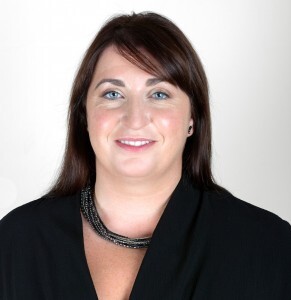
From top: Soc Dems Stephen Donnelly and Glenna Lynch (with Isobel and Rory Baillie) launching the party’s ‘Cherishing Children Equally’ initiative at Fitzwilliam nursery and montessori school in February; Anne Marie McNally

All the international evidence points to the benefits for both society and the individual of having an early-years system where the development of the child is prioritised but also where the mother is empowered to be the best version of herself she chooses to be.

Anne Marie McNally writes:

Last Week’s CSO report declaring Ireland as a ‘pricey young and fertile nation’ highlighted the fact that we now have the 3rd most expensive cost of living in the EU with the second highest fertility rates!

Now this presents quite the conundrum because one of the key factors in the increased cost of living is the astronomical costs of childcare in this country. Not much point being fertile, eh, if you can’t afford to have children while maintaining the option to have some form of life outside the home. (Note I said ‘option.)

I recently asked women in my social and professional circle what was the biggest issue they felt facing them today in a broad societal context. All gave varying expressions of the one topic – equality.

Some expressed it as a desire for more maternity care acceptance in the workplace, some expressed it as a desire for recognition of their professional goals, and others spoke about wanting to be better able to balance work/life demands – all different aspects of the same topic.

Affordable and accessible childcare is one the most fundamental factors in ensuring gender equality in the workplace and wider society yet we have one of the most underdeveloped childcare systems in the world with many families paying the equivalent of a second mortgage for factory-style childcare.

All the international evidence points to the benefits for both society and the individual of having an early-years system where the development of the child is prioritised but also where the mother is empowered to be the best version of herself she chooses to be – either as a stay at home parent or in the workplace.

Choice is the key factor here.

If the glass ceiling is broken, and some would argue that it isn’t- (I personally would say that it is at least cracked) – but if it is, it was broken for that very reason – that women could choose their own paths in life, whatever that path may be.

Thankfully, more and more we are seeing co-responsibility relationships. We are beginning to lose the culture of man as breadwinner, woman as carer. It is an evolving process and here in Ireland we are not very far along the path.

Remember, it’s really not all that long ago that Irish women were forced, by law, to give up their job in the civil service as soon as they married! That type of legacy is a hard one to deviate from, but we are, and as each generation reaches maturity we get a step further away from that draconian past of ours.

Women have to have the self-belief that they can do it. They can go toe to toe with the guys and perform equally. We have to believe that because it is true. We have to – and when I say we, I mean men too – we have to teach our daughters that they can do anything they wish – we have to lose the ‘that’s a boy’ thing and ‘that’s a girl thing’.

Empowerment is not some idealistic notion, empowerment is telling yourself and your children every day that if you want it and you work for it then you can achieve it – regardless of your gender.

We have to move away from the notion that feminism is some female-only issue that requires women to stand on the proverbial soapbox to have our voices heard.

Instead we have to view feminism as men and women equally embracing the notion of equality – an equality where gender is irrelevant.

But for these ideals to be realised society has to provide the basics that not only encourage such gender equality but which facilitate it to be so and childcare is one of the most effective and important ways in which to do that.

Anne Marie McNally is a founding member of the Social Democrats. Follow Anne Marie on Twitter: @amomcnally

Rollingnews

000b7421-642Screen Shot 2016-05-04 at 09.31.12

From top: Bill Kenneally, Former Superintendant in Waterford Sean Cashman

In February Bill Kenneally was jailed for 14 years, after he pleaded guilty to 10 sample counts of indecent assault on 10 boys between October 31, 1984 and December 31, 1987, in Waterford.

Kenneally, whose grandfather and uncle were Fianna Fáil TDs, used his position as a sports coach – basketball, soccer and tennis – to lure and abuse boys.

He was eventually charged – 25 years after Kenneally himself admitted to gardaí that he abused a boy in 1987.

Yesterday, it was reported that Kenneally lodged an appeal with the Court of Criminal Appeal against his sentence.

Further to this, several men who were abused by Kenneally spoke to Damien Tiernan on RTÉ’s Prime Time – with several of them saying some adults in Waterford at the time were aware of the abuse but did nothing about it.

In addition Mr Tiernan spoke to former superintendent Sean Cashman about when Kenneally admitted the abuse in 1987 – after a father reported that his son had been abused.

Mr Cashman recalled:

“He [the father] told me that his son, who was a student at De La Salle, aged about 15, that he was one of a number of students who were being lured to the house of a man named Billy Kenneally and that this man was coming in to the schoolyard and that he was giving them basketball lessons. In a short time, he had started to interfere with them and that there was a sexual contact, content to it and he just wanted to report it to me.”

The father told Cashman his son could not be interviewed so Mr Cashman contacted Kenneally’s uncle, the former Fianna Fáil TD, Billy Keneally, who died in 2009.

The TD arranged for Kenneally to go to the garda station when he met the then Supt Cashman and Inspector PJ Hayes.

Mr Cashman recalled:

He was a broken man, he was absolutely emotional, he was shaking like a leaf, he was in terrible shape, I thought. He said, ‘I know why I’m here lads and I’m glad to be here because I want to be looked after’ – or words to that effect now. He might have said, ‘I want to be looked after’ or ‘I want to be treated’.”

Mr Hayes recalled:

“And he went on then to tell me that he had placed handcuffs on this young boy and I asked him, ‘where did it take place?’ and he said it was in his own home.”

Mr Cashman added:

“We did not have evidence to charge him now if I… ah, he admitted it, I’ve known a case where a man came through the station at one time and admitted murder that he hadn’t done. So you know the fact, he did admit it and I’ll have to say, I knew he was the culprit, it wasn’t a question of his imagination, I knew he was the culprit but I didn’t have a statement from an injured party.”

“And I know, I know people were talking about it, you know, it was a political family and it was a cover-up, well there was no cover-up at all. And the irony of the whole situation really is that the best help I got to try and put him where he should have been, before the court, was from his uncle.”

I got absolutely no help from any injured party. None.

After this, Kenneally was no longer allowed to coach at De La Salle and he was told to get counselling. He wasn’t questioned by the gardai again. He continued to live in Waterford.

Twenty five years later, one of boys who had been abused by Kenneally discovered that Kenneally was still involved in coaching basketball but not in a school capacity.

Jason Clancy went to the gardaí in 2012 to tell them about the abuse he suffered as a boy. After waiving his right to anonymity, other victims came forward.

There were originally 74 charges against Kenneally.

Watch back in full here

Me-Before-You

What you may need to know:

1. Wheelchair-bound Will (Sam Clafin) falls in love with his caregiver, Lou (Emilia Clarke). And vice versa.

2.
Film adaption of Jojo Moyes’ hugely successful airport novel. If you didn’t read it on your holliers then you probably know someone who did.

3. It’ll end in tears.

4.
Not mine, though. I’m not feeling it. *Sniff*

5. Broadsheet prognosis: Cognitive Dignitas.

Release Date:
June 3.