

Hic.
Shiela Larkin writes:
Spotted two of these in D8/D2 the last few days. First time for these pre Paddy’s day posters?
Anyone?



Hic.
Shiela Larkin writes:
Spotted two of these in D8/D2 the last few days. First time for these pre Paddy’s day posters?
Anyone?

This afternoon.
Bríd Smith of the Anti Austerity Alliance/People Before Profit wins the final seat in Dublin South Central after a marathon recount in the RDS, Ballsbridge, Dublin 4.
It means AAA/PBP will have six TDs in a new dáil, on par with Labour (pending the final Longford Westmeath count).
Pic: Cllr John Lyons
Dublin South-Central #dubsc #ge16 count complete: 1 SF 1 FG 1 IND 1 AAAPBP. Story of count: https://t.co/2x0OtFyPn5 pic.twitter.com/nrLuEmrSzf
— The Irish Times (@IrishTimes) March 1, 2016
And, just one vote between @WilliePenroseTD and @JamesBannonTD, final recounts continue for last seats pic.twitter.com/bb09sqJsSo
— Drivetime RTE (@drivetimerte) March 1, 2016
Bonkers.
Previously: Meanwhile, In The RDS
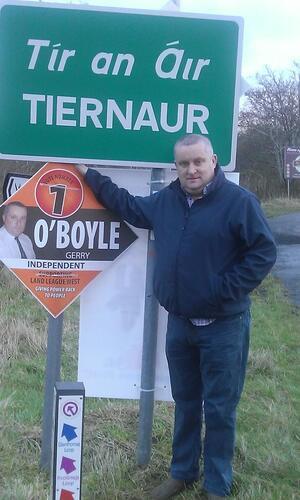
Unsuccessful Independent general election candidate for Mayo Gerry O’Boyle
Further to yesterday’s post…
The Mayo News reports:
A defeated Mayo candidate in the general election is to launch a High Court bid to have the constituency’s result declared null and void and a new election called.
Independent candidate Gerry O’Boyle received just 126 first preference votes, but he claims ‘there was a thousand votes robbed off me’.
Mr O’Boyle further claims that he lost a lot of votes in Claremorris and Ballyhaunis, claiming votes went ‘missing’ sometime between the polling stations closing on Friday night and the count starting in the Royal Theatre in Castlebar on Saturday morning.
Ballyhaunis-based O’Boyle said he is lodging High Court application papers this week and applying to get the ‘General Election Mayo four-seater recalled as a new election’.
“I’ve had people contact me from all over the county who said they voted for me and it didn’t come through. I’m not in this to get a seat. I know my vote wouldn’t be that high, but I expected to get 1,000 to 1,200 first preferences,” Mr O’Boyle told The Mayo News last night.
“For instance, in the Crossboyne box I have nine dead certs there, and only one vote came up on the tally. We have a whistleblower in relation to what I am saying, but I am not willing to say any more about the whistleblower, as there is a legal case pending. We’ve enough evidence. Independents were targeted. You might think I’m mad, but I’m not. It was a total fraud,” he added.
…“Something went wrong. I’m not a whinger. I’m a fair sport player. I can take my beating. I’m not a child throwing my rattle out of the cradle. I know I’m right here,” he said.
Independent candidate claims election was ‘rigged’ (The Mayo News)
Previously: Hold The Mayo

Jaykers.
Brian Conroy writes:
Someone has applied for a trade mark for “Pint Aid”, which hopefully means some way that I can drink for charity. Huzzah! It’s like the Trocaire 24 Fast, except without the fasting and instead of not eating, you eat AND drink instead.
Charity begins at home…..provided you live over a pub. Also, this might have nothing to do with drinking for charity, I’m speculating wildly.
Anyone?


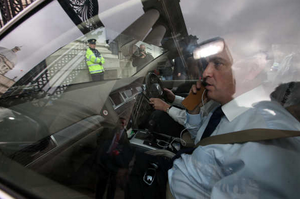


From top: Fine Gael’s Paschal Donohoe, Heather Humphreys, Paul Kehoe, Alan Kelly and Taoiseach Enda Kenny arriving at the Dáil this afternoon
The first post-election Cabinet meeting of Fine Gael and Labour gets under way this afternoon.
Government TDs who lost their seats, from both parties, are expected to attend.
Hot skinny jeans fella.
It’s not always about you.
Sam Boal/Rollingnews

The charge was actually €75 per day…imagine how expensive that would get if it was Dublin Bay North :-)
— Fearghal O’Connor (@Fearghaloc) March 1, 2016
Mary writes:
Just spotted these tweets about reporters having to pay to access the press area of the count in Mayo at the weekend. Is that normal? Do all reporters have to pay at every count centre?
Anyone?
Pic: Ferghal O’Connor

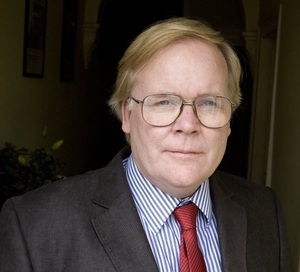
From top: Possible future coalition partners Enda Kenny and Michaél Martin; Michael Taft
We need a new conversation and a new way of doing business among progressives, just as we need these at the level of national and local policy.
We can’t expect people to change if we do not change.
Michael Taft writes:
So what’s it going to be? Coalition? Minority Government? Extended stalemate? What we do know is that support for the Government collapsed – by over half. Labour’s decline was anticipated, Fine Gael’s wasn’t – at least not in the pre-election polls.
We also witnessed Fianna Fail’s significant advance with a 40 percent increase in their first preference vote, winning an additional 25 seats.
In the new Dail Fine Gael and Fianna Fail look set to take 94 seats. In 2011 they won 95 seats. However, this is a smaller Dáil. In percentage terms, the two conservative parties won 57.2 percent of seats in the 2011 Dail; now they won 59.5 percent.
The conservative vote didn’t fall; it just swapped between the two parties. And this doesn’t count the increase in conservative and gene-pool TDs who look to increase from six to eleven seats.
Progressive parties and independents put in a credible performance. However, the breakthrough that many were hoping for (including me) didn’t come.
Sinn Féin increased their popular vote by 3.9 percentage points with the AAA-PbP increasing by 1.5 percentage points. Combined, these two parties look set to gain 13 seats – positive but about half the Fianna Fáil increase.
The Social Democrats took three percent but couldn’t increase on their outgoing total while the Greens are back in parliament with two seats. However, the number of progressive independent TDs doesn’t appear to be increasing at time of this writing.
So where next for progressives? Much will depend on the formation of government and potentially an election in the short-term. But for the medium-term here are a few suggestions.
1. Start an Honest Conversation
In policy terms, wipe the slate clean. One of the messages coming out of the election was that people didn’t believe the promises to cut taxes, increase public spending and establish fiscal stability. Rightly so. There is little fiscal space – far less than parties claimed.
The future is extremely uncertain: low Eurozone growth, interest rates, oil prices, currency movements, the stability or otherwise of the European banking system. Then there’s the question of the character of the recovery (how much real, how much statistical). And what about Ireland’s continuing and unsustainable reliance on a corporate tax regime which works at the expense of other countries. Start an honest conversation about the challenges we face over the next decade – and don’t be surprised how many people will thank us for it.
2. Talk about the Economy
Strangely, there was little talk about the economy, about how we generate wealth, income, and sustainable enterprise activity. Let’s start that conversation. We can start with the rich and detailed analysis by the Nevin Economic Research Institute’s Tom McDonnel. You can read the full report here – Cultivating Long-Run Economic Growth in the Republic of Ireland – and an abridged comment here. It doesn’t address the all issues (no single document can) but it sets out the foundation:
Investment makes up 50 percent of long-term economic growth. If you want to ‘continue’ the recovery or ‘extend’ the recovery to those who haven’t felt it yet, you start with investment – driving up growth, productivity and wealth.
Education is another key component of growth – that and growing the working age population through immigration. Limited resources should be targeting at our youngsters’, starting with pre-primary education.
An infrastructural investment bank, affordable childcare, R&D spending, reduce inequality (which is more than just cash redistribution), advanced broadband – these and other initiatives can help promote a dynamic and enterprising economy.
Let’s remember the old Keynesian adage: look after the economy and the budget will look after itself.
3. Social Security
Revolving contracts, uncertain hours, low-pay, lack of rights: we are creating more uncertainty in the workplace which is driving down living standards and social prosperity. We must prioritise employees’ issues –ICTU’s Charter for Fair Conditions at Work is another useful starting point.
Alongside workplace uncertainty is social uncertainty. What happens if I get sick, or can’t find another contract soon; how will I care for my parents’ in their old age or afford to send my child to third-level education? These and other questions occupy more and more people. We must ‘socialise’ these costs through accessible public services and a strong social protection system – protection for people at work as much as for those out of work. And, being honest with people, this will only happen with a much high ‘social wage’ (or higher employers’ social insurance). That’s how continental European countries do it.
4. A New Way of Doing Business
Why don’t progressives talk about enterprise? It’s how we generate jobs, incomes and security. If low taxes and social insurance, low wages and ‘labour flexibility’ were the key to success, we would have the best indigenous enterprise sector in Europe. Instead, we have one of the poorest sectors. We need to grow investment-minded and productive companies – through public and municipal enterprise, new models involving labour-managed companies, new hybrid forms of non-profit and for-profit companies, community cooperatives and enterprises (working with local capital), and more attractive supports for private companies tied with public equity (if the state takes the risk, it should share in the success).
Business is too important to be left to Irish business.
5. Don’t Forget, We’re Europeans
How many times did Europe come up in the general election debate? Not much. If at all. We need to talk about the alliances we will make to advance policies that will benefit all those living in Europe. And this is not just about opposing TTIP (the Transatlantic Trade and Investment Partnership) or demanding our money back from the banks, though this will be part of it. What about the proposal to end low-pay by pegging minimum wages at the low-pay threshold (60 percent of median income in each country)? Or an economic QE programme to fund an investment programme in transport, telecommunications, energy, housing and education? And, of course, ending the irrational austerity programme through a progressive adaptation of the EU fiscal rules.
And while we’re on the subject of Europe – let’s call for Ireland to sign up to the Financial Transaction Tax being introduced through enhance cooperation.
These are just a few suggestions. Others will have more and no doubt better ones. But there’s one more thing: progressives must end the sectarianism and division among the Left and Centre-Left. Cooperation, tolerance and open-mindedness are needed now more than ever.
We need a new conversation and a new way of doing business among ourselves, just as we need these at the level of national and local policy. We can’t expect people to change if we do not change.
But there’s much to be hopeful about. Fintan O’Toole made an important point yesterday, rightly saying that the majority of the Irish people are moving in a different direction from the one the Government wanted to go – a pathway public services, housing, solidarity and more equality. We have a great opportunity to work with people in moving the country in that direction.
The future is progressive – if we make it so. That will take some hard work.
Michael Taft is Research Officer with Unite the Union. His column appears here every Tuesday. He is author of the political economy blog, Unite’s Notes on the Front. Follow Michael on Twitter: @notesonthefront

We would like to add our voices in support of Sharon O’Halloran of Safe Ireland, when she states (February 23rd) that the issue of domestic violence is a horrific reality faced every day by thousands of women and children in Ireland.
And not just by women and children.
The incidence of domestic violence where men are the victims is also on the increase. In 2014, slightly over 6,500 contacts were received by Amen, an increase of just over 35 per cent on the previous year.
Amen Support Services has been providing support and help to male victims of domestic abuse for almost 18 years.
We welcome the contribution by Hozier in the Cherry Wine video to increasing awareness of domestic violence and hope that the often ignored issue of male victims of such violence will continue to be highlighted.
Niamh Farrell,
Manager,
Amen Support Services,
St Anne’s Resource Centre,
Railway Street,
Navan,
Co Meath.
Male victims of domestic violence (Irish Times letters page)

Dave G Kelly tweetz:
“Signage being removed from the Screen Cinema in Dublin. Closed after 35 years.”
Mmmf.