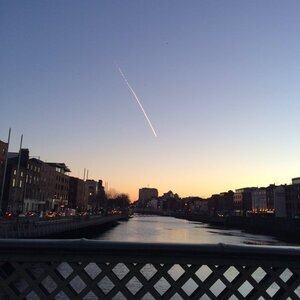
This morning.
Unidentified location.
Joe Furlong writes:
It’s official! Get that conservatory you’ve always wanted…



This morning.
Unidentified location.
Joe Furlong writes:
It’s official! Get that conservatory you’ve always wanted…

Taoiseach Enda Kenny is to speak at the World Economic Forum in Davos-Klosters, Switzerland tomorrow on… rebooting the global economy.
The forum takes place from today until Wednesday.
How to reboot the global economy (World Economic Forum)
Previously: The Man With One Point
Pic: Conor McCabe
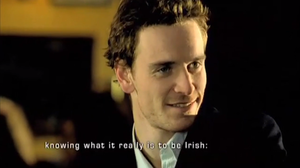
A four-and-a-half-minute tribute to film director Lenny Abrahamson.
And his ability to tell Irish stories, in an Irish way.
Contains: spoilers and a youthful Fassbender (top).

https://www.youtube.com/watch?v=Zg5zSVxx9JM
From top: Colm O’Gorman and director of Spotlight Tom McCarthy at the Light House Cinema in Dublin last night; Spotlight trailer
Last night director of Oscar-nominated film Spotlight Tom McCarthy held a Q&A at the Light House Cinema in Dublin after the movie was screened.
The film tells the true story of a team of journalists from the Boston Globe and their investigation into the cover-up of widespread sexual abuse by Catholic priests in the state – prompted by their new editor who has just joined the newspaper.
During the Q&A, New Jersey-born Irish-American Mr McCarthy, who was raised in a Catholic family and who has personal friends who’ve been abused, spoke about the importance of local journalism.
Colm O’Gorman: “That whole point about how sometimes it takes an outsider to come into a space and get us to look at ourselves, I think is something that will resonate here in Ireland, as well, in many ways for us. Because if we look at our own history on this issue, at many times, it’s not that nobody knew that these things were happening, it was almost the silence around them was accepted and acceptable.
And sometimes it takes a figure… to come in and shake things up and ask us to look at things differently. The other thing that the film is, it’s a phenomenal testament to journalism, I’ve read where you’re talked about it being a tribute to long-form journalism. How important was that for you?”
Tom McCarthy: “I think very important, obviously, this story is set in 2001/2002. The [Boston] Globe was still very much at the height of their powers. There was smoke on the horizon that bad times were coming, the internet was sort of biting into their classified revenue, which is very important to a local paper like The Boston Globe… I think specifically in our country there’s a misconception of the state of journalism, that because there’s so much information on the interweb, that we no longer need long-form, legacy journalism.
But, you know, from my experience and research, as legacy journalism, newspapers continue to decline and, you know, the internet sort of takes off. The question is where is all this information coming from. A lot of these sites are aggregate, so where are they aggregating from. It’s in decline, where’s the coal coming from? And the answer is: nowhere. It’s just diminished, there’s fewer reporters, there’s fewer boots on the ground, specifically at a local level. And the more research we did, the more alarming it was about the state of journalism. Clay Shirky who’s done a lot of writing on this, in the States, said to us, it’s a very good time to be in local corruption because, quite honestly, nobody is minding the store.”
Previously: Broadsheet Trailer Park: Spotlight
Pic: Le Cool Dublin

What you may need to know:
1. “Daddy, what was it like when you were young?”
2. “Well son, I remember when all this was Robert De Niro movies as far as the eye could see. And not turdy ones either. The Godfather II (1974), Raging Bull (1980), Once Upon a Time in America (1984), Cape Fear (1991)… the man was unstoppable. Then he started doing comedies, and nothing’s been the same since.
3. “You mean, Midnight Run (1988) somehow opened a Pandora’s Box that led to De Niro strapping on a fake boob and breastfeeding a kid?”
4. “I’m afraid so Son.”
5. “Daddy… I’m sad.”
6. “Me too Son. Me too.”
Release date: January 22


From top: Social Democrat canvassers in Galway this week; Anne Marie McNally
On the campaign trail we find apathy and indifference.
But enough about the politicians.
Anne-Marie McNally writes
There’s always plenty of talk come election time of voter apathy and the disconnect between citizens and the political system.
As someone whose entrance to politics came via a passion to engage people of lower socio-economic backgrounds in the political sphere, I am one of those guilty of constantly talking about the apathy that exists.
No doubt, on the canvass trail over recent months I have heard more than my fair share of ‘sure what’s the point? they’re all the same.’ or ‘I know nothing about politics, they’re all just in it for themselves’.
People worry about young people’s engagement with politics; those on the margins of society; and those people who just never seem to turnout come polling day.
We decry the lack of engagement, we blame apathy for maintaining the status quo and whether you’ll admit it or not, we judge people who don’t go out and vote. How often have you heard the ‘people died for that right’ refrain? I’m guilty of it myself and I do stand by it however this canvass trail has opened by eyes that bit wider as to the reasons for abstention.
While so much of the negative attention is focused on decrying the voter apathy, there is a lack of similar attention given to politicians’ apathy regarding certain sections of society and how that political abandonment of certain areas and demographics might actually be the reason for those people not coming out to vote.
Last Friday night I hit the icy pavements (quite literally hit it at one stage!) and headed off to an estate in Clondalkin that is described in the Maynooth university AIRO research project as being ‘Very Disadvantaged to Extremely Disadvantaged.’
I had headed there because my Canvass Director had identified that of those registered to vote in the area, a high proportion of them actually turn out to vote.
What I found there was joyous. I’m not exaggerating. As someone from a working class background who is passionate about the importance of politics to change our lives, I was giddy from the exchanges I had that night.
I was met with passion, engagement and a sense of relief from people that someone felt it worthwhile to come and speak with them. On too many doors I was told that I was the only politician to have ever knocked on their door. One man said to me, I’ll vote for you purely because you weren’t afraid to come in here. That’s depressing in itself but revealing nonetheless.
The young people I encountered sitting on freezing cold walls around the place that evening were no more interested in politics. But would they be if they got a chance to have a face to face interaction with an actual real person who wanted to listen to them, hear what they had to say and acknowledge both their hopes and their fears?
Certainly that was how I felt with those I managed to speak to. A face and name on a poster is one thing, a real person at your door, engaging with you as a peer is an entirely different thing and I challenge anyone to have that type of interaction and not feel engaged in the political process.
For a political system to be truly representative it must have the voices of all those it seeks to represent at its heart. I would contend that it currently fails in that regard.
I know, from years of political strategy lectures and experience that the process of pulling apart an electoral register is a cynical exercise designed to identify the likely voters and those to be ignored.
That is electioneering rather than politics but it is still not acceptable. I freely admit that I will be focusing my attention, with very limited resources and time, on those areas where we know people actually come out to vote.
But I can guarantee that if I was lucky enough to be elected I would spend the next few years speaking to those people in the other areas, the people who want to be political but don’t know how; the people who are political but don’t yet know it in a formal sense; and the people who have stayed away from voting because they believe, rightly so, that establishment politics doesn’t value them.
Those are the people who deserve our biggest efforts not our apathy.
Anne-Marie McNally is a political and media strategist working with Catherine Murphy TD and is a candidate for the Social Democrats in the forthcoming General Election. Follow Anne-Marie on Twitter: @amomcnally

This morning.
O’Connell Street, Duublin
The Vector Martini powerboat, one of the vessels taking part in the Venture World Cup around Ireland this June in what will be the “longest, toughest and most prestigious offshore powerboat race in the WORLD”.
Thanks Helen

This morning.
Dartry park, Dublin 6
Anyone?
Thanks Ciaran


Ah here.
Robert Kennedy’s 1964 New York Senatorial campaign poster (top) and poster for ‘Fine Gael candidate’ Con Kennedy (above) spotted in Dublin West last night.
UPDATE: Con Kennedy (for it is he) writes (in comments):
In case you haven’t noticed it’s a wind up by my so-called mate Marc…. This is rich coming from someone who looks like Jedward’s da!… There will be retaliation…
*phones mind-controlled assassin patsy*
Thanks Marc O’Riain