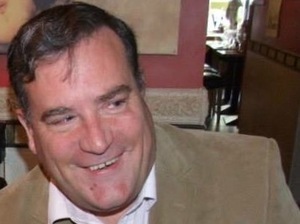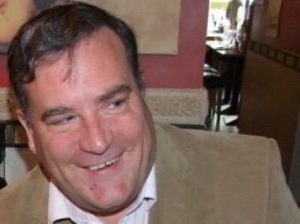
From top: Steven Agnew, who has resigned as an MLA in the Northern Ireland Assembly, with Claire Bailey, who succeeds him leader of the Green Party in Northern Ireland; Dan Boyle
A friend and colleague of mine, Steven Agnew, recently announced his retirement as an MLA at Stormont. He is joining a renewable energy NGO from where he can continue to promote a Green vision from a more secure position.
He and his Stormont colleague, the now leader of the Green Party in Northern Ireland, Clare Bailey, have experienced huge frustration as members of an assembly now pushing three years in mothballs.
Both have worked assiduously in their constituencies despite that. The quality of their work helped produce significant advances for the Greens in Northern Ireland.
In recent local elections there the Greens doubled our seats to eight. There was an especially strong performance in Belfast, where the party now holds four seats.
The Greens in Ireland is an All Island party. We operate in both jurisdictions under autonomous structures. Our position on the constitutional question is locked into the Good Friday agreement.
It isn’t that we Greens are agnostic on the ‘settlement’, it is that all our energies are being spent in trying to construct a new politics in Northern Ireland.
There are some signs that a new politics might be starting to take hold. The growth in support of The Greens is also being matched by a renewed support for the Alliance Party.
It is clear that there is a growing army of voters in Northern Ireland that does not identify with the Two Tribes approach to politics, an approach that has bedevilled the place and its history.
Part of the unravelling of Brexit has created the possibility of a poll on Irish Unity. This has excited some, others view the prospect with more trepidation.
Changing demographics, seen through the filter of a sectarian head count, holds a realistic chance of agreeing to an United Ireland.
More likely it would produce a Brexit type 52-48 result in favour of staying in the UK. Those promoting the poll will purse their lips then claim that inevitable victory will follow at the next poll, that will follow in another seven years.
But what kind of victory would that be? Most probably we will seven years of heightened tensions of the type that has blighted Britain since its Brexit referendum.
The debate we should be having is asking what is the benefit of a referendum on Irish Unity won on the basis of 50% plus one basis?
Creating, in what would be a new country, an instant discontented minority would hardly constitute Unity.
If we are serious about a successful Unity referendum we should be agreeing on mechanisms that more properly reflect consent.
Such a mechanism might be a super majority of 60%, or 40% of those entitled to vote.
If a referendum on Irish Unity was won without the support of a considerable number from within the traditional Unionist community, it would be a victory that be quite Pyrrhic .
That isn’t to discount the reality that Northern Ireland itself was formed without any such democratic niceties. The question I would pose is should we bring about a new Ireland, through the flawed and failed decision making of a dying empire.
Or can we have a new Ireland brought about on a to be sure to be sure basis.
Dan Boyle is a former Green Party TD and Senator and serves as a Green Party councillor on Cork City Council. His column appears here every Thursday. Follow Dan on Twitter: @sendboyle
Top pic: Rollingnews