



A Japanese hand tattoo on pop star Ariana Grande (left) reads ‘small charcoal grill’ instead of the intended ‘7 rings’
Getting a foreign tattoo
Is something the trendy folk do
It’s all very well
As long as you spell
Correctly, just please think it through
John Moynes
Pics: Getty/Ariana Grande

From top: the cast of 1970s children’s favourite ‘The Magic Roundabout’; Brexiteers, from left: Michael Gove, Jacob Rees-Mogg, Boris Johnson, David Davis and Liam Fox: Dan Boyle
It makes more sense to me now. It was an allegory written before the events it so perfectly describes. Growing up watching it I thought it surreal, but now realise it was created as prognostication at is finest.
On the learning the history of what was meant to me a children’s television programme, it seems that the story of the making of the programme was as illustrative as its contents were.
The premise was a set of characters who lived on or around a fairground roundabout, a Magic Roundabout, a perfect allegory for people or things that never went anywhere.
The characters themselves also represented allegorical material capable of describing qualities we see now in abundance – the distance from reality; the slowness of response; the denial of the possible; the comfort of considering themselves separate and apart.
The main character was a long haired dog. His friend a jack out of the box, who moved across the screen propelled by a spring. Other characters included a snail, a cow and a rabbit. The only character which seemed to missing was that of a unicorn.
The programme was quite popular in its own right. In its later years it acquired a considerable adult following, even if many of these watched under a chemically induced euphoria.
It might even be suggested that the programme was to the forefront in preparing a society and its politics, for its eventual infantilisation.
It had all begun in a spirit of entente. Developed in France, where it was broadcast as Le Manège enchanté, one of the its principal animators was English. The BBC expressed an interest in the programme but was unwilling to use subtitles or to dub the French script into English.
What they eventually decided to do, in a typical display of British (English) diffidence, was to use the French films which were then narrated with completely different story lines.
Characters names were also changed. The dog character who in French was called Pollux (and he was a bit of a one) became Dougal in English.
The name change almost caused a diplomatic incident as the French thought it a subtle satirical dig at their President, General De Gaulle. The man, who at that time, was continuing and adamantly saying ‘Non’ to the idea of the United Kingdom becoming a member of what was then called the European Community.
The inability to use the same terms, the same script, or even the same language, saw the British refer to the European Community as the Common Market, which according to tone and emphasis could be loaded with meaning.
I shouldn’t have to join the dots here and state how this relates to where we are now. The Magic Roundabout is Brexit before its time. Brexit is just as surreal, just as mind-bendingly awful.
A melange of characters who just don’t get it, who sadly don’t want to get it. A perverse collection of ideologues who want to impose their deranged narratives in interpreting the same basic material.
Perhaps the best logic that can be applied to this whole sorry mess, is to dwell upon the words of the jack out of the box character, Zebedee, who would end every episode of the British series with the immortal phrase, “It’s time for bed,”.
Dan Boyle is a former Green Party TD and Senator. His column appears here every Thursday. Follow Dan on Twitter: @sendboyle

This morning.
Mount Argus, Harold’s Cross, Dublin 6
Thanks Halfahead
Sickening
at


MORE to folly

Digicel Chairman Denis O’Brien remains committed along with the Clinton Global Initiative to bring about real impact in countries like ours that need it most, as we face the effects of climate change. Thanks Denis.#impact #digicelhumanitariansupport #cgi #ideasintoaction pic.twitter.com/X5IzXtgeHJ
— Digicel Dominica (@digiceldominica) January 30, 2019
This afternoon.
The Puerto Rico Convention Centre, San Juan, Puerto Rico
Beleaguered, debt-soaked humanitarian Denis O’Brien addresses the the third meeting of the Clinton Global Initiative (CGI) Action Network on ongoing hurricane recovery needs facing Puerto Rico, the U.S. Virgin Islands, Dominica, and Antigua.
The CGI Action Network brings together leaders in government, business, and civil society to “develop strategies and solutions to address hurricane recovery needs facing the region, while laying the foundation for a more resilient future”.
Just ask Haiti.
Fight!
Related: Shaky Foundation

This morning.
Ballymote, County Sligo.
The Q47 writes;
Up to three inches of snow dumped overnight in this corner of Ireland, which gave us this winter wonderland…

A new report from Nestpick, the world’s largest database for furnished apartment rentals, takes a look at the cost of renting an apartment in more than 700 neighborhoods spanning 50 major cities.
The prices are based on median rents for the last quarter of 2018, so they should reflect the current listings for an apartment. Apartments are considered “affordable” if households are spending 30% or less of their income on rent – a standard used by the US government.
Full Nestpick report here
Meanwhile…
The company [Nestpick] defines a single person apartment as around 50sq m (plus or minus 10sq m) and a family apartment as 105sq m( plus or minus 15sq m). The monthly salary requirement incorporates an area’s rent per sq m and the average apartment size.
The research found a worker on the minimum wage would need to work more than 279 hours to pay the monthly rent in Dublin 2.
Monthly salary after tax of €8,900 needed to live in Dublin 2 (Irish Times)
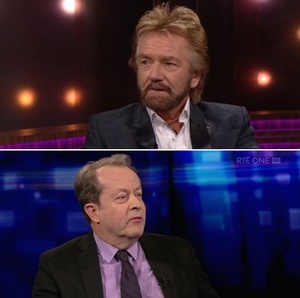
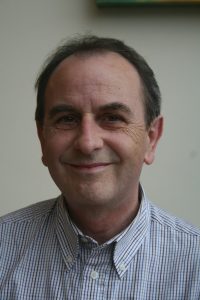 From top: Noel Edmonds on The Ray D’Arcy Show; Master of the High Court Edmund Honohan on Prime Time; Eamonn Kelly
In 2016, Edmund Honohan, Master of the High Court, offered a solution to the growing homelessness crisis in an open letter to the then environment minister, Alan Kelly, who had called for a debate about property rights as defined in the constitution.
As I understand it, there seemed to be a belief at the time that the question of property rights guarded against the government acting to acquire property in the interests of the constitutional “common good”.
Mr Honohan wrote:
“The Constitution in effect provides that the State may expropriate private property if the Oireachtas decides that to do so is for the ‘common good’. Road widening is a good example… At the moment there are long waiting lists for housing and the private rental market is unable to provide dwellings at affordable rents…Consequently, if the Oireachtas is of the view that the State should itself (or its local authorities) provide public housing ‘in the Common Good’, the State can (and probably, legally, should) decide not to wait the two/three years needed to build social housing but instead to immediately acquire houses now in private hands.”
So that’s that clarified. Honohan anticipated that the response to his suggestion would be to make it a football and kick it back to the supreme court to decide.
But it seemed the supreme court had already decided, in 2000, that “the provision of affordable housing is an objective which is ‘socially just and required by the common good’.”
So, there was no grey area. No humming and hawing, no debate required. It was quite clear. The government had constitutional leeway to provide social housing, and that any failure to do so, according to Honohan, would be a political decision.
As we know, it was decided by government to ignore this solution and to allow the homelessness crisis to fester, in a move seen by many as engineering social neglect to generate profit for certain sectors.
But legally, according to Edmund Honohan, there was no reason why those families should have been left in private hotels in the years of government inaction that have since passed.
Since then Honohan continued to be a vocal opponent on behalf of people adversely affected by the housing and mortgage crises.
The Journal reported that in recent years, Honohan has become known for his strong views on the treatment by financial institutions of debtors in distress.
He has been particularly vocal in relation to possession cases, often engaging in…
“…heated exchanges with barristers representing lenders…He has also written a bill sponsored by Fianna Fáil TD John McGuinness, the Affordable Housing and Fair Mortgage Bill. The bill includes a number of proposals for tackling the number of households struggling with mortgage arrears…
He also recently wrote to Fianna Fáil leader Micheál Martin, reminding him that it is his job in opposition to call out the vulture funds that are buying up distressed home loans…”
In a report from June 2017, writing in a personal capacity, he outlines the significance of the effect of the growing number of repossessions.
These are coming about as a result of the banks managing to sell off accounts in arrears, many of which are the result of the sub-prime mortgage phenomenon that triggered the banking collapse. These accounts are being bought up by private agencies known as “vultures”.
Mr Honohan writes:
“The crisis is not that these people are heavily in debt, it is that when they are eventually evicted…there will still be no public housing for them…”
He conjectures that many of the loans taken out during the boom were taken out for two reasons: one, the banks were pressing money on people at that time, to the extent that it was difficult not to take out a loan; and two, there was insufficient social housing for people who may, in wiser times, have gone that route if there had been sufficient social housing.
The real sting in the tail in the report is that the tax-payer will now pick up the tab for the evictions; including policing costs, legal costs, transport costs, and so on.
Again, Honohan offers legal remedies to avoid all this pain, including ways to keep people in their houses despite the debt.
He offers comparisons with other jurisdictions and solutions to similar problems found elsewhere.
It seems though that these suggestions were also ignored, and we know from the taoiseach’s recent admonition about the term “vulture funds”, along with his more general championing of privatisation, that he largely approves of the concept of private companies re-possessing homes and evicting people who will then, in the absence of a social housing programme, be accommodated in private hotels, all paid for by the tax-payer until such time as the market can deliver sufficient housing.
Put simply, the taoiseach’s privatisation programme and reluctance to provide social housing is beginning to seem more like a gamble, not unlike the banking gambles that preceded the 2008 collapse, and, is similarly, being underwritten by the tax-payer.
The taoiseach’s gamble is that the market will deliver housing, and the chips he has set down are the homeless people in the private hotels, making of the gamble something of a neo-liberal social experiment.
Let’s rephrase that again: The taoiseach’s gamble, or neo-liberal social experiment, is to be paid for entirely by the tax-payer, with further contributory costs in the form of stunted childhoods and broken families condemned to live for years in private hotels, along with further costs paid by low-income workers priced out of an increasingly restrictive private rental market, again as the consequence of a lack of social and affordable housing.
This month, Edmund Honohan, a voice for those anonymous debtors being forced from their homes, found himself at the centre of what seemed like some kind of comical trumped-up charge of vandalism.
When his requests for ventilation in the court where he works were seemingly unheard, he broke open some small windows with a hammer to freshen the air. The ventilation he had tired of requesting was then provided.
This might seem like a trivial matter, but shortly after this incident he was relieved of his duties in hearing debt cases.
Maybe it was felt he was too strongly opinionated in his opposition to the banks and the political class to offer unbiased service. Maybe he was punished for breaking windows? Or maybe he was simply politically silenced.
Who knows? No doubt that will be debated too, at length, sometime, somewhere. But David Hall of iCare Housing said that the decision was a bad day for debtors.
He added that Honohan was…
“…one of the few officials who have spoken the truth about banks’ behaviour and has tried to help those crippled with debt”.
Around the same time, in RTE, Noel Edmonds, the UK DJ who lost a fortune to the HBOS, a subsidiary of Lloyds bank, was telling Ray D’Arcy his story.
Mr Edmonds is seeking compensation from Lloyds. His combination of public figure status and his criticism of the bank has made him into a controversial figure.
Mr Edmonds claims that a whistleblower overheard the chief executive of Lloyds say that the bank would have to “crush” Edmonds to deter any other claims for damages.
At the mention of bank trouble, the audience seemed to murmur in approval, but Ray D’Arcy, seemingly keen to control the moment, said that it was different in Ireland. No Ray, it’s different for girls; but banks, like cars and neo-liberals, tend to be the same the world over.
Mr Edmonds pushed ahead and when he talked about jailing a few bankers, the Irish audience burst into loud applause. Mr Edmonds told of how the experience of losing his home, his marriage and 300,000 GBP in savings brought him to the brink of suicide.
When Edmonds mentions being driven to the brink of suicide, D’Arcy seems to murmur doubtfully.
This is quite a common response. I suppose it is assumed that if a person had tried to commit suicide and had done it “properly”, they would have succeeded, in which case sympathy would then be extended.Continue reading →