Um.

Dundrum Road, Dublin 14, Windy Arbour, Dublin 14, South Dublin City (Daft)


Behold the Project Force Land Rover Discovery – a heavily modified D130 with (among other things) upgraded suspension, disc brakes, full roll cage, quilted custom leather interior and a swapped-in 6.2-litre LS3 Corvette V8 engine boosting the power from 134bhp to 565bhp.

Built to order by custom house ECD, price on demand.

uncrate

This Christmas.

Give the gift of part of a racehorse.

Eve Fitzgerald writes:

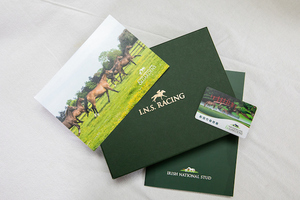
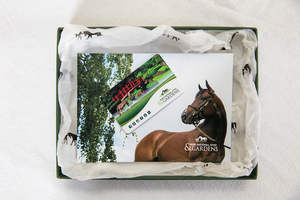
Are you struggling to find a Christmas present for the sports-mad guy or gal who has everything, or perhaps your Dad is notoriously hard to buy for? Well, look no further than the Irish National Stud’s new horse racing club for the perfect Christmas gift.

INS Racing makes the possibility of racehorse ownership a reality for those who previously thought it was something they couldn’t afford.

The club enables sports fans to come together and experience what it is like to ‘own’ a minimum of six racehorses, all for the annual cost of €399.

The gift is presented in a beautiful keepsake box and includes free racecourse entry to every meeting that includes an Irish National Stud declared racehorse in Ireland, regular trainer updates via a bespoke INS Racing app, access to yard visits, educational workshops, special events and, as a bonus, a share of the club’s prize money…

INS Racing (Irish National Stud)

Irish-made stocking fillers to broadsheet@broadsheet.ie marked ‘Irish-made Stocking Fillers’. No fee.,

Rami Malek as Freddie Mercury in Bohemian Rhapsody

That Freddie Mercury biopic.

Too gay?

Or not gay enough?

Via The Irish Times:

The man in this fiction is crippled by remorse for acknowledging his homosexuality and discarding his heterosexual facade with the woman he always described as being the love of his life…

Queen’s musical journey and the worldwide conquest are now slaves to a heteronormative vision that has been made fit, retroactively, to the lifestyles and sensibilities of the other three members of Queen.

Early on it becomes a “confession” film, following a model the French philosopher Michel Foucault recognised as participating in the creation of “an abusive guilt, something alienating and offering control over the confessed by a normative culture”.

In the movie Freddie Mercury almost appears as someone asking for forgiveness for being what he is. Like the real singer, screen Freddie also desires men but, in doing so, he “sins”.

He does not understand, as a sequence in the film shows, that another member of the band (Taylor) does not have enough time for carousing because he has a family, a woman and children for whom he feels responsible.

Screen Freddie lived out a sexuality that his time still considered mostly as deviant. This homosexuality, in the movie, leads him to make wrong choices, to damn his soul and come under evil influences.

By moving away from his “mother house,” portrayed here as a self-inflicted exile or banishment, the film shows an impressionable, almost weak-kneed Freddie Mercury sinking into the gay underworld of London, New York or Munich, eventually contracting an unknown virus – a stigmatising “gay cancer” – that will eventually kill him, as it killed over 30 million people since 1981…

The soundtrack’s not bad though.

FIGHT!

Freddie Mercury: Bohemian Rhapsody is no tribute. It’s full of unconscious homophobia (, irish Times)

Pic: 20th Century Fox

Thanks Biddy Bitcoin

Ecky thump.

Breaking! Return of the Mick – McCarthy to be offered Ireland job (RTÉ)

Earlier:  Our Nation Turns Its Lonely Eyes To Ye

Meanwhile…

In fairness.

‘sup?

You know what you need?

A stunning portrait of your pet.

Artist Aine Macken writes:

I’m a watercolour painter based in Dublin, I specialise in portraits of people or paw-traits of pets. I only charge €150 for an original watercolour painting. To book, people can email a photo of their favourite person or pet to info@ainemacken.com Some examples above, from top: Ben, Bruce and Rita. Thank you…

Arf.

Aine Macken

Irish-made stocking fillers to broadsheet@broadsheet.ie marked ‘Irish-Made Stocking Fillers’. No fee.

Minister for Justice Charlie Flanagan

Today.

In the Irish Examiner.

Mick Clifford reports that a serving prison officer has made certain claims in a sworn affidavit to the Justice Minister Charlie Flanagan.

The officer has made the affidavit as he has “no confidence in the operation of the Protected Disclosure Act in either the prison service or the Department of Justice”.

News of the affidavit comes a week after a separate prison officer Noel McGree, in an unrelated case, appeared in private before the Public Accounts Committee after he made a protected disclosure two years ago.

Mr Clifford reports that the following claims are in the affidavit:

“Tracking devices were placed on a number of prison service vehicles and in the private cars of prison officers;

The drivers of the prison vehicles, and the prison officers whose private cars were tracked, were unaware of the surveillance…;

Some of these devices remained in place over a long period and intelligence gathered passed onto An Garda Síochána;

Listening devices were placed in the visitor area of one prison to gather information.

These devices were in situ for extended periods. In some instances, these devices were in place when prisoners had conversations with their solicitors;

The private detective agency was employed to install listening and tracking devices in order to shield the prison service from any legal repercussions that would attach if it had been done directly...’

Whistleblower: Tracking devices placed in prison officers’ cars (Mick Clifford, Irish Examiner)

Rollingnews

Life On The Outside

A radio documentary by Bairbre Flood looking at the lives of  three women who have survived Direct Provision.

Bairbre writes:

For my latest documentary I talked to three women; Elsie Nwaora, Nomaxabiso Maye and Florence Eriamantoe who lived for years in Direct Provision.

This was the system set up almost 20 years ago to provide accomodation and meals to asylum seekers while their claim is being processed. Intended to be a short-term solution, it seems to have created even more long-term problems.

The lack of access to cooking facilities, the overcrowding (Florence lived in one room with her family for more than six years), the lack of privacy and the strain this puts on family dynamics are all obvious: but perhaps what’s less tangible is the subtle loss of dignity and self-direction that Direct Provision incurs. ‘You have no autonomy’ as Nomaxabiso puts it. Everything is done for you. Who wants to live like that?

Most Direct Provision centres are situated in isolated areas, and Noma recalls how the place she was sent to, Drishane Castle, County Cork was ‘spooky’.

Noma says:

‘It’s a very old castle. It looks beautiful from the outside. It’s very hidden away from the local community – you know, that separateness of people: that this is the local community and these are asylum seekers.’

They’d almost no contact with the locals there. ‘It was very rare you’d see people interacting with Drishane residents.’ Noma said.

I put it to Noma that it’s hard for Irish people to get to know people in Direct Provision as we usually meet people through work and college, and she agrees that ‘this is where the trick is.’

She adds:

‘If you allow people to participate in those things (college, work,) then you allow people to get to know each other. I met a lot of friends through college – had I been in Direct Provision sitting there, there’s no way I’d have.’

Florence and Elsie also described how isolated they felt from the wider community and Elsie noted,

Florence says:

‘The way it is, people didn’t know…that place there is the hostel, the Direct Provision centre; people didn’t know about it.”

This physical isolation isn’t helped by the fact that none of the women were allowed work during their time in Direct Provision. (Although there is a limited possibility for this now following a Supreme Court decision earlier this year, none of the women would have qualified as their cases were under appeal.)

‘You weren’t able to do anything’, Florence said. Boredom and anxiety wear away at the body and mind and the effect on the physical and mental health of people in Direct Provision can be devastating.

Noma says:

‘I won’t lie, I went through this myself and I didn’t see it happening, it was just the little things. I don’t have sleep, no appetite, this and that…and this is what the government is failing to understand because it’s costing the state more to keep people in that way.’

‘I started blaming myself and feeling like a failure, ending up in a place like that.’

Nomaxabiso managed to get on a course, however she says:

‘Somebody else did not have that opportunity that I had and people just fell into depression. They fell deep into depression. I could tell you horrible, horrible stories and people with young children, most of them would lose their children to social services…they couldn’t look after their children because they were depressed.’

Nomaxabiso is just graduating from her degree in social work this year and says that she would like to work with migrants because she understands where people come from, ‘people come with various challenges from various backgrounds.’

Florence too is studying social work in UCC, and both women hope to bring their experiences to help families in the future.

One of the most distressing parts of being an asylum seeker is the threat of deportation which hangs over you. All three women spoke about deportation being the worst aspect of their lives.

Florence described how immigration officials would come in the middle of the night to take people away.

She recalls:

‘They would have their cars and staff members surrounding the buildings…There was this woman we had to hide in the wardrobe with her kids. I’ve never seen anything like that. Those kids were the kind of kids that are very active, but for the first time in my life I saw kids that were quiet. That’s when it dawned on me that the kids knew everything that was happening. It was horrible.’

Florence’s husband was deported, but she was allowed stay while her children’s case was being heard through the courts.

Florence says:

‘I know ten to fifteen women, their husbands were deported and their family has been destroyed.’

All three women spent years trying to rebuild their lives after getting their papers and moving into the wider community. The sudden switch from years of institutional living isn’t easy.

Elsiedescribes how her daughter was six years old when they finally got their papers. Having never lived anywhere other than the Hostel, her daughter couldn’t get used to a house away from the friends she’d grown up living with

: ‘She’d always say, ‘Mum, I don’t want to stay here, let’s go back to the Hostel…maybe if she didn’t spend six years in the Hostel and she just grew up in the house she will just see that is normal.’


Largely hidden away from Irish society, people in Direct Provision rarely have their voices heard, and there’s much we can learn from these women’s experiences.

Bairbre Flood: Life On The Outside (Soundcloud)

Pic: 255 Photography

Broadsheet.ie