


Vertiginous highlights from the Instagram account of 23 year old Russian photographer Angela Nikolau.



Vertiginous highlights from the Instagram account of 23 year old Russian photographer Angela Nikolau.


Emails (above) from Pat Hickey (top left), who has stepped aside of his role as president of Olympic Council of Ireland, to president of the International Olympic Committee Thomas Bach (above right)
Brazil’s Globo News has obtained a copy of an email in which Hickey gives Thomas Bach a comparison of the ticket allocations received by the Olympic Council of Ireland (OCI) for the London 2012 and Rio 2016 Games. Hickey states that the OCI received 84 tickets for the opening ceremony in London but only 38 for Rio.
He also delivers a “wishlist” to Bach demanding 980 extra tickets, including a further 150 for the opening ceremony, an extra 200 tickets for the men’s 100m final and 500 more tickets for the men’s football final.
“We found enough evidence linking Hickey to this plot to sell tickets by a company that was not authorised,” prosecutor Marcos Kac told the Associated Press. “These are tickets that were sold for up to $8,000 [about £6,000].”
…Police have said that he plotted with businessmen to transfer tickets illegally from Pro 10, a sports company, to hospitality provider THG Sports, which was a non-authorised vendor and allegedly sold them for high fees. Police investigators said that the scheme was planned to bring in $3 million.
IOC chief absent after link to ticket scam (The Times)
Further to this, Mr Ziegler tweetz:
Re: Hickey’s ticket request to Bach, why would Olympic Council of Ireland want 500 tickets to the football final (Ireland not in tourament)?
Images: Globo News

Inside the Danish parliament Christianborg Palace in Copenhagen, Denmark
Luke Harding, in The Guardian, reports:
Denmark has become the first country in the world to apparently buy data from the Panama Papers leak, and now plans to investigate whether 500-600 Danes who feature in the offshore archive may have evaded tax.
Denmark’s tax minister, Karsten Lauritzen, said he will pay up to DKK9m (£1m) for the information, which comes from the Panamanian law firm Mossack Fonseca. He said an anonymous source approached the Danish government over the summer.
The source sent over an initial sample of documents and the government reviewed them. After concluding they were genuine, it secretly negotiated support for the controversial deal from political parties in parliament, the minister said.
“Everything suggests that it is useful information. We owe it to all Danish taxpayers who faithfully pay their taxes,” Lauritzen said, admitting that he had originally been “very wary”.
He added: “The material contains relevant and valid information about several hundred Danish taxpayers.”
There you go now.
Panama Papers: Denmark buys leaked data to use in tax evasion inquiries (The Guardian)
Pic: Wikipedia
Thanks Nelly
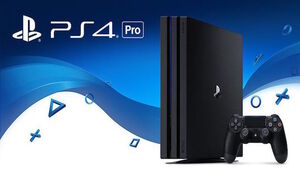
Yesterday saw Sony reveal long-rumoured hardware updates to its ridiculously successful PlayStation 4 console at their #PlayStationMeeting event in New York, after a solid year of conjecture.
To say it’s been roundly negatively received is an understatement, as hardcore gamers object even more strenuously than usual to being taken for eejits.
$300 gets you a slimmed-down version of the current hardware, while $400 gets you a slightly shinier box with (partial) 4K compatibility among other perks.
PS4 hovers just outside the top 10 best-selling videogame consoles of all time, approaching the lofty heights of Nintendo’s records for the NES and Wii machines, and even its own industry-defining efforts with their first two boxes.
All this in three or so years, completely wiping the floor with Microsoft’s tempestuously-launched XBox One and Nintendo’s unfairly-ignored Wii U in the home-console marketplace.
Sony’s move here leaves us with a small few questions, like what they’ll do with the preponderance of “old” PS4 stock to be had (any surplus units can of course be sent to Karl’s den the Broadsheet office to be given a good home)?
Why should anyone subsequently pay up for the newly-repackaged PS4 Slim when it just does what the “old” box did without a price cut, and why does this PS4 Pro, a machine aimed at adopters of Ultra HD/4K tellies, not support 4K Blu-ray movies?
But these are small fry compared to the overall question: what, precisely, are Sony and Microsoft (whose XBox One is also getting a steroid injection next year) playing at?
This whole situation, console companies on the pig’s back and blind to their own failings, should be familiar news to any gamer or tech hack of the last three decades, because right up until this generation, the following story has been wheeled out any time a games journo has needed a lazy cautionary tale…

In the nineties, it’s safe to say that Japanese/American outfit Sega were the men who would be kings of the vidya roost.
Having placed Master Systems in every Toymaster and Quinnsworth in the land in the late eighties, their massively-successful Megadrive console (above) was the must-have item of an entire generation, recovering from a slow 1989 launch to claim a place under tellies worldwide off the back of Sonic the Hedgehog.
So, when talk of the next generation of consoles began, the pressure was on Sega to succeed, and their Japanese division began developing hardware that would lead the company into the new millennium, Sega Saturn, now a cult classic.
The American division was not so thrilled about the rapidity of expansion, however, as after a hard sell, the Megadrive finally had a massive user base on which to capitalise.
But with Sony’s upcoming PlayStation seemingly arriving from the future in glorious 3D and upsetting the natural order of the games market, the decision was taken in Sega of America to bump up the Megadrive’s specs and satisfy existing console owners at the same time, while Sega of Japan worked on the real successor…

…the result was the 32X (above), a supremely ill-advised expansion that clipped into the cartridge port of the Megadrive, and ran games designed exclusively for itself, rather than beefing up older games.
The privilege would set gamers back another $200, on top of the cost of their existing machine, and in a few truly unfortunate cases, would also need the similarly-greedy (and near-defunct) Mega CD drive, another $200.
All of which, when stacked atop each other, needed separate plugs in the wall for each component. Separate versions of certain games were released, and there were one or two rather underwhelming exclusives, but as talk of the next games generation proper became announcements, deals and reveals, the expansion quickly disappeared into the ether, along with new titles, lining bargain buckets within months.
Early adopters were furious, casual consumers and parents were confused as to whether the Saturn or 32X was the next big thing, and the whole kerfuffle cost Sega untold amounts of momentum right at the worst possible time.
Later that year at E3, Sega, looking to bounce back from all this stupidity, made the surprise announcement that their next-gen Saturn would be on sale immediately for $399.
It was rushed out overnight as market exclusives to big chains, much to the fury of other stockists, who then refused to pick up the machine and its paltry line-up of available games.
The same evening, Sony delivered the blow that would ultimately finish Sega’s console racket off, cutting the announced price of their new PlayStation by a hundred dollars to $299 in a succinct keynote speech.
The Saturn was a great console with a solid library of games that remains a favourite of core gamers to this day.
But it had its head cut off early by the aforementioned boardroom fumbling, exacerbated by both the disappearance of a Sonic the Hedgehog sequel intended to bring in casual gamers and kids, and the rush announcement two years later of its similarly-doomed successor, the Dreamcast,.
The Dreamcast would eat it by 2000, and Sega ceased home hardware development the following year, while Sony’s PlayStation 2 became the biggest-selling games console in history.
The fall of Sega to this day is a lesson to hardware manufacturers across all sectors, mostly in the virtues of temperance and patience at the top.
A successful company gets a bit big for its britches and expects the audience to stump up again for a half-concocted expansion/repackage, midway through the current hardware cycle, off of brand recognition and awkward lurches into new technology the hardware can barely manage.
Sounds familiar, alright.

Tomorrow night.
On The Late Late Show on RTE One at 9.35pm.
Gareth Naughton writes:
MMA coach John Kavanagh, the man in Conor McGregor’s corner, will chat about the guts and determination that saw himself and The Notorious rise to the very pinnacle of UFC.
Earlier this week, Ryan Tubridy visited John’s Straight Blast Gym in Walkinstown, entered the famed Octagon and got some pointers from the man himself (clip above).
400-metre hurdler Thomas Barr will tell viewers what it feels like to come so angonisingly close and what his prospects are for Tokyo 2020.
Marty Morrissey will share where he got the inspiration for his emotional speech and who he thinks will be taking home the Sam Maguire later this month.
Model and author Alison Canavan will explain how, and why, she beat the booze and what lies ahead now that alcohol is no longer a part of her life.
The Young Offenders Alex Murphy and Chris Walley will chat about starring in the film critics are calling “fall on your face funny”. Mario Rosenstock, Goats Don’t Shave featuring PHAT KiiDZ, The Kilfenora Ceili Band and All Tvvins will also feature.

https://www.youtube.com/watch?v=2Iu975xZzb4
The standard definition series where it all began, as imagined by Comedy Central UK

Beithíoch – releasing a new full-length
What you may need to know…
01. A one-man project from the north-west, Beithíoch (“the beast”) plies an atmospheric take on black metal with doomy undertones, and pauses for breath of eerie ambience.
02. Emerging in 2008 with debut full length Aisling Dhorcha, Beithíoch’s explorations have moved further and further into heavier territory, while retaining a pensive air.
03. Streaming above is most recent album Ghosts of a World Long Forgotten, released last week digitally and on CD via Irish metal label HI ARC TOW.
04. In lieu of live activity anytime soon, Beithíoch’s discography to date is available in a digital bundle at the project’s Bandcamp, with certain albums available for free at the label’s website.
VERDICT: A focused, fleshed-out work that balances aggression, heft and atmosphere.

For the 48 hours that are in it.
John Moore, of Dun Laoghaire-based design agency Clickworks, writes:
Sad day for the 46A. No Summer in Dublin….
A mere bagatelle.
Never mind
Earlier: Three Come Along At Once