
One of ten new public statues in the rather superbly named city of Sugar Land in Texas.
The female group selfie dip in bronze.
Apparently, the locals hate it.



One of ten new public statues in the rather superbly named city of Sugar Land in Texas.
The female group selfie dip in bronze.
Apparently, the locals hate it.

By Con Kennedy.
Earlier: Dan Boyle on Brexit


Stillorgan dual carriageway during the recent VHI Women’s Mini Marathon
“Last Monday I was a participant in the “fast jogger” category of the women’s mini-marathon, running with my aunt, a victor over breast cancer, in Dublin on a hot summer’s day.
On three occasions I was exposed to what what I would consider sexism in the form of “motivational” slogans: “Run like you left the immersion on!”, “The N11 never looked so good!” and “Don’t worry, ladies, the hair still looks gorgeous!”
The first two slogans appeared in fabric stretched across the footbridge of the Stillorgan dual-carriageway.
The latter was shouted by a member of the Order of Malta. To my astonishment, most women around me did not find fault with any of these slogans.
In fact, they cheered on the troglodyte and seemed genuinely validated by his creepy flattery.
Are the old concepts of our worth as women so embedded into the female Irish psyche that comments such as these automatically elicit a positive response of appreciation or, at the very least, an embarrassed smile?”
Christina Cleary, in this morning’s Irish Times
FIGHT!
‘Run like you left the immersion on!’ – Everyday sexism and the mini marathon (Irish Times)
Meanwhile…
Were St Joseph’s Centre for dementia care being sexist when they made the same immersion joke for their campaign? pic.twitter.com/axeFJMpzcW
— Joe Leogue (@JoeLeogue) June 9, 2016
Thanks Rotide
Pics via CJNíChléirigh and Lindie Naughton

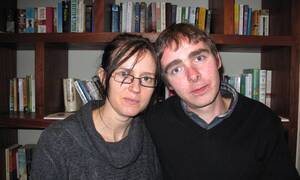
UN logo; Amanda Mellet and her husband James Burke
The United Nations Human Rights Office of the High Commissioner writes:
A woman in Ireland [Amanda Mellet] who was forced to choose between carrying her foetus to term, knowing it would not survive, or seeking an abortion abroad was subjected to discrimination and cruel, inhuman or degrading treatment as a result of Ireland’s legal prohibition of abortion, UN experts have found.
The independent experts, from the Geneva-based Human Rights Committee, issued their findings after considering a complaint by the woman, AM, who was told in November 2011 when she was in the 21st week of pregnancy that her foetus had congenital defects, which meant it would die in the womb or shortly after birth.
This meant she had to choose “between continuing her non-viable pregnancy or travelling to another country while carrying a dying foetus, at personal expense and separated from the support of her family, and to return while not fully recovered,” the Committee said.
AM decided to travel to the UK for a termination and returned 12 hours after the procedure as she could not afford to stay longer. The UK hospital did not provide any options regarding the foetus’s remains and she had to leave them behind. The ashes were unexpectedly delivered to her three weeks later by courier.
In Ireland, she was denied the bereavement counselling and medical care available to women who miscarry. Such differential treatment, the Committee noted, failed to take into account her medical needs and socio-economic circumstances and constituted discrimination.
“Many of the negative experiences she went through could have been avoided if (she) had not been prohibited from terminating her pregnancy in the familiar environment of her own country and under the care of health professionals whom she knew and trusted,” the Committee wrote in its findings.
The Committee said that, in addition to the shame and stigma associated with the criminalization of abortion of a fatally ill foetus, AM’s suffering was aggravated by the obstacles she faced in getting information about the appropriate medical options.
Ireland’s Abortion Information Act allows healthcare providers to give patients information about abortion, including the circumstances under which abortion services can be available in Ireland or overseas.
But under the law they are prohibited from, and could be sanctioned for, behaviour that could be interpreted as advocating or promoting the termination of pregnancy. This, according to the Committee, has a chilling effect on health-care providers, who struggle to distinguish “supporting” a woman who has decided to terminate a pregnancy from “advocating” or “promoting” abortion.
Ireland, which is a State party to the International Covenant on Civil and Political Rights (ICCPR), is obliged to provide AM with an effective remedy, including adequate compensation and psychological treatment she may need, the Committee said. Ireland is also obliged to prevent similar violations from occurring.
“To this end, the State party should amend its law on voluntary termination of pregnancy, including if necessary its Constitution, to ensure compliance with the Covenant, including effective, timely and accessible procedures for pregnancy termination in Ireland, and take measures to ensure that health-care providers are in a position to supply full information on safe abortion services without fearing being subjected to criminal sanctions,” the Committee’s findings said.
In its observations to the Committee on AM’s claims, Ireland said that the country’s constitutional and legislative framework reflected “the nuanced and proportionate approach to the considered views of the Irish Electorate on the profound moral question of the extent to which the right to life of the foetus should be protected and balanced against the rights of the woman.”
The Human Rights Committee considered this case under the First Optional Protocol to the ICCPR Covenant which gives the Committee competence to examine individual complaints.
Read the UN’s findings in full here
Related: Ireland abortion laws breach human rights, rules UN (The Times Ireland edition)
Previously: Another Victory For ‘Balance’
‘It’s A Sensitive Issue That Must Be Teased Out Very Carefully’

I’m baffled, outraged and perplexed
To read that young Irish folk sext
When I was a lad
We did nothing bad
Whatever will they think of next?
John Moynes

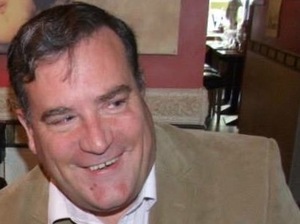
From top: Green Party leader and Minister for the Environment John Gormley following the result of the secend Lisbon Treaty referendum, September, 2009; Dan Boyle
The author examines his own voting record on Europe integration and argues that it was never based on opposition to the idea of a European Union or the need to detach ourselves from it.
Dan Boyle writes:
I was nine years old when Ireland voted to become what was then known as the European Economic Community. I had barely been in the country for a year, my family having moved from the United States to my mother’s hometown of Cork.
Even at that stage I had been socially conditioned enough to realise that you should not tilt against the crowd. The message was simple – Yes to joining was good; No to not joining was bad.
The Labour Party offered what passed for opposition to that proposal then. They and the trade unions also spoke then with the same voice. A neighbour identified himself as a No voter. I thought him mad. In the end less than one in five of those who came out to vote voted No.
The government and the political establishment were pleased with the outcome. They presumed that having voted the people would never have to vote again, the issue having once and finally been decided.
Fourteen years later that establishment reckoned without the dogged determination of Raymond Crotty, who won an important Supreme Court decision that any change to the Treaty of Rome would also be a change to the Irish Constitution, which would always require a referendum of the Irish people.
By then I had reached the physical age (if not the emotional maturity) of being an adult. I got to vote in the referendum on the Single European Act. I voted No.
Labour now in government sought a Yes vote. Of all the political parties represented then in Dáil Éireann, only The Workers Party articulated a No position.
In the subsequent referenda – Maastricht, Amsterdam and Nice (twice), along with The Greens, I continued to vote No. The reasons were many, and to my mind still quite valid.
What they were never was based on opposition to the idea of a European Union or the need to detach ourselves from it.
There was, and continues to be a fear about some nations within the Union being seen as more equal than others. More than a concern of the existence of a democratic deficit.
A headlong rush into aspects of becoming a single unitary state such as a single currency or the idea of a common army; that were either ill thought out or were never necessary, brought about obvious concerns and doubts.
By the time the Treaty of Lisbon required ratification The Greens were in government in Ireland. It caused considerable debate within the party.
I rationalised a Yes vote on the basis that Lisbon at least corrected some of the worst aspects of Nice. I also voted Yes to the Fiscal Treaty. This was despite having voted against Maastricht because of the way a single currency was being introduced in such an unthought through way.
In 2012 we hadn’t a choice to change course.
Having established residence in Wales to participate in the Welsh Assembly election, I find myself now entitled to vote in the Brexit referendum there.
Unlike all the Irish referenda, Brexit isn’t about a better Europe.
It’s about a mythical Britain. It isn’t about protecting or enhancing the role of nation states. It’s about pandering to bitter isolationists whose superior sense of being can’t abide a World where nations need to co-operate with each other.
My having a vote in this referendum may be a quirk, but this is one windmill I will enjoy tilting at.
Dan Boyle is a former Green Party TD and Senator. Follow Dan on Twitter: @sendboyle


Niall Gubbins writes:
Spotted in Fields Supervalu in Skibb at the weekend. The dancing in the music video is only glorious.