annie fleadh fine art print 2015 online version(1)

Annie West’s poster for this year’s Fleadh Cheoil na hÉireann.

Literally ‘The Music Festival of Ireland’ the Fleadh is the largest single festival of Irish Music in the WORLD and will attract revellers numbering up to 400,000 [all pictured above] over the course of nine days in August.

Fleadh Cheoil na hÉireann

Annie West

elliot2

Former CEO of the National Board of Safeguarding Children in the Catholic Church (NBSCCC) Ian Elliott

You’ll recall how, in March 2014, the former CEO of the church’s watchdog on child protection, National Board of Safeguarding Children in the Catholic Church, Ian Elliott told the Irish Independent that the Diocese of Down and Connor had blocked the release of information it had about  former priest Jim Donaghy, who was jailed for 10 years in 2012 for abusing two altar boys and a trainee priest.

The NBSCCC rejected the claim at the time.

Further to this, RTÉ Radio One’s This Week yesterday reported that Mr Elliott, whose role at the NBSCCC ended in June 2013, is taking a personal injuries case against the NBSCCC.

It is not known if the personal injuries case is related to the allegations pertaining to the Diocese of Down and Connor audit.

RTÉ journalist John Burke reported:

“My understanding is that the particular type of case which has been initiated by Mr Elliott in this case relates to a claim for stress in the workplace caused, allegedly, by a failure of the NBSCCC in this case to adequately support or protect his work while at the board.”

“In terms of the status of the application which Mr Elliott has taken against the board, and it’s important to explain first that the Personal Injuries Assessment Board operates a kind of clearing house for most types of injuries cases. You can’t take a personal injuries case in the courts without effectively going through this process first. So, effectively, the injuries board examines a case to see whether they can handle in it by consent between the parties or by some related means. And if not, they’ll formally release it which means they effectively decide that it can now proceed to a full civil litigation in the courts, if the applicant chooses.”

“Now, my understanding is that, earlier this month, the injuries board decided to release the case forward for litigation. And it’s also important to say that, by releasing the case, they don’t endorse or pass any judgement on the merit of a case. Essentially, what the injuries board has said is that the case is now released to proceed to the next stage which will be a court action.”

“The NBSCCC published a final version of that report [the audit into the Catholic diocese of Down and Connor] in December 2013 and it was reported some months later that Mr Elliott believed that that final report did not, in his view, reflect the original fieldwork that he had done during that process. The safeguarding board [NBSCCC] rejected the substance of those reports and said that they stood over the final published audit report, as an accurate reflection of the work of the board in preparing this audit into Down and Connor…We don’t know about the precise detail of Mr Elliott’s personal injuries case agains the board, other than our understanding that it relates to a claim for stress and psychological damages. He has not yet filed a plenary summons in a court which might be the most next likely outcome so it’s not until the subsequent stages of this that we would have more detail in terms of the specifics of Mr Elliott’s claim or whether it’s connected to that earlier dispute.”

“Mr Elliott met with the then Minister for Children, Frances Fitzgerald in February 2014, after he wrote to her, seeking a meeting. She then engaged in a series of written correspondence with the NBSCCC over the issue, copies of some of which we’ve obtained under a Freedom of Information request. Frances Fitzgerald wrote to the national board on the third of March last year, and a number of letters passed back and forth with the national board in which they categorically denied all of Mr Elliott’s allegations.”

“The issue has more recently been taken up by the current minister James Reilly, who met with the national board specifically on this issue in October last year. Now a spokesman for the minister described the disputed account of the audit report into Down and Connor as an internal matter between the national board and it’s former CEO. However he did say that the minister was reassured over the governance structures at the national board. And he also said that if such a dispute arose, again in the future, then a new procedure will apply, under which a High Court judge will be assigned to consider the differences in terms of the outcome of any report.”

There you go now.

Listen back in full here

Previously: On A Collision Course

‘By Covert Means’

Screen Shot 2015-06-15 at 12.33.59

Peter writes…

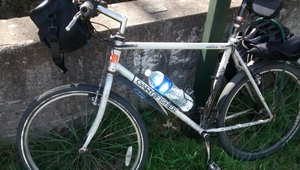
“My bike was stolen from outside Odessa [Dame Court, Dublin] last night. An old Gary Fisher (Aguila – 1996 model), it’s not worth very much but it has a lot of sentimental value. I’ve taken this bike on tours around the Baltic Sea, up to North Cape, to France, to Spain, to Portugal and all over Ireland.

“I locked it outside the Odessa bar  for about two hours last night (from 8.30pm until 10.30pm) and when I got back I found the lock on the ground.”

Meanwhile, this morning…

Screen Shot 2015-06-15 at 12.21.41

Giustina Mizzoni writes:

“I know you don’t normally do this… But my lovely bike was stolen from a car park at the back of the CHQ building, Custom House Quay between 9.10am and 9.45am this morning. It’s worthless but I love it after bringing it home from London where I originally bought it :( “

Mmf.

Anyone?

Screen-Shot-2015-05-05-at-13.00.42-1024x692

The Pint pub on Dublin’s Eden Quay, which closed down last month

Nialler9 writes:

“The news that The Pint, the Eden Quay venue was closing down, now has a happier ending and a potential new beginning with the announcement that The Wiley Fox is to take its place from this Thursday.”

“The Wiley Fox is a bar and live music venue in the same space as The Pint which has been renovated and consists of the ground floor bar, 220-capacity Ballroom with new soundsystem, and the outdoor roof Terrace area with DJ area and a Function One sound system.”

“The bar serves craft beer, wine and cocktails with a Pieminister stand open all day. Co-owner Paddy Scully said of the venue – “We wanna bring something new to this part of the city, creating something unexpected”.”

The Pint is reopening under new owners as The Wiley Fox (Nialler9)

Previously: Closing Time

CallPurcShatt Screen Shot 2015-06-15 at 11.42.39

Former Garda Commissioner Martin Callinan, former Secretary General of the Department of Justice Brian Purcell and former Justice Minister Alan Shatter (top) and Taoiseach Enda Kenny (above)

You’ll recall Justice Niall Fennelly’s Commission of Investigation.

It was set up in April of last year to investigate the covert recording of phonecalls in some Garda stations between 1980 and November 2013.

It is also tasked with looking into the circumstances of Martin Callinan’s position as Garda Commissioner ending in March 2014 – following accusations that Taoiseach Enda Kenny sacked him.

Last Thursday, a draft interim report from the investigation was distributed to ‘interested parties’. Those mentioned in the draft are being given several weeks to respond to any findings made against them.

Further to this, Ali Bracken, in the Irish Daily Mail (not online), on Friday, reported:

“The interim report has distributed to interested parties, including Taoiseach Enda Kenny and [former Garda Commissioner Martin] Callinan. It is understood that Enda Kenny will come under intense criticism in the report. Brian Purcell and Alan Shatter are also expected to be criticised but not to the same extent as the Taoiseach.”

In addition, Fionnan Sheahan in the Irish Independent on Saturday, reported:

“Taoiseach Enda Kenny’s handling of aspects of the crisis around the secret taping of phone calls at garda stations is criticised in the inquiry into the affair, the Irish Independent understands. However, the Fennelly Commission does not appear to say Mr Kenny forced out former Garda Commissioner Martin Callinan in March 2014…

“If the Commission found the Taoiseach sacked the Commissioner without giving him a right of reply, or before discussing it with Cabinet, he would have broken strict laws laid out in the Garda Act. A Garda Commissioner can only be forced out of office by a Cabinet vote. The inquiry appears to conclude Mr Callinan resigned. Mr Kenny has denied Mr Callinan was sacked by the Government in March 2014 and insisted he merely resigned.”

Bewildered Student writes:

“These are the only news reports I’ve seen in regards to the contents of the Fennelly draft interim report. Because it’s a criminal offence for recipients of the report to discuss its content, I guess we can only expect these snippets. Still though, I thought it might be worth highlighting these reports so we can compare them to the final report…”

Fennelly critical of Kenny in garda tape inquiry (Irish Independent)

Previously: Thin Blue Timeline [Updated]

Martin’s Letter

Getting Their Story Straight

Photocall Ireland

9034072600124413

Stephen Rae (top) Group editor Of Independent Newspapers; Former editor of the Sunday Independent Anne Harris (below).

“One evening in November 2012 – a Monday, my day off – I was summoned to an “off-site” meeting. I had misgivings about attending. The previous Saturday, at edition time, there had been an attempt to pull a story about a statement issued by Transparency International Ireland, which had complained to a UN special rapporteur about O’Brien’s serial litigations against journalists.

“Accordingly, on alert, I asked if I should have somebody with me. No need, I was assured. The meeting was attended by two men, one of whom was a senior INM executive. Things were bad with the company, he said.

Certain “temporary measures” were necessary. Then we got to the core problem: O’Brien, the majority shareholder, was not to be written about in certain ways. Then he issued a specific directive: any reference to O’Brien was not to be handled by me, but was to be referred to the managing editor. When I pointed out that this was censorship, I was informed it was “sensitivity”. I later asked for the directive in writing, but was refused.

“I did get a series of emails which confirmed the directive but tried to revise what had transpired at the meeting. One ridiculously stipulated the stricture was to cover references to “all” INM shareholders (there are thousands); another said it applied to coverage of the three largest shareholders, O’Brien, Dermot Desmond and Tony O’Reilly.

Contact with O’Reilly elicited an immediate response: the stricture was “repugnant” to him. (I should add that in my three years as editor, the paper had no representations from Desmond.) At subsequent meetings with management, any pretence that the stricture was wider than O’Brien was dropped.

Contemporaneous with these meetings was the drawing up of a charter or code of practice for INM journalists with its infamous clause stipulating there could be no repeated, sustained, adversarial criticism of a person or organisation without the written permission of the managing editor. The charter eventually faded because a restructuring of the newspapers rendered it unnecessary.

“At one of these attritional meetings, I asserted that the managing editor did not outrank an editor. I was informed that an editor-in-chief would, and such a post could be created.

It was. On June 24, 2013, an editor-in-chief [Stephen Rae] was appointed, and within days the structure of the Sunday Independent was dismantled. From then on I never again held a meeting with my own staff that was not attended by persons with strange new titles taking notes furiously.

At the meeting to announce the appointment of the editor-in-chief I asked who, now, would make the decisions on coverage of O’Brien. I got no reply.

Copious correspondence asking the same question proved equally fruitless. But I did get an answer, a painful one, on July 19, 2014. In an article published in the early edition of the Sunday Independent, I referred to O’Brien and control of INM. Without reference to me, the editor-in-chief stopped the page and removed a crucial sentence.

I rang him to protest. The paper was delayed while we argued. In order to get the pages running again, several minor changes were negotiated. But I had no part in the removal of the crucial sentence. Did O’Brien have any knowledge of these events? I don’t know. I asked to meet him. I was told that wouldn’t happen.

Anne Harris, ex-editor of The Sunday Independent, in yesterday’s Sunday Times (behind paywall).

Previously: Continuity Rae

Denis O’Brien’s Editorial Interference: The Smoking Gun?

Broadsheet.ie