
90379545

Clarity, people.

Clarity.

Gallantman writes:

I went into a shop yesterday. City Centre Dublin. Almost six o’clock. I know the owner reasonably well. I know him to be a friendly, warm and intelligent man. We often exchange pleasantries. He let me in as he put up the ‘Closed’ sign. I went straight to the till, to speed things up, and noticed a ‘Yes Equality’ poster leaning on the counter. I pointed at it and joked that he had obviously made up his mind on this issue. At this he hummed and hawed a bit. He explained that a ‘Yes’ campaign team had come in the day before and he had left it there. I got the distinct sense that he wasn’t yet convinced.

We chatted some more and he made a general point that he reckoned a lot of people will give the impression they are voting ‘Yes’ but will in fact not do so. I sensed he was trying to tell me something. I listened to him. I said to him that I did feel that it was unfortunate that anyone who expressed doubts about the referendum were afraid to articulate these thoughts. We chatted some more. I felt an admission coming on and he duly told that as it stood he currently intended voting ‘No’.

I acknowledged his point of view. We continued to converse in a measured respectful way. I told him that I intended to vote ‘Yes’. I gave him my reasons- the fact that I see this amendment this as only a minor tweak to the Constitution. No big deal-no seismic shift in the social order as I see it. A no brainer for me personally.

At this point he asked about the actual change to the wording of the Constitution. I explained that to him, as I understand it. He then said that he had concerns about surrogacy and adoption and I clarified that they’d already been legislated for and wouldn’t be affected in any material way by this particular referendum.

He listened. We chatted. I explained that while a ‘Yes’ vote was no major thing for me I felt it may be for somebody being bullied in school or living fear of coming out to their family or friends. Another reason for me, for a ‘Yes’. With that he thanked me , told me that I’d clarified a few things and given him some food for thought. He said he’d talk to his wife later and we left it at that.

I reflected later on this exchange. It is a concern that the ‘Yes’ campaigners who’d visited him the day before had seemingly failed to address this man’s honestly held, if ill-informed and mis-informed views. It was apparent that he was afraid to publicly admit these doubts and ask the relevant questions. I feel it is important that people like this man- moderate ‘No’ voters are not afraid to be heard. It shouldn’t shock or surprise us that people who grew up in a theocratic, explicitly homophobic society may still have residual doubts and fears around such topics. Unless these lingering reservations are articulated they won’t be identified and potentially challenged.

The mainstream media discourse continues airing the same few  polarising voices. In the midst of all this there is a confused middle ground keeping their heads below the parapet. An Irish version of the ‘Shy Tories’ who came out and voted in such numbers in the UK last week.  I think it is vital to leave a space in the referendum debate for moderate ‘No’ voters to identify themselves. That way they can engage, without fear of vilification, in the type of conversation that I outlined above. Clarify some issues that are being deliberately obfuscated by the ‘No’ side.  I think the resulting voter swing can and will only go one way.

Earlier: No Fear

(Sasko Lazarov/Photocall Ireland)

2015-05-11Lisa Naylor

Niamh Kelly writes:

I am writing on behalf on my friend Lisa Naylor, who is too unwell to write herself. Lisa has been battling depression and an eating disorder for many years, and has been surviving quite well until recently. Four weeks ago her community team diagnosed her with a major depressive episode and recommended that she goes into inpatient care to maintain her own safety, as she is extremely suicidal and has tried multiple times to end her life.
She has tried both the public and private system and due to overcrowding and paperwork, four weeks later she is at home alone all day every day fighting every minute to survive. She is tired and has given up. She no longer wants the pain of life and cannot keep begging for help only to be turned away at every avenue.
Below is a copy of an email she sent three days ago to the Minister for Health and the Mental Health Commission.I, and all of Lisa’s loved ones are praying and fighting her case as best we can and would really appreciate if you could highlight this issue.

My name is Lisa Naylor, I am 30 years old and I suffer from depression and an eating disorder. I have been struggling with this current period of illness for over a year and have attempted suicide multiple times and been hospitalised twice; once in John of Gods and once in Lois Bridges. I am currently under the care of Coolock Mental Health Clinic, and have been put under home care as I was seen as too unwell to attend my local day hospital.

Four weeks ago I advised my registrar that I could no longer see a way out of my depression and could not guarantee my safety. After extensive interviews with my doctor, nurses and a local consultant it was decided I needed a short stay in hospital in order to ensure my safety and give my mind a rest from the constant struggle with my self harm and suicidal impulses.

Luckily, I have health insurance, and referrals were immediately sent to St John of Gods and St Patrick’s Hospitals asking for admission for a major depressive episode. In the last four weeks I have spent my days fighting against every fibre of my being to give in to the never ending voices in my head, urging me to end my pain.

I have been self harming almost daily and spend hours face down in a toilet, forcing myself to throw up whatever I have eaten. I feel no joy, I feel no contentment, I feel nothing but self loathing and pain. All day, everyday.

I have been told that as a result of my eating disorder I must wait until the end of May for an assessment in St Pat’s, that I cannot be given a bed to keep me safe until after this date. St John of God’s refuses to answer multiple phone calls and voice mails about an admission.

I have been advised that the public ward in Beaumont is not an option as they are at crisis point. My very dedicated HSE team have literally run out of options and can give me no answers or reassurances.

I am 30, I am suffering, and I have nothing left to give. It took everything I had to tell my doctor how I felt and it was all for nothing. I am going to die because I asked for help and nobody answered.

I am not sending you this email for pity, or dramatic effect, but to highlight the fact that something is very wrong with our mental health system. I am going to die because of paperwork. Please, do not let this happen to someone else.

Lisa Naylor

Down the hole, with a bumped head and bruised soul (Lisa Naylor)

persiaScreen Shot 2015-05-11 at 12.39.47

Prince of Persia.

The groundbreaking 1989 computer game.

Now in Dublin

Emlyn lewis writes:

You may have remembered sharing my “Sonic Vs The Luas Train” video on your site, September 2014. I just finished yet another old school animated filmed featuring Dublin scenery, check it out

Screen Shot 2015-05-11 at 11.48.36

Sr Stanislaus Kennedy

First in a series.

“I have thought a lot about this. I am going to vote Yes in recognition of the gay community as full members of society. They should have an entitlement to marry. It is a civil right and a human right.”

Sr Stan, age 75, a member of the congregation of the Religious Sisters of Charity and founder of the homeless support organisation Focus Ireland.

Sr Stan to vote in favour of same sex marriage (Irish Times)

Previously: Priests For Yes

(Photocall Ireland)

CEt91sTWYAAeodc

A photograph taken at Trinity College Dublin in 1955 by Norman McGrath

Trinity College Dublin writes:

“What’s your iconic Trinity image? – the playing fields, the Science Gallery, the Long Room, research under the lens, mayhem at the Ball? Calling all staff, students and alumni: the Provost is looking for images of Trinity for a stylish new coffee table book, Trinity Contemporary, that will showcase our university to the world. Images selected for publication will be fully credited and will reference the photographer’s reasons for taking the shot. The focus is on Trinity today, but staff and alumni are also invited to send in images from previous decades, to showcase continuity and heritage.”

Think of Trinity and what do you see (TCD)

Screen Shot 2015-05-11 at 11.19.31 Screen Shot 2015-05-11 at 11.19.45Screen Shot 2015-05-11 at 11.20.46

Screen Shot 2015-05-11 at 11.22.03

Screengrabs from a new rental report by Daft.ie

Ronan Lyons, of Daft.ie, writes:

“Dublin’s population may grow by as many 100,000 families during the 2010s but, halfway through the decade, fewer than 10,000 new homes have been built in the capital…The easing of rental inflation in Dublin has little to do with supply coming on-stream, as the total number of properties on the market at any one time remains unhealthily low.”

FIGHT!

The Daft.ie Rental Report

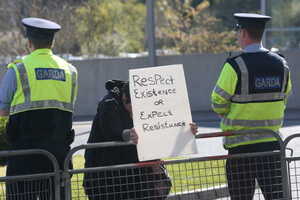
90377429MercilleProtests in Blanchardstown, Dublin last month and Julien Mercille (above)

It’s Monday.

It’s 9.32am.

Do not hit ‘snooze’.

It’s Mercille on Monday at 9.32am.

Dr Julien Mercille writes:

Governments are not moral entities. Water charges policing has given us quite a few demonstrations.

This week the government announced that it is moving to introduce new legislation allowing Irish Water to collect the water charges from those who refuse to pay from their welfare payments or wages.

The government says this will only apply to those who do not want to pay, as opposed to those who are not able to pay. But how do you determine if someone is truly not able to pay, or refuses to pay?

Who knows, but we can bet it will involve hiring an army of consultants and lawyers to ponder over the question, come up with a (flawed) scheme, implement it, monitor it, review it, etc.

The cabinet has also approved a proposal that those who haven’t paid their water charges will not be able to sell their house until they pay what they owe Irish Water. Finally, another plan is to allow landlords to deduct the charges from tenants’ deposits.

Such measures reveal how authoritarian and anti-democratic the government is. It will simply come up with any scheme needed to do what it wants to do.

The government spin on the new measures is that they are “good news” because they mean that nobody will be jailed for not paying the water charges.

That this is presented as a generous move displays the very low standards of morality which characterise the Irish state. While at it, we should also rejoice that imprisonment for life has also been ruled out for those who won’t pay the charges.

Justice is elusive in this state. Punishment is reserved for those who oppose government power, whereas those who defend it are handsomely rewarded and live comfortably. In recent weeks we have witnessed, among other things:

– Six police officers going to Paul Murphy’s house before 7am to arrest him without warning. Three others were also taken in relation to Joan Burton’s two-hour captivity in her car. In total, 23 people were arrested following the Jobstown protest.

– Five protesters were given jail sentences for 56 days (Damien O’Neill, Paul Moore) and for 28 days (Bernie Hughes, Derek Byrne, Michael Batty) for crossing a 20-meter perimeter around the workers installing water meters (they were freed after a little more than two weeks in jail).

– Joan Collins TD was arrested along with 12 others for demonstrating as Irish Water was installing a meter.

And we can add to this: arrests related to Shannon airport while government officials still roam free even if facilitating US militarism; the fact that bankers who played a direct role in bringing about the economic crisis are still free while banks are attempting to repossess thousands of ordinary people’s houses across the state; that TDs and ministers who have shattered the lives of so many by implementing austerity are either still in office or comfortably going about their business.

This only confirms the pattern that the rule of law is political and geared towards protecting those in power.

Indeed, some Garda leaders seem aware of the political nature of the policing going on in the state. In a job interview, Garda Commissioner Nóirín O’Sullivan asked a candidate about his views on “left wing political extremism in Ireland” and on left wing politicians. The candidate said he was “taken aback” and “uncomfortable” with such types of questions, and understandably so.

Moreover, the Garda Representative Association complained that there was a “sinister and dangerous element” in the protest movement and that “anti-water-charge protests are taking valuable resources away from the investigation of crime”— excluding state crimes, of course.

The Garda Association said it wanted to be better armed, for example with Uzi submachine guns and Taser guns. That’s worrying.

When she got arrested, Joan Collins TD said “I break laws that are immoral”. This is seen as outrageous by respectable politicians, but in that, it only follows a long tradition of peaceful civil disobedience which has won rights for people around the world. Many have made similar statements, of which a sample:

“One has a moral responsibility to disobey unjust laws.”
-Martin Luther King Jr.

“Protest beyond the law is not a departure from democracy; it is absolutely essential to it.”
–Howard Zinn

“If it is of such a nature that it requires you to be the agent of injustice to another, then I say, break the law.”
–Henry David Thoreau

These are people who, if still alive, would be at the water protests—and would probably all be arrested.

@JulienMercille is lecturer at UCD and the author of The Political Economy and Media Coverage of the European Economic Crisis: The Case of Ireland (2015, Routledge). His new book, Europe’s Treasure Ireland (Palgrave), will be out in July 2015.

Broadsheet.ie