

Tag Archives: Anne-Marie on Wednesday

SeanadChamber_800-750x400anne-marie-291x300

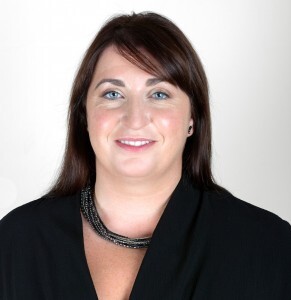
From top: Seanad Eireann; Anne Marie McNally

Are you are one of the lucky ones who can cast your vote in the upcoming Seanad election?

Make it count.

Anne Marie McNally writes:

It’s almost election time again. No matter what Bill and Ben decide in the big room of chats, there will be an election in the coming weeks – an election to elect national legislators who will preside over the passage of legislation that will impact on both the country as a whole and your life personally.

The catch here is this; unless you are one of a handful of elite graduates from select institutions then you will not get the chance to that vote in that election.

Yes, you guessed it, it’s the Seanad election.

To be clear, even if a General Election is called we will still have to go ahead with the current Seanad election and then following the General Election there would be yet another Seanad election with the same process. The Seanad election MUST take place within 90 days of a General Election being called.

Two years ago there was a referendum put to the people as to whether to keep or abolish the Seanad. The third (& seemingly most favoured option) which was not put to the people was to maintain the Seanad with dramatic reforms to the institution itself and to the process which ‘elects’ the institution.

Two years since that referendum we stand poised to have another run of the Upper House with absolutely zero changes to either the institution or the electoral process associated with it.

Of the 60 members who will sit in our Upper House, 11 will be nominated by the Taoiseach (whomever that may be!) six  will be elected from the University Panels – consisting of just two universities – the National University of Ireland and the University Of Dublin (Trinity).

Each of those two institutions will elect three members to make up the six University members of the Seanad.

Feeling represented yet?

The remaining 43 ‘panel’ members of the Seanad will run on the panel where they supposedly have ‘knowledge and practical experience’ on the subject of the panel.

It’s not clear if being a rejected General Election candidate qualifies you but it appears so judging by the candidates for the upcoming panels).

The panels are as follows:

-Cultural and Educational Panel
-Agricultural Panel
-Labour Panel
-Industrial and Commercial Panel
-Administrative Panel.

Now here’s the real rub…you may be thinking ‘OK I didn’t attend either Trinity or NUI but I can choose my legislators on the general panel elections…’

Not unless you are either (a) a member of the incoming Dáil (b) a Member of the outgoing Seanad –the irony! Or (c) an elected Councillor on either a city or county council.

So unless you’re one of a very select few who went to either of the ‘chosen’ Universities or an elected official (or a Senator vacating your seat!) then you will not have the opportunity to have any say whatsoever in the election of the 60 people who will sit in the Upper House of our Oireachtas.

Now you may console yourself by saying things like ‘ah sure they’ve no power anyway’ and for the most part you wouldn’t be far wrong however if we want an Oireachtas and a legislature that is truly representative of the citizens and that is for and of the citizens then we cannot sit back and allow the Seanad to continue in its current form.

We should not accept that 60 undemocratically elected people will spend the next few years (or months depending on the political landscape) coasting along on very nice salaries and expense accounts while being cushioned by the ‘there’s not much we can do anyway’ argument.

That’s why when you (if you are one of the very few lucky ones who can) cast your vote in the upcoming Seanad election then vote for someone who is not satisfied to hide in the shadows for the next lifespan of the Seanad.

Elect someone who is prepared to stand up and challenge the status quo both inside and outside the Upper House,

Someone with genuine background on the panel they are running on or someone on the University panels who has raised their voice for change against the odds rather than the high-profile politician who’s using a branch of our democracy as a stepping stone or a layover on their political career.

Anne Marie McNally is a founding member of the Social Democrats. Follow Anne Marie on Twitter: @amomcnally
Valartis-BankSUJET_1431440959575497_v0_l 00077337

anne-marie-291x300

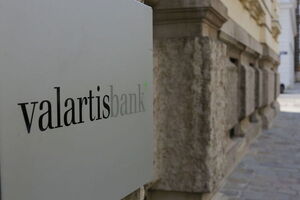
From top: Valartis Bank, purchasers of Anglo Austria; David Drumm (left) and Sean Fitzpatrick in 2005.

We didn’t have to wait long following the Panama leak to hear of an Irish connection.

Anne Marie McNally writes

Panama papers, tax havens, connected billionaires and a hidden money trail across the world. Is this the stuff of the latest suspense novel or an actual unfolding news story with implications for citizens across the world?

Surprise surprise it’s a true story – the stuff we of the 99% brigade have pretty much come to expect from those up there in the 1% brigade. But come to expect or come to accept?

I fear it’s increasingly become the latter as many shrug their shoulders and think ‘sure we know that’s what they’re up to, it’s no big deal.’

In the current US Presidential race we’ve two significant, and not untarnished, members of the 1% club running for the office of President.

Hundreds of thousands line up at rallies  to support them despite knowing what they know about their shady financial affairs that have been designed to screw the ordinary Joe Soap while they accumulate millions onto their billions by avoiding the taxes that would pay for the services they claim to be campaigning for.

Even less surprising was that we didn’t have to wait long following the Panama leak to hear of an Irish connection.

Even if we leave aside the two Irish individuals- a former senior Fine Gael strategist and a well-known developer – we are still left with the fingerprints of toxic Anglo all over.

According to the papers Anglo Austria was recommended to customers by the now notorious Panama law firm Mossack Fonesca as one of a small number of banks with ‘fairly relaxed conditions’ when it comes to setting up offshore companies designed to facilitate wealthy individuals to disguise their ownership and control of significant assets.

This is the same Anglo through which the infamous Bernie Madoff channelled his ill-gotten funds in order to finance his lavish lifestyle.

As far back as 2013, Simon Carswell, writing in the Irish Times, was telling us that Anglo Austria had actually been soliciting business from a company known for setting up offshore trusts.

In 2006, while the branch was still under the control of the Irish operation, a senior official in Anglo Austria was sending emails to the Singapore based Portcullis Trustnet appraising them of the ‘smooth and quiet’ nature of Austria’s banks and praising the culture of banking secrecy.

Says a lot about the internal culture at senior levels within Anglo doesn’t it?

Anglo sold it’s Austrian subsidiary to a Swiss based company in 2008 with the deal being signed on the day of David Drumm’s resignation, which had come the day after the Chairman, Sean Fitzpatrick, had been forced to step down because of his failure to reveal the extent of Director loans – which ran into the millions- within the organisation.

At the time of the sale that bank had €600 million in assets yet it was sold for only a €49million profit, with the bank itself financing part of the sale costs by way of a loan to the purchasers, Valartis.

The circumstances of the sale drew whispers across the financial world from those in the 1% circle with more than a few rumours that David Drumm had been worried about how it conducted its business and the possible blowback on him and the Irish operation.

Sean Fitzpatrick had apparently made the decision to sell the branch – with its €600 million in assets – mostly liquid cash deposits, at a time when Anglo in Ireland was in desperate need of deposits and was about to be bailed out by the Irish people to the tune of €24 billion.

The Board of the Anglo Austria operation included eight people from Anglo’s Dublin operation – a number that far outweighed the Board’s Austrian contingent.

With that level of Board representation you’d have to assume there would be an overlap of information between the Irish situation and the Austrian branch which causes me to repeat the questions that were whispered at the time – why sell off a branch with liquid assets at a time when you were shoving the begging bowl into Irish people’s faces and forcing them to flay themselves on your alter?

The initial Panama reports indicate that there may now be an answer to that question, and it undoubtedly won’t be a pretty one.

Anglo the Musical? More like Anglo the never-ending saga of disrepute.

Anne Marie McNally is a founding member of the Social Democrats. Follow Anne Marie on Twitter: @amomcnally

annemarie:gary

annemarie:erica

From top: Anne Marie McNally and fellow Soc Dem Gary Gannon and with Erica Fleming on Patrick Street, Dublin on Easter Sunday

How do you celebrate the birth of the Republic when its ideals have essentially been cast aside by successive Governments.

Anne Marie McNally writes:

I’m conflicted. I’ve friends who are conflicted. We’re conflicted see, about the conflict – or more accurately-the commemoration of the conflict, the 1916 conflict to be precise.

I want to celebrate it. I, quite literally, was raised on songs and stories about heroes of renown. I could spit from my house to Kilmainham Gaol and many afternoon strolls with my dad ended with a pint in The Patriots Inn.

Luke Kelly’s Foggy Dew was the background to many a family evening. I was surrounded by and steeped in the history, the heroism and the patriotism of those who fought and died for the cause of Irish freedom in 1916.

Last Sunday I walked up Patrick Street following the Military parade and feeling a real sense of occasion. I got to College Green and I stood and watched the big screen as Captain Kelleher read the Proclamation to a deathly silent Dublin city.

I won’t lie, I shed a tear. It was a powerful moment that will stay with me for the next hundred years – and that was the point wasn’t it? – to create a memory of our past for the current generation and to keep our history alive within us. In my case, it worked.

From College Green I pushed past the throngs of people and circumnavigated the various barricades and found a circuitous route to Marlborough Street where people were gathering to highlight another facet of our nation’s legacy – our homelessness crisis.

Erica Fleming, the young mother who featured on RTÉ’s documentary ‘My Homeless Family’, had organised the protest to lay bare the stark reality between the Republic that was proclaimed in 1916 and the Republic we find ourselves living in today in 2016.

While those dignitaries who were actually allowed onto O’Connell Street on the day sat and celebrated the visionary men and women of 1916, just two streets over we stood and lamented the fact that their vision has never been achieved.

Never was that more manifest for me than standing surrounded by parents and their children who had arrived from various hostels and hotel rooms across the city while a triumphant flypast soared overhead.

There has been harsh criticism in recent days of those of us who sought to use the words of the proclamation to highlight its unfulfilled promise.

They shout at us about it not literally meaning children when it spoke of cherishing all the children of the nation equally. Well d’uh, but you know what – those visionaries certainly weren’t excluding actual children from that phrase and why wouldn’t you use it to highlight the horrific injustice of 1800 of our children living in a 2016 Republic without a home?

When they spoke of cherishing the children they referred to every person in Ireland, the 1800 homeless children are just the tip of the iceberg, if we take it at its most literal and use it to highlight where we have failed across the board then your eyes would water.

It has therefore made very little sense to me that those detractors would seek to jeer those of us using the ideals of the proclamation to make a statement about the absence of those ideals from our society today.

So my conflict was thus – I wanted to commemorate, I wanted to remember, and I wanted to burst with pride in memory of our strike for freedom and the brave men and women who made the ultimate sacrifice to deliver the Irish Republic.

I also wanted to shout from the rooftops about how we have failed to deliver that Republic, how a Republic that fails to ‘cherish all the children of the nation equally’ is one not worthy of the name, and how I felt hypocritical celebrating the birth of that Republic when its ideals have essentially been cast aside by successive Governments.

I’m not filled with romanticism for the 1916 figures, I realise that their beliefs and many of their aspirations were founded in conservative religious ideologies that I would eschew and which – as DeValera’s reign proved – had a warped vision of what equality actually was, however, their words and actions about equality and civil and religious freedoms, taken separate to their own personal beliefs, were visionary and 100 years later I still desire a Republic based on those ideals.

So while I honoured and commemorated the events and the people, I celebrated the vision not the delivery and that allowed me to stand side by side with Erica and my colleagues and continue the fight that began 100 years ago – the fight for the delivery of a true Republic

Anne Marie McNally is a founding member of the Social Democrats. Follow Anne Marie on Twitter: @amomcnally

.

kennymartinanne-marie-291x300

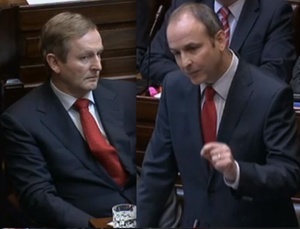
From top: Enda Kenny and Micheál Martin; Anne Marie McNally

The numbers simply dictate that Fianna Fail and Fine Gael must work together in some form no matter what the outcome is to be – Coalition or a Minority led government.

Anne Marie McNally writes:

Minority/Majority. Tomato/Tomato…etc. etc. What’s going on with the political scene nationally and do we really understand the merry dance we’re being led on as the two old behemoths circle each other in an awkward scenario where one won’t tell the other that they fancy them so they’ll keep on pretending things are normal and silently hope the other will find the nerve to eventually say ‘let’s talk.’

As they engage in their awkward charade the general public continue to be fed baffling spiel about ‘options’ and what might occur.

There’s lots of talk from the hacks and analysts among us about various scenarios, potential participants and the motivation, or lack thereof, of those participants to make scenarios work.

To the average Joe it’s dull, tedious and frankly difficult to understand given the spurious narrative being trotted out by lazy journalists with their own political agendas. I work in the game and I still have to keep running the numbers through my head and double checking where it’s at.

The Irish Times coalition number cruncher is probably the best tool to make you realise the impossibility of the situation that certain people are trying to convince us is possible.

Here’s where we’re at; the magic number required to form a Government is 79.

Fianna Fáil has 44 (43 now that one from their ranks was elected Ceann Comhairle), Fine Gael have 50. So between them they hold 93 seats.

If they had the chats and decided to jump into bed together then that’d be that. By all accounts they won’t. The likely scenario at the moment is that they have the chat and decide maybe, possibly, to go for a drink together but each buying their own while engaging in a very suspicious relationship that requires the company of others on their various dates.

Those others get to call the shots quite a bit on how the relationship develops and survives and can actually break-up the relationship at any point along the way. It’s hardly a Tinder match made in heaven now is it?

And what of the others? We’re not talking about one or two like-minded individuals here; we’re talking about an eclectic kaleidoscope of political persuasions and interests.

The type of hangers on who could ruin a blossoming romance with the drop of a single demand – be it a colosseum for Killarney or the overlooking of a report in Tipperary.

Sinn Féin the third largest party with 23 seats have categorically ruled themselves out of any support so those 23 seats are not up for grabs by either of the big Two.

While both Fine Gael and Fianna Fáil would have us believe right now that they both have a chance of forming a Minority Government what they are not making so clear is the fact that they cannot even do that without some form of agreement with each other.

The numbers simply dictate they must work together in some form no matter what the outcome is to be – Coalition or a Minority led by either/or.

It may be that one agrees to abstain from the vote for Taoiseach in order to make the Minority possible (it’s not yet clear which one will win the numbers race but Fine Gael appear to be in the lead) but agree they must.

Let’s imagine for a moment that Fine Gael have managed to convince even 10 Independents to support them (an extremely unlikely unrealistic prospect) that still only brings them to 60.

So even if they somehow managed to convince all the other smaller parties to abandon their principles and go into Government with them (a prospect with zero grounding in reality) they’d still only add 2 from the Greens, 3 from the Social Democrat, 6 from AAA/PBP and 7 from Labour they still only have 78.

Therefore even in the most wildly ideal scenario for Fine Gael it’s still not possible for them to reach the magical 79 without some input from the old foe who they actually hold the candle for.

So while they both spout rhetoric in the media (aided and abetted by some journalists) about others having to ‘step up to the plate’ it would serve us all well to realise that the only plate in town is the one they will share as they drop the awkward charade and finally get it on.

The first date may be a disaster and the whole thing is called off before it ever gets going but either way there’s no getting away from the fact that the date has to happen.

Anne Marie McNally is a founding member of the Social Democrats. Follow Anne Marie on Twitter: @amomcnally
90411828
anne-marie-291x300

From top: Gerry Adams and Mary Lou McDonald with new Sinn Féin TDS on the plinth at Leinster House last week. Party members take the industrial wage and give the remainder to the party; Anne Marie McNally

Politicians not taking the full TD salary while diverting the rest to their political coffers are misleading the public.

Anne Marie McNally writes:

Politics in Ireland – it’s a mess. For myriad reasons but not least the bamboozling political funding process that throws up so many questions with very few straight-forward answers thus leading to another bona-fide reason to mistrust the political system in Ireland.

There’s a widely held view that there is golden pot at the end of the Dáil rainbow and a trough within which snouts are firmly placed.

This view is not helped by elected politicians who try to make a virtue from the fact that they’ll supposedly only claim half their salary. What those politicians aren’t so quick to tell you is that what they mean by that is that they WILL take their full salary but they’ll choose to give half of it to their political party.

It’s the equivalent of you saying that you are refusing to take your thirty or forty grand per year salary because you’ve chosen to give half of it to the local boozer on nights out.

You take the money and you do what you choose with it, that’s really irrelevant to the person paying your wages and in the case of politician’s that’s the tax payer.

The average industrial wage argument is does not and should not apply to political salaries. You are not paying average industrial workers; as citizens you should be expecting highly competent/qualified individuals willing to work 24/7 on the issues affecting the quality of people’s day to day lives. It’s no small thing.

The fact that in far too many instances we don’t get that quality of representation should not be used as a tool to denigrate the nature and the purpose of the role. Like any other profession the salary must be commensurate with the level of work involved and the importance of the role. If it is not then you are less likely to attract the best qualified people towards it.

I would personally argue that the salary is in no way a deciding factor for those of us who believe public service is a vocation rather than a career but the point remains that appropriate remuneration for what should be, if done correctly, an extremely tough job.

What level that ‘appropriate remuneration’ should be set at is an entirely different conversation but in the meantime it is important that citizens are not misled by politicians who give soundbites about not taking the full salary whilst taking the full salary and diverting some of it to a cause of their choice – in most cases their political party coffers.

Even less clear to the public is the way in which Electoral Acts funding works or even what it is and who is or isn’t entitled to it.

Any registered political party that achieves at least 2% of the national vote is entitled to party funding. Every percentage increase above that 2% increases the amount awarded.

Independents, whether part of a grouping or not, do not receive such funding. Any party that did not meet the 30% Gender quota target but achieved above 2% will have their funding halved – this applies to Renua for example.

Every elected Oireachtas member is entitled to ‘Leaders Allowance’ – Independent TDs are paid it directly while it is paid to Party Leaders in respect of every TD elected for that party, again the amounts differ depending on how many TDs the party has or whether or not it is in Government.

If a TD leaves their party between elections, the party continues to receive funding for them but the TD in question gets nothing – this clause can be more powerful than any Whip in keeping backbenchers silent when they disagree with party policy.

Expenses, allowances and all the rest is a conversation for another day but my point here is that citizens shouldn’t be misled by politicians who try to use the confusing nature of the Irish political funding model to convince them that they are only taking the ‘average industrial wage.’

Anne Marie McNally is a founding member of the Social Democrats. Follow Anne Marie on Twitter: @amomcnally

-1anne-marie-291x300

From top: Bumps in the road in North Kildare; Anne Marie McNally

We have a vestige of local government rather than a proper functioning arm of our democracy.

Anne Marie McNally writes:

It’s rumoured to have been first uttered during Tip O’Neill’s 1935 Cambridge City Council campaign but if there’s any truth to that old (infuriating) adage that ‘all politics is local’ then it’s high time we turned it on its head and started acting like responsible citizens who respect the differentiation between a local councillor and a national legislator.

At a family gathering the other evening everybody, of course, wanted to talk politics with me. One woman from the Wicklow constituency, following a really good conversation about the Social Democrats and Social Democracy in general, told me that she hadn’t voted for Stephen Donnelly despite really admiring him and everything the party represents.

When I queried why she told me it was because he ‘is from East Wicklow and I live in West Wicklow and we needed somebody who will deal with our issues over here’.

When I asked what type of issues she was referring to she mentioned the local roads and ‘trying to get the dip in the road just before the bridge sorted’.

I asked who she voted for and nearly fell off my chair when she said [fomer Fine Gael TD now Renua deputy leader and pro-life activist] Billy Timmons. ‘But aren’t you in favour of repealing the 8th?’ I asked, having had previous conversations which had left me with the impression that she was fairly liberal and progressive.

She proceeded to tell me that yes she is indeed in favour of repealing the 8th and while she knows that Timmons is absolutely opposed to it that doesn’t really matter because ‘he always takes a call about local issues’ and he’s reliable on those things.

That led me down the rabbit-hole conversation about the purpose of local councillors. It didn’t matter it seemed because the local councillors ‘weren’t great’ while Billy would ‘always take a call.’

How do we, as responsible citizens, change that narrative? Surely we can all recognise the need for there to be a fundamental difference between the people we elect to draft and pass national legislation and the people we elect to deal with our potholes.

At the same time though you cannot blame people for electing those they feel will take their calls and resolve the issues affecting their day to day lives at a local level. S

o how do we get to a space where the distinction comes naturally? We completely reform local government structures – that’s how. We need to build a local government structure to which central power is devolved in a meaningful way.

Right now we have a system of local government that simply doesn’t work. Councils have very little power in relation to local policy formation and the elected Councillors have even less.

Check out the Facebook/Twitter posts of many local Councillors following Council meetings and you will routinely see posts regarding the unwillingness of the Council Executive body to provide information or pursue the requests of sitting Councillors. We have a vestige of local government rather than a proper functioning arm of our democracy.

You may argue that even if local Councillors were effective and in a position to deal with issues that citizens may still gravitate towards their elected TDs. In the short-term that may well be the case but if you institute proper reform with very clear structures and a mechanism that allows elected Councillors to perform effectively you will, with the correct political will, eventually change the popular culture.

With a culture shift that clearly delineates the local from the national, citizens will see that the most expeditious and efficient way of dealing with local issues is to approach their Councillors while the best way of ensuring good legislative oversight and passage is to elect parliamentarians who prioritise the national interest rather than the local pothole.

Anne Marie McNally is a founding member of the Social Democrats. Follow Anne Marie on Twitter: @amomcnally

Irish-election-PA-1

anne-marie-291x300

From top: General Election posters; Anne Marie McNally

Until a majority of Irish people shirk the media narrative and realise that their fortunes are not dependent on either Fianna Fáíl or Fine Gael, we will have no real progess as a society.

Anne Marie McNally writes:

It’s done and dusted. GE16 has come and gone and with it our understanding of what constitutes our political framework for the foreseeable future.

The electorate returned a somewhat confusing mandate but a mandate which must be respected nonetheless.

But there is a difference between respecting a person’s choices and legitimately questioning the reasoning behind those choices.

If you look back to 2011 and recall the decimation that was wreaked upon Fianna Fail as punishment for the political terror they had inflicted upon people in the period 2007-2011 it is really hard to understand how many of those people, just five years later, saw fit to wave a white flag and forgive Fianna Fáil their sins.

There has been lots of talk in recent days of borrowed votes being returned to Fianna Fáil.

If you voted for Fine Gael or Labour in 2011 to punish Fianna Fáil then voted last Friday for Fianna Fáil in order to punish Fine Gael or Labour then you need to look very close to home as to the cause of the malaise in our political system and the root cause of the disenfranchisement of people from electoral politics.

As I canvassed over the past few months I was convinced turnout in this election would be amongst the highest ever recorded. People were angry; they were determined to punish this Government. It never for a moment crossed my mind that the punishment they intended to inflict would be a return to the aggressor of the recent past.

While many told me they wouldn’t bother voting because they didn’t see the point, I was enthused by the amount of people who were politically exercised. Unfortunately when it came down to it, those who were apathetic stood by while the establishment traded power between them.

We got near to change, there was certainly a shake-up of sorts but the people who opted out of the voting process were complicit in allowing tweedle-dum and tweedle-dee to keep their hands on the levers of power for at least another election cycle.

I’m incredulous that we’re now seeing Fianna Fáil being touted as some bastion of political reform or possible saviours of this political stalemate we’re currently witnessing.

I want to scream from the roof-tops that this is the same Fianna Fail who brought us to our knees, who drove our young people from this country in their thousands; that lumbered our children and grandchildren with debt burdens that were never ours or theirs to bear; yet here they stand as an almost white knight, with a mandate given to them by citizens with apparent goldfish memories.

I take the point that it is their second worst ever election result but I take no solace in it because following 2011 it is incomprehensible to me that they should regain seats lost just 5 years ago when really it should have been a further nailing into the coffin of the type of politics that has brought us to where we are today.

For my own part I put my hat into the ring and while I managed to poll ahead of two sitting TDs and take 5320 votes it wasn’t enough on this occasion and I finished 5th in a 4 seater.

I’m good with that and I’ll take the defeat on the chin and move forward but I’ll find it far harder to accept that people returned their vote to Fianna Fáil as some perverse means of punishing Fine Gael and Labour.

Until a majority of Irish people shirk the media narrative and realise that their fortunes are not dependent on either Fianna Fáíl or Fine Gael, we’re going to continue in a form of political limbo where we swing mercilessly between the two parties over electoral cycles with no real progress for our society as a whole.

Anne Marie McNally is a founding member of the Social Democrats. Follow Anne Marie on Twitter: @amomcnally


9040954190409532

From top: The launch of the Social Democrats youth policy yesterday, Anne Marie McNally (centre) with Soc Dem supporters Ronan Mac Giolla Rua (left) and Jack Power; Anne Marie with fellow Soc Dem candidate Gary Gannon,

Political apathy among our young has never been because of a lack of passion on their part but rather on the part of the political establishment.

Anne Marie McNally writes:

In less than 48 hours people will go to polling booths across Ireland and decide the fate of our country for the foreseeable future and beyond. Many will do so based on historical voting habits but an increasing number will cast their vote with change in mind.

They will be hopeful that their vote can make a difference and buck the almost 90 year old status-quo that has dominated Irish political life. In larger numbers than ever before, young people will get out and cast their vote.

Some will do so because they became politicised during the Marriage Equality referendum but yet more will do so because they are angry. They realise how abandoned they have been by the political establishment and they want to have their voice heard and their plight acknowledged.

Yesterday Gary Gannon [Social Democrat candidate in Dublin Central] and I launched the Social Democrats youth manifesto. We asked young party supporters to tell us what the key issues for them were and we took their responses and created the youth manifesto.

The issues weren’t surprising – housing, decent employment, climate issues, the 8th amendment, mental health – all topics of serious concern to young people. Speaking at the launch I made the point that we are the first generation of Irish people who cannot realistically aspire to own our own home.

Home ownership has become a pipe dream for far too many of us and in the meantime we are forced to rely on a rental sector that is unprofessional insecure and unreliable. In other words our housing needs are not met and the knock-on effects of this include emigration, people putting off starting families and people who simply cannot see how they will ever be in a position to settle down and start a family.

We spoke to people who had struggled with mental health issues or those whose family or friends had been impacted by mental health issues. People who understand first-hand that the services are not fit for purpose and that this is the one issue that not even enough lip-service is paid to by the establishment parties.

Young people will not be silenced on this issue nor will they be fobbed off by politicians who have sat by and watched as the #anyonesbrother hashtag trended following the death of yet another young person abandoned by a mental health service that has failed so many before.

The voices then came loud and clear on the 8th amendment – the last referendum was held in 1983, this generation has not had our say. We deserve and demand the opportunity to have our voices heard on this human rights issue.

Those who voted in 1983 have lived their lives based on their choices. Those 33 year old choices should not determine our current choices and on that the message is clear; in 2016 Ireland, we will not be silenced.

As we move into the last few hours of this campaign, Social Democrats teams across the country will be putting in the final big push to hit as many doors as possible to get the message out.

Those teams are made up of a wide demographic spread from Irish society but every team contains a significant amount of younger voters who are involved in active politics for the first time.

They are eager and they are excited because for the first time they feel their voice has a home and a party that is prepared to listen and heed the voices of young people when formulating policy.

Political apathy amongt our younger people has never been because of a lack of passion on their part but rather on the part of the political establishment. This campaign has witnessed a sea change in that regard.

The Social Democrats have ensured that is the case and I’m proud to finish out this campaign surrounded by young people who will, quite literally, rock the vote.

Anne-Marie McNally is General Election candidate for the Social Democrats in the Dublin Mid-West constituency. Follow Anne-Marie on Twitter: @amomcnally
leaders000bcccc-642

anne-marie-291x300

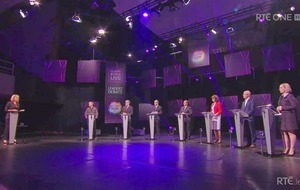
From top: Leaders; debate, University of Limerick; Stephen Donnelly; Anne Marie Mcnally

Laugh about it, shout about it when you’ve got to choose

But not every way you look at this you lose.

Anne-Marie McNally writes:

‘Tis the season. Though in this season the only ones who are jolly are the political nerds who enjoy watching our political leaders go toe to toe in what passes for debate on our national airwaves.

They’re ubiquitous; you can’t swing a canvass leaflet without hitting an angry leader shouting at another angry leader. These ‘debates’ will help you make up your mind you see.

Apparently traditional political party strategists think that the best way to showcase what their respective leaders have to offer the country is to pitch them in a shouting match against each other while they loudly decry the failings of each other.

Nobody questioned that strategy, it seems nobody said, hang-on, wouldn’t I be better laying out a vision rather than an indictment of others failings? What about those in glass houses etc? But no, each puppet leader went out and done as advised…”attack them on this, attack the others on that then attack him on the other..” and so it went.

Last Thursday evening’s TV3 debate was a row. There’s no other way to describe it. A noisy off-putting row. I canvassed a mature estate the next day. Almost every house said something along the lines of ‘Did you watch that farce last night?’

Not one person told me they felt informed by it or in any way had their vote been swayed or their position solidified. If anything it had served to reinforce the far too commonly held complaint that politics is ‘a load of guff’.

Roll forward to Monday night in the University of Limerick and the RTÉ Leaders’ Debate where the floor was opened up to 7 party leaders to include the traditional four as well as Renua, PBPAAA and my own party the Social Democrats.

We were clear in our focus. Irish people do not need to hear 7 people in a ‘he said, she said’ Punch and Judy show. Stephen Donnelly was the nominated leader for the night and his brief was to do what we have set out to do since we launched; lay out an alternative vision based on hope and ambition and impress upon people who have become so disillusioned with politics that another way is possible. We can do things differently. He did that and then some.

Dublin Central Soc Dem candidate Gary Gannon, (he of that tracking shot) and myself had driven to Limerick for various media events surrounding the main event and we sat in the press room watching the debate alongside the country’s most prominent political journalists (It would have been an awfully embarrassing position to be in had Stephen crashed and burned!).

We sat there with pride. Stephen nailed it, in a debate which once again descended into a cacophony of pointed fingers (quite literally in Joan Burton’s case). Stephen stood tall and offered our vision.

The online reaction shows just how badly Irish people needed relief from the shouting. Stephen Donnelly was the most googled Leader during the debate. He was also the most mentioned leader on twitter during the debate. the ADAPT data also shows that Stephen generated the strongest positive reaction on twitter during the debate.

The Social Democrats website crashed briefly twice during the debate due to the traffic it generated. In particular when Stephen closed with a rallying statement to Vote Social Democrats, the Candidate information page on the website came under siege as people tried to find who they could vote for in their area.

Stephen himself gained over 1500 twitter followers in the time period from 9:30 to 11:30pm. Each of the candidates, myself included, had people message us looking to get involved or to donate. In other words people got excited.

My point here is to outline what should have been a very simple message for other parties. People want honesty. They want someone to speak to THEM, not shout at each other and try and score points.

Let’s be honest, unless you’re a nerd like me, politics can be boring but in the first instance that somebody stood up and offered them a credible and hopeful vision they paid attention and they reacted. That fills me with hope.

Anne-Marie McNally is a political and media strategist working with Catherine Murphy TD and is a General Election candidate for the Social Democrats in the Dublin West constituency. Follow Anne-Marie on Twitter: @amomcnally
00119791anne-marie-291x300

From top: Joan Burton and Eamon Gilmore during the 2011 General Election; Anne Marie McNally

If the best you can offer is ‘elect us to ensure the right-wing doesn’t get too carried away’ then you may as well be honest about your lack of political ideology

Anne Marie McNally writes

“What counts is what works” –Tony Blair 1998.

Irish politics has historically failed miserably to divide itself ideologically along traditional left/right lines. We’ve got some kind of blurry thing going on whereby despite protestations to the contrary, most traditional parties in this country are somewhat interchangeable.

In 2011 we witnessed a self-confessed left party enter coalition with a self-confessed right party with both apparently abandoning ideologies in favour of a more centrist pragmatic stance.

Roll on five years and we have Labour supposedly of the Left urging voters to transfer to Fine Gael on the Right.

I’m confused. So are most.

Eamon Gilmore in 2011 described the rationale for Labour cosying up to Fine Gael by saying that “the normal rules of politics changed when the IMF came in.”

Ok…so what’s the rationale in 2016?

I interviewed Eamon Gilmore for my thesis back in 2012 and he told me that they did not ‘have the luxury of ideologies’ as they were creating what he described as a National Government.

As part of the same interview process Labour TD Eric Byrne told me that he believed political ideologies were placed under the carpet for the 2011 General Election and would stay there until the Irish economy had been stabilised at which he point he said he ‘would be hopeful that Labour could revert to a true social democratic ideological stance.’

Here’s me being all confused again. Labour and Fine Gael would have you believe that the economy is in recovery now. If that’s the case then where are the signs of the ideology being taken out from under the carpet where it was shoved?

The people who defended Labour’s coalition decision in 2011 pointed to social democratic ideals such as Gilmore’s commitment to ‘Frankfurt’s way or Labour’s way’ and the commitment to fully funded free healthcare.

Yet neither has been delivered on and ultimately you cannot look beyond the words of the party leader at the time who was unequivocal in his belief that ideology was parked for #GE11.

Now I’m not judging Eamon Gilmore for that, in fact his honesty is to be commended and at least he understood that being straight about the pragmatic approach he was taking for his party was the best way to explain his marriage with the right-wing.

Now it’s 2016 and current labour leader Joan Burton has taken a different approach. She has decided that trying to maintain a vestige of democratic socialism whilst urging voters to elect a right-wing led Government is somehow not in any way disingenuous. It is.

If the best you can offer is ‘elect us to ensure the right-wing doesn’t get too carried away’ then you may as well be honest about your lack of political ideology. And that’s ok too.

In fairness, I’d much prefer to see a party who was proud to be honest about what its ambitions are rather than one who is trying to link onto a set of values that it long-since abandoned in the pursuit of power.

When you’ve a deputy leader of a party openly saying that power is a drug then you pretty much know you’ve got an ideological problem within the ranks!

In 2016 the electorate need, want and deserve honesty. If that position is to emulate Tony Blair and go with ‘what works’ for your party then own that and be honest enough to let your potential voters know that you are making a genuine and perfectly acceptable choice to be pragmatic rather than ideological.

I’m honestly not making a judgement here regarding how a party chooses to position itself for its own purposes. What I am saying is that for me it’s all pointless unless I’m doing it for reasons I believe in and not just political careerism.

I’ve had lots of pundits dismiss myself and some colleagues because we’re ‘ideologically driven’ – it’s thrown at us like a slur of sorts. Personally it’s one of the nicest compliments you can pay me.

Anne-Marie McNally is a political and media strategist working with Catherine Murphy TD and is a General Election candidate for the Social Democrats in the Dublin Mid-West constituency . Follow Anne-Marie on Twitter: @amomcnally