Tag Archives: coronavirus

This morning.

Thanks, Paddy.

More as we get it.

Yesterday: Nursing Home Timeline

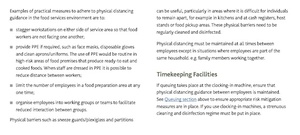
Physical Distancing guidelines for pubs

Kev writes:

Have you seen the actual guidelines proposed for bars (see above)?  They are either trying to kill the pub or destroy any sense of community a pub can provide. I would love to know why.

f_lawless writes:

There’s a feeling of inevitability about this descent into absurdity. The Irish ruling class don’t do accountability.

A policy reversal is unthinkable. Instead of holding their hands up and admitting the blanket shutdowns were an overreaction – that it’s time to open up and let citizens take responsibility for their individual behaviours, they’re now desperately trying to save face and keep the narrative going with these overly-cautious trade-off measures.

It doesn’t matter that nowhere in Europe has seen a sustained rise in cases after easing lockdowns or holding mass gatherings in recent times. Arbitrary numbers are plucked out of the sky.

How can any citizen have respect for an authority that will tell them to obey a 105 minute time limit for their own good when it’s plainly obvious that taking personal responsibility completely overrides that? If anything, setting a short time limit may encourage rapid binge-drinking in some.

Guidelines For Reopening Pubs (Fáilte Ireland)

Earlier: A Limerick A Day


This afternoon.

Dáil, Leinster House, Dublin 2.

Labour TD Brendan Howlin said:

“Like others, I’m daily being contacted by people, by hairdressers, by other businesses who want to get back. And we have to have sound, logical, expert reasoning to give to them.

I’m afraid what’s happening in these draft guidelines erodes that because eating food gives you no additional protection.

“You know whether you go in and have your Chicken Korma (top) or your Cottage Pie does not give you extra protection against the virus. And why would that criteria be a determinate. Can you explain that?”

“And also, just because people are asking and will ask, why is 90 minutes determined?”

Minister for Health Simon Harris responded:

“What I would appeal for everyone is to wait for the final guidance…”

Earlier: My Mask And Me

Stagger Your Boozing

Top pic: BBC Recipes

From top: The Stag’s Head, Dublin; Tara Kerry of Fáilte Ireland

This afternoon.

Tara Kerry, registrar and Accommodation Manager at Fáilte Ireland, spoke on RTÉ Radio One to Claire Byrne about the new pub guidelines.

Ms Kerry was as clear as a freshly poured stout.

Claire Byrne: “Where does Failte Ireland stand on this notion, if you go to a pub, you have to spend €9 on a meal?”

Tara Kerry: “Well there’s an interesting story behind that. The €9 meal, just to give you a bit of context on it. The value of a meal as set out by ministerial order, under Section 9 of the Intoxication Liquor Act 1962. But in 1979, this is where it gets interesting, in the act was amended to reflect the rate of two punts, two pounds in the day, which was seen as an appropriate charge for a substantial meal.

“Now, in 2003, the then Minister for Justice Michael McDowell updated the act under statutory instrument to reflect the equivalent value of the day in 2003 of €9. Now that €9 still stands under the act today. So €9 is what is in the act so €9 is what actually going to be required for a substantial meal.”

Byrne: “So what if you go into a smaller pub and they’re serving soup and sandwiches? And it’s €9?”

Kerry: “Well, if you look, a lot of bars, it would cost, in or around the €9 but again, we have to follow the law of the land on this. And €9 is the price. So they might end up having a cup of coffee with their meal aswell to make it the €9-plus.”

Byrne: “OK, and will you have to buy €9 or does it have to be offered to you?”

Kerry: “No you would have to buy it. That is our understanding of the act, you have to buy it.”

Byrne: “OK. And who will be responsible for policing that?”

Kerry
: “Again, that is one of the other areas that we are seeking clarity on...But can I say to you, though, one of the things is, and having a wide experience of the industry myself, I’ve grown up in the industry and worked in it for most of my life. I firmly believe that business owners who have the best interest of both their customers and employees at heart, will actually self-police this themselves.”

Byrne: “Because there was a suggestion this morning that you might have a group that would spend 90 minutes in one establishment, somebody buys a meal for €9 and then they pop along to the next one and somebody else buys a meal for €9, ensuring that they have a good, long chunk of drinking time.”

Kerry: “Well I think that the public now, on the back of where we have been for the last 13 weeks, will actually, there’s obviously going to be exceptions to the rule but I do think that people will honour what is actually in place and the importance of allowing businesses to reopen.

“Because these food operations have been closed for a substantial period of time and now to have the opportunity to reopen is fantastic. It’s great for employment, it’s great from a Revenue perspective. And I think that both owners and customers will be compliant.”

Later

Byrne: “Will that €9 meal requirement be removed for pubs after the 20th of July?”

Kerry: “It will.”

Byrne: “So all pubs will be allowed open after the 20th of July?”

Kerry: “Well it’s based on the current advice that we have as yet. Unless something changes on the government’s roadmap to reopening.”

Byrne: “And what about contact-tracing measures then. What actions will pubs have to take to ensure that they’re ready for contact-tracing, should they need to do it?”

Kerry: “Another area that we are actually seeking clarity on because obviously there are GDPR issues related to it. So we just want to find the best method for that. Because obviously public health has to be taken into account.

“And the pre-booking element, if that is to be taken up by businesses, will assist in that because if you were to get, and this is our suggestion, if you were to take just the lead booking of a group, rather than each indivduals, we also seek clarity on how long that information will have to be retained for.”

Byrne: “There’s a real concern amongst some business owners that they’re just going to miss out on so much passing trade because of that pre-booking requirement.”

Kerry: “Well the thing about this is, if you read through the document, basically it’s stating that you can still take walk-ins but you would have to retain the two-metre distancing. The pre-booking is one of the caveats for the one-metre distancing.”

Byrne: “OK, so if you are operating with one metre, you will have to take pre-booking.”

Kerry: “That’s exactly it yeah.”

Byrne
: “OK. Even if it’s two minutes before they sit down?”

Kerry
: “Again that would be down to each operating business and how they actually operate their booking systems.”

Um.

Listen back here

Rollingnews

IKEA, Firhouse, Dublin

This morning/afternoon.

State aid.

For IKEA?

Via RTÉ:

IKEA said it received aid from Belgium, Croatia, the Czech Republic, Ireland, Portugal, Romania, Serbia, Spain and the United States but did disclose the sums.

Several of the countries have already been reimbursed, Ingka said, without specifying which ones nor the sums involved.

In a statement, Mr Oncu said IKEA had accepted the money “at the height of the pandemic to secure livelihoods and employments”.

Hmm.

Anyone?

IKEA to return state aid received during Covid crisis (RTÉ)

Rollingnews

Professor Alan Barrett this afternoon

This afternoon.

At a Special Covid Committee meeting in Dáil Éireann.

[Non-medical] Professor Alan Barrett, Director of the Economic and Social Research Institute (ESRI) spoke about the possibility of ‘geographical lockdowns’ and ‘surgical interventions’.

He said:

“That notion of having much more sort of targeted lockdowns and, I remember this came up in a discussion that one of my colleagues sitting around the table discussing epidemiology matters was making the point that when you have viruses in animals. OK, it’s very, very clear, you sort of lockdown the group of animals or whatever like that. And you just make sure they don’t move around.

Now at the time it sort of seemed inconceivable that we would think about a human virus in the same way we would think about a virus affecting animals.

But I think, you know, we can actually imagine a situation that geographically, in some shape or form, if a virus could be contained, it would be better to contain one part of the country rather than the whole area or the whole country.

“So I certainly think we should be moving in a direction of having much more sort of surgical lockdowns … surgical interventions to the extent that we can.”

Hmm.

Meanwhile….

Orla writes:

‘I’ve been wondering if people have considered changing where they live because of Covid and in case there’s another pandemic down the road..feels like there might be some kind of virus decentralisation.’

Anyone?


COVID-19 cases according to county

Meanwhile…

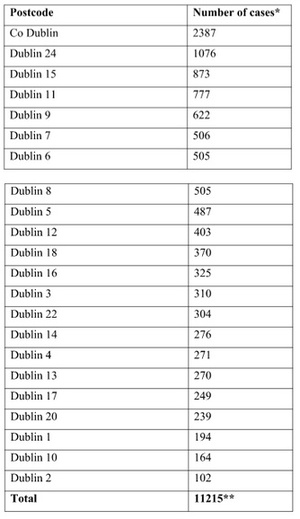
COVID -19 cases according to Dublin postcode

Ken Foxe writes:

The most detailed geographic breakdown of cases in Dublin that has been made available so far by health authorities.

In the breakdown of #COVID19 cases by Dublin postal district. Dublin 15 and Dublin 24 account for around one in six cases. Up until now, this level of detail has not been made available for the county…

Data is provided by postcode via HSE and published by Right To Known the public interest…

Right To Know

*Some patient addresses reflect the location of their residential care facility.
**This total does not include cases who had an address outside of Ireland and those who had an incomplete address recorded.

Dr Tony Holohan, chief medical officer at the Department of Health

This morning.

More than 500 patients were transferred from hospitals to nursing homes at the height of the coronavirus pandemic which left Ireland with  the second highest death rate in care settings in the world with 1,030 victims.

Dr Tony Holohan, chief medical officer at the Department of Health, on RTE Radio One’s Morning Ireland said the high number of deaths could not have been prevented.

Via RTÉ:

Dr Holohan said that it is not realistic to say that the high number of deaths in nursing homes and other care settings could have been prevented as he said that “it is a highly transmissable infection” especially for those aged over 80 and this makes prevention of it challenging.

Dr Holohan said that influenza is transmitted in significant numbers in these settings each year and as Covid-19 is virulent and spreads even more easily than influenza, it makes the absolute prevention of the spread of Covid-19 unrealistic.

He said “we know the measures that are important in slowing down that transmission and we need to continue to offer protection to nursing homes”, although the numbers of infections have fallen.

He said that deaths in nursing homes in Ireland are at the lower end of the mortality experience in European countries and a lot of reporting had focussed over-simply on the proportion of deaths in nursing homes.

Hmm.

Holohan calls for more compliance over facemask use (RTÉ)

Previously: ‘‘I Expect It To Be Ignored, As The Elderly Have Been Ignored’

Rollingnews

Meanwhile…

Ah.

Here.

The Flaming Lips perform ‘Race For The Prize’ on The Late Show with Stephen Colbert with both audience and band bubble-wrapped.

Watch The Flaming Lips Perform for “Colbert” in Plastic Bubbles to an Audience in Plastic Bubble (Under The Radar)

Former World Health Organisation (WHO) chief Professor Karol Sikora

This afternoon.

Former World Health Organisation (WHO) chief Professor Karol Sikora has claimed many health practitioners in Britain have been putting Covid-19 down as the cause of death if there has been “any hint” that the virus played a part.

The NHS has reported that over 41,000 people have died in hospitals due to the pandemic and Prof Sikora said this figure could in fact be much less as many are marking it down without proof it was the main cause.

He said the UK’s system of recording deaths caused by Covid-19 was different to places such as Germany. In Germany Covid-19 can only be recorded as the cause of death when the end-of-life care team certifies that this was the case.

“It could end up that more people have died because of lack of medical care directly caused by the unavailability of it, because its facilities have been taken over for Covid.

“If we look at the numbers, how many people have really died from Covid that wouldn’t be dead at the end of the year?

“The numbers vary enormously. The current ONS data suggests 60,000 people have died from Covid. I’m sure that’s not really the case, it’s because of the counting.”

Ireland, anyone?

Coronavirus deaths ‘may be less than half official toll – as docs wrongly mark certificates’, says ex-WHO chief (The Sun)

Prof Karol Sikora: Covid-19 death toll may be less than half of what has been recorded (Telegraph)

Pic: Medscape