Tag Archives: Denis O’Brien


Judge Donal Binchy’s written judgment released today giving his reasons for granting an injunction to Denis O’Brien and Irish Bank Resolution Corporation against RTÉ.

Court issues written judgment on O’Brien injunction (RTÉ)

“What is particularly curious is that Deputy Murphy is persistent in her claims even though I have made clear that what she is saying is untrue and she has repeatedly made erroneous and untruthful statements about my banking relationship.”

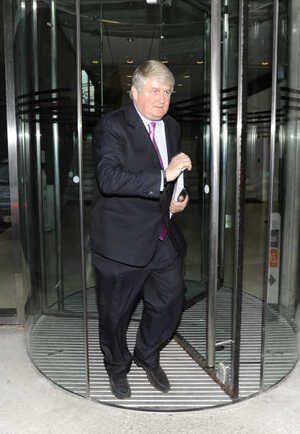
Denis O’Brien yesterday.

00140113

Catherine Murphy

“I welcome the clarification of the High Court ruling today. It vindicates the rights of elected representatives to raise matters of public concern and for those issues to be fairly reported in our media. It is vital for democracy that clarification was provided.

The substance of my concerns has always been to have a full, competent and independent inquiry into the wider governance issues in IBRC and I will continue to pursue that through the appropriate democratic channels available to me in the Oireachtas.”

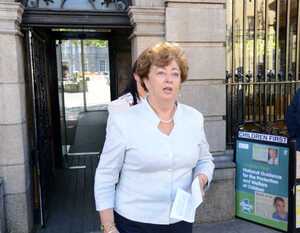
Independent TD Catherine Murphy this afternoon.

Judge says court is not entitled to restrain reporting of Dáil business (Newstalk)

Judge says he did not intend to restrict reporting on Dáil (RTÉ)

(Laura Hutton/Photocall Ireland)

Thanks Ann Marie McNally

9021886190274561-1Screen Shot 2015-06-01 at 11.04.21

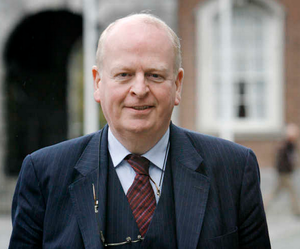
From top: Denis O’Brien, Independent TD Catherine Murphy Former Attorney General, Justice Minister and Tánaiste Michael McDowell,

Further to the ‘thing‘.

Tomorrow RTÉ and several newspapers, including the Irish Times and the Sunday Business Post, are expected go before the High Court seeking clarification on whether or not they can publish what Independent TD Catherine Murphy said in the Dáil last Thursday, in light of a interlocutory injunction awarded to Denis O’Brien – against RTÉ – on May 21.

Ahead of this, Cathal MacCoille spoke to former Attorney General Michael McDowell on Morning Ireland this morning.

Cathal MacCoille: “Good morning.”

Michael McDowell: “Good morning, Cathal.”

MacCoille: “This question that, this statement made that the Oireachtas has, to use a word not in the Constitution, has absolute privilege. Two obvious questions for every lay person listening to you, does it have absolute privilege? And should it have?”

McDowell: “Well it’s not very, very clear from the wording of the Constitution to the extent of which that privilege applies to repetition in different circumstances. Yes, the words of parliamentarians are privileged wherever their published but that doesn’t absolutely mean, and I think you have to be clear about this, that a parliamentarian can say anything they like and anybody else, in any circumstance, repeat what they said with absolute impunity. I don’t think that that extreme view is a tenable one.

But I think we’re dealing here with a very different situation. Firstly, can I just go back to what was said before the ad break there. I mean [Labour Party TD] Pat Rabbitte is correct, in one sense, when he said that no court has ruled that the newspapers cannot carry Catherine Murphy’s speech of what she said in the Dáil about Denis O’Brien and his borrowings.

No court has even attempted to deal with that issue, thus far. But a court order made between in proceedings between RTÉ and Denis O’Brien,seemed to have the potential to prevent RTE from revealing the same information that they were concerned to keep confidential, from whatever source RTÉ found it, including Catherine Murphy.

That’s the argument that Denis O’Brien’s lawyers made and it seems to me that where Pat Rabbitte says we are collectively leaping ahead of ourselves  on this issue; there’s a different point to be made. Denis O’Brien’s lawyers have contacted all the media to impress upon them that it would be unlawful to publish material, including Catherine Murphy’s speech. And, I mean, Denis O’Brien’s lawyers went, for instance, to Broadsheet.ie, which is an independent news online service and threatened them and requested them to take down their coverage of her speech by seven o’clock last Friday.

So it’s Denis O’Brien who believes that this order has this effect. It’s his lawyers who are effectively issuing threats to media organisations not to cover speeches, her speech, and that is the crux of the issue at the moment. I wrote on Saturday, in the Irish Times,  that media organisations had a choice. They could either take their own advice and publish what she said, or else go to the high court, which RTÉ and the Irish Times are doing and get clarification as to whether the threat that is made by Denis O’Brien’s lawyers is a valid threat, or not. And I noted that the Sunday Times yesterday published Catherine Murphy’s speech or a large portion of it and they took their own advice.

And the issue now is, was that publication by the Sunday Times, or the publication on Broadsheet, or whatever, was that a contempt of court? And the only person who can decide that, obviously a judge is the only person who can decide that, but it can only be done on a complaint made by Denis O’Brien in essence, that it amounts to a contempt of court and what RTE and the Irish Times are doing is they’re going in to seek clarification of the scope of the order that was made by the High Court in favour of Denis O’Brien against RTÉ..”

MacCoille: “Yes, essentially the position we are in now is one where most of the Irish media have acted on the basis of editorial caution, on legal advice, so therefore the position will become serious, surely, only when a court decides that, yes, Oireachtas privilege is restricted to include, for example, Catherine Murphy’s statements last week which we cannot report, again on legal advice and only on legal advice now.”

McDowell: “The reason that RTÉ and the Irish Times are taking that position, that cautious position, is because of a direct threat to them by Denis O’Brien’s lawyers, of the kind that was made to Broadsheet, saying, ‘you may not do this, it would be a contempt of court if you do it’. And I mean, let’s remember that at the heart of this is the, I believe, overweening ambition of Denis O’Brien to use the courts in this way to silence the media in covering affairs relating to himself. That’s the thing. I mean this…”

MacCoille: “His lawyers are entitled to point out what they wish about a court injunction…”

McDowell: “Oh they can and RTÉ…”

MacCoille: “…of an interlocutory injunction which they have obtained. Are you saying…”

McDowell: “They are entitled to do that, yes, Cathal, but on the other hand, it’s up to media organisations, RTÉ has taken one cautious view, the Sunday Times has taken a less cautious view. Is the Sunday Times in contempt of court? I very much doubt it.”

MacCoille: “In your view, should Oireachtas privilege overrule considerations which, for example, in Denis O’Brien’s case, of the privacy of its financial affairs?”

McDowell: “In virtually every case I believe that is the case. That is the starting point that Oireachtas, the privilege which is attached to utterances in the Oireachtas wherever published should trump the private interests of someone like Denis O’Brien in relation to business borrowings from a bank, yes I do believe that.”

MacCoille: “In terms of the likelihood and it’s obviously a very experienced and learned view in your case but it is only  a view, when you say we’re in dangerous territory, do you believe it’s likely that we’ll be out of that dangerous territory and that Oireachtas privilege will be asserted and accepted by the courts when they, either in the High Court or the Supreme Court, issue rulings.”

McDowell: “Well I think there’s two things quite possible to happen. Firstly, I think the High Court might say, the High Court judge to whom this is brought before, [inaudible], ‘neither I nor the High Court has ever made an order in relation to Catherine Murphy’s speech and, therefore, the threats made by Mr O’Brien’s lawyers…’ ”

MacCoille: “Can I just interrupt you there? Because we’ve had this clarified, as you’ve been speaking. RTE did not get any letter from Denis O’Brien’s lawyers, it was simply acting on the basis of what it understood the injunction to mean.”

McDowell: “Well then that’s fine but I know that Broadsheet.ie, which went ahead and published her speech, did get such threats so RTÉ obviously are operating on the basis of their own internal legal advice and that’s fine. But the Sunday Times took a different view so…”

MacCoille: “But back to what you think, given our Constitution, do you think…

Talk over each other

MacCoille: “Do you think that the likelihood is that the freedom of a TD to speak will be accepted by the courts?”

McDowell: “I think the first thing is that the courts will probably say that the order they already made did not extend, and had no application to the situation of whether or not to cover Catherine Murphy’s speech. I’d say that will be the first position that the courts are likely to make. They haven’t ruled on that issue and their order did not deal with that particular scenario. The second thing I think a court will do is to look, and probably somebody will draw this to the attention of the court, to the reality that the speech is now in the public domain. Her speech is in the public domain and that it would be absurd and futile to order some media in Ireland not to report it or to lay down for them a rubric that would amount to contempt of court – when others are free to do it with impunity. So, I think that, on both counts, it’s quite likely that the media will not be under any court-ordered silence in relation to Catherine Murphy’s speech whenever this matter does come before the courts.”

MacCoille: “Right and just the final point, the obvious point that’s been raised by a number of people in relation to the Mary Lou McDonald case, where her colleagues on the Committee of Procedure and Privileges found that she had abused Dáil privilege but there was no effective sanction, isn’t that a fair point?”

McDowell: “Well, the first thing is that, in relation to sanctions, the Oireachtas has been fairly lax in putting serious sanctions on its members and it has never actually evolved a code of sanctions which are effective, that’s true. But, on the other hand, let’s remember, this is an important point of principle and an important point of public interest. If Denis O’Brien is correct in saying that his financial affairs are, and we can see from the Sunday Times, it’s a kind of order that those financial affairs, the size of his borrowings, etc. If he is correct in saying that this is an entirely private matter, and could not legitimately concern parliamentarians, then we have a very strange situation indeed. I believe that there was a clear public interest in what Catherine Murphy said in the sense, not of public curiosity but of public interest because it is an issue which is important in the context of the various other dealings of IBRC and it’s liquidator. And the last point Cathal, I’d like to make is, if Denis O’Brien believes he’s bringing these proceedings, and making these threats to independent news channels and the like, as a matter of principle, is this a principle that all news organisations – of which he has a commercial interest – are going to abide by in the future. Is it really the case that if INM – the Irish Independent, the Evening Herald, or whatever – find themselves with confidential information about me, you or anybody else, that he’s going to say, ‘oh no, we don’t publish those things’, or is this a case of the rich and the powerful using their legal muscle to attempt to do something which is completely incompatible with a functioning democracy. That’s my view.”

Listen back in full here

Previously: [REDACTED]’s 1.25 Interest Rate

Mark Stedman/Photocall Ireland

Meanwhile…

Screen Shot 2015-06-01 at 11.06.32

A Letter received via email from Owen O’Sullivan, head of litigation at William Fry Solicitors at 6.27pm on Thursday, May 28.

This led to the following email exchange.


6.52pm,
Broadsheet:  “Apologies for the delay. I am John from broadsheet. I am trying to locate our legal person but I think it may be for the High and Supreme Court to decide. Article 15.12 allows all Dáil statements “wherever published” to be privileged.”

7.28pm, Fry: “Thanks for responding. All I’ll say in reply is that there is an injunction in place of which you are on notice, the terms of which are very wide and cover what could be reported about what was said in the Dail by Catherine Murphy. I await a response to the request for a confirmation regarding the article.”

7.40pm, Broadsheet:  “Thank you. Just two more things. Does the High Court ruling supersede Dáil privilege? Also Catherine Murphy has stated (this evening) that the information came from sources other than the court proceedings which you mentioned.”

7.55pm, Fry: “That is for your own legal advisors.”

8pm, Broadsheet: “Fair enough. Do you have a copy of the terms of the injunction?”

8.25pm Fry: “No – but RTÉ reported on it extensively and within its terms so their reports are probably a good source for it…”

Friday 11.05am: Hosting Ireland (broadsheet’s web providers): “We have received a letter from Denis O’Brien’s solicitor William Fry regarding content on your site breaching a high court injunction. ‘As you are hosted on our network we can become responsible if we do not act on this.  We request you please remove this content as soon as possible and confirm.”

11.20: Broadsheet to Hosting Ireland: “Apologies for all this. The speech is protected “wherever published”  by Dail privilege in the constitution.  Mr O’Brien’s solicitors say the High Court ruling supersedes the constitution but the judge never revealed the terms of the injunction.”

All correspondence concluded.

Large tay.

(Photocall Ireland)

9031313100108281

Denis O’Brien’s spokesman James Morrissey (above) and Fianna Fáil leader Micheál Martin (top)

This afternoon.

Radio that needs to be read to be believed.

Denis O’Brien’s spokesman James Morrissey and Fianna Fáil leader Micheál Martin engaged in a pre-recorded debate with Richard Crowley for RTÉ’s This Week on the ongoing constitutional brouhaha.

Richard Crowley began by asking Micheál Martin if he believed the virtual black-out in the Irish mainstream media of Independent TD Catherine Murphy’s comments in the Dáil last Thursday  represented a constitutional crisis.

Grab a tay.

Micheál Martin: “It is, I think we are in very dangerous territory where the alleged privacy right of the powerful, if you like, are coming into conflict with the constitutional  right of parliamentarians to articulate matters of undoubted public interest in parliament and to have those concerns aired and reported on by the national media. I think last Thursday, as I watched the news, both on various TV channels, it was something I had never experienced before where, essentially, the media were silenced because of the litigation and because of the actions taken both in the High Court and in legal advice, to the effect that the national stations couldn’t cover what Catherine Murphy said in the Dáil. I think it’s an extraordinary state of affairs. The Dáil should be recalled to debate this because it goes to the fundamental heart and cornerstone of our democracy.”

Richard Crowley: “James Morrissey, this has been seen by some as an attempt by Denis O’Brien to silence the Oireachtas, to muzzle the press by preventing it from reporting Catherine Murphy’s statement.”

James Morrissey: “Well I agree with Micheál Martin that, as I think you said, a constitutional crisis because the courts and the Oireachtas need to respect each other. I don’t ever recall Micheál Martin bringing forward a privacy bill or anything that would help in resolving this problem and I have a greater difficulty with Micheál Martin because I recall going back to December of last year, when you, Micheál Martin, stood up in the Dáil and you said it is wrong and out of order for Deputy Mary Lou McDonald to name names in the context in which she did, in particular the individuals concerned need to know how they can get redress or, in essence, get their names cleared on the record and their reputations cleared as well. Now, I’d ask you a question: where is the difference? Is it because some of them were your party colleagues? Cabinet colleagues? So, Denis O’Brien is different is he?”

Martin: “No, the fundamental difference is that the media reported on all of that and carried everything that was said by Mary Lou McDonald verbatim on the national airwaves and in the newspapers. And I, or nobody in my party, ever attempted to stop the media from so doing and from exercising their constitutional right. And your problem, Mr Morrissey, is you’re attacking people too much. Your attitude and your response to this is to attack the person who stands up for democracy. So you attack Catherine Murphy, you call her a liar, you call her a thief and you denigrate parliament by calling it a ‘talking shop’, as you did last week. Now the first thing you should do, and the public want, is for you to apologise to Deputy Murphy for saying she’s peddling lies, for saying she got information illegally. It is extraordinary charges that you are making, attempting to bully and intimidate a parliamentarian who is held in widespread respect across the parliamentary divide. And we know that Deputy Murphy has form on this, in the sense, that through dogged pursuit of parliamentary questions and utilisation of freedom of information, she unearthed significant issues and concerns that public servants had, civil servants in the Department of Finance had in relation to the sale of Siteserv, for example, and other major transactions concerning IBRC.”

Talk over each other

Crowley: “Can we just hold it there. James Morrissey, can I just ask you to deal with a couple of points raised by Micheál Martin. You said that the document, or information, was stolen. As far as I remember you didn’t say that Catherine Murphy stole it but who, or from where was it stolen?”

Morrissey: “It was removed from IBRC.”

Crowley: “Removed? The original document, not copied, but removed?”

Morrissey:There were documents stolen and they were amended and altered and they were presented to Catherine Murphy and what is most fascinating about Micheál Martin’s comments here, he seems to accept in totality everything that Catherine Murphy has said. So, has he seen the documentation? Or is he just relying on her version of events? You see…”

Talk over each other

Crowley: “Let him answer that..no, no, no, let him answer that because if we move on that point could be lost.”

Morrissey: “Micheál Martin, have you seen the documentation?”

Martin: “I have not seen the documentation that Catherine Murphy has seen but I accept…”

Crowley: “How do you know…”

Martin: “Sorry…”

Crowley: “How do you know that it’s correct in it’s entirety.”

Martin: “Mr Morrissey made an assertion and he was wrong in making that assertion. Now he hasn’t apologised to Deputy Murphy and he should because what I accept is, and will defend to the bitter end, is the right of Deputy Catherine Murphy to say what she said in the Dáil. She was speaking on legislation that she was introducing into the house…”

Talk over each other

Crowley: “No, Micheál I have to cut you off there, all right, look we want to get to the nub of this. James Morrissey how much of  what Catherine Murphy said in the Dáil was correct and how much of it was incorrect? Did she say something that was true?”

Morrissey:She said, most of what she said was untrue but not all of it.”

Crowley: “Not all of it. And so what she said that was true, you would have no difficulty with her putting that on the record?”

Morrissey:Whatever she said is true she can say whatever she likes.”

Crowley: “You have no problem with that?”

Morrissey: “The most important thing though here comes back to, you see, Micheál Martin uses the word ‘powerful’. I would have thought that all citizens rank equally but he obviously doesn’t think so. I think the key issue here is when information is leaked and when it’s interfered with and when fundamental facts…”

Crowley: “I’m sorry, that’s the second time you’ve said that. What do you mean by altered, changed? Who changed it and in what way?”

Morrissey: “I don’t know who changed it but Catherine Murphy has presented as facts figures that are not correct and she has made statements that are fundamentally wrong.”

Crowley: “And are you saying that a document, in its original form, was correct in every way but that it was altered in such a way as to make it untrue?”

Morrissey:I don’t know what documents she has but  I am satisfied…”

Crowley:How can you say they were altered then?

Morrissey: “I am telling you that I’m satisfied that documents that she presents as being facts contain erroneous figures and numbers that simply…”

Crowley: “No, no, no, you said that they were altered. How do you know they were altered if you don’t know what documents she had?

Morrissey: “Well, I’ve seen, I’m aware of the original documentation, I’ve seen what she has misrepresented.”

Martin: “Well the bottom line then is deal with it, deal with it…”

Crowley: “Why not deal with it? Isn’t that a good point? If there is a difficulty here that some of the information is correct and some is not, why not come out an issue a full statement, clarifying what’s true and what’s not, James Morrissey?”

Morrissey: “You see I think what Micheál Martin is doing here is he…”

Crowley: “No, could you answer my question, rather than address Micheál Martin. If there is a difficulty here and some information is correct and some is incorrect, why not, why wouldn’t your side come out and clarify it by putting the truth into the public domain?”

Morrissey: “For one particular reason that Micheál Martin chooses to ignore and that is the rights of a citizen in this country to privacy in his financial matters.”

Martin: “But the bottom line here is, this is about the IBRC which is a bank that was bailed out by the taxpayer, 100%, fundamental matter of public interest which, by any definition, trumps any other issue. The public have a right to know if there are issues pertaining to how that bank operated in terms of its corporate governance, in terms of the large transactions that the civil servants and the department of finance had concerns about and which has led to an inquiry, established by the government in my view a very poor type of inquiry, that’s the context in which Catherine Murphy spoke last Thursday and she’s acting in good faith, that’s the point. That Mr Morrissey should attempt to undermine her authority…”

Talk over each other

Crowley: “Mr Morrissey…”

Martin: “Because people across the House, and this is an important point, will defend the right of Catherine Murphy to act in good faith..”

Crowley: “Even if she gets it wrong, inadvertently.”

Martin: “But of course, the whole nature of parliamentary democracy and parliamentary debate is the freedom to speak out but in terms of other issues when it’s come to the fore, if it’s dealt with efficiently, promptly and in the public domain, the Oireachtas polices the privilege it has under the Constitution. It has that basis..there is no issue to resolve here by the way, it’s very clear.”

Crowley: “All right. James Morrissey would you take the point about this being in the public interest? It’s a point made by Michael McDowell, the former Tánaiste, Attorney General and Senior Counsel, a former Justice Minister writing in yesterday’s Irish Times, he says ‘I venture to suggest that the points made by Deputy Murphy and her speech appear to be points of very significant public interest’.”

Morrissey: “Then there’s one key question and that is, why has RTÉ failed to appeal this whole matter?

Silence

Martin: “But that’s not..”

Crowley: “We’re going to the courts next week, RTÉ is going to the court, as is the Irish Times and the Sunday Business Post.”

Morrissey: “No, I think for clarification, Richard. RTÉ had seven days in which to appeal the court order – it did not do so.”

Crowley:We don’t have the court order yet. We don’t know yet. The document has been redacted and we have yet to get the full court order and it’s on the basis of having seen that, that an application or an appeal would be lodged.”

Morrissey: “No, I think my understanding is that the station had seven days to appeal it and has decided not appeal it.”

Crowley: “No, that’s not true. As far as I’m aware, RTÉ has until next week. But would you go back to the point, would you go back to the point of the public interest, why is this not in the public interest?”

Morrissey: ” Because the private banking affairs of an individual who borrowed money to invest in properties and businesses, employing up to 10,000 people coming out of the recession is entitled to privacy in his financial matters. Maybe Micheál Martin could tell us, because he’s never brought forward a privacy bill ever, in all his years in the House, could he tell us what different grades of citizens, of what level of privacy should apply to various people, does it apply to former Fianna Fáil ministers or does it apply to Denis O’Brien? Again Micheál Martin you have danced around the whole Mary Lou situation, which I think is very curious..”

Crowley: “We’re not going back on the Mary Lou situation, let’s just stay with Denis O’Brien.”

Martin: “The Dáil dealt with that and dealt with it adequately, the CCP met and sanctioned..”

Crowley: “Would you go back to Denis O’Brien’s privacy. Why is he not entitled to privacy?”

Martin: The bottom line here, this isn’t about a private domestic banking issue. As I said earlier, it’s about a fundamental issue pertaining to the taxpayer, of public interest where the IBRC, a bailed-out bank, it’s a State bank in essence and, rightly or wrongly, there is no question but that large transactions are, by definition, matters of public interest and, in terms of the citizen out in the street. Here’s the real heart of the matter. People are out there, turning up in courts with their mortgages and so on with potential evictions from their houses, if the charge emerges that there is a different set of rules for those higher up the scale, as opposed to the ordinary punter on the ground, then that feeds into resentment in society and very significant resentment so there’s an absolute need for transparency here…that’s all we’re saying here and what’s..”

Talk over each other

Crowley: “Sorry, Micheál, we’re running out of time, I want James Morrissey back in on that point.”

Morrissey: “Micheál Martin, does that include all the business interests in Fianna Fáil and everybody in this country that all their banking interests should be made public. If that’s what you’re saying, that’s fine and we will cooperate with that but I think you’re biggest problem here is you’re working in a selective basis.”

Martin: “No, I’m not Mr Morrissey, I’m working on the basis of the Irish Constitution which actually has, at its heart, protecting parliamentary democracy which is at the very core of our system, our…

Talk over each other

Martin: “No, Mr Morrissey, we don’t actually have one [a constitutional crisis]. I think this will be resolved because the constitutional privilege is absolute.”

Talk over each other

Martin:Stop the bullying, stop intimidating people and trying to undermine people. Have the guts to apologise to Catherine Murphy for how you’ve treated her and also apologise in terms of your denigration of parliament which you’ve..that’s your approach, it’s wrong.”

Crowley: “Mr Morrissey, I want to ask what your course of action will be next week. Let’s presume that RTÉ and the Sunday Business Post and  the Irish Times go to the High Court for clarification on this from Justice [Donald] Binchy and he says that the original interlocutory injunction does not cover, that it was intended to [RTE journalist] David Murphy’s story for RTE, it does, it was not the intention of the court to cover matters raised by Deputy Catherine Murphy in the Dáil. What then will you do?”

Morrissey: “The answer is I don’t know, that’s something that’s being considered by the legal team at the moment. But what is of…”

Crowley: “What options are open to you?”

Morrissey: “A very important part of this, as I’ve mentioned. RTE decided not to appeal the decision and it was given seven days.”

Crowley:Ah now sorry, sorry, James. Twice, I’ve told you that no decision has been made on that because the court order has not been received by RTE and that’s a decision that will be made next week so please stop saying that RTE have not appealed this. Now, go back to what you will do, what options are open to you next week, if Mr Justice [Donald] Binchy says that Catherine Murphy’s comments are not covered by the injunction?”

Morrissey: “I’m not going to get into a hypothetical situation on that at this point in time.”

Crowley: “But would you consider separate court action?”

Morrissey: “That will be considered by Denis O’Brien’s legal team. I’m not a member of the legal team.”

Crowley: “Micheál Martin.”

Martin: “The fundamental point I’d make, I think it’s absolutely essential that you back off from this. One thing you can not do is silence the national parliament or silence the rights of Daáil deputies, whether you like what they say or dislike what they say. Constitutionally you cannot do that and nobody, and I’m talking to people across the country, they’re very upset and angry with what is going on. They do not like it. Fear stalks the land in terms of the journalistic landscape by the way, litigations left, right and centre – it’s a very unhealthy situation, there’s a very unhealthy atmosphere out there in our democracy, there’s a very simple way of resolving that and pulling back from the brink. There’s one battle that cannot be won in any republic like this and I’m a republican. The parliament cannot be undermined…”

Crowley: “James Morrissey..”

Martin: “..in any shape or form in terms of the rights that it has.”

Crowley: “James Morrissey, the Sunday Times today publishes some of the details of what Catherine Murphy said, they’re still on the Broadsheet.ie website last night, it’s on the Oireachtas website, it’s been covered by the Guardian, it’s been covered by the New York Times, it’s on the Channel 4 website, in terms of keeping this under wraps, it’s been a spectacular failure for your side and if anything, you’ve heightened the interest in it. Everybody is interested in hearing more now.”

Morrissey: “Perhaps that is the case but I think it’s also fair to say that an individual is entitled to take a course of action and whether that course of action results in success or failure, Denis O’Brien said at the very outset, at the very outset in this whole affair that he was taking this action on a point of privacy principle in relation to the privacy of his financial affairs and his banking…”

Crowley: “And his opinion or his tactic, his approach hasn’t changed, given that there is now heightened interest in the story and that, effectively, the pressure is on for him to come out and make a clarifying statement to say this is untrue and I can prove it.”

Morrissey: “Well, you see, I think the big issue here is, do you concede to pressure that’s out there or do you stand your ground and say, ‘I am a private citizen and I’m entitled to privacy in my financial affairs.”

Crowley: “And you seem to be suggesting that it’s the latter course that he will opt for, or is opting for.”

Morrissey: “That’s certainly my understanding of it.”

Crowley: “And that won’t change in the short term, as far as you’re concerned?”

Morrissey: “I don’t believe so because, as I say, I think it’s  a point of principle.”

Crowley: “Was the gagging, effective gagging, of Catherine Murphy  on the Dáil on this issue unintended, though a welcome consequence of the injunction against David Murphy on RTE?”

Silence.

Morrissey: “Well again I think it’s where there’s a constitutional issue. Denis O’Brien went to court…”

Crowley: “To stop David Murphy, on RTE, broadcasting a story but an unintended consequence of that has been, that it’s been interpreted as being affecting what Catherine Murphy said in the Dáil and then the reporting of what Catherine Murphy said, that was, that was hardly your intention or strategy at the time, was it?”

Morrissey: “Well I think what’s happened here is that…”

Crowley: “But was it?”

Morrissey:A lot of information is being peddled and it’s being peddled to a lot of different people and we had no idea as who else was going to come forward with it next. It could be anybody. I mean clearly Micheál Martin obviously would have loved to have had this information for political points scoring, he could have gone into the Dáil with it but he didn’t.”

Martin:What are you talking about?

Morrissey: “I’m talking about…”

Martin: “I’m not saying, listen, I, my intervention this weekend is a very simple one: it’s to defend the national parliament and the right of the Dáil to exercise its constitutional rights, what I witnessed last Thursday night, I never witnessed in my life – where the national broadcaster was effectively silenced, where other television channels were silenced and you had these pathetic spectacles of senior reporters saying, we can’t talk about this, we can’t hear this. That never happened before in  our country, it never happened before. ”

Crowley: “Final word to James Morrissey.”

Martin: And it’s not good enough and it needs to stop and you need to back off.”

Morrissey: “Micheál Martin has been in the Dáil and he has been a minister and he has never done anything about a privacy bill, ever.”

Martin: “Because the bottom line is I actually understand the balance between protecting society and having liberty and freedom of speech. And I actually will accept the points that have been made by former deputy and former minister Micheal McDowell in relation to that very point.”

Talk over each other.

At this point, Mr Crowley asked Mr Morrissey about a report in this morning’s Sunday Business Post which stated that Mr O’Brien advised the Government not to sell its stake in Aer Lingus to IAG.

Although the Government did give the go-ahead to sell the State’s 25% interest in Aer Lingus to IAG, it’s interesting to note that last week’s Sunday Independent featured a lengthy profile piece on managing partner of William Fry, Bryan Bourke, and mentioned how the firm – which represented Denis O’Brien at the injunction proceedings against RTE – was involved in IAG’s bid for Aer Lingus.

Crowley: “James Morrissey, before you go, one of the consequences of all of this, of course, is even greater scrutiny of Denis O’Brien and what he’s done or not done and we have the Sunday Business Post today reporting that Mr O’Brien contacted the Government several months ago to oppose the  sell-off of Aer Lingus can you conform that that’s a fact and, if so, who did he speak to?”

Morrissey: “I”m not aware of who he spoke with but I know that he held very strong views that  Are Lingus should not be sold because he believes it is an iconic brand and that it is a company with a great history and that it is one of the world’s leading Irish brands that has stood the test of time and, from speaking with him, I think he feels it’s regrettable that the headquarters of Are Lingus is going to end up in Hounslow.”

Crowley: “And did it have anything to do with his own business interests?”

Morrissey: “He has no aviation interests.”

Crowley: “No connection, none of his companies, either controlled or owned by him have no connection with Aer Lingus as of now and as of, and involved in transactions that might be involved, might be affected in the longer term by an IAG takeover?”

Morrissey: “He was a shareholder in Aer Lingus and, as I understand, he disposed of all of those shares in the last 12 months.”

Crowley: “And do any companies, now controlled or owned by him, do business with Aer Lingus and are those transactions that might be affected in the longer term by an IAG takeover?”

Morrissey: “None whatsoever.”

Silence

Crowley: “James Morrissey, spokesman for Denis O’Brien and the Fianna Fáil leader, Micheál Martin.”

After the interview, Mr Crowley clarified RTÉ’s position in relation to appealing Justice Donald Binchy’s original high court injunction, saying:

“RTÉ says that it has 21 days, and not seven days, to make  a decision on that matter.”

Listen back in full here

Previously: [REDACTED]’s 1.25% Interest Rate

Keeping Print Alive

‘It’s Important People Stand Up For Democracy’

Photocall Ireland

UPDATE:

Meanwhile…the letter Denis O’Brien reportedly sent to Catherine Murphy which she has yet to receive officially.

Screen Shot 2015-05-31 at 17.32.09

Related: Dukes hits back as storm rages over Dáil ‘silencing’ (Sunday Independent)

9036161600108281

His Master’s Voice: Denis O’Brien (top) and James Morrissey (above)

Constitutional crisis?

What constitutional crisis?

Denis O’Brien’s tireless spokesman James Morrissey went on RTÉ Radio One’s Today with Sean O’Rourke [hosted by Keelin Shanley] this morning to put forward his client’s case for wishing to prevent media outlets reporting Catherine Murphy’s speech to the dáil yesterday.

Keelin Shanley: “We spoke to Fianna Fail TD Billy Kelleher who has called for the Dáil to be recalled to discuss the restrictions on reporting what Independent TD Catherine Murphy said in the Dáil yesterday, in relation to Denis O’Brien and his dealings with IBRC and of course it can only be recalled by the Taoiseach. Well, James Morrissey, advisor to Denis O’Brien has contacted us and he joins me now on the line. Morning, James Morrissey. I suppose your reaction to what Billy Kelleher had to say and what he said was that the fundamental principal of a TD being able to stand up, to speak on an issue and that that could then be reported is the cornerstone of our democracy. He said anything that undermines that is an attack on democracy. What would you say to that?”

James Morrissey: “Well there’s only one thing that deputy Kelleher left out in his interview with you on that issue. And it was: does that allow Dáil privilege to include people to say whatever they like about people – be they correct or incorrect. And I think it’s a little bit rich of Deputy Kelleher to call for the Dáil to be recalled and, as I understand it, Micheal Martin has called for the same. They never did that when this country was going down the tubes and we were losing tens of tens of billions and I think that Dáil privilege most certainly has a very, very important role in our society and in our democracy but I don’t think it should be allowed be used, or abused, where falsehoods are represented or misrepresented as facts, as has happened in the Dáil in the last 24 hours.”

Shanley: “Well, I mean we are injuncted on this. We cannot go into what is or isn’t being said in the Dáil. Just remind us why Denis O’Brien went to court in the first place, to seek the injunction.”

Morrissey: “On a point of principle on the basis that every individual is entitled to privacy, in relation to their banking affairs.”

Shanley: “And in fairness, on the issue of Dáil privilege, I mean Billy Kelleher was very clear in saying that he absolutely believes that there should be a sanction on any TD who abused Dáil privilege. He said it was something that needed to be respected. But the basic issue there of one body of the State, the courts, being used in order to prevent another body of the State, the Dáil, elected by the people, from being reported by the media. Is that not a worrying development in terms of democracy?”

Morrissey: “There always has been a separation of powers. But a fundamental core principle of a democracy is the right of every individual to their good name and reputation and privacy in matters that are private.”

Shanley: “Ok, now, writing on the issue in this morning’s Guardian newspaper, Roy Greenslade said that the owner of the bulk of Ireland’s media outlets is using an injunction to prevent reports on his affairs appearing in the rest of the media, that he doesn’t control. Clearly, he says, there are questions to ask about press freedom implications due to Ireland’s lack of media plurality and diversity. What would you say to that?”

Morrissey: “Well, Keelin, at the end of the day, the largest media entity in Ireland is RTÉ.”

Pause.

Shanley: “But the idea that RTÉ in this particular case has been injuncted, has been silenced on this issue. I mean do you think that there is a worrying issue here, the fact that it’s being reported by Roy Greenslade in The Guardian. Do you see any issue around that?”

Morrissey: “Well I think Roy Greenslade has, if you look at his record, it’s a little bit dubious on some of the arguments he’s taken up on issues in the past. But to the core issue: every individual, and I repeat, are entitled to their good name and reputation and privacy. Would you like to see your banking matters being published in a newspaper? I wouldn’t. And I think the vast majority of people wouldn’t. If there is wrongdoing involved – let that be examined and investigated. But until such, as there’s a view that there is wrongdoing involved, then a person is entitled to their good reputation.

“And, you know, when Billy Kelleher speaks about, oh a need for this and recall the Dáil, you know, and powerful people, I think it’s important to mention, and it would be a celebratory fact if it was an IDA-backed company, but Denis O’Brien employs in and around 10,000 people both directly and indirectly in this country and he’s entitled to invest and he’s entitled to have his leading bid for a company accepted.”

Shanley: “But James, just to go back, I mean what relevance is it how many people he employs in this country? I mean we’re talking here about press freedom. We’re talking about somebody with huge power, who owns half of the media and is preventing the other half from reporting…”

Morrissey: “No I think you’re missing my point. I was just saying when Billy Kelleher talks about powerful people. A powerful person has the same rights as a person who’s not powerful and that is a democratic right to their good name and reputation and not to have it sullied in the Dáil. And I think, to be brutally blunt about it, the Dáil is a bit of a talking club. They want their own rules for themselves and I think, to be fair, it’s important that people stand up for democracy inside the Dáil, as well as outside the Dáil because that’s the basis on which they get elected.”

Shanley: “I think, in fairness, that is what Billy Kelleher believes he’s doing today. I mean he’s saying they’d like the Dáil to reassert its validity as a chamber of free speech and he says, you know, today it’s one powerful person, a powerful entity, tomorrow it’s another powerful person and another powerful entity, where does it end?”

Morrissey: “Well this country has gone through a lot of traumas in the last 10, 20 years. Traumas that have caused huge hardship to people, huge problems in our hospitals, in our healthcare…”

Shanley: “And did silencing reporters help this?”

Morrissey: “…I don’t ever remember Billy Kelleher calling for the Dáil to be recalled.”

Shanley: “But, James, isn’t that the very point there, that you need the media, you need freedom of the press to address issues like this. How are you linking this to the idea that it’s good idea to silence reporters?”

Morrissey: “No, no, no. I’m. Keelin, I think… you keep asking me the same question. The bottom line is a person is entitled to privacy in relation to their financial affairs. That goes to the core of it.”

Shanley: “Even if it means that we, the citizens, do not hear what is being said in our Dail, our elected Dail?”

Morrissey: “But if somebody, if somebody stands up and utters falsehoods and tries to have them represented as facts. So that’s fine? That newspapers can publish those falsehoods? Because newspapers want to publish them? Where does democracy go then.”

Listen back in full here

Earlier: Always A Privilege

Yesterday: [REDACTED]’s 1.25% Interest Rate

UPDATE:

In response to Mr Morrissey’s interview, Catherine Murphy responds:

“The people that continue to accuse me of falsehoods refuse to provide evidence to refute any of the issues I’ve questioned in the Dáil. My entire line of questioning on this has been to ask the Minister to give us all the pertinent information so that we can be assured that citizens were not disenfranchised as a result of any deals that may have been done.”

 Meanwhile: Oireachtas defends Murphy’s right to make O’Brien comments (Irish Times)

Update…

It’s escalating.

Meanwhile….Clash Between Irish Billionaire and Broadcaster Reopens Wounds (Stephen Castle, Douglas Dalby, New York Times)

denis

How little?

Catherine Murphy, Independent TD for Kildare North, dropped a series of revelations in the Dáil today concerning alleged preferential treatment given to Denis O’Brien by IBRC, formerly Anglo Irish Bank.

The claims emerged as Ms Murphy introduced a bill to permit the Comptroller and Auditor General to investigate the sale of Siteserv to Mr O’Brien and other IBRC transactions.

Grab a tay.

“This bill extends the functions and powers, or seeks to extend the functions and powers of the C & AG [Comptroller and Auditor General] to cover IBRC. It was the Taoiseach that first suggested that the C & AG review the Siteserv sale’s process and it was then pointed out to him that IBRC does not come within his remit.”

“With this Bill, I’m attempting to address that problem by broadening the remit of the C & AG. The reason I’m anticipating the need to involve the C & AG, if not a full Commission of Investigation, which may well be a better option, is because I believe the Government have got this badly wrong, not least because most of the key players in the Siteserv saga have links with KPMG and its eventual purchaser and vice versa, is a web of connections and conflicts, that requires outside eyes to unravel.

I have no doubt that the special liquidator [Kieran Wallace] is more than capable of doing such a review but his direct involvement in the sale process, and his relationship with the eventual purchaser of Siteserv, and his current actions in the High Court, in supporting Mr O’Brien versus RTE, place him in a position where there is, at the very least, a perceived conflict of interest, if not an actual conflict of interest.

The review is not confined to Siteserv but it is the transaction that prompted a review. I would worry about the transactions that have been excluded from the review, given that what we now know, that in the final months before prom night, the relationship between the department and IBRC had completely broken down.

“If deals were being done without the knowledge or input of the minister then we need to know what they were. We are now aware for example that the former CEO of IBRC made verbal agreements with Denis O’Brien to allow him to extend the terms of his already expired loans.

We also know that the verbal agreement was never escalated to the credit committee for approval. I’m led to believe, and I would welcome the minister clarifying, the rates applicable at this time, that the extension also attracted some extremely favourable interest terms.

I understand that Mr O’Brien was enjoying a rate of around 1.25%, when IBRC, and arguably, when IBRC could, and arguably should have been charging 7.5%. We are talking about outstanding sums here that are upwards of €500million. The interest rate applied is not an insignificant issue for the public interest.

We also know that Denis O’Brien felt confident enough, in his dealings with IBRC that he could write to Kieran Wallace, as the special liquidator and demand that the same favourable terms extended to him by way of a verbal agreement could be continued.

We now have Kieran Wallace, who’s been appointed by the Government to conduct a review into the IBRC review, actually joining with IBRC and Denis O’Brien in the High Court and seeking to injunct the information I’ve outlined from coming into the public domain – surely that alone represents a conflict.

In FOI documents released to me, the minister, his officials and the Central Bank and even the Troika acknowledge that IBRC, the former Anglo Irish Bank, is no ordinary bank and there’s a significant public interest because the bank had been fully nationalised and was in wind-down mode.

They all accept that this is the people’s money that we’re dealing with and that there can be no dispute regarding the public interest in this. The same FOI materials detail incidences where the minister can specifically intervene, and issue an ministerial order that material matters have significant interest. Included in these material matters are incidences that are outside the ordinary course of business.

I would argue that what I’ve outlined out here regarding verbal deals, extensions, etc, are outside the normal course of business and I would ask the minister to exercise his right to intervene in the current proceedings and defend the public interest.

“I’ve a motion on the order papers, signed by the majority of the Opposition – 45 members have signed it and more are welcome to – calling for a debate into the proposed review. When I tried to raise it on the order of business, I was silenced and I was told to take it up with my Whip. I am the Whip of the Technical Group and I did raise it at the weekly Whip’s meeting.

The Government Chief Whip told me that they would not be altering the KPMG review, the Government would not be giving time to debate this issue and suggested that we use Private Members’ time.

It’s not just an Opposition issue, minister. This is an issue for all in this house. It’s an issue of serious public concern where there is public money involved and I know, if you got your hands on maybe an extra €20 million, I don’t think you’d have to think too hard on how to spend that money. I urge the Government to reconsider this and give the Bill and the motion the time they deserve. I believe this is in the public interest. Thank you.”

There you go now.

1.25 per cent.

Yesterday: Deputy Murphy is Out of order

Scary update:

Solicitors acting for Denis O’Brien have asked us to remove this post asserting that it is a breach of a High Court Order [O’Brien Vs RTÉ]. They gave a 7pm [Thursday] deadline or they would begin injunction proceedings.

We have replied that article 15.12 of the constitution allows all Dáil statements “wherever published” to be privileged and we currently await their response.

Scarier update:

In response, Denis O’Brien’s legal representative said the High Court ruling “covers what could be reported about what was said in the Dáil by Catherine Murphy” and again put us ‘on notice’.

Unfortunately The judge in the case never revealed the terms of the injunction.

In a statement tonight Catherine Murphy said:

“I am a public representative. Information came to me, from a number of reliable sources, that is, without doubt, in the public interest. I have a duty to put that information into the public domain and I fully intend to fulfill my democratic mandate.”

Meanwhile, we will keep this post up until it is humanly impossible not to.

Save yourselves.

Pray for us.

90378183

“At the moment – this House is being forced to proceed with a costly review into IBRC’s deals – a review it must be said that is not only costly but inherently conflicted, particularly given the most recent incidence of the special liquidator [KPMG’s Kieran Wallace, formerly with IBRC] who has been assigned to conduct the review – actually joining Denis O’Brien in the High Court to injunct reports into IBRC’s business dealings and unorthodox verbal agreements between senior debtors and the [IBRC] CEO Mike Aynsley. A very worrying trend indeed…..”

Catherine Murphy TD [during a debate in the Dáil today on the sale of the government’s share in Aer Lingus], rvealing that the man tasked with running the Siteserv deal review was in a joinder with Denis O’Brien in the tycoon’s legal action to injunct RTÉ News…while also explaining what the redacted case was all about.

Good times.

Earlier: ‘Deputy Murphy Is Out Of Order’

Previously: Siteserv on Broadsheet

Liquidator denies conflict of interest in decision not to sue KPMG (irish Examiner, February 27, 2014)

catherinemurphy

Yesterday

Independent TD Catherine Murphy attempts to raise concerns about the involvement of KPMG in the review of the Siteserv deal.

Enter Ceann Comhairle Seán Barrett.

Catherine Murphy: “There is a motion on the Order Paper, No. 197, to which there are 45 signatories. Unusually, it has been signed by almost the entire Opposition. I am calling on the Taoiseach to consider allocating time for a debate on it. It concerns the review by KPMG of Siteserv and other issues. It was pointed out when we were debating the matter that there were conflicts or, at least, perceived conflicts with the individual who was to carry out the review.

Seán Barrett: “I am sorry, but we cannot deal with that issue on the Order of Business.”

Murphy: “There has been further damaged by virtue of the fact…”

Barrett: “Is time being allocated to debate the motion?”

Murphy: “…that IBRC joined the process last week.”

Barrett: “I am sorry, but the Deputy cannot raise this issue on the Order of Business. Will she, please, resume his seat?”

Murphy: “It joined the court case last week. Essentially, a court case was taken by Mr Denis O’Brien…”

Barrett: “Deputy Martin Heydon is next. I am sorry, but Deputy Catherine Murphy is out of order.”

Murphy: “The conflicts of interest are now greater than they were.”

Barrett: “The Deputy is out of order. Will she, please, resume her seat? She cannot raise this matter on the Order of Business.”

Murphy: “If there is to be a review and we are to spend public money on it and there is someone who is…”

Barrett: “The Deputy has a Whip. She can ask them to go to the whips’ meeting and arrange a debate.”

Murphy: “It seems that time should be provided…”

Barrett: ‘Will the Deputy, please, resume her seat?’

Murphy: “That there are 45 signatories on the Opposition side is no small matter.”

Barrett: “The Deputy can ask her Whip to deal with the matter at the whips’ meeting.”

Murphy: “I am asking the Taoiseach to consider allocating time to debate the motion.”

Barrett: “Will the Deputy, please, resume her seat?”

Martin Heydon (Fine Gael): “I wish to ask the Taoiseach about promised legislation following last Friday’s historic vote. It represented another move by the Government to improve equality in society, as well as fixing the economy. I wish to ask the Taoiseach about another issue on which the Government has made progress…”

Good times.

Related: Sanctions being finalised to crack down on disruptive TDs (Irish Times)

Previously: Not Going Away

Transcript via Oireachtas.ie