Tag Archives: Housing

.

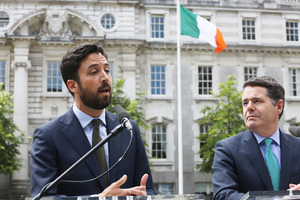
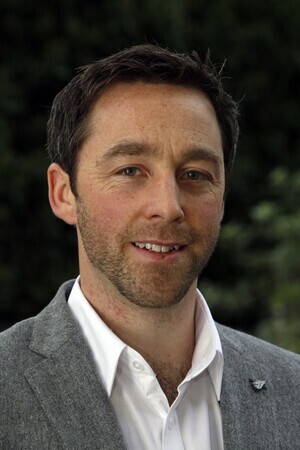
From top: Minister for Housing, planning and Local Government, Eoghan Murphy and Taoiseach Leo Varadkar at the launch of the establishment of the Land Development Agency last week; Dr Michael Byrne

With Sinn Féin submitting a motion of no confidence and widespread revulsion at the eviction of the Take Back the City occupation in Dublin 1, Minister for Housing Eoghan Murphy finds himself once again scrambling to defend the Government’s response to the homelessness crisis.

Under these circumstances one would assume the government would take every opportunity to stem the tide of homelessness.

One such opportunity is to address the danger posed by the huge number of Buy-to-Let properties in arrears. But as has been the case with each aspect of this housing crisis, the government seems bent on ignoring the issue until it is too late.

The eviction of tenants from the private rental sector is central to the homelessness crisis.

In response to last week’s news that the numbers in emergency accommodation had reached almost 10,000, Focus CEO Pat Dennigan pointed out that the main reason families are becoming homeless is because they are evicted from the private rental sector when the homes they are living in are sold or repossessed.

And if the summer is anything to go by, this problem is going to get considerably worse as Irish banks offload their non-performing Buy-to-Let mortgage books.

In May, AIB sold a €1.1 bn loan portfolio, which included Buy-to-Let mortgages. In July, Permanent TSB agreed the sale of 10,700 mortgages, of which approximately 3,300 were reported to be Buy-to-Let loans, to an affiliate of Lone Star Funds.

This summer also saw Ulster Bank announce the disposal of 2,900 Buy-to-Let mortgages, while KBC offloaded €1.9bn, including Buy-to-Let loans, to Goldman Sachs.

The push to off load non-performing Buy-to-Let loans is in part a response to direction from the Single Supervisory Mechanism, an ECB institution responsible for ensuring the ‘safeness and soundness of the European Banking System’.

The SSM want Irish banks to bring the proportion of NPLS down to approximately 5% (at the end of 2017 the NPL ratios was just under 14%). This is an important goal as high levels of NPLs make the Irish financial system vulnerable to future shocks.

However, with Irish lenders aiming to hit the 5% target over the next few years, it is clear that thousands of tenants will find the properties they call home in the hands of vulture funds.

This can only mean eviction, and the risk of homelessness.

When it comes to vulture funds, politicians have focused their attention for the most part on so called family homes being sold to international funds. This an important issue.

But Buy-to-Let properties are family homes too – it’s just that in this case the families in question are renters.

Moreover, the impact of homeowner mortgages being off loaded remains somewhat unclear. In the Buy-to-Let sector, however, repossession always means eviction.

What makes this a scandal, rather than simply cause for concern, is that many of these lenders are in part state owned and have received massive government support in recent years. PSTB is 75% state owned and AIB is 71%.

The state, in a sense, is creating the very problem it is struggling to contain.

The good news is that there are immediate solutions, although they require careful consideration.

In 2015 (even then it was obvious this was a disaster waiting to happen) I proposed a NAMA-type intervention focused on non-performing Buy-to-Let loans. This would acquire loans and use rental income to cover the costs, keeping tenants in their home.

Similarly, the Oireachtas Committee on Housing and Homelessness final report, published in 2016, recommended a ‘rent switch programme’ which would allow Housing Associations or Local Authorities to purchase rental properties from receivers or investors.

The same Committee also recommended the removal of ‘sale of property’ as grounds for terminating a tenancy, i.e. an eviction. Properties could still be sold, but without effecting the tenant.

Finally, a temporary moratorium on any evictions in the private rental sector could be introduced.

Some might say we should simply let the logic of the market play out, even if this means thousands of evictions, and that state intervention on this scale is unwarranted.

The reality, however, is that this is not the law of the market. Most of the institutions who are selling Buy-to-Let mortgages simply would not exist where it not for the largesse of the tax payer.

Bailing out lenders may have been justified to address the financial crisis. But on that basis, surely emergency measures are justified to address the current housing crisis?

Central Bank data for the first quarter of 2018 tells us that there are currently 22,545 Buy-to-Let mortgages in arrears (19% of the total). During this period, 314 such properties had receivers appointed to them – that’s more than three every single day.

This scale of this problem should be of clear concern. But whatever your view on how this issue should be tackled, what is most damning of all is the fact that there is no plan whatsoever.

Dr. Michael Byrne is a lecturer at the School of Social Policy, Social Work and Social Justice, UCD and participates in the Dublin Tenants Association.

Rollingnews


Outside 35, Summerhill Parade, Dublin 1, earlier this week

Today.

From 2pm to 4pm.

Outside 35, Summerhill Parade, Dublin 1, which has been occupied by housing activists since Tuesday evening…

Summerhill Occupation writes:

Join us for a fun-filled day of community spirit, solidarity and celebration outside our occupation in Summerhill.

We’ll have music, magic, face-painting, food and arts and crafts to keep people of all ages entertained.

We’ll also have information about housing, tenants’ rights and the occupation at our stall.

Summerhill Occupation (Facebook)

Pic: Richard Chambers


Houses

Houses
Are balloons now
They inflate
And conflate
Boom and burst

Houses
Are horses now
We speculate
And place our bets
A lifetime’s work
On coral haven estate
House no 2

Houses
Are flat pack now
Allen keys and spare screws
Starting lovers tiffs
Since 1998

Houses
Are everything now
But homes

Roberta Cappieri


Leah Farrell/Rollingnews

This morning.

Phoenix Park, Dublin 7

Minister for Housing Eoghan Murphy, Minister for Finance Paschal Donohoe, Lord Mayor of Dublin, Councillor Nial Ring and residents celebrate the ‘turning of the sod’ on the first phase of the Regeneration of O’Devaney Gardens Dublin.

A mere 10 years after removing all 285 householdss when the regeneration project was initially mooted and then scrapped.

Of the 600 new homes promised, 30 per cent will be social homes, and 20 per cent will be “ affordable” housing , it is claimed and hotly disputed,

Good times.

Previously: O’Devaney Gardens on broadsheet

Sam Boal/RollingNews

Minister for Housing Eoghan Murphy (left) and Minister for Finance Paschal Donohoe discuss house building initiatives yesterday; Donal O’Shea

In the weeks since the Irish people decided, by an overwhelming majority, to entrust women with control over their own bodies, there has been a tangible sense of optimism about the future for which our country is now heading.

The referendum illustrated that the Irish electorate, despite what we have been told about ourselves, possesses both the compassion and the intellectual wherewithal to engage with issues of great complexity, and come to conclusions not based on fear and manipulation.

It is important that we capitalise on the momentum created by the repeal movement, and continue to work towards change in how our society operates.

What do the repeal, marriage equality, and water charges movements have in common? Each had its roots in citizen-led, grassroots organization; often, years before they became issues of national import.

These campaigns showed that when the Irish people come together in solidarity we can break ties with our regressive past. They should be used as points of reference in the next social and political struggle facing the Irish population; the fight for a right to housing.

It seems clear that if there is to be any change in how we as a people interact with housing, it will need to come from outside the realm of party politics.

A second housing crisis, just 10 years after the first, has seemingly done nothing to dispel the view among our political class of housing as a commodity first and foremost. The needs of the Irish people remain a distant second to the needs of foreign vulture funds, and will continue to do so it seems.

If you were to look briefly at the current government’s oddly passive handling of the housing crisis thus far, you could be forgiven for interpreting their various missteps as just that; missteps.

But after further examination, it becomes apparent that their housing policy fits in with their overall ideological self-image; shepherds for the market, with little or no duty of care to their own electorate.

Their reluctance in regulating a private rental market out of control, for fear that they may disrupt the phantom supply that it has been providing, has seen rents approaching an average of €2000 in Dublin. Indeed, their pursuit of Rent Supplement as a primary solution has only served to create an artificial floor in many areas.

When contrasted with their bullish responses to the EU’s GDPR and the European Commission’s Apple tax ruling, it becomes evident that Irish legislature are only averse to imaginative, decisive policy solutions when the outcomes favour citizens over capital.

One of the most heartening developments of the entire repeal campaign was the success of the Citizens’ Assembly. The Assembly, a collection of citizens drawn from a range of locations, ages, genders, and social backgrounds, came together and heard expert witnesses, held Q&A sessions, and participated in roundtable discussions and debates.

This participatory forum, along with the campaign that followed, showed the way forward for Irish democracy. Citizens were allowed to influence and engage with their own futures in a way that wasn’t limited to a vote every few years.

Although there is no imminent prospect of a similar forum on the issue of housing, there does seem to be an increasing appetite among the public for a change from the traditional paradigm.

People want to live in a society, not a marketplace. Suggestions such as cost rental models and local cooperative housing, with a focus on local investment to suit local needs, are beginning to gain traction in the public consciousness.

The Irish political establishment are still a long way from legislating for the type of change required to make a meaningful impact on our broken housing system, but a groundswell of public protest and support would go a long way in encouraging them.

One needs only to revisit Leo Varadkar’s previous statements regarding marriage equality and the 8th amendment, not to mention Micheál Martin‘s shaky history with water charges, to see that our politicians have a propensity for evolutions in thinking depending on which way the electoral winds are blowing.

 Donal O’Shea is an Irish freelance writer, currently living in Chicago.

Rollingnews

Housing Minister Eoghan Murphy (left) and Junior Housing Minister Damien English

“The key to solving the housing crisis is supply. This is one of 720 such sites around the country. There were about 7,000 social housing units built last year — 8,000 this year. That’s how you solve the housing crisis. Rebuilding Ireland wasn’t a plan for one year. It’s a five-year plan and is ahead of targets in many areas.”

Junior Housing Minister Damien English, April 11.

Eoghan Murphy last night who said local authorities built 1,014 houses in 2017, a further 761 were provided though Approved Housing Bodies, and 522 came from Part V of the Planning and Development Act 2000. The remaining homes were completed in 2016.

Irish Examiner, April 20

A total of 780 social houses were built across the State last year, according to figures published by the Department of Housing.

Irish Times, this morning

Good times.

Total of 780 social houses built last year (Irish Times)

Rollingnews

Thanks Mel Reynolds

Last night.

On RTÉ Radio One’s Late Debate, presented by Sarah McInerney.

The panel was: John Paul Phelan, Minister of State for Local Government and Electoral Reform; Dr Rory Hearne, of Maynooth University Social Sciences Institute; Fianna Fail TD for Kildare North James Lawless; Jennifer Bray, Deputy Political Editor of the Times Ireland edition and Emmet Ryan, business and technology reported at the Sunday Business Post.

During an item on housing, Dr Hearne (again) laid out steps he believes would help ease the housing crisis.

He added that the local authorities in Dublin have enough land to build 20,000 houses and, elsewhere across Ireland, local authorities have enough land to build 40,000 houses.

Dr Hearne asked: “Why is that public land not being used to build affordable houses?”

Mr Phelan went on to give updates on the most recent quarter – saying commencements are up 40 per cent, planning applications are up 20 per cent and that planning laws have been changed.

Dr Hearne specifically asked Mr Phelan how many of these new home will be affordable housing for people on an average wage.

After a pause, Mr Phelan responded: “I don’t know.”

Watch back in full here

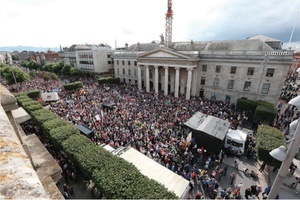
Irish Water protest on O’Connell Street, Dublin in August 2015; Dr Rory Hearne

The focus in recent weeks on the Taoiseach’s self-imploding spin machine (from his spinning of yarns to impress Trump and the exposure of the Strategic Spin Unit) hasn’t been all bad news, however, for Varadkar and his band of merry Ministerels.

It has served to distract attention from the Government’s consistent failure to address the biggest crisis this country faces – the housing crisis – or as it should be called – the affordable homes emergency.

The latest reports show that rents and house prices continue to rise, making housing even more unaffordable for the average worker.

Tens of thousands of home owners in arrears still face repossession and eviction, and over 3,000 children and their families remain in homelessness emergency accommodation.

But the reality is that this crisis is likely to worsen further in the coming months and years.

There is no reason (aside from public and political concern) why the numbers of children and families in homelessness couldn’t rise from 3000 to reach 6,000 or 10,000 in the coming decade.

The authorities can keep building more ‘Family Hub’ emergency accommodation and ignore the evidence of the damage being done to children and families.

There is no reason why rents won’t keep rising faster than wages, that overcrowding won’t continue, and people will be stuck living at home with parents or in the private rental sector.

Just look at the US and the extent of housing inequality and suffering that is tolerated there.

That is the ‘dystopian’ housing system we are heading towards in Ireland. But it is not inevitable.

It depends on who wins the battle for housing that is underway at the moment. We are in the midst of a ‘moment of reckoning’ in the Irish housing system – a type of war –and the winners are determining its future for decades to come.

On the one hand, there are the current ‘winners’ – the vulture funds, the banks, the financial and property investors (investing on behalf of the global and Irish wealthy), Real Estate Investment Trusts, landlords, estate agents, and property developers.

And, within these, are many of our politicians (a quarter of the current cabinet are landlords) and media (who benefit from property advertisements).

This class, or even cabal, I call the property-finance complex – are in the process of converting more and more of our homes into commodities (investment assets to be profited from) through which renters and students can be exploited and mortgage holders fleeced.

The property-finance cabal has no interest in building affordable rental properties or homes for purchase. And they have government working on their behalf – implementing policies of tax breaks, selling off NAMA and bank assets, privatising public land and social housing facilitating a huge profit and wealth transfer to the property-finance cabal in order to ‘incentivise private sector ‘supply’ (and boost the profits of the banks).

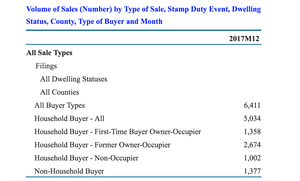
The table below shows that in December 2017 property investors – (household buyers-non occupiers and non-household Buyers) – bought over a third (37%) of homes that month, 2,379 homes.

In contrast, first-time buyers bought much less – just a fifth (21%) of homes purchased – 1,358 homes. So the property-finance cabal are clearly winning, backed by current government policy.

But, on the other side, there is a growing population of people losing out – and they range from our most vulnerable homeless families to average and professional workers, from guards and teachers to university academics who cannot afford to buy a home.

The extent of people affected by the housing crisis is reflected in the shift in attitudes amongst the Irish public towards housing.

Housing has moved from being a relatively marginal issue in public and political debate to becoming the issue of single most concern.

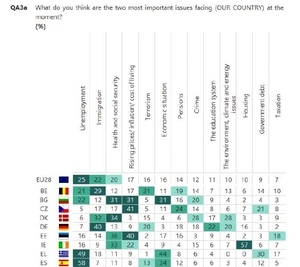
The most recent Eurobarometer poll (undertaken in December 2017) shows that, for Irish people, they think housing is the most important issue facing the country. 57% of respondents cited it as the most important issue.

The second most important was health and social security (cited by 33% as the most important), followed by rising prices/cost of living (cited by 22%).

We can see the dramatic rise in importance of housing as an issue (as the crisis worsened) from the Eurobarometer November 2013 poll when just 4% cited it as the most important issue to November 2014 when it was cited by 13%. But then in November 2015 housing jumped to being the first issue of concern at 34% and in November 2016 it was again first with 42% citing it as most important.
Alongside this, there has been a growing movement of citizen action (most notably the Apollo House occupation), civil society groups and political parties asserting that housing should be provided as a home – as a human right and that everyone should have access to affordable secure accommodation.

These have been putting forward alternative solutions such as setting up a new semi-state housing agency to build affordable ‘cost-rental’ housing for a mix of incomes, co-operative affordable purchase homes, putting in place tenant protections from eviction, funding local authorities to build social housing on a much greater scale, putting the right to housing in the constitution and new initiatives to support Housing Associations not vulture funds to buy the mortgages in arrears.

But many are asking why there hasn’t been more citizen action on housing – why have there not been housing protests like the water movement?

There are a myriad of explanatory factors, including the active undermining of society-wide solidarity on the issue by government and state agencies blaming the victims like the homeless and those in mortgage arrears.

It has been a real challenge to convince people why they should partake in such protests and public action and motivate them to get involved.

At the MyName protest concert we organised outside the Dail before Christmas, for example, there was a good turnout – possibly close to a thousand people there at one point. However, we thought there would be more there.

But there are also two other important interlinked explanations.

Firstly, the various housing action campaigns and NGOs and trade unions representing the diverse groups affected by housing exclusion have been ploughing their own furrows – doing great work – but not coming together to create a sufficient mass of united impact.

Secondly, and this is linked to that issue, is that many of those affected – from private rental tenants to those on housing waiting lists to aspirant home owners – have not been convinced that the campaigns and protests are relevant to them and can make a difference.

Next Saturday, April 7, in Dublin the National Homeless and Housing is organising a protest calling on the government to make housing a constitutional right, to end evictions, to build public housing and legislate for real security of tenure for tenants, amongst other issues.

The coalition is now one of the largest civic alliances created on the housing issue to date in Ireland involving trade unions, tenant’s groups, community groups, artists, musicians, NGOs, charities and political parties.

This is an important attempt to bring together the diverse groups affected by the crisis.

There are many reasons why it is worthwhile attending housing protests such as the one on April 7.

Firstly, if you want to ensure everyone has access to an affordable and secure home then you are going to have support public action to make that happen. The Government has shown that it is not going to do it willingly.

But, as with water, or medical cards, and many other issues – the evidence shows that public protest and a public outcry on an issue can change government policy. But it has to be big enough that politicians can’t ignore it.

So each additional person that is there on April 7 will make it more likely that it is a big enough protest to have an impact on politicians.

Politicians don’t like negative publicity and people pointing out what they are doing wrong.

They prefer citizens to be passive and to leave their democratic ‘involvement’ to voting every four or five years. Large protests shatter the cosy consensus that government decision makers have an inalienable legitimacy to govern.

Large protests also challenge societal tolerance of the present crisis. They challenge the idea that the crisis is acceptable and it is the only possibility.

Public action disrupts this fallacy and points to alternative solutions and pathways. Importantly, it raises the aspiration and expectations of people affected to not have to just accept their current difficult housing circumstances.

Being part of the protest is a way to shatter the silence around housing victims who are being stigmatised and attacked on a constant basis by politicians, on social media and elsewhere. This is probably the essential reason to join the protest on April 7.

Joining the public protest is an act of true citizenship – an act of solidarity with your fellow country people who are really suffering.

Homeless families I have worked with have told me how their children have asked them ‘how can we be left like this without a home’.

The children asked them ‘does nobody care about us? Why does nobody care about us?’.

Thousands marching through Dublin calling for action on this affordable homes emergency and demanding the right to a home for everyone, will show these children that there are people – genuine citizens – who care and are not going to tolerate this crisis continuing.

Dr Rory Hearne is a policy analyst, academic, social justice campaigner. He writes here in a personal capacity. Follow Rory on Twitter: @roryhearne

Rollingnews

Previously: Ireland’s Home Truths