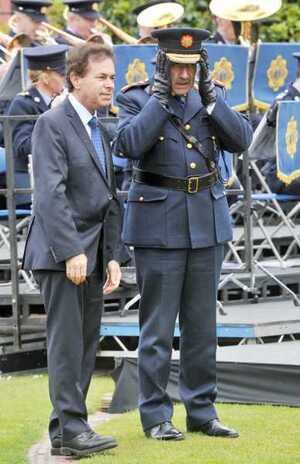
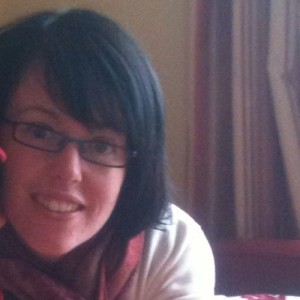
[Justice Minister Alan Shatter and Garda Commissioner Martin Callinan, top,
and Dr Vicky Conway]
Dr Vicky Conway, a senior lecturer in criminal law at the University of Kent and author of The Blue Wall of Silence, about police accountability and the Morris Tribunal, has written about the Garda Ombudsman bugging controversy on the Human Rights in Ireland blog – asking six specific questions:
Her slightly-edited questions are:
1. Who was doing the surveillance and why? GSOC has access to a great of sensitive data, of both personal and State security nature. It is a statutory body which someone has been, in essence, spying on. The reason that some have raised the issue of Garda or Government involvement relates, I suspect, to the well-documented poor relationship between an Garda Síochána and GSOC. Indeed, just last September, around the time of the security sweep, new arrangements for the requesting and sharing of information had to be negotiated between the two, after GSOC publicly complained of delays in accessing material. Others may believe that Government Departments might have an interest in the operations of GSOC. There are of course many criminals and complainants who would have a vested interest in the operations of GSOC.
2. How did they manage to conduct the surveillance they did conduct?
3. What, if any, data was compromised? GSOC have stated that their databases were not compromised but this does not exclude the possibility of data being accessed either through access to emails or overheard by bugging equipment. Those who have complained, and those who have been complained about, should rightly be concerned about their privacy, not to mention any information pertaining to the operation of the state police service which may have been discussed and overheard.
4. Having received the report in December, why did GSOC not report it to the Minister, the Garda Síochána or other relevant departments? Section 80(5) of the Garda Síochána Act 2005 states:
“5) The Ombudsman Commission may make any other reports that it considers appropriate for drawing to the Minister’s attention matters that have come to its notice and that, in its opinion, should, because of their gravity or other exceptional circumstances, be the subject of a special report to the Minister.”
Clearly GSOC is not legislatively required to report this to the Minister, but nonetheless, if an agency so central to the justice system has concerns about its security, it is not unreasonable to expect that they would report these to the Minister or even the Taoiseach. The gardaí, one might think, should be informed as criminal activity must be suspected.
GSOC has given some reasons as to why it is did not do so. Some may leap to conclusions that GSOC either didn’t trust the Minister, or they feared a garda/ministerial connection. In the context of the poor relationship already noted, this is perhaps understandable.
We should not get caught up, for now, in blaming GSOC for not reporting this: that is tantamount to victim-blaming. It is disappointing that GSOC’s statement focuses on expressing regret for not contacting the Minister and that the Garda Commissioner’s statement focuses on why gardaí are being eliminated from suspicion. Similarly many national newspapers are leading with the Commissioner’s concerns. This is not the primary issue at this moment in time. The focus should surely be on who did this, why, and what did they get access to. GSOC is, in essence, the victim here and yet they have ended up expressing regret for their handling of matters.
5. Where is Shatter’s response?
6. What should happen now? Every effort to be made to find out who did this and why. The public should be reassured that data held by GSOC is secure and that the situation is under control. And all players involved should seriously question how politics has distorted this issue. My own view is that this is a further example of the politicisation of policing in Ireland and that the need for a police authority to break that direct political control is more evident than ever. In 2006 Fine Gael agreed with this view-point in a co-authored an agenda for the reform of policing in Ireland. Now in government one might hope that they would act on such commitments.
Surveillance of the Garda Síochána Ombudsman Commission (Human Rights In Ireland blog)
Vicky Conway
(Laura Hutton/Photocall Ireland)