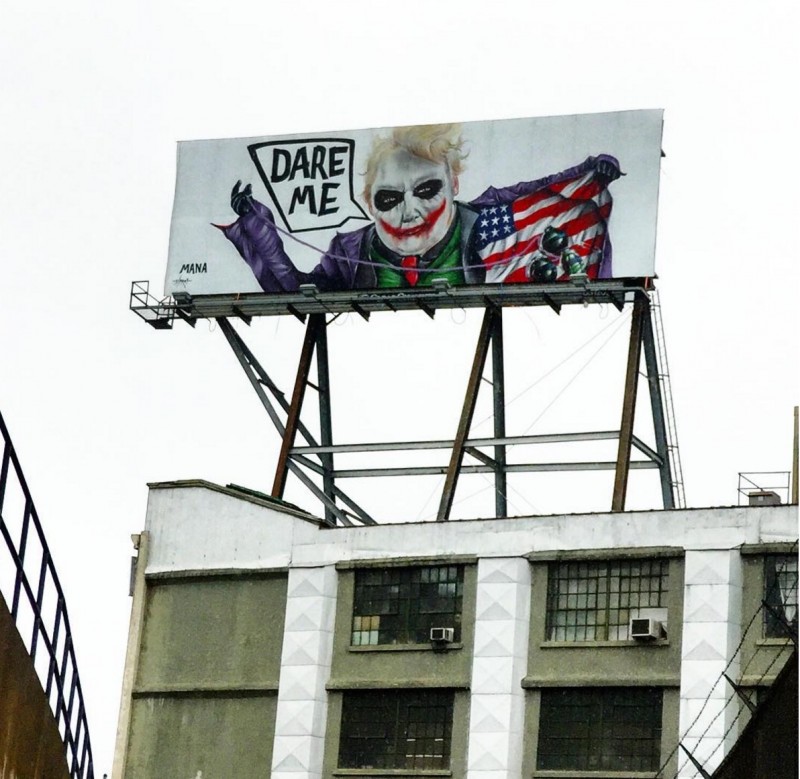

(*clown car)
Just seventeen Russians, an accordion and a guitar coming to work in a Volga, or a very good illusion.
We want to believe.



Further to the graffiti incident at Anti-Austerity Alliance TD Mick Barry and Cork City Councillor Fiona Ryan’s office in Blackpool, Cork last week…
Mick Barry tweetz:
All male anti-choice picket of my constituency office today. Vile abuse shouted at two women who had the audacity to challenge them.
Previously: Eighters

A 55-second trawl through the multifarious sneaky tropes of advertising by comedy troupe The Kloons.
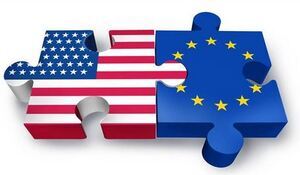
Further to Fine Gael MEP Brian Hayes’s recent letter to The Irish Times about an article concerning the Transatlantic Trade and Investment Partnership (TTIP)…
Brian Hayes, MEP, takes me to task for suggesting in a recent article that aspects of the proposed EU-transatlantic treaties need far better political and journalistic scrutiny than they are getting.
He is particularly insistent that the Transatlantic Trade and Investment Partnership (TTIP) has gone away forever and that the public interest EU “precautionary principle” is under no threat.
This is an extremely complacent and short-sighted view.The central question for both the Comprehensive Economic and Trade Agreement (CETA) (almost ratified) and TTIP (whenever it makes its inevitable reappearance) is whether the EU’s guiding principle on food and safety standards will be preserved when regulatory harmonisation starts to bite.
Experts close to the policy process acknowledge that the EU, which has higher standards than the US in many areas, will have to adopt a strongly defensive stance on food safety and health issues if it is to tackle robust American interests.
There is no certainty that the European Commission is able or willing to mount a defence, since it is motivated, particularly now in hard economic times, to add momentum to transatlantic diplomacy that will seal a deal as quickly as possible and with a minimum of public fuss.
The risk for public health, however, is that key European principles will be regarded as legitimate bargaining chips in the effort to negotiate economic gain and that the end product will favour corporate interests far more than the public interest.
Through its actions at the World Trade Organisation, the US has already demonstrated opposition to EU policies in food safety and, as the European Journal of Public Health points out, has steadily pressed for adoption of a more US-centric approach to the scientific evidence that is called upon to underpin public-health rules.
We can see from the Trans-Pacific Partnership (TPP) that US interests are also pushing for a more aggressive stance in trade deals to favour the patenting of medical procedures, extending medical data exclusivity and supporting the ever-greening of patents.
Arguably the biggest threat in these treaties is that they enable multinational companies to raise legal challenges against food and public health legislation. Arbitration held in private allows corporations to bypass national courts.
Essentially it opens the way for corporate investors to scavenge for profits by suing governments, accusing them of breaking trade commitments with their own national food and health regulations.
This aspect of trade treaties is currently being activated in South America, where multinational tobacco firms are attacking cigarette control regulations in Uruguay, despite the Uruguayan constitutional court supporting its own government’s sovereign right to regulate smoking.
All of Ireland’s 15 MEPs should be well aware that the way trade negotiations are structured has been problematic for some time. This criticism has been well circulated in Brussels by various citizen lobby groups over several years.
No action has been taken to correct the glaring imbalance in the composition of EU expert groups that reflects the relative influence of corporate investors and public interest advocates.
European Ombudsman Emily O’Reilly in Brussels has been outspoken about the absence of consumer protection representatives on these expert groups that have significant influence on the way the European Commission arrives at trade decisions.
The EU and the US negotiate trade issues through a well-established dialogue process, which is designed in theory to allow consultation with non-governmental organisations. But the consultation mechanisms for business are systematically stronger than those for consumer, environmental, labour and public health advocates.
Irish MEPs should be leading the charge towards urgent reform of the internal workings of EU policy-making.
If a more transparent EU doesn’t begin to appear on the agenda pretty quickly, the current mood of alienation evident in the UK and parts of eastern Europe could begin to get a grip in Ireland too.
No amount of complacent bluster from our MEPs will save us from that.
Farrel Corcoran,
Clontarf,
Dublin 3.
Media, democracy and international trade agreements (Irish Times)
Previously: Brian’s TTIP

In Poland.
BBC reports:
Women in Poland have gone on strike in protest against proposals for a total ban on abortion.
They marched through the streets wearing black as a sign of mourning for their reproductive rights.
Women who oppose the ban are staying away from work and school and refusing to do domestic chores, in a protest inspired by a women’s strike in Iceland in 1975.
Anti-abortion protests are being held around the country too.
Women took to the streets of the capital city, Warsaw, in a pro-choice march on what they are calling “Black Monday”.
Further to this…
People who wish to express their solidarity with women in Poland are invited to bring a candle to the Polish consulate on Eden Quay this evening between 5.30 to 7pm.
Dublin – Solidarity with Polish women on strike (Facebook)
Black Monday: Women in Poland go on strike against abortion ban (BBC)
UPDATE:

Lenny Abrahamson writes:
Huge protests happening in Poland against a full scale attack on women’s rights. They are asking for support from abroad…
For the day that’s in it.
David Layde writes:
You might find the above link relevant to today’s cycling protest.
Previously: Two Wheels Good

Free next Saturday?
Ruairi O’Hagan writes:
Feis Lebowski, Cork’s little Big Lebowski festival is back!
The night takes place on October 8th upstairs in the Roundy on Castle Street (near Argos for those unfamiliar). Doors will open at 8 where you can sip on a White Russian and chat to fellow Little Lebowski Urban Achievers (and proud we are of all of them).
DJ El Duderino will be dipping into his record collection to spin some tunes before the movie – and yes, there is a strict “No Eagles” policy. No Metallica either. Bunch of a**holes.
Achievers are encouraged to come dressed as their favourite character from the movie – be it The Dude, Donny, Walter, Jesus, The Stranger, Maude, Bunny, whoever. The best costume on the night will receive a very special prize, along with being crowned Feis Lebowski King or Queen for 2016.
The movie will then start at 9.30pm, where Achievers are encouraged to laugh along/quote along/sing along.
Following the movie, we’ll be giving away Lebowski-themed prizes, before DJ El Duderino takes us on home and gets everyone on the dance floor.
Admission on the door is 10 Euro (or bones, or clams, or whatever you call them) – every single penny of which will be going to the Alzheimer Society of Ireland.
Capacity is limited so come along early – we’re not pre-selling tickets and we won’t be keeping tickets on the night for anyone, so it’s first come first served.

Thomas Quigley writes:
I bought a brand new bicycle yesterday and it was stolen from the bike cage in the underground car park of my building in the Ashbrook estate in Clontarf, Co Dublin.
It didn’t even last 24 hours. I didn’t even get to know her. I was hoping you could spread awareness in case people spot it online or in the city. Appreciate any help.
Mmf.