



Yearly Archives: 2016
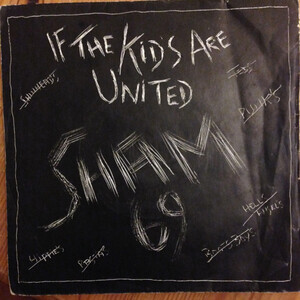
Two hours ago we asked YOU for a suitable anthem for fans and players heading to the Euro 2016 in France.
You answered in your tens.
But there could only be one winner.
‘Jake the Fat Man’ wins the €25 voucher to spend at any of the 13 Golden Discs stores nationwide for requesting Sham 69’s inclusive 1978 foot stomper If The Kids Are United.
Runners up:
Squiggleyjoop: You’re Not Alone by Embrace
Pat Walsh: Here Come The Good Time by A-House
Pretengineer: Road to Nowhere by Talking Heads
Thanks all.
Earlier: A Song For Euro

A 1997 Cannes Palme d’Or nomimated short by Gil Alkabetz which appears to present a possible solution to the Medieval river crossing riddle involving a wolf, a sheep and a cabbage.
And then doesn’t.


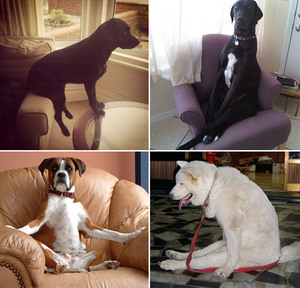
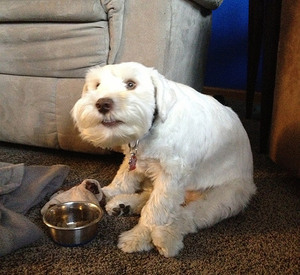

Yikes.
The latest edition of Village Magazine, in shops now.
Via Village Magazine
Meanwhile…
Taoiseach says if he were to meet Trump he would “certainly” be happy to relay his previous concerns about ‘racist and dangerous’ comments
— Gavan Reilly (@gavreilly) June 10, 2016
Previously: ‘The People Of Doonbeg Have No Objection To Trump’s Visit’

The cost of motor insurance.
It’s been soaring.
Yesterday, during a Dáil debate about the trend, Independents 4 Change TD Clare Daly said the following:
We all know the overall figures. More than one third of Irish drivers have seen the cost of their insurance increase by more than 50% in the past year. We could all tell our own individual horror stories. It has gone beyond being a rip-off at this stage.
Last week, a father contacted me about his son who paid €2,400 for his first insurance cover. His renewal quote was €3,100, which was then withdrawn, allegedly because he had changed from working in retail to being a labourer. They contacted the Ombudsman who told them to shop around, which they did, but the nearest quote was €6,500.
This car is registered for social, domestic and pleasure purposes. It is not used for his job. The situation is utterly ridiculous. The young man ended up changing jobs because he needed a car but could not pay the cost of the insurance.
The reality is that the increases being imposed are leading people to drive with reduced cover, which is very concerning, or to the imposition of severe economic hardship. It is simply unacceptable.
We know AA studies and so forth have blamed fraudulent activity and high costs in legal claims. However, they fail to mention the profiteering of insurance companies. This is the nub of the issue.
I support the Fianna Fáil measure calling for a national database to record premiums and settlements. This can be done anonymously and would help provide some transparency. The truth, however, is that there is no reason for the current situation whatsoever and the only credible explanation is that a cartel is operating for profit.
For example, in the modern era of new technologies, the use of dash cams can be implemented. A dash cam can record footage which could be used as evidence in the event of a traffic incident. They can record speeds through GPS tracking and issue proximity warnings, for example, when changing lanes.
The encouragement of the use of this type of technology has the potential to massively simplify the insurance process. Do the insurance companies want it? We can bet they do not, because there is a cartel of insurance underwriters and companies profiting from the current situation.
I know of an insurance brokerage company which set itself up with the view to operating with dash cams in particular and using them as a mechanism to reduce premiums and simplify the claims process.
The company was taken over by a bigger insurance company and the dash cam programme has ended up in the bin. That is the real nature of the insurance business in Ireland.
Figures show that the number of collisions has declined with the implementation of these types of technology, which are already available. We could radically transform the situation. There is no need for it whatsoever and unless we get to the heart of the matter the problems will continue.
It is simply unacceptable for young people, in particular, but for other drivers as well, who, as other Deputies have said, against the backdrop of an inadequate public transport system, need their cars and should be able to drive them safely.
Transcript via Oireachtas.ie
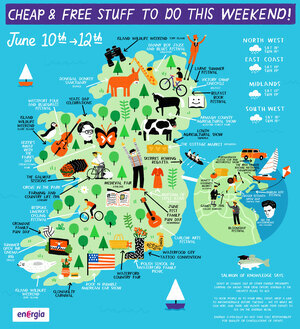
Your inexpensive weekend mapped by Ross O’Mullane and Fuchsia Macaree for Energia. Full details at link below.
On Message
at
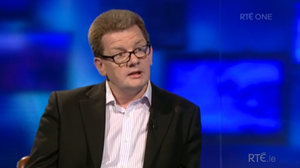
Last night.
On RTÉ’s Prime Time, presenter David McCullagh spoke to Gerry Edwards, of Termination for Medical Reasons Ireland, and Tracy Harkin, of Every Life Counts, about the UN’s criticism of Ireland’s abortion laws.
From last night’s discussion:
Tracy Harkin: “I think, myself, as a mother, who has a daughter who has been diagnosed with a life-limiting disability, I find this report from the United Nations disturbing for a number of reasons. Firstly, I suppose what’s deeply distressing for many parents involved in our support network, and other charities that work with families that have lost babies to these conditions is the language the United Nations has chosen to use.”
“Terms like ‘fatal foetal abnormality’, ‘incompatible with life’, they’re such harsh sounding, dehumanising terms. And I think for parents like myself and for the many parents throughout Ireland who have lost their little ones to these conditions, that’s not how they see their children at all.”
“Their experiences have not been heard by in this report which is deeply disturbing; parents have been speaking out, for example, in our organisation, Every Life Counts, for the last few years, calling for better support and services to be rolled out in maternity hospitals throughout Ireland to help them make the most of the time to parent their child, to love their child, to hug their child, to, you know, smell their child as any mother wants to.”
“And this is so important, such an important pathway to healing for these mothers and I think it’s alarming that the only option, or solution that the United Nations is fixated on is abortion. You know, these are children, human beings with severe disabilities and there’s not an agreed list, neither will be, and I think for us parents, for myself, before I had my little daughter Kathleen Rose, who’s now 9 years of age, you know she’s such a wonderful little character, she’s brought such joy to my life. Many of our parents didn’t have that time with their little ones and maybe only had minutes or days but they all said that that time was so important to healing. And there’s more and more research coming out to show that, in contrast, abortion increases despair and depression among mothers because they don’t have that closure.”
David McCullagh: “Tracy Harkin, sorry to cut across you, you talk about having services available to allow parents to spend time with their children, however short that time unfortunately may be. And I don’t think anybody’s suggesting that people shouldn’t be able to make that choice. But simply that others, who feel differently, shouldn’t be deprived of their choice, for what is best for their family.”
Harkin: “Well, I think the main thing here is accurate information and I think what’s missing from this whole conversation is also to look at what’s happened in other countries. What has the impact been of legislation in other countries. You look at the UK for example, over 90% of children with any disability whatsoever are aborted right up to birth. I mean most of us have their children with Down syndrome, Spina Bifida, in our communities, we love them, we fundraise for them. There’s a chilling effect to legislation here which the United Nations has chosen to ignore, time and time again. And it’s also important to mention that this case was brought forward by the Centre for Reproductive Rights which are a large, wealthy organisation with many millions at their disposal and their only focus, worldwide, is to promote abortion…”
Later
Gerry Edwards: “I think it’s very important, again in the interest of language, that we are quite clear that there is a difference between disabilities and life-limiting conditions and fatal foetal anomalies which are conditions which are not capable of sustaining independent life outside the womb.”
“Our son had a condition called severe anencephaly. Most of his skull was missing and his brain was missing. He could not sustain independent life, there was no question whatsoever of him surviving for any length of time. And that was confirmed to us by five different medical professionals in three hospitals in two jurisdictions.”
“My wife would have been forced to continue with that pregnancy for five more months in this country, not able to bear the social contact with other people, working with the people that she worked with, being stopped by people on the streets, in the full knowledge that our son would not die, or would not live, I beg your pardon. And this was the situation which was absolute torture for us and we made a decision which was in our best interest and in the best interest of our family.”
“And that decision required us to leave our carers, leave our family and travel to another state. We did spend time with our son, he was delivered naturally, he had an induced labour, we got to spend time with him but we would have got to spend more time with him had we been able to go through that process here in Ireland.”
“Our family members would have gotten to meet him, we would have had the dignity of having a funeral and a community to stand with us and support us in our loss. Instead we got a jiffy envelope, delivered by a courier a couple of weeks later. That’s unacceptable.”
Later
Edwards: “It’s the responsibility of our legislators to legislate. They also have an obligation to uphold international human rights law. This isn’t imposed upon Ireland. This is something that Ireland signed up to. There was a discussion earlier on in the programme about upholding the law and Ireland is one of those countries that has pledged to uphold international human rights law and we’ll find out very soon whether our Government is going to honour that commitment it made and actually take steps to change our legal environment soon.”
Watch Prime Time back in full here
Meanwhile,

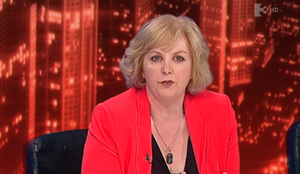
On TV3’s Tonight With Vincent Browne last night…
During the newspaper review, the panel – Senator Lynn Ruane, Breda O’Brien, of the Iona Institute; Sinéad O’Carroll, of The Journal.ie and Ger Colleran,former editor of the Irish Daily Star – also discussed the UN’s criticism.
From the discussion…
Mick Clifford: “Breda, ‘Cabinet to defy UN on abortion reforms’ [the main headline on today’s Irish Examiner]. This is not going to go away and some people would say all roads to a referendum one way or the other.”
Breda O’Brien: “Well I’m absolutely delighted if that’s an accurate headline in the Irish Examiner because this committee is part of a huge push that there is to kind of, in a sense, the UN treaty say ‘do not give any right to abortion’ but these committees have been pushing this agenda for years. And they’re stuffed with people who share a point of view which is that the baby in the womb does not have equal rights with the mother. And of course they’re going to find that something is cruel and inhumane and degrading, but I had the privilege of accompanying a friend of mine when she had a baby with a life-limiting condition and..”
Clifford: “But there’s stories like that but there’s also the other side…”
Sinead O’Carroll: “Fatal foetal abnormality is different to life-limiting…”
O’Brien: “No, life-limiting condition is the term used by hospice, it’s the term used by…”
O’Carroll: “Fatal foetal abnormality is the term used by doctors when they give diagnoses to women with fatal foetal abnormality…”
O’Brien: “But also, people, I think fatal foetal abnormality is one that people who have had babies with life-limiting conditions have asked to have it removed because it is so offensive. Your child is not a fatal foetal abnormality, no more than somebody with leukaemia is a cancer.”
Ger Colleran: “It’s the condition, not the child…”
O’Brien: “But that’s what, people have actually said in the media, they’ve said things like, ‘the fatal foetal abnormality’ as if that were, it’s a child who has a life-limiting condition…”
Clifford: “Breda, do you believe there’ll be a referendum?”
O’Brien: “I hope that there will be good sense and that people will see that this is a matter of equal rights and that they should leave it as it is.”
Lynne Ruane: “There will be.”
Clifford: “Ok, well, we’re going to have to leave it for that because that’s it now, we’ve run out of time..”
Watch back in full here
Previously: ‘The Ashes Were Unexpectedly Delivered To Her Three Weeks Later By Courier’
Italy-born André writes:
The company I work for is growing, there are a few open roles indeed… I’m Italian and I got in Dublin when they hired me two years ago. I can say that has been best decision of my life.
Beside the work, I love Ireland, bought the book about strange things that look like Ireland because I want to be able to recognize my new home as easily as I could recognise Italy.
So,for immigrants the change is for good. I don’t know if you do this, but would other people who have come to live and work in this country like to share their best reason to be in Ireland, to be in Dublin or to move here? (or not to, if you don’t like)…
Anyone?
Incoming
at
‘sup?
This morning.
In Kildare.
Dave O’Sullivan writes:
Bird Strike: The day the pigeons flew into my office window….
Meanwhile…

Sue Kirk writes:
Same! Live in the sky, die* in a window. *Spoiler: he didn’t die…