




Dreamlike photo manipulations by Italian architect and photographer Laurent Rousset.



Dr Peter Boylan
“There are serious challenges when it comes to things like tubal ligation, IVF services, abortion, gender reassignment surgery, etc. None of these are allowed in Catholic-controlled hospitals around the world and it’s a puzzle as to why the nuns, or religious Sisters of Charity would want to be involved.
“I mean I can’t imagine them being comfortable with a hospital which is effectively under their control doing these sorts of things in one of their hospitals.”
Dr Peter Boylan, Consultant Obstetrician and Gynaecologist at the National Maternity Hospital and Chairman of Institute of Obstetricians and Gynaecologists, speaking on Morning Ireland this morning about the ongoing national maternity hospital row.
St Vincent’s Healthcare Group is refusing to allow an application for planning permission go forward to An Bord Pleanala until the Holles Street board agrees to come under its corporate governance structure.
Meanwhile, in today’s Ireland edition of the The Times, Justine McCarthy writes:
What really upset St Vincent’s have been the legitimate concerns raised in the media about a hospital group that is owned by an order of Catholic nuns taking control of the state’s national maternity hospital.
Historically, the church’s grip on women’s wombs has produced some of the tawdriest and most tragic scandals of the Irish state.
Think of the mass graves in Dublin’s High Park laundry and Tuam’s mother and baby home. Think of the mothers who had their pelvises sundered during symphysiotomy and the dying Savita Halappanavar being told she could not have her doomed pregnancy terminated because “this is a Catholic country”.
The Religious Sisters of Charity ran three of the Magdalene laundries covered by the McAleese report, which catalogued the systemic indentured servitude of pregnant girls and women, and which led to Enda Kenny’s apology in the Dail.
The nuns have refused to contribute to the state’s compensation scheme for the women. Meanwhile, St Vincent’s group receives over €200 million a year from the exchequer.
Listen back in full here
Hysterical women and the maternity hospital delay (The Times Ireland edition, Justine McCarthy)
Previously: ‘In The Interest Of Patient Safety’


German digital artist Tobias Gremmler applies the science of motion capture to kung fu, creating animated sculptures to express the physics of the martial art.

Tonight: My Lovely EP: Duke Special, Neil Hannon & more @ Button Factory, Curved Street, Temple Bar, Dublin 2 (€7)
Nialler9 writes:
The My Lovely Horse Rescue charity retrains, rehabilitates & re-homes abandoned horses. Cathy Davey is involved so she and her musician friends have put together an EP of songs to raise money for the charity. Tonight’s launch features possibly equine-themed songs from Neil Hannon, Duke Special, Paddy Hanna, No Monster Club, The Late David Turpin, Gar Cox and promised special guests.

YIKE’S!
Gaz Flood writes:
Outside a print shop in Cork. My teeth are still grinding 4 hours later.

Fine Gael ‘s Michael Noonan (left) and Pat Breen
We have a ‘deal’.
Earlier this morning, Fine Gael TD from Clare, Pat Breen, spoke to Morning Ireland presenter Dr Gavin Jennings about the ‘agreement’ reached between Fine Gael and Fianna Fáil on a Fine Gael minority-led government.
So, any concessions?
Grab a tay.
Dr Gavin Jennings: “I gather unanimous backing at your own parliamentary party meeting for this document last night?”
Pat Breen: “Yes indeed, we had a full house for the parliamentary party meeting and it was a unique meeting because it was the first time we had our almost complete parliamentary party together since the Senate results, we got new Senators in place. Minister Coveney went through the document in detail and there was unanimous backing in relation to it. Questions were asked by a lot of members, of course but I mean it was constructive, it was a good meeting and it got the unanimous backing of the Fine Gael parliamentary party.”
Dr Jennings: “Fianna Fáil conceded to a Fine Gael-led minority government, what has your party conceded to Fianna Fáil?”
Breen: “Well it’s not a question about conceding, it’s a question of a compromise. I mean, look, we faced a situation, after the general election, where we didn’t get the majority we needed to return the outgoing government, we returned as the largest party in the Dáil, I think there was an onus on Fine Gael to try and form a Government, we’ve been trying to do this over the last 67 days, talking to Independents, talking to Fianna Fáil, and eventually coming up with this document which reflects the broad policy principles, agreed by Fianna Fáil and Fine Gael negotiators and today of course we’re making progress with the Independents and hopefully before the end of the week we may be able to put a Government into place.”
Dr Jennings: “Now it’s in writing, it’s been published, we can see it, it contains a lot more policy than I think many of us expected, albeit, in some places, it’s a little vague. Can I just read out some sections just to see…”
Breen: “Sure.”
Dr Jennings: “These might have been some of the questions that might have been raised by you and other members last night. You spent a long time talking about water with Fianna Fáil and we know about the commission that’s going to be set up and the suspension of water charges. ‘We affirm that those who’ve paid their water charges to date will be treated no less favourably than those who have not’ – what does that mean?”
Breen: “Well it means that anybody that has paid their bills will have paid their bills in full obviously. It’ll take six weeks to set up this commission and to suspend the water charges. So everybody will have to pay their water bills for the first half of this year. And obviously the law has to be upheld in relation to those people, we want to treat people equally here, to that haven’t paid their water bills and that’s the situation at the moment. Water bills are live right up to the time when legislation is put into place, probably in six to seven days time which will probably bring the water bills right up to the end of June.”
Dr Jennings: “So those who haven’t paid will be pursued?”
Breen: “Those that haven’t paid will be pursued, the law will have to be upheld in relation to this.”
Dr Jennings: “How will they be pursued?”
Breen: “That’s a matter for the Irish Water, obviously they’re pursuing people at the moment. Over 65% of the people that paid their water bills – that water, any arrears that are in place will be there for those people to pay at some stage.”
Dr Jennings: “And if you don’t pay?”
Breen: “If you don’t pay then that’s a matter for Irish Water to decide how to deal with the situation.”
Dr Jennings: “The other questions that arise, and there’s a few of them, under the heading ‘Securing affordable homes and tackling homelessness’. You promise to provide greater protection for mortgage holders – how?”
Breen: “I think that’s all, this is, first of all, I have to say this policy is a statement of broad policy principles..”
Dr Jennings: “Very broad.”
Breen: “It’s a bit broad. That’s all you’d expect it to be Gavin, really, at this stage. It’s not going to be a programme for Government. Obviously a programme for Government would be much more comprehensive. You have to understand this is a minority-Government and that Fianna Fáil will be in opposition and we’re going to be in Government, so the document that was agreed was always going to be very broad, a broad policy principles of both parties in agreement. On the issues that were raised at the doorsteps during the election campaign, you mentioned mortgage relief and that’s something that’s extremely important – that’s now been extended now right up to, it was supposed to end in December 2017 – that’s going to be extended as well. Rent supplement is going to be increased as well – up to 15% as well. So, you know, what we have done in this document is that we haven’t compromised in the core Fine Gael policy, I think that’s important as well.”
Dr Jennings: “At all?”
Breen: “No, not in a lot of issues. We’ve, if you look at the document in detail, a lot…”
Dr Jennings: “Did you compromise at all?”
Breen: “A lot of the Fine Gael manifesto is included in this here, of course you have to compromise on certain issues…”
Dr Jennings: “Like what?”
Breen: “Well we compromised in relation to Irish Water. First, you know, Fianna Fáil did as well. We wanted charges to be brought in immediately. That didn’t happen because we didn’t get the numbers in the Dáil… and Irish Water is still there. I think that’s the important thing to point out.”
Dr Jennings: “Have you compromised on USC?”
Breen: “No, well, we haven’t compromised in USC, what we have, we have compromised a certain amount in USC...”
Dr Jennings: “You said you wanted to abolish…”
Breen: “What we want to do here is eventually fade out USC, but we are, it’s going to, I mean we are going to ensure that low-paid workers and middle-aged workers, middle-paid workers, that it’s going to be reduced on them, so it’s going to take a little bit of time…”
Dr Jennings: “Are you going to abolish it?”
Breen: “Sorry?”
Dr Jennings: “Are you going to abolish it? Have you had to compromise?”
Breen: “Eventually, we will abolish USC…it was always going to be a temporary tax, it was never going to be a permanent tax for people. And, you know, at the doorsteps, people, during the election campaign, people were very much in favour of this tax which was, again as I said, a temporary tax, it was never going to be a permanent tax.”
Dr Jennings: “‘We will take all necessary action to tackle high variable interest rates’ – what does that mean?”
Breen: “Well, exactly, I mean obviously what’s important here, in relation for people, is to ensure that people are kept in their homes, that they can pay an affordable mortgage, I think that’s extremely important as well. And you know when we put the programme for Government together, obviously it’ll be much more comprehensive in relation to…”
Dr Jennings: “What does ‘take all necessary action’ mean?”
Breen: “Well it’ll mean ensure that we work for the people, we’re in a situation now we’re in a minority government, we have to ensure that we’re working for the people and to ensure…”
Dr Jennings: “Yes, I know that but just, the phrase is put in here after weeks of talks, what does it mean – ‘take all necessary action’. Is it just thrown in there just to make us all feel good or does it mean something?”
Breen: “No it’s put in there for a reason, it’s put in there for a reason because we know the difficulties that people are facing in relation to mortgages, we know the difficulties people have in relation to a payment, paying their mortgages and you know every effort has to be made to ensure that people are kept in their family homes.”
Dr Jennings: “Like what?”
Breen: “Well, whatever is, you know, can be decided by the Government when it’s set in place. It’s not for me to decide on that at the moment. Obviously that’s something that’s going to be put into the programme for government. There is going to be a minister for housing put into place and, you know, there’s going to be Dáil committees as well. I think the Dáil is going to be a very important place now for Dáil deputies because a lot more work is going to be done there and, obviously, you’re going to have corresponding committees as well, so the new Dáil is going to be far more transparent, it’s going to be far more accountable and a lot more work is going to be done there – particularly in relation to the preparation of budgets.”
Dr Jennings: “When will there be a Government?”
Breen: “I would hope there would be a Government in place before the end of the week, if not early next week, but I would hope that it would happen sooner rather than later. I think a lot of progress has been made with the Independents over the last couple of days. There’s going to be a lot of work done today with the Independents as well. There are some outstanding issues to be dealt with but, you know, most concerns have been dealt with the [Independent] Alliance and with the rural group.”
Dr Jennings: “What are the big issues left to be dealt with?”
Breen: “Well, obviously, the individual deputies, Independent deputies will have their own issues, I’m not privy to those issues at the moment because obviously those talks are taking place within the confines of Leinster House with our negotiators but I’m happy to report that a lot of progress has been made and I’m confident that we will be in a situation in the coming days to form a minority government and there’s going to be a challenge, there’s no doubt about that out there. The reality here is for all deputies, 158 deputies is that the careful management of the economy and the public finances will remain a priority for them, this minority government and there’s a challenge for all of us in this, including the Opposition.”
Listen back in full here
Rollingnews

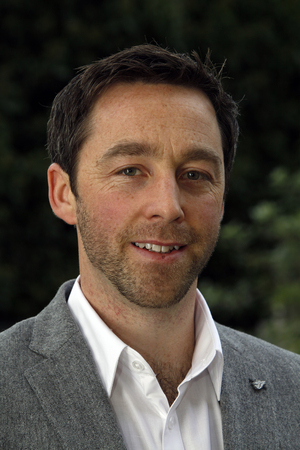
From top: Michael McDowell launching his successful Seanad campaign at the Royal Irish Academy last month; Dr Rory Hearne
Politicians might publicly agree with Seanad reform yet their inaction shows that they want to keep the status quo.
Dr Rory Hearne writes:
Most people do not trust politicians or our political institutions of government like the Dáil and the Seanad.
Too many unfilfilled promises, a consistent failure to deal with the key issues affecting people, cronyism, corruption and a failure to respect ordinary people’s wishes and concerns have left people cynical and tired of politics.
This is a major problem for our democracy which is founded on the principle of ‘rule by the people and for the people’ – all the people and not just the elite, wealthy and insiders.
Take the Seanad, for example. The Seanad is the second most important institution in our democracy, next to the Dail. It is the upper house of the Oireachtas (the Irish legislature or houses of parliament).
It does not have anything like the powers of the Dáil but Senators are part of the important ‘watchdog’ Dail committees that investigate various issues and hold state and other authorities to account, like for example the recently formed housing and homeless committee.
The Seanad can also delay laws and propose amendments to laws.
Yet only a tiny proportion of our population can vote to elect Senators. Of the 60 seats in the Seanad, the Taoiseach appoints 11 Senators, three Senators are elected from registered NUI graduates, three Senators are elected from registered Trinity graduates and the remaining 46 are elected on various ‘panels’ from local councillors, TDs and Senators.
Last week the election was held for 49 of the 60 senators. Understandably given the lack of ability of people to vote in it, it received little attention. It was unfortunate though that there was not more critical analysis by the media of this undemocratic and elitist process.
We had a referendum on the Seanad in 2013. Remember? And a majority of Irish people voted to retain it and not to abolish it. They gave a clear message that they wanted it reformed to be given more powers and for all citizens to have a vote rather than abolished.
Furthermore, an all party Oireachtas working group on Seanad Reform 2015 concluded that
“a parliamentary assembly such as Seanad Éireann whose electoral system excluded the majority of its citizens from participation lacked popular legitimacy”
They recommended opening it up to all citizens to vote.
So why has it not been reformed and why have all citizens not yet being given a vote in the Seanad Elections?
From my recent experience as a candidate in the Seanad NUI colleges election the only conclusion I can draw is that the current system suits those in power and the traditional establishment parties.
They might publicly agree with reform and opening it up to make it democratic for all citizens yet their inaction shows that they want to keep the status quo. Of course it suits them – a new Taoiseach can use the existing system to appoint almost a fifth of all new Senators.
Shamefully it has been used by some failed politicians who actually campaigned against the Seanad as a route to re-election.
Unfortunately I was unsuccessful in my bid this time for election to the Seanad on the NUI panel. After getting 837 first pref votes (11 out of 30 candidates) I was eliminated on the 21st count with a final tally of 1451 votes. Former PD and long time supporter of inequality – Michael McDowell got elected as did the right wing conservative Ronán Mullen.
That these two topped the poll says a lot about those who voted in the election – a bastion of conservative views.
It also points to a major flaw when only a third of NUI graduates are actually on the electoral register and then only a third of those on the register actually voted!
So in the end only 10% of NUI graduates actually voted in the election.
Thankfully, the excellent progressive community activist Lynn Ruane got elected on the Trinity Panel while Alice Mary Higgins was elected on the NUI Panel. I know they will both be strong voices for social justice and equality in the Seanad.
While I was very disappointed not to get elected I am proud of how I used my campaign to raise some of the key social crises that are affecting people in this country – like the scandal that 1,900 children are homeless, rents are unaffordable for many, 138000 children are in poverty, almost 60% of lone parents and their children suffer deprivation.
I decided to run late in the game and I also had to balance running the campaign with looking after a very young family and a full time job. It’s clear to me that if you are going to successfully run for election then you need to have a lot more resources, people and time for your campaign.
Either way I will continue in whatever ways I can to raise these issues and develop solutions that can make Ireland the best country in the world in which to be a child, to have a family, to grow old in – the best country in which every person is valued equally and can live with dignity and flourish to their best potential.
Its a long road ahead but I know that a majority of us in this country want to bring about a Republic of Social Justice and Equality.
Finally, we clearly do not have a true democracy when the right to vote for representatives in our second house of parliament is restricted to a tiny proportion of the population. Another issue is citizen’s initiated referendums – which I will come back to again.
Before the next election our politicians and new government should demonstrate their genuine commitment to democracy
Providing for free and fair elections to the Seanad where the franchise (entitlement to vote) is extended to all Irish citizens over 18 including Irish citizens in Northern Ireland and to holders of Irish passports living overseas
A majority of Seanad seats to be elected by popular vote on the principle of one person one vote
Strengthen the powers of the Seanad to scrutinise, amend, and initiate legislation
Introduce citizen-initiated referendums
And we can judge the commitment to starting this process of real reform and democracy in how Enda Kenny uses his power (assuming he is re-elected as Taoiseach) in the next few weeks to appoint 11 new Senators.
Will he use it for patronage and reward for loyal Fine Gael servants or will he take a bold step and appoint diverse voices who represent the most marginalised in our society?
Voices for those with a disability (Tom Clonan?), Travellers (Brigid Quilligan?), the homeless (Peter McVerry or Erica Fleming?), marginalised communities (Rita Fagan or John Bissett?).
I won’t be holding my breath on this one….
Dr Rory Hearne is a policy analyst, academc, social justice campaigner. He writes here in a personal capacity. Follow Rory on Twitter: @roryhearne
Rollingnews