

The stock image which has sold for €1million
A chap took a snap of a spud,
And a businessman thought it so good,
That right there, in a trice,
He paid a high price,
And you know that you would, if you could.
John Moynes
Pic: Kevin Abosch



The stock image which has sold for €1million
A chap took a snap of a spud,
And a businessman thought it so good,
That right there, in a trice,
He paid a high price,
And you know that you would, if you could.
John Moynes
Pic: Kevin Abosch
Don’t make unnecessary journeys! Salthill car park this morning! @TeresaMannion @galwayad @CTribune @GalwayHour Met Éireann National Weather Warningspic.twitter.com/74vhBqALW8
— PictureDiaryGalway (@PicDiaryGalway) January 26, 2016
Gulp.


By Darren Lynch (25/01/16)


MORE to folly
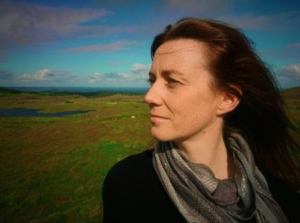
Fiona Kennedy
Fiona Kennedy lives in Connemara, Co. Galway. She has clinical depression and borderline personality disorder.
She writes:
I am so angry right now I am literally shaking. I probably shouldn’t write when I’m this wound-up, but I have to do something because I cannot carry this anger around for the day, not on top of all the other emotion that’s currently going on.
I have been banging my head off a brick wall, metaphorically and at times literally, for months now. The last week has been horrendous. I went to my doctor yesterday because I had to talk to someone and I had literally nowhere else to go. There was nothing he could say, nothing he could do, other than give me space to vent and try and chase the hospital to get a definite answer on dbt for me.
My husband is scared, and worn out. There’s only so many times he’s going to be able to talk me down off a ledge before he cracks too. My parents have been on the receiving end of more than one distress call. My friends don’t believe me when I tell them I’m going home. I have told my psychiatrist I want to be dead. I’ve told my doctor. For fuck sake, I’ve called my husband at work and told him. How is this fair? How have we been left in this situation? I drafted a piece the other day which I had hoped to get published but no one is biting, so here it is. I would be grateful if you could share this as far as you can, because enough is enough.
I do not deserve to be treated like this. My family do not deserve to be treated like this. My friends should not have to pick up the pieces, over and over and over again. I need my life back. But I cannot do it alone. We cannot do it alone. None of you should have to do it alone either.
We are making huge progress as a society when it comes to talking about mental health, huge. Slowly but surely, the stigma that surrounds it is being chipped away.
There are several well-established national campaigns encouraging people to talk, and these are getting a bigger response year on year. It’s fantastic to see. So where’s the caveat? I write from my own experience. I’m not a mental health professional, but I’ve spent years in the public mental healthcare system in Ireland, and that is where the caveat comes in. No more than any other illness, there are varying degrees of severity when it comes to mental illness, and I think that’s where the problems arise.
Yes, it’s ok to ask for help. Seeking support is the first step towards addressing any mental health difficulty. But what about when that help is not forthcoming? What about when a call to a helpline, or a trip to the GP, is not enough? What about when professional support is needed?
The barriers are immense. First, there’s the cost. Let’s suppose I don’t need psychiatric support, but I very much need to speak to a therapist. However, I’m on a low income. Barrier number 1. I need therapy, but unless I can access a low cost service (which may still be too expensive depending on the scale they use) it’s not an option that’s open to me, so I’ve to find a way to manage on my own.
The impact that this can potentially have is far reaching. I may find myself unable to work, further compounding the financial situation and increasing the stress, which in itself has a knock-on effect on whatever the original issue was… you can see how quickly this can spiral out of control.
Let’s take it a step further. I’ve been to my GP, I’ve been fortunate enough to access therapy, but the situation still isn’t improving. I need psychiatric assessment. Barrier number 2. I have two choices – take my chances with the public system, or pay to see someone privately.
Going privately was never an option for me, so I can tell you about the public system. In the first instance, unless there’s an emergency trip to A&E, it will most likely involve a lengthy wait, and once I get in, I will be seen by a consultant.
Thereafter, I will be seen by a member of the team working under said consultant. The lack of continuity that goes hand-in-hand with this approach – new doctors at almost every appointment, trying to explain the same issues over and over again, varying opinions – is heartbreakingly frustrating.
I’m lucky that in recent months I’ve seen my consultant at every appointment for which I’m ridiculously grateful but, prior to this, there were years of rotating doctors asking me to rate my mood over the previous number of months on a scale of 1 to 10.
Given that my mood can shift dramatically a number of times in any single day, that’s a question that’s both impossible to answer and profoundly unhelpful. Again, I must emphasise that I’m writing from my own experience, and I’m at the more severe end of the scale in terms of mental illness. But, I’m far from being the only one.
Barrier number 3. Private therapy isn’t an option. I’ve made it through psychiatric assessment and a very specific form of therapy is recommended. But, there’s a waiting list. A lengthy one, with no guarantee of when a place will be available.
So what do I do in the meantime? I dig in. I hang on. I have no one left to tell that I’m not ok, because I’ve followed every avenue that I can. My bad days are horrendous. My bad days I quite literally fight for my life.
Yet I’m aware that I’m still one of the lucky ones. I have good friends, and a loving, supportive family who do the very best they can for me, but it’s not enough. More than that, it’s not fair to expect that to be enough. I don’t want to detract from the incredible work that is being done to get people talking about mental health. It’s absolutely vital, and I’m confident countless lives will change for the better because of it. It’s ok not to be ok?
Of course! It’s OK to ask for help? Undoubtedly, and it is 110% the right thing to do. It does somewhat work on the assumption that help is both available and accessible though. That’s the caveat right there. From my perspective at least, it’s quite a big one.
Fiona is an Ambassador for See Change, a national movement that tries to improve attitudes towards people with mental health issues.
It’s OK not to be OK? Sure. With a huge caveat (Sunny spells and scattered showers, Fiona Kennedy)
Saturday: Turned Away

Lenny Abrahamson
Lenny Abrahamson, the Academy Award-nominated director of ROOM, will be honored at the Oscar Wilde Awards on 25 February. The US-Ireland Alliance event is held at J.J. Abrams’ Bad Robot production company in Santa Monica.
Also being honored are Irish actress Sarah Greene, Snow Patrol, James Corden and Daisy Ridley, the star of Star Wars: The Force Awakens. Abrams will emcee. Snow Patrol and up-and-coming Irish singer, Roísín O, will perform.
Oscar nominee Lenny Abrahamson to be honored at Oscar Wilde Awards
Thanks Buzz

SPLUTTER!
Rose writes:
Hmm…..I don’t think they’re four of the best animal print cushions at all.


