



Yearly Archives: 2019

Planning permission for the Plastic Factory in Skibbereen has been quashed today by High Court Order : 30th July 2019 #Skibbereen #WestCork #Cork #Irelandhttps://t.co/zLN2ghDXaJ
— Save Our Skibbereen (@SOSkibbereen) July 30, 2019
Yay.
More as we get it.
Previously Dan Boyle; Revenge For Skibbereen



This morning/afternoon.
The corner of Harcourt Road and Richmond Street South, Dublin 2
Artist Alan O’Regan writes:
I just finished this Dublin Canvas box (with the help of my girlfriend)… I was going for a positive message among all the negative news we hear daily.
In fairness.
Pics: Daycent Exposures
Previously: The Canvas Can Do Miracles


This morning.
The plinth, Leinster House, Dublin 2.
Sinn Féin spokesperson on Communications, Climate Action and the Environment, David Cullinane TD launches a discussion document looking at the “possibilities and practicalities of bringing domestic waste collection back into the control of local authorities”.
Finally.
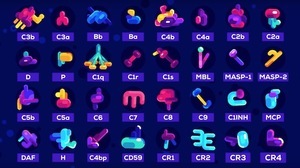

Another fascinating animation from German educational design studio Kurzgesagt. In this instalment, the Complement System. To wit:
An army of millions and trillions of tiny bombs, which work together in a complex and elegant dance to stop intruders in your body.
Previously: Electromagnetic Pollution
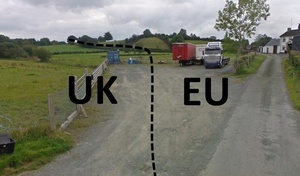

Boris Johnson (right), then UK Foreign Secretary, with Simon Coveney at the Department of Foreign Affairs and Trade in Dublin, November, 2017; Derek Mooney
This day last week Boris Johnson became the new leader of the Tory party. Profiling him here I described Johnson as the incoming Prime Minister of the slowly disunifying United Kingdom.
A few days later the SNP leader at Westminster, Ian Blackford MP, described Johnson in even starker and bleaker terms hailing him as the last Prime Minister of the United Kingdom.
Comments over the last few days suggest that Blackford may well be close to the truth. Last I hoped that Johnson might use his admiration for Churchillian rhetoric to define – for the first time ever – what Brexit means.
Johnson had a very small window in which to set out a deliverable form of Brexit and give Britain a transition period during which it could have the best of both worlds.
Within minutes of stepping into Number 10 he made clear that he was not merely going to reject that opportunity, he was going to go the other way.
He chose to fill his Cabinet to overflowing with hard-line vote leave ministers and advisers from the Vote-Leave campaign, as if the three years since the referendum had not happened.
Here, at last, was the vote leave government that his brilliantly botched bid for leadership failed to deliver when Cameron quit as Tory leader three years ago.
The problem is that a lot has happened in the intervening three years.
Not that you’d know this from his comments since taking office.
In his first statement to the House of Commons last Thursday, Prime Minister Johnson not only said that he was making the abolition of the backstop as a full pre-condition for any discussions with the EU, he also gave an insight into how he saw relations between the EU and UK in the future. He said that he hoped for
“…a friendly and constructive relationship, as constitutional equals and as friend and partners in facing the challenges that lie ahead.”
The phrase “constitutional equals” is significant and has been since repeated in other guises, including on his trip to Scotland yesterday when he told reporters that:
“they [the EU] understand that the UK and the EU are two great political entities and it is possible for us to come up with a new deal that will be to the benefit of both sides”.
All of this echoes something I wrote here almost two years ago. In September 2017 I posited the view that:
The Tories want a new arrangement where the UK is the equal of the rest of EU 27-member states put together. The Tories ideal post Brexit outcome is an open marriage… so the groom can have a few external relationships with former conquests such as India and Malaysia.
Harsh political and economic realities soon disabused Prime Minister May and her succession of Brexit Ministers of the viability of such a notion, but without much cost to the UK. Boris Johnson will not have that luxury.
Johnson’s view of the EU and UK as equals has echoes of Churchill’s post WWII world view. Fresh from the Allies victory over the Axis, Churchill saw the UK at the centre of three global circles of influence.
Circle number one was the Commonwealth, circle number two was the US, Canada etc (the English-speaking world), circle three was Europe… though Churchill chose to describe it as “United Europe”, a point entirely lost on Johnson.
While Churchill may have seen Britain at the centre of world power, others didn’t, not least the United States whose attitude was best summed up in the withering comment delivered in 1962 by Dean Acheson, a former US Secretary of State:
“Great Britain has lost an empire and has not yet found a role”.
Churchill’s ideal was a very 19th century view of global relations – the old spheres of influence – but it can at least be excused as post WWII rhetoric.
But just as it was demolished by the realities of late 1940s and early 1950s, so too will Johnson’s dreams of some Empire 2.0 fall apart at it first experience of reality.
Several things are clear now as we face into a very turbulent and torrid couple of months.
Number one: Boris Johnson’s cabinet has no intention of governing – it is only there to campaign in an election. Johnson is not extemporising he is working to a detailed, pre-ordained strategy. His jibes and provocations are deliberate and designed to enable him to have an early election.
He wants to enter that campaign portraying himself as a modern-day Churchill, standing alone with the British public and fighting against the EU and a weak-kneed House of Commons to deliver Brexit on October 31st.
Britain’s fixed term parliament act denies him the power to simply go to the public, therefore he must engineer a collapse via votes of no confidence so he can have an election, roll over Farage’s Brexit party, cull dissenting Tories and – all things going to Dominic Cumming’s plan – end up with a parliamentary majority of committed Tory leavers and no dependence on the DUP.
Number Two: There is no such thing as a no Deal Brexit. Even if Britain crashes out of the EU on the 31st of October, at some point in the future – whether it be weeks, months or years, the UK will need some form of deal with the EU.
This is important to us not just because we will want to see a deal, but also because we will have a full veto on any such a deal, as do each of the other 26 member states. The UK will be in an even more disadvantageous position than it is now.
This is a point made in the retweet by the former UK minister David Lidington of a Twitter thread highlighting the many wins for the UK in the Withdrawal Agreement that Johnson now junks, including:
Nick Gutteridge The UK-wide backstop also sets a precedent ahead of future trade talks by giving Britain that quite significant quota and tariff free access to the EU market before negotiations have even begun. As one official put it they see it as ‘a kind of gift from the EU’ in that regard.
Number three: though Johnson says he is steadfastly committed to the Good Friday Agreement, an Oct 31st crash out will likely herald the imposition of direct role in Northern Ireland. The UK Institute for Government warns about this in a recent paper saying that:
“…the government might decide to leave the bill until 1 November and rush it through all stages as a response to the ‘emergency’ in Northern Ireland. That would further undermine confidence and add to uncertainty at what will already be a tense time.”
Finally, Number Four: Brexit was, is and remains a British demand. Britain is asking the EU27 to facilitate its democratic and legitimate exit from the EU, and this it has attempted to do by negotiating a Withdrawal Agreement.
The UK cannot however expect the EU27 to shield and protect it from the consequences of its own actions. Though Johnson may talk and posture as if he has just mounted a coup d’état there has been no change of government in the United Kingdom.
There was no election. Johnson has no mandate and the current British Parliament may be about to make this clear to him.
The idea, therefore, that we urge the EU to capitulate on the Backstop is not merely short sighted, it is politically illiterate. What do we gain by handing an election win to a man and a government who have no regard for how badly any form of Brexit impacts us?
It is galling to watch Brexiteers attacking Ireland using quotes from political pundits and commentators here.
You don’t have to go back through too many of my columns here to see that I have almost no regard for the political abilities of the Taoiseach or his ministers, however on the Backstop the government is right as are the main opposition parties.
Britain is about to enter one of the most divisive and bitter periods in its recent existence. We cannot simply stand by and watch as Johnson torches the neighbourhood in pursuit of a parliamentary majority but we must be measured and smart and must not add fuel to the flames that Johnson fans.
While some around the Taoiseach may see the current turmoil as a way of regaining for Leo the Brexit poll bounce he once had, they would be making the biggest mistake they have ever made.
Derek Mooney is a communications and public affairs consultant. He previously served as a Ministerial Adviser to the Fianna Fáil-led government 2004 – 2010. Follow Derek on Twitter: @dsmooney

Amber Gill and Limerick’s Greg O’Shea on ITV’s Love Island
Even better, Greg seemed to genuinely like and respect Amber, with no ulterior motives lurking in the background. They appeared to have a laugh, and humour is a rare enough thing in the Majorcan villa.
If you reckoned Love Island was an unending succession of women calling out men for not treating them the way they deserved, you’d be dead right. Yet Greg was above all of this. He was himself, quietly self-possessed, with no need to showboat. Your mammy would love him.
And who doesn’t love a Mammy’s boy?
*crickets*
*tumbleweed*
*looks at watch*
Anyone?
Pic: ITV

Minister for Finance and Public Expenditure & Reform Paschal Donohoe and NAMA Chairman Frank Daly at the launch last April of NAMA’s Annual Report and Financial Statements for 2018.
Irish Tax Payer writes:
A number of news reports have declared that NAMA is on on track to achieve its overall objectives and is estimated to return a €3.5bn profit to the exchequer.
Ignoring the obvious questions of whether the €3.5bn is really a profit, when it won’t come close to recovering the €74bn nominal value of the loans. Or whether NAMA’s ‘objectives’ actually contributed to the current rental and housing crises we are experiencing.
Instead let’s look at the “return” NAMA is making.
If we take it at face value that it will generate a profit of €3.5bn over its initial €32bn investment, that is an 11% return.
Not bad, right?
Or is it?
Nama was set up in 2009, so that’s only 1.1% return a year. Not great.
How about the private investors that purchased the assets from NAMA, how are they getting on?
Homebuilder Glenveagh Properties PLC, has a gross margin of 18.2%. The company is targeting a 20% margin in 2020.
Cairn Homes the listed housebuilder’s operating profits surged by 267% in 2018.
Profits at Pepper, the loan servicing company, were in excess of €16m for 2018 which was up 186% from €5.6m a year earlier.
And finally figures published by the Government’s show that the dividends paid by the four listed REITs (Green, Hibernia, Yew Grove and Irish Residential Properties I-Res) grew to €93.49 million last year from €9.95 million in 2015, a TENFOLD increase in four years.
Doesn’t look so impressive now?
Fight!
Tooled Up
at


Yesterday.
Harcourt Street, Dublin 2.
Members of the Armed Response Unit, ahead of a briefing media in relation to organised crime. Gardai also displayed a selection of weapons seized since the establishment of the Garda National Drugs and Organised Crime Bureau (March 2015).
Name those ‘pieces’, anyone?