

Previously: Today



Snail slime in Thailand sold as anti-aging serum can fetch up to $58,200 per kilo
The mucus that comes from a snail
Is something they reckon can’t fail
To make your skin glow
Does it work? I don’t know
But it fetches a nice price on sale
John Moynes
Pic: AFP











MORE to folly
— Eoghan Murphy (@MurphyEoghan) July 19, 2019
Earlier…

Good times.
Murphy rows back on claim co-living spaces are like ‘trendy boutique hotels’ (Newstalk)


Already underway.
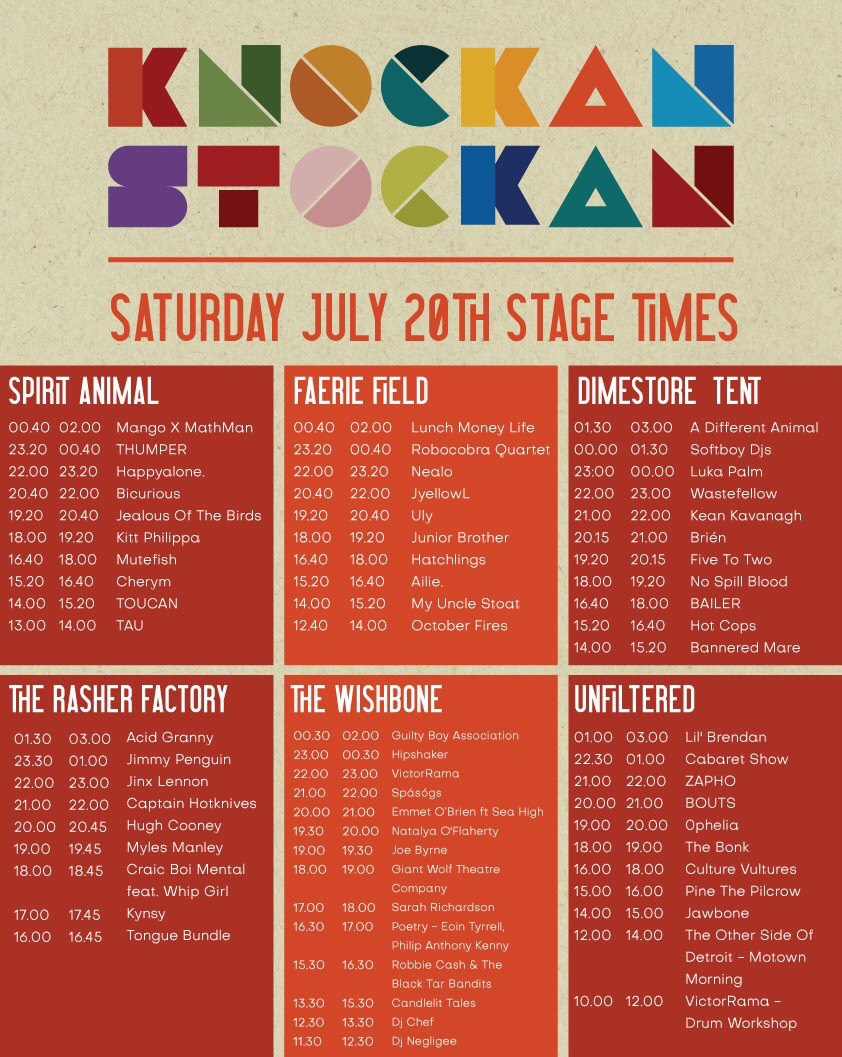
The final line-ups for this weekend’s KnockanStockan festival beside the Blessington lakes [County Wicklow] have been announced (see above).
See you in the Rasher Factory?
Meanwhiile…
Further to our competition for two FREE camping tickets to KnockanStockan and the announcement of a winner this morning.
Aptly-named Good Seed PR have made use of a SECOND pair of tickets to runner up Dillon Quinn, who melted hearts with this entry:
My favourite festival experience was dressing two girls in my own designs at Body & Soul this year for their own sustainable fashion talk at The Living Lab. It was a dream to see my work showcased at such a big festival & the talk was excellent! Really added a highlight to my festival weekend & that evening I seaw my favorite rapper Cupcakke!!!! How can I top that festival? Maybe at Knockanstockan ;) I know I won’t forget it!
Thanks all.
Earlier: KnockanStockan Winner

A curved stick and pebble (ball 🙂) game from Serbia. More about the development of various stick and ball games in Europe and why I think they all have the same Gaelic root can be found here: https://t.co/pLj7YfeVit @MagicalEurope @FolkloreThurs @FolkloreThurs @officialgaa pic.twitter.com/J6OBwMjzSo
— oldeuropeanculture (@serbiaireland) July 19, 2019
What is very interesting is that that the Serbian name for this traditional shepherd game is “klis”. This word has no meaning in Slavic languages, means “games, sports, tricks, crafts” in Gaelic.
How old is this word?
According to official history, Celtic languages were last time spoken in the Balkans in the 4th and 3rd century BC when Celts invaded Balkans on their way to Galatia.
Did they bring this game with them and somehow both the game and the name survived in the mountain of the Balkans until this day? Preserved by the descendant of the Scordisci?
Is this why there are so many similarities between Serbian and Irish folklore? You can read more about this in my post “Klis” here.