[soundcloud url=”https://api.soundcloud.com/tracks/301054963″ params=”auto_play=false&hide_related=false&show_comments=true&show_user=true&show_reposts=false&visual=true” width=”100%” height=”450″ iframe=”true” /]
Yesterday evening.
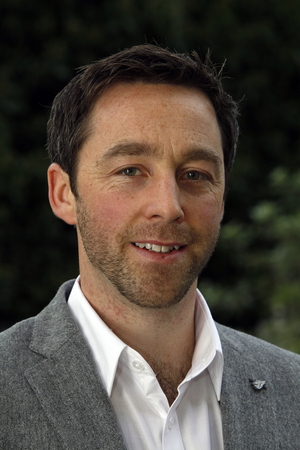
Culture editor of The Irish Times Hugh Linehan interviewed the newspaper’s Opinion Editor John McManus (above centre, with editor of The Irish Times Kevin O’Sullivan, left, and KPMG managing partner Shaun Murphy at the launch of a magazine in 2013) for his Inside Story podcast.
It following Wednesday’s publication of Nicholas Pell’s ‘glossary of terms’ article and the reaction to the same.
From the interview…
Hugh Linehan: “This week, The Irish Times has come under strong criticism for a sympathetic piece it published about the American so-called alt-right. The article by Irish-based American journalist Nicholas Pell claimed to offer a glossary of terms – some of them racist and misogynistic which are used by followers of that amorphous far-right movement that has grown over the last few years to become a very significant element in the success of Donald Trump. I talked to our opinion editor John McManus about how and why an article of this sort gets published and about his response to the criticism of The Irish Times‘s decision to go ahead with it.”
“John, thanks very much for joining us today. You’re the opinion editor and I wanted to get a sense, first of all, before we got into the nitty gritty of this particular subject of what your day-to-day job involves?”
John McManus: “Well, I suppose the way to answer that is what the purpose of the opinion pages are. We see them as a space in which we will carry pieces that will inform people, challenge people, give them something to think about. And, over and above that, we believe we have a, part of our job is to provoke debate, encourage debate about matters of public interest. So, with all those three, with all those things in mind, the job basically involves going through a lot of stuff that’s submitted, commissioning stuff and then obviously we have our regular columnists. So, between that mix, you know, what you’re trying to do is achieve those objectives. We’re not holding this stuff out as factual accounts, we’re not holding it out as our opinions either. That’s probably an important point to make. The opinions of the paper are expressed only in the editorial columns.”
Linehan: “And, obviously, in this day and age, the opinion page isn’t restricted to a single page in the dead tree edition, there’s also the digital output as well. So, the opinion pages online also…”
McManus: “Yeah, it’s a vertical on the website.”
Linehan: “So, if you’re commissioning then now, does that mean, I know some readers have asked me this in the past, you know, how is a decision made and is the process different of commissioning something which is purely for online. Obviously everything that goes into print, I think I’m right in saying also ends up having an online life as well but, increasingly, you’d be commissioning pieces which end up just online.”
McManus: “Yes, we are, no, the same basic rubric applies. But we have more space, obviously, on the website so that’s why you get pieces on the website that don’t appear in the paper. What we…”
Linehan: “Is there a quality issue? Is their a first division? Second division thing? That things go to print, if they’re deemed good enough or is it different type of content at times?”
McManus: “No, the quality is the same. Perhaps you’d be conscious, you might have a different audience in print as online and you might put a piece in print for that reason. It might appeal to that audience more than the online audience.”
Linehan: “And would you be mostly working with, obviously, as you said, you have your regular contributors, daily columnists and so on, would you generally be working with a pool of people who you would have an ongoing working relationship with or do you take pieces on spec much?”
McManus: “We have our columnists, outside of that, a pool of writers who we would go to because we know they would be experts on a particular area or have a good insight into it. And then, beyond that, we’d get a lot of submissions from a lot of people and we go through them and treat them on merit and, you know, if it chimes with something we think is interesting and that people would want to read about, and it’s well written, then we’ll publish it.”
Linehan: “Which brings me to the Nicholas Pell piece which has caused such controversy over the past 24 hours or so, how did that piece come about?”
McManus: “That was a submission from Nicholas Pell that came in earlier this week and I had a read of it and, you know, I thought it met the criteria that I just set out, you know, it was about a topical issue. It was, it informed people. I mean, at a minimum, you came away from it understanding the language that this sort of alternative right conservative movement in the US uses and, at best, you would, it gave you a pretty good insight into the way their minds work and the ideology they espouse. And the public interest argument is pretty clear because, if you like, the poster boy of this movement, the founder of Breitbart, he’s going to take up a job in the Donald Trump administration. They are a real force in American politics. And I don’t think, to pretend they don’t exist or just not, deciding they’re too obnoxious to be debated with is…”
Linehan: “I suppose there are two separate points to that. I mean I think, clearly, we would all, we would all agree that pretending that something, something which is clearly a rising political phenomenon doesn’t exist isn’t really an option. The piece itself I think, one of the things that people took exception to was that, it certainly seemed to me reading it, the piece itself, was in a jocular fashion, quite sympathetic to the beliefs and, you know, aims of the alt-right movement which is, to describe it as, thinly veiled fascism is not that far from the truth, in some respects.”
McManus: “No, far from it, and some of them would even celebrate being described as such. Yeah, that’s a valid criticism but you’re never going to get the exact, perfect piece you want. And, you know, this piece came along and it was a, you know, it, by publishing it, we’ve served to get this debate going and I think that, you know, the response that we’ve had confirms that this is something that people have very strong views on. You know, it’s not as if we’ve done just a one stop shop, we’ll be having, we’ve a piece lined up for tomorrow hopefully, giving the other alternative view. I’m sure there’s going to be an awful lot of letters. There’s been a huge amount of comment online. So, you know, we’ve done our job in a way, we’ve surfaced this issue, we’re going to…”
Linehan: “I suppose, some of the criticism and…from all kinds of people, I noticed, I just picked up on a couple of them that were interesting to look at. One was Colm O’Gorman, of Amnesty Ireland, and he pointed to an article on the same subject really which The Economist published a few months ago, back in September. I read it, went through the link, it was a well-written, fairly, you know, very objective piece but it contained all the information and more, I suppose, that was in the piece in The Irish Times but did not come across as an apologia for views which many people consider outside the pale, which is the criticism of the piece which we published.”
McManus: “Well, I mean, people are going to feel like they feel and, you know, there’s no point not acknowledging that we’ve offended some people but the point is that was not our objective. What we were trying to do is, it was a piece that gets this issue ventilated and you can argue about the tone but fundamentally, you know, it wasn’t, I’d be amazed if anybody came away from reading that piece thinking ‘these are good guys, I really like what they’re doing’. You know, to a certain extent, we let them hang themselves.”
Linehan: “Well some people did because I actually…I noticed, I mean I was looking at Nicholas Pell’s Twitterfeed for example and he was retweeting comments by people who clearly identified with out-and-out fascist organisations who were expressing pleasure at the fact that these views and some of the expressions were appearing for the first time in mainstream Irish media, which had never happened previously.”
McManus: “Yeah, but they’re going to appear in mainstream Irish media. You go and Google any of those words and they’re, you know, they’re out there now but that’s, you know, not even…”
Linehan: “But isn’t this part of the criticism of Liam Hogan, who’s written extensively about the conflation of Irish indentured servitude with African American slavery, as a way of undermining the critique of racism in American society. That’s a very long-winded explanation of who he is but he’s a respected scholar in his own right. And he was writing today about this process of what people call normalisation is going on at the moment. Now, obviously, normalisation is a reality because, as you say, some of these ideas have been injected much deeper into the American mainstream than they have been previously and in other countries, too. But is there a responsibility on us not to go along, fully, with such normalisation? I suppose the question is: would an equivalent article been published in The Irish Times ten years ago?”
McManus: “That’s hard to know. And things, the media has changed dramatically. There was no social media, as such, ten years ago but there’s a couple of points there. One is the Irish, sort of, right-wing fascist thing is a niche within a niche within a niche and…”
Linehan: “Well, American fascism as well…”
McManus: “The broader thing is, I suppose, what you’re talking about there, is this whole business of platforms and who you should and shouldn’t give a platform to. You know, we as an organisation don’t subscribe to the…I mean I understand the platforming argument is that the groups that are either so powerful or so controlling, you know, it’s unfair to, they shouldn’t really be allowed access to platforms. We don’t really subscribe to that, we will run pieces by people whom we don’t agree with. We will run pieces that we think may challenge our readers. We think, to a certain extent, our readers want that, they almost expect that of us. I mean, if you look at the abortion debate at the moment, we’ve run trenchant pieces arguing it both ways and they’ve upset people on either side of the argument but, you know, we haven’t had the same level of…”
Linehan: “Is that a valid comparison though? Because the views of the, of the organisation, I’m not even sure if it is an organisation, it’s more of an amorphous thing than that. But the views, the racist, the white nationalist views, the deeply misogynistic views, in some ways, are not, for example, reflected in any way in any elected political body of any consequence that I’m aware of in Ireland. Whereas, in fact, there is a political movement, you know, there are political views on both sides of the equation in the abortion debate, for example.”
“I suppose what I’m trying to get at is if, say that, this is within the boundaries of what The Irish Times thinks is valid, publication of interest and debate, what’s outside the boundaries?”
Silence
McManus: “Well, you know, there’s taste and decency and this piece, we believe, fell, fell on the right side of that and I think it’s, you know, it’s… The point of publishing the piece was that, you know, Donald Trump is going to be in the White House in a few weeks. This movement fed into his election. People who are aligned to this movement are going to in his administration. You want to know…if you don’t know who they are, what they do, you should because they’re going to be a factor. They’re going to be in the news this year. They’re going to be affect how America is run. There’s no point pretending they’re nasty, fringe, marginal people who are just going to go away now. That’s not going to happen. So, unpleasant, disgusting as they are, they’re here. If you’re serious about challenging them, then you want to understand them…”
Linehan: “Accepted but then in covering that, is there a greater than usual, perhaps, imperative on all of us to be careful about who we do get to cover these issues. You know? Because again, this comes back to the criticism of this, this is somebody who has never written for The Irish Times before. I’ve no reason to believe he’s not a perfectly professional individual. His sympathies, it seems to me, are quite clear in terms of the tone and tenor of the article. You know, is that sort of person the right person to cover an area of such sensitivity because, you know, there are serious kind of issues that people might, are personally affronted by this subject.”
McManus: “Well, that’s a risk, like I said, if we offended people, that wasn’t the objective but I suppose you could argue if we had got one of our writers there, if I’d suggested to one of our columnists ‘why don’t you write a piece about this alt-right movement’, they would have written a fine piece but you probably would have come away from it thinking, like I said, that’s a nasty fringe movement that shouldn’t be taken seriously. You know, which would be, a lot of Irish Times readers would be comfortable with that because it would reinforce their views and this piece doesn’t. So, it’s offended some people, that’s never the objective but it’s probably shaken a few other people out of a certain complacency about it and this consensus that, you know, that they can be ignored or shouted down.”
Linehan: “I suppose one of the things that strikes me about that is we’re talking about this in the context of a way of thinking about journalism, in particular, which is rooted, to be honest, in the printed newspaper and the idea of the opinion page. That these things play very differently in the digital space and the social media sharing space and that, in particular, with a piece of writing of this sort..I went searching around a bit, around about the writer, Nicholas Pell. He actually wrote a piece, quite an interesting piece actually, about how you can learn to get paid for trolling online. And he goes into some detail about what he’s learned about getting paid for trolling online. And a lot of the criticism in the last few hours of this piece is that this is The Irish Times engaging in the lowest form of trolling. I’ve, myself, written a few pieces over the last couple of months about this whole issue about fake news. Reading the piece, it’s not a million miles away from what those Macedonian teenagers were doing in Veles and making money out of it on Facebook.”
McManus: “I don’t think so, I mean he hasn’t said anything, he hasn’t made anything up there which I think is the definition of fake news. It’s clearly…”
Linehan: “Actually one of the points he makes about effective trolling is, always make sure everything’s true. It’s an interesting piece actually.”
McManus: “Social media is very fickle. You know, it’s a very quiet day, in the start of January, everyone is going beserk about this particular piece. I don’t think it’s going to be remembered as one of the stories of 2017 particularly. I think, people having a great, good, strong, robust debate going on…”
Linehan: “There’s one particular phrase in this glossary of alt-right phrases. And it says ‘dindu od dindu nuffin’ and that’s described as ‘A black man convicted of a crime, often one lionized by the press or portrayed as innocent. An attempt to approximate the African-American vernacular English pronunciation of “didn’t do anything” (“dindu nuffin”).’ Now I look out the window, at the sea of white faces here in The Irish Times and I’d say if I was a person of colour, I would say that is a racist statement published by an almost exclusively white media organisation.”
McManus: “You would and we thought about whether or not to include it and took the view that, you know, if you’re going to, if what you’re setting out to do is provide a lexicon of these people’s language, this is what they mean when you read that word, that’s what they mean. Then…”
Linehan: “Would you do the same with an anti-semitic phrase?”
McManus: “Well, it’s all about context isn’t it? I suppose if there was an equivalent context perhaps yeah, and this is one of those… it’s..”
Linehan: “I suppose really..”
McManus: “That’s the, that was the question for us really about this piece was, you know, we know what we’re about and we…but you know this piece was practically at the edge of what we considered acceptable for publication. And we, I took the view that it was acceptable. And I thought there was good grounds for publishing it because, you know, if nothing else, you can say it’s worked. We’re having, there’s a big debate going on now about these people and their language and perhaps it’s, people are going to realise that they’re real. You know I keep going back to the fact that they’re connected to the Trump administration and, you know, if you’ve read that piece, you now know more about them and what they’re about.”
Linehan: “And was this the best way to do that? I suppose, I’ll just ask, I mean just to wrap it up, the conflation of the issues we’ve gone through here, that you had a, you had a writer who, we didn’t really know who he was..would you have…is that fair to say? You know, we’re not really familiar with him..”
McManus: “He’s never written for us before but…”
Linehan: “So, you’ve a writer that hasn’t written for us before at all, writing on a subject of which I think, we can all agree, is a very sensitive subject in terms of some of the issues, in terms of…writing about that subject from a point of view of sympathy, I would say, to views which the majority of people in this country would find reprehensible. And, in the course of doing that, using objectionable racist hate speech.”
McManus: “Well, that’s the criticism of the piece. They’re the counter arguments which, you know, I’ve been through, are that only on balance… it was worth publishing and I suppose there is a certain…”
Linehan: “You don’t feel at all that, you know, this is an imperfect trade that we work in, we all make mistakes and god knows, I’ve made plenty of them along the way and you wouldn’t be a journalist if you didn’t make mistakes sometimes, that sometimes, you know, that in a context like this, there’s not some element of it that you’d be prepared to acknowledge, in retrospect maybe, that you might have done it somewhat differently?”
McManus: “Well we’re not in the business of offending people, it sounds trite but it’s true. So, I suppose, yeah, you, when the dust is settled on this, you know, that’s the thing we need to look at. You know, was it, did we offend more people than we informed? I suppose is how we’ll judge it. And did we offend too many people? Is perhaps the other things we need to get a handle on. I’m not going to get, I’m not going to do that right now.”
Inside Story – Reaction to ‘alt-right’ article (Irish Times)
Previously: To Pell And Back
Everything You Need To Know
Photograph: Irish Times
UPDATE:

A ‘wordle’ of the interview.