

Pictograms scrawled on walls by homeless wanderers and migrant workers for the benefit (and wellbeing) of fellow travellers during the Great Depression in the US.



Pictograms scrawled on walls by homeless wanderers and migrant workers for the benefit (and wellbeing) of fellow travellers during the Great Depression in the US.

The queue to get into Ireland at Dublin Airport on the eve of the same sex marriage referendum in May 2015
Brian Boyd makes some interesting observations on what is referred to as “Generation Snowflake”.
As he points out, it is the prerogative of every generation to look at the generation that succeeds it with an often unjustified sneer of pity and disdain. It was the meat that was dished out to us as teens by the generations that preceded us; and we took in so much of it that we want to impose the feast of our moral superiority on a generation whose only obligation, like the generations that preceded them, is to embrace knowledge and to take delight in their own youth and in the marvellous gift of life.
However, a major social experiment has occurred over the past 20 years that has elicited very little debate. The children coming into adulthood now are the first generation to be shaped by the internet.
Once upon a time our parents were charmed when we invented an imaginary friend; now children can have a thousand imaginary friends and we call it Facebook. Rather than interacting with the rough and tumble of real children, it is easier for children to sit in their rooms and morosely compare the amount of “likes” their picture receives in relation to others whom they can so easily perceive to be more attractive, affluent and intelligent than they.
A teenager won’t burn many calories staring at a screen, nor do they acquire much in the way of life skills. Depression and self-harm are a growing issue among the young. Rather than dealing with the individual when they have the courage to present themselves, or castigating a whole generation as “snowflakes”, we should perhaps ask ourselves how smart is it for adults to hand children smartphones and unrestricted access to the internet.
It is an issue that we need to take seriously, otherwise we may find that these “snowflakes” rapidly accumulate into a blizzard and change, not for the better, the fabric and culture of society.
Kevin Ryan
London.

Sinn Féin spokesman Pearse Doherty
Further to the announcement from Finance Minister Michael Noonan that Ireland must pay an additional €280million to the EU next year – because of the recent GDP growth of 26.3%, as recorded by the Central Statistics Office…
Sinn Féin TD and finance spokesman Pearse Doherty and Stephen Collins, political editor of The Irish Times, spoke on Today with Seán O’Rourke about the development.
Seán O’Rourke: “Pearse Doherty, are you assured by a comment from the Public Expenditure and Reform Minister Paschal Donohoe on Morning Ireland, saying that bill has to be met, as a result of our EU membership, it will not influence the spending plan for Budget 2017.”
Pearse Doherty: “Well, Minister Noonan actually provided me with this figure on Tuesday, €280million additional and made that point that it doesn’t affect our fiscal space. And this is about just how the rules are applied and the fiscal space has been agreed in April and therefore it’s set. It will have an impact next year and that’s where we need to actually tease out how we calculate the fiscal space for next year. But I think there’s a deeper issue here and me in Sinn Féin and myself, in particular, have been challenging the previous government on this, since 2013. Our economic, the way we calculate our economy is absolutely broken, it’s bust in this country. It’s been a way out for quite a long number of years. We all agree that the 26% isn’t real, but neither was the 7% that we were suggesting was happening last year as well because the same type of factors were at play. At a lesser extent.”
“But the fact that we’re actually paying more to the European Union budget as a result of this year isn’t something new. I have figures going back to 2010, as a result of redomiciled plcs – these are companies that were domiciled in Ireland but don’t pay any tax here. And the actual additional contribution that we had to pay to the EU budget every year, because of that average, between €45 and €60million per year. So this is something that’s been going on, over and over again. In 2014, when we started to, we raised our GDP figures because of the activities of illicit trades that’s, you know, prostitution, drug sales and all the rest which gives us a bump in GDP, we actually had to pay €6.5million to the European contribution.”
Meanwhile…

Yesterday.
In the Dáil…
Anti-Austerity Alliance-People Before Profit TD Richard Boyd Barrett raised the €280million bill after he asked why the Government recently opposed an EU proposal to begin country-by-country reporting of corporation tax by large multinational firms.
He was speaking during a debate on corporation tax.
From the debate:
Richard Boyd Barrett: “A few weeks ago, the Government opposed an EU proposal to introduce public country-by- country reporting of corporation tax for large multinational companies on the spurious grounds of subsidiarity. Are we going to bring in public country-by-country reporting ourselves?
Mary Mitchell O’Connor: “Last April, the European Commission adopted a proposal for a directive to introduce public country-by-country reporting of corporation tax by large multinational enterprises.Since then, my Department has been considering the detail of the proposal and consulting with stakeholders. The Department also ran an open consultation in the course of last May. The task of assessing the proposal is continuing and, at EU level, the negotiations have begun. Although they are at an early stage, it is clear that the proposal raises a number of practical, legal and technical issues. These will need to be addressed over the coming months. Until we know the scope and content of any final EU measure, it is too soon to consider national measures on this type of public reporting. However, Ireland is already to the fore in introducing similar reporting obligations for large multinational companies. Under the Finance Act 2015, certain Irish-resident parent companies and subsidiaries of non-Irish companies must file a country-by-country report on tax with the Revenue Commissioners each year. The first of these reports are due to be submitted to the Revenue by the end of next year. Several countries, including the US and all EU member countries, have committed to introducing this form of country-by-country reporting and to sharing the information among their tax authorities.”
Boyd Barrett: “The Minister may have heard this week that we are already paying a big price because of aggressive tax avoidance by multinational corporations. We will have to pay an extra €280 million to the EU this year because of the artificial inflation of the growth figures. Already, even before that, our contribution to the EU is grossly inflated and distorted because it is, in proportion to population, double that of countries such as Portugal and others due to the tax avoidance strategies of multinationals based in this country. It is in our interests to have public country-by-country reporting of the big multinational companies to stop them engaging in aggressive tax avoidance. Yet, incredibly, when offered the opportunity to do that by the European Union, we used the spurious excuse of subsidiarity to reject that proposal. What the Minister seems to be saying is that we cannot do it on our own. I agree with that, but why the hell did we not sign up to a pan-European proposal to do it, instead saying that we could not sign up to it because it infringes our sovereignty? It does not make any sense.”
Mitchell O’Connor: I reject tax avoidance. We cannot do it on our own. If we were to publish the figures the Deputy is referring to, it would allow some companies to gain a possible commercial advantage over others because matters would be deemed to be commercially sensitive. Other jurisdictions might not share the information with us if they knew we were going to publish the reports. It would not help the tax transparency agenda and a system of country-by-country reporting. I cannot do it.
Acting Chairman (Deputy Catherine Connolly): I thank the Minister. That brings Question Time to a close, and we are moving…”
Boyd Barrett: “There are 21 seconds remaining.”
Connolly: “We are moving on. I asked for the Deputy’s co-operation. I have three different clocks here. I am going to move on to Topical Issues.”
Listen back to Today with Seán O’Rourke interview in full here
Dáil transcript via Oireachtas.ie
Previously: How Much?

Same D4ence – new EP released this morning
What you may need to know…
01. Recent featurees in this column, the trio of Size, Hazey and MC B more than merit repeated mention.
02. Following the release of the video for A Beauty Named Shannon, as well as an acapella appearance at The Hip Neck Blues Collective‘s farewell show, the trio release their second EP, Exclamation Marks!, via Limerick hip-hop cornerstone The Unscene.
03. Stream (and download) the EP in its entirety in the widget above. Production from one-man duo Deviant & Naive Ted, and guest appearances from members of trad iconoclasts Lynched and beatmaker Mankyy.
04. A compelling bonus take from the shoot for the Beauty video, a freestyle filmed in an old handball court and making the most of the acoustics there, can be found at the band’s Facebook.
Verdict: A singular, focused slab of eloquent, yet distinctively Limerick-accented hip-hop, that raises the bar that little bit higher.

This morning.
Dublin City University Chief Operations Officer Declan Raftery tweetz:
DCU Bus Stop this morning – the sooner we get Metro North the better!


Aibhín Bray writes:
Hi there, I found a set of keys on the road outside the Dental Hospital in Dublin this morning. I left them in with the lads at the security kiosk in the vehicular entrance to Trinity College Dublin, on Lincoln Place.
There was a tag for 1 Escape health club, and a climbing club. I took a couple of photos before handing them in, but the name isn’t very clear – Laura McGrady I think…
Anyone?
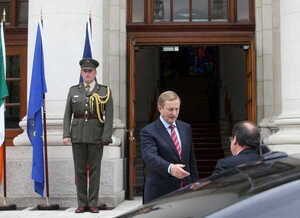

WATCH: François Hollande is greeted by the Taoiseach Enda Kenny as he arrives in Dublin @TodayFMNews pic.twitter.com/YfdZeYQga2
— Helen Vaughan (@HelenVaughan24) July 21, 2016
Bonjour you.
Rollingnews
Meanwhile…


Stop that.
This afternoon.
President Hollande with Sabina Higgins and president Higgins at ther Aras, Phoenix park, Dublin.
Mucky frog.
Rollingnews
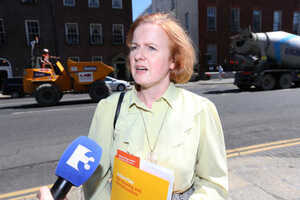
Ruth Coppinger TD
That action plan on housing.
End of local authority housing as we know it, three quarters of council land to be privatised, no challenge to EU rules and rocketing rents to remain.
What’s not to love?
Ruth Coppinger writes:
The government’s Action Plan on Housing sadly repeats the failed focus on incentivising the market through increasing the profit of developers and landlords.
The market caused the crisis, now this neoliberal government turns to it to resolve it.
Given the scale of the housing emergency, the poverty of ambition is startling, considering also the much-lauded economic growth. The aim is to house only one-third of those on current lists by 2021.
Presumably the rest can just wait another 10! The figure of 47,000 ‘social houses’ is a mix of new-builds, refurbishments, acquisitions and leasing, the latter often impermanent. It falls short of even the Housing Committee target and adds on another year.
As I pointed out with the Housing Committee Report, funding and delivery is dependent on keeping within strict EU fiscal rules.
The Plan confesses that while the housing emergency has been raging, the Dept has scandalously spent two years trying to come up with a workable off-balance sheet model to do this.
If implemented, this will mark the end of local authority housing as we know it. Not alone will ‘additional social housing provision (be) a combination of building, acquiring and leasing’, but councils will not be directly funded and allowed to fully build on their own land.
They will be forced to hand over 75% of it to private developers. A new form of housing estate will be created on public lands: only 25% will be council housing and the rest private mortgages and affordable/’cost rental’ where tenants will pay up to 80% of the market rent, rather than a differential rent based on their income.
The key to resolving the housing emergency is to use council and Nama lands, for councils to directly employ labour and build on public lands on a large scale, cutting out the private developers cut (often 11-15% ) and keeping costs down.
The document is laced with stigmatising phrases about council housing, such as ghettoisation and not repeating ‘mistakes of past’.
But if social housing is limited to 25%, we would have to build 560,000 houses to clear the 140,000 on the council’s lists!
Local authority estates can be highly successful if well planned with facilities and open space. The income eligibility could be raised allowing more workers avail of affordable mortgages or council rents.
But there is never a concern for ‘tenure mix’ in Killiney or Malahide.
The real reason for the ‘tenure mix’ is to have a rental funding stream to achieve the neo-liberal ‘off balance sheet’ rule.
For the 6,000 people in emergency accommodation, there is little except more overpriced modular or transient housing. The emphasis is on forcing people onto HAP or private rental, potentially miles away from the family’s choice of area.
Despite the Private Rented Sector being the cause of homelessness, the government promotes it, extolling it’s virtue of supporting “a mobile labour market, as renting households may more easily pursue job opportunities.” It ignores the interests of workers and families who want to live in a fixed community.
Instead of rent controls to stop the huge hikes which are making people homeless, the Plan proposes no measures to curb profiteering on rents, it defends and promotes landlord interests by continuing the use of the private sector as a substitute for public housing, alongside introducing a new range of tax breaks to ‘incentivise’ landlords. No moratorium either on repossessions.
Rather than driving down the cost of housing to affordable levels, a ‘help to buy’ initiative for first time buyers would end up in the pockets of developers.
Michael Noonan told the Housing Committee ‘we do not have a shortage of money’. He is right. €5.4 billion is sitting in the Irish Strategic Investment Fund – the remnants of the pension reserve fund after it bailed out the banks.
But he admitted that EU fiscal rules prevent us actually spending it on public housing. It must be ‘off balance sheet ‘ and involve the private sector or be self financing. The same goes for the €2.4bn cash reserves Nama has left.
Neither do EU fiscal rules prevent taxation on wealth being used to finance housing. So, a millionaire’s tax could be introduced. The headline rate of corporation tax could be immediately imposed and increased to house our homeless.
The government could stop its opposition to Apple repaying €17 billion in back taxes to this country. There is vast untapped and untaxed wealth that could be used to fund affordable and secure home building.
Only a government that is willing to challenge and breach those rules can end our housing emergency.
That government is not this government.
Ruth Coppinger is a member of the Socialist Party and an Anti Austerity Alliance TD for Dublin West. She has occupied Nama housing with homeless families. Ruth is a member of the Housing Committee and has published her own housing Minority Report. Follow Ruth on Twitter: @ruthcoppingertd

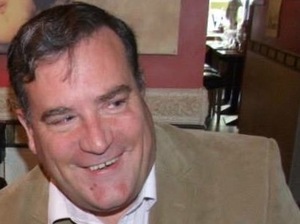
From top: UK Labour Party leader Jermey Corbyn; Dan Boyle
Whoever wins its leadership contest will likely be the last British Labour Party leader as we have known it.
Dan Boyle writes:
The British Labour Party is probably already dead. Its leadership contest is less a battle for the party’s soul than a picking over of its corpse.
The DNA of all political movements contain the genes of their eventual self destruction. With the British Labour Party we are sadly watching these genes take effect.
While most political parties are coalitions, the British Labour Party of today has become the battlefield for competing parties within their party.
The rot set in after the death of the then leader, John Smith, in 1994. In all probability Smith would have won the 1997 election from the centre left, without the Blairite Tory lite makeover that followed.
Tony Blair, in turn, was the most electorally successful Labour leader ever. It was success gained through skilful media management. He possessed a toothy charm, mixed with an eruditeness, and an affectation of managerial competence that persuaded enough of the electorate that he and Labour were electable.
His administrations were not without policy achievements but sadly they were based on policy goals centred on keeping the middle class happy whilst ignoring Labour’s working class support.
Over this hung and will linger the shadow of Iraq. The messianic zeal which Blair pursued his crusade, indifferent to his party, parliament and ultimately the British people, should put pay to his style of politics.
There are those in Labour today who continue to believe otherwise. They style themselves the ‘Progress’ group. Their credo is to never really challenge the status quo, but to gently nudge it towards a preferred change of emphasis.
Its mirror image is the ‘Momentum’ group which sees Jeremy Corbyn as its saviour. This group is clear in what it opposes. In what it opposes there much that many among the general public are also against. Where it falls down is that it is less clear in what it is it proposes.
In Jeremy Corbyn this group seems to have a perfect exponent. To all intents a decent man who is consistent in his beliefs. There is no doubt either that he has been entirely unfairly treated by what passes for a free press in Britain.
Where he has failed and seems unlikely to succeed, is that he lacks genuine leadership ability. He cannot persuade those who do not share his value system nor those who haven’t had his experiences.
The path least travelled by both these parties within this party will continued to be ignored.
The future for socialism and social democracy is not to be compliant nor is it to be dogmatic. Politics does involve compromise but it is on the when not the what. Not the how.
Whoever wins its leadership contest will likely be the last British Labour Party leader as we have known it.
The party has achieved much in its history. There is much that can be celebrated in those achievements. However it is no longer a coherent coalition of interests. Without such coherence it is difficult to see what relevance it will continue to have.
In a country seemingly intent on retreating into a cartoon version of its past as a means of succour, this is tragic.
Europe, as much as the UK, requires a strong, progressive political party in Britain. The difficulty is, like the wise Kerryman giving directions, they shouldn’t be starting from here.
Dan Boyle is a former Green Party TD and Senator. Follow Dan on Twitter: @sendboyle
Pic: Getty


Upcycled mannequin art by Frank O’Dea at Claddagh Pier, Galway – a fringe event at this year’s Galway International Arts Festival which runs until 24th July.
(Thanks Frank)