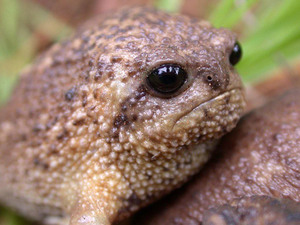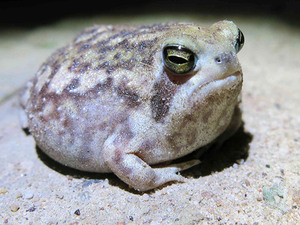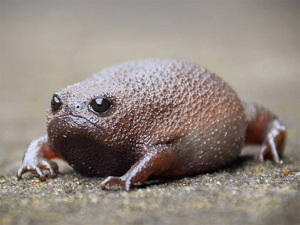


Finally: the Badonkadog in bread form.



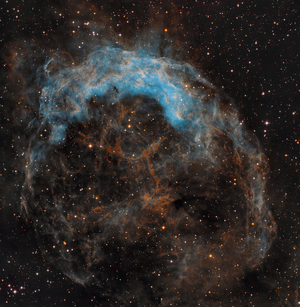
Behold: NGC 3199, aka the Banana nebula – a glowing cosmic cloud in the southern constellation of Carina, 12,000 light years away. To wit:
The nebula is about 75 light-years across in this narrowband, false-colour view. Though the deep image reveals a more or less complete bubble shape, it does look very lopsided with a much brighter edge along the top [the ‘banana’]. Near the centre is a Wolf-Rayet star, a massive, hot, short-lived star that generates an intense stellar wind. In fact, Wolf-Rayet stars are known to create nebulae with interesting shapes as their powerful winds sweep up surrounding interstellar material. In this case, the bright edge was thought to indicate a bow shock produced as the star plowed through a uniform medium, like a boat through water. But measurements have shown the star is not really moving directly toward the bright edge. So a more likely explanation is that the material surrounding the star is not uniform, but clumped and denser near the bright edge of windblown NGC 3199.
(Image: Mike Selby and Roberto Colombari

Boreholes drilled into the frozen surface of the polar regions (to retrieve ice cores for research) can be up to 3.5km deep.
Dropping a chunk of ice into one of these echoey vertical tunnels makes for very pleasing sounds indeed (best heard with the sound up or headphones on).



What would happen if you fell into a black hole? German educational design studio Kurzgesagt has the skinny.
Which, rather terrifyingly, is how you would be, on your way in.
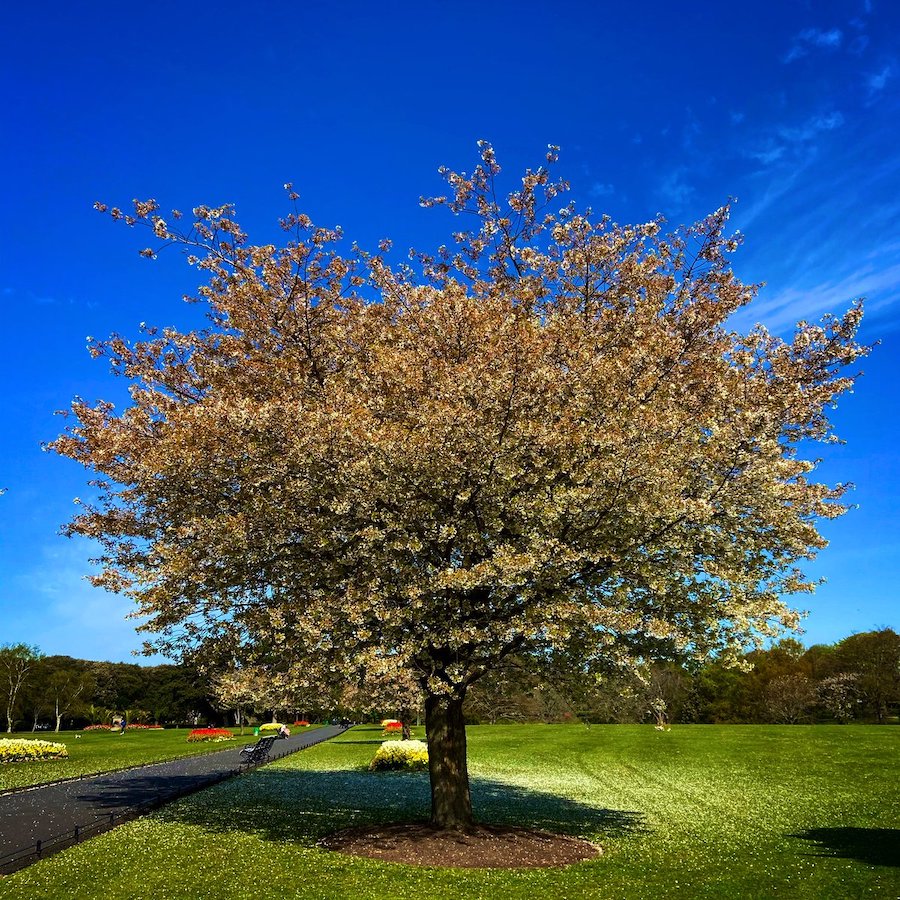
Yesterday.
Colum Cronin tweetz:
Blue sky morning in the Phoenix Park. Blossoms fleeting but beautiful.
In fairness.


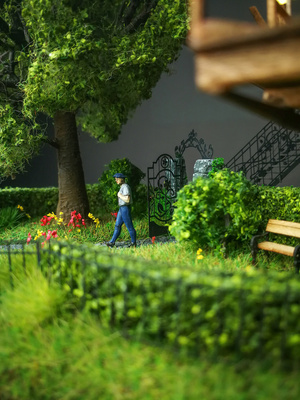


Behold: Skyville – a meticulously crafted 90x40cm miniature village by Bulgarian artist Ognyan Stefanov, who creates these and other lavish architectural wonders in his spare time between stints as an aviation photographer.
Tiny homes, shops, farms and gardens designed to mimic real functionality with a water drainage system, pulleys, and walkways that climb from level to level: two years in the making, complete with luxuriously appointed interiors and a population of teeny-tiny villagers.
More on the project here.

Behold: STEVE – a Strong Thermal Emission Velocity Enhancement. Wait. What? To wit:
STEVEs have likely been seen since antiquity, but only in the past five years has it been realised that their colours and shapes make them different from auroras. Seen as single bright streaks of pink and purple, the origin of STEVEs remain an active topic of research. STEVEs may be related to subauroral ion drifts (SAIDs), a supersonic river of hot atmospheric ions. For reasons currently unknown, STEVEs are frequently accompanied by green “picket-fence” auroras. The featured STEVE image is a combination of foreground and background exposures taken consecutively in mid-March from Copper Harbor, Michigan, USA. This bright STEVE lasted several minutes, spanned from horizon to horizon, and appeared in between times of normal auroras.
(Image: MaryBeth Kiczenski)


CAPCOM’s Resident Evil: Village demo with a mod by MarcosRCRE that replaces the ravenous zombies with multiplicities of a vastly more terrifying assailant – Barney the Dinosaur.