

A supercut of huge movie moons by Ariel Avissar, set to the most appropriate tune.



@lucy_and_greg Impression time with @thathappychap Star Wars Edition ⭐️ #impression #starwars #fyp
Lucy Griffiths cues her boyfriend, professional voiceover artist Greg Jones as he cycles through a very impressive array of Star Wars impressions.


In case you mizzed it.
A short based on an anecdote by Michael Dignam, animated by the Brothers McLeod, directed and voiced by comedian, Bowie fan and noted wuzza-wuzzist Adam Buxton.
You may also care for a previous McLeod/Buckles/Bowie outing, to wit: David Bowie, Brian Eno And Tony Visconti Record ‘Warszawa’

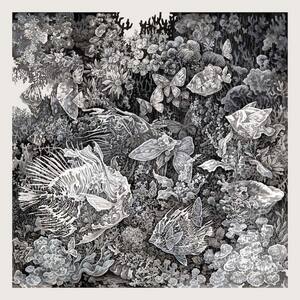


The otherworldly, labyrinthine ink drawings of illustrator Song Kang: stream of consciousness bio-architectures and ecosystems about which she admitz:
In one moment, I feel like I’m building a distinct environment one crosshatched pebble at a time. The next moment, I’m clueless with only an impulse and a gut feeling to add something somewhere. One of these spontaneous decisions was choosing to add colour. I was always using black ink, avoiding bright colours out of habit and uncertainty. But during quarantine, I found several colourful ink pens and became curious to see how it would look in my texture-heavy, fine-tuned crosshatched style.
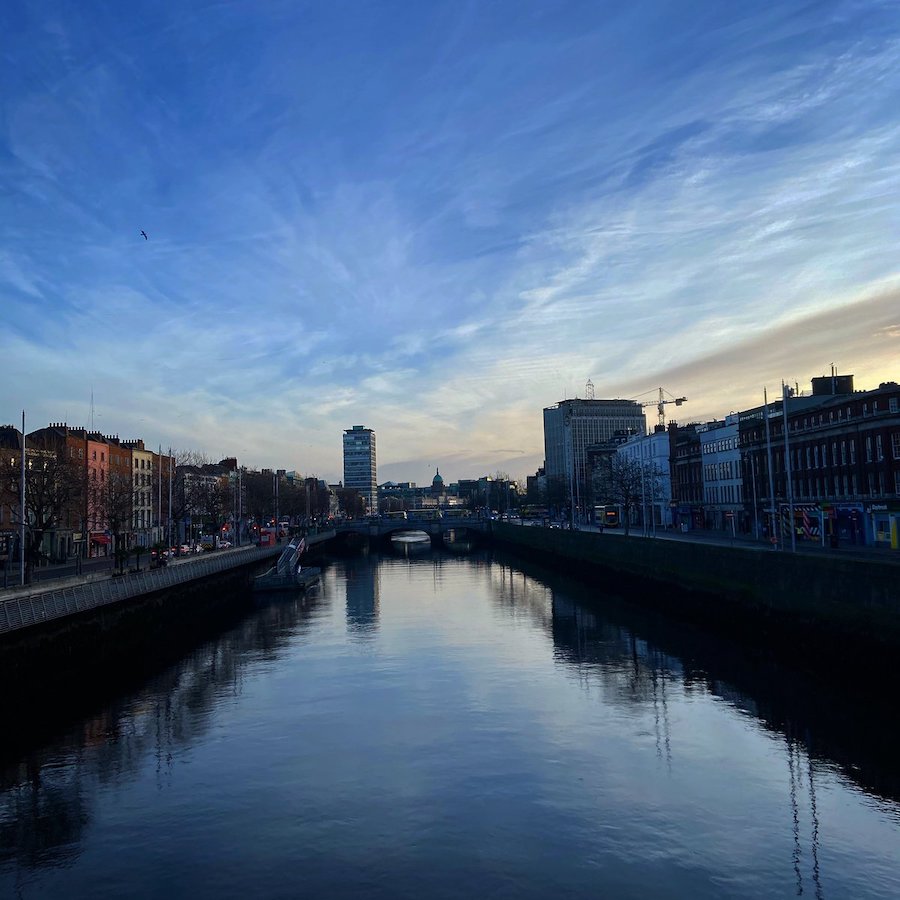
Signs of Spring! @broadsheet_ie pic.twitter.com/cDXmuiSVe0
— Colum Cronin (@ColumFromCork) February 16, 2021


A very pleasing 4K time-lapse (only recently made available due to initial ‘restrictions’) of a boat traversing the canals, locks and bridges of the Netherlands from Rotterdam to Amsterdam in 2013.

Behold: the Rosette Nebula, aka Caldwell 49 or NGC 2237 or NGC 2238 or NGC 2239 or NCG 2244 or NGC 2246 depending on what way you look at it. To wit:
The bland New General Catalog designation of NGC 2237 doesn’t appear to diminish the appearance of this flowery emission nebula, at the top of the image, atop a long stem of glowing hydrogen gas. Inside the nebula lies an open cluster of bright young stars designated NGC 2244. These stars formed about four million years ago from the nebular material and their stellar winds are clearing a hole in the nebula’s centre, insulated by a layer of dust and hot gas. Ultraviolet light from the hot cluster stars causes the surrounding nebula to glow. The Rosette Nebula spans about 100 light-years across, lies about 5000 light-years away, and can be seen with a small telescope towards the constellation of the Unicorn (Monoceros).
(Image: Adam Block & Tim Puckett)


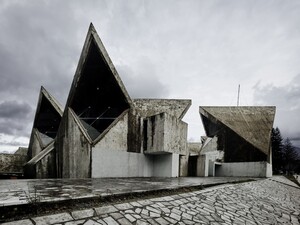
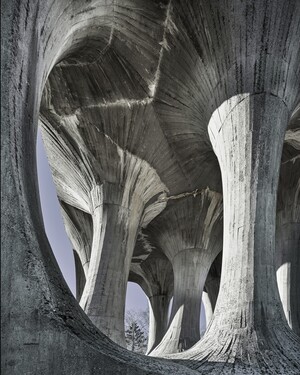


From a 2018/19 MoMa (New York) exhibit exploring the global reach and surprisingly elegant concrete forms of Communist-era Yugoslav architecture. To wit:
Situated between the capitalist West and the socialist East, Yugoslavia’s architects responded to contradictory demands and influences, developing a postwar architecture both in line with and distinct from the design approaches seen elsewhere in Europe and beyond. The architecture that emerged—from International Style skyscrapers to Brutalist “social condensers”—is a manifestation of the radical diversity, hybridity, and idealism that characterized the Yugoslav state itself.
MORE: Toward a Concrete Utopia: Architecture in Yugoslavia, 1948–1980 (MoMA)