
Wow, bummer. MT: Looks like My Sc’tology Movie won’t get an Irish release due to blasphemy laws https://t.co/g7dMDr0ku1 via @entertainmentie
— Louis Theroux (@louistheroux) September 26, 2016
Last week: Going Clear
Meanwhile…

Burn it!



Wow, bummer. MT: Looks like My Sc’tology Movie won’t get an Irish release due to blasphemy laws https://t.co/g7dMDr0ku1 via @entertainmentie
— Louis Theroux (@louistheroux) September 26, 2016
Last week: Going Clear
Meanwhile…
Burn it!
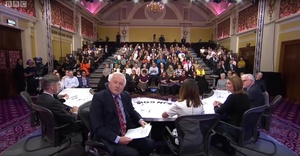
From top last week’s BBC Question time Derek Mooney
There are two chances of a second vote on Brexit
Derek Mooney writes:
I have to confess that my heart sinks a little whenever I hear English Tories or English nationalists, like Nigel Farage, mention Ireland during their rants about the EU.
The reference is usually patronising or condescending or – even worse – is given in the form of advice that would have us join them in their march back to a glorious era that never existed.
This is why my heart sank when Julia Hartley Brewer, a British Talk Radio host, Leave campaigner and former political editor, stated on last Thursday’s BBC Question Time that the EU had forced Ireland, and other countries, to vote again on EU referendums.
Her comments came during the course of a discussion on whether Britain might have another referendum on Brexit – a proposal put forward by the failed Corbyn challenger, Owen Smith MP or that the UK might have a separate vote on the final deal hammered out on the conclusion of the Art 50 negotiations, an idea put forward by Tim Farron’s Liberal Democrats.
Though hearing Hartley-Brewer getting it badly wrong on the notion of the EU ‘forcing’ us to vote again made my heart sink a little,
it sank even further when I realised that she and her fellow panellist that night Jacob Rees-Mogg MP (who looks like he is being portrayed by Joyce Grenfell) may actually have a point, just not the one they think.
Though I and other Remainers may wish it to be otherwise, the hard fact is that Ireland’s voting again on the Nice and Lisbon treaties is not relevant to the UK’s situation for one simple reason: turnout.
In the first referendum on the Nice Treaty (Nice I) in 2001 the turnout was just under 35% – the result then was 54% No: 46% Yes. At second referendum on the Nice Treaty (Nice II) in Oct 2002 the turnout shot up to just under 50% with Yes getting 63% and No dropping to 37%.
It was a broadly similar situation in the case of the two Lisbon Treaty referendums. In Lisbon I in June 2008 the turnout was 53%. No won by 53%:47%. At Lisbon II the turnout had again increased, this time to 59% with Yes now winning by 63%:37%
In both cases the turnout in the first referendum was low to start with, in the case of Nice I it was exceptionally low, just in the mid-30s, so there was a convincing argument to be made for a second vote, particularly when you felt that a second referendum would have a higher turnout.
This was not the case in the UK’s Brexit referendum.
The turnout there was a whopping 72%. This is a substantial turnout. It is much higher that recent UK General Election turnouts, indeed you have to go back to Tony Blair’s 1997 election victory to find a UK general election turnout of over 70%.
The huge political risk you take by having a re-run second Brexit referendum in these circumstances is that you get a lower turnout. It is politically saleable to try to reverse one mandate with a smaller one?
To be clear, turnout alone was not the reason why there were re-runs of the Nice and Lisbon referendums. In both cases post referendum polling and analysis found that the main reason for voting “No” or abstaining was a lack of knowledge of either treaty.
Both “Yes” and “No” voters were highly critical of what they viewed as a dearth of clear, accessible information on the treaty’s merits.
While the Remainers can clearly point to a lot of misinformation from the Leave side, not least the claims that leaving would mean £350 million extra per week for the NHS, they cannot yet point to any substantive research or analysis suggesting any changes in opinion.
Noted UK pollster, Prof John Curtice, reckons that there is little evidence of a “significant rethink” three months on from the result with those who voted Remain still convinced that they were right and likewise for the Leavers.
Very few minds have been changed, though let us see if that remains the case as the details of the Brexit deal on offer emerge during the course of the next year or so.
The problem with all this abstract discussion on a second referendum is that it takes the focus away from the very real and tangible issues with the first result: most crucially that the Hartley Brewer, Farage and others do not want to honour the clear Remain majorities in Northern Ireland and Scotland.
Instead they want to use the votes of English and Welsh people to forcibly drag Northern Ireland and Scotland out of the EU against their declared will.
This is no small issue, yet it is receiving scant attention in the UK and, sadly, here.
Voters in both Northern Ireland and Scotland voted convincingly to stay in the EU, by much bigger margins that the people across the UK voted to leave.
Many of those voters in Northern Ireland hold Irish passports and are thus also EU citizens, even if the UK leaves.
Can that citizenship – and the guarantees and privileges it offers – simply be snatched away from them on the say so of 50%+ of voters in the south of England?
As people like Michéal Martin and Colum Eastwood have repeatedly said over the past few weeks and months; trying to drag the North out of the EU against its will ignores the layered complexities of the Irish political process.
It is a refutation of the basic principles of the accommodation achieved in the Good Friday Agreement and that is something that concerns all of us on this island.
We should be debating and discussing this now. We should be looking at the significant consequences of Brexit for our economy, for our trade – both North/South and East/West, our education system, out health service.
We should not allow the foot dragging by the British Government on outlining its terms of exit to stop us from forcefully setting out our concerns and our alternatives.
We need the speedy establishment of the all-island political/civic forum I called for here at the end of June. I know the Taoiseach and his team messed up their first attempt to get the idea up and running, but they need to go again and get it right this time
Derek Mooney is a communications and public affairs consultant. He previously served as a Ministerial Adviser to the Fianna Fáil-led government 2004 – 2010. His column appears here every Monday mid-afternoon. Follow Derek on Twitter: @dsmooney
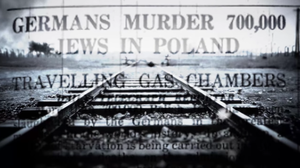
The latest video from Youth Defence.
Calling for the 8th amendment to be “saved”.
Includes, segregation, the Holocaust and “discrimination against those who are deemed imperfect”.
Previously: Unbowed

Johnny Collins and his dad Micheal Collins
Ireland Shed A Tear?
A new play by writer and actor Michael Collins.
To be performed at The New Theatre, Dublin from September 28 until October 2, as part of the Dublin Theatre Festival.
Written to commemorate the first anniversary of the Carrickmines tragedy, Ireland Shed a Tear? is a new play by acclaimed writer and actor, Michael Collins (Pavee Lackeen, Killinaskully, Glenroe, King of the Travellers).
Using song and poetry, it portrays the life experiences of one Traveller family, while engaging the wider community in a dynamic and lighthearted way.
In the aftermath of the fire that claimed the lives of ten members of the Connors and Gilbert families, including a pregnant mother, Tom sees the introduction of a national fire safety audit of Traveller accommodation as an opportunity for a better life for his family.
Living conditions, safety, and issues with his local council might finally be resolved. However, he soon discovers that the battle is far from over.
See here for tickets and times.
Previously: The Trouble With Travellers

Red C poll in yesterday’s Sunday Business Post
Further to the results of yesterday’s Sunday Business Post/Red C poll…
Geography lecturer and deputy head of the Geography Department at NUI Maynooth Adrian Kavanagh writes:
After little change in party support levels had been evidenced in the wake of the February general election, a series of opinion polls in July 2016 pointed to significant gains in support for Fianna Fail, pushing that party ahead of Fine Gael in terms of overall support levels.
The latest in series of Red C opinion polls more or less reflects the trend that has been established across all polls from July onwards; showing Fianna Fail standing a few percentage points ahead of Fine Gael in terms of overall support levels.
This also reflects the trend evidenced in the recent Behaviour & Attitudes poll, in which the two largest parties were both seen to lose some ground to Sinn Fein, Labour and the Anti-Austerity Alliance-People Before Profit. (This poll, however, sees the Social Democrats standing in notably stronger position than was the case with the Behaviour & Attitudes poll.)
The 25th September Sunday Business Post-Red C opinion poll estimates party support levels as follows: Fianna Fail 27% (down 2% relative to the previous Red C opinion poll), Independents and Others 26% (NC) – including Anti-Austerity Alliance-People Before Profit 6%, Social Democrats 4%, Green Party 2%, Renua <1%, Independent Alliance 4%, Other Independents 10% – Fine Gael 25% (down 1%), Sinn Fein 15% (up 2%), Labour Party 7% (up 1%).
My constituency-level analysis of these poll figures estimates that party seat levels, should such national support trends be replicated in an actual general election, would be as follows: Fianna Fail 52, Fine Gael 44, Sinn Fein 23, Anti Austerity Alliance-People Before Profit 8, Labour Party 7, Social Democrats 4, Independents 20.
Red C poll: FF sees support slip for first time since election (Sunday Business Post)
Previously: For Whom The Polls Toll
Pic: Sunday Business Post

John writes:
I was outside the big Centra in Stoneybatter earlier on today at about 12pm and I overheard some lad trying to make a quick sale on a bike. The potential buyer asked him where he got it, to which he replied ‘on the southside’.
He was trying to flog it for €50.
From what I could see, and after doing some research online, I would say it’s a black Carerra ‘Vengeance’ with neon blue text and trim, a little battered, but still in good condition.
Maybe Centra could help out with some security footage?
Anyone?
Earlier: Busted
Brian Hayes, Fine Gael MEP
Farrel Corcoran’s article contains arguments concerning the Transatlantic Trade and Investment Partnership (TTIP) talks and coverage of TTIP that simply do not stand up to scrutiny.
Mr Corcoran argues that the proposed deal would allow the use of “carcinogenic pesticides” in foods. Let me be clear, nothing could be further from the truth. But that doesn’t stop protectionists deliberately misleading the public.
Again and again, European Commissioner Cecilia Malmström has said no EU trade agreement will ever lower our level of protection of consumers or food safety.
Both sides in the trade talks are crystal clear that importation of hormone treated meat will not happen. Yet those against trade have repeated something that they know was never on the agenda of the EU.
The precautionary principal, the EU’s guiding principal on food and safety standards remains unaltered.
When it comes to Ireland’s sovereignty the position couldn’t be clearer. The first item agreed in a joint declaration by the lead negotiators was that TTIP does not prevent governments, at any level, from providing or supporting services in areas such as water, education, health, and social services.
This has not stopped those against the talks framing the process as a kind of new conspiracy where the corporate world, aided and abated by the European Commission, has hatched a masterplan to impoverish us all by – wait for it – by increasing trade between the EU and the US.
He bemoans the fact, according to him, that there has been “little” media coverage. Come on, where has Mr Corcoran been for the past number of years?
Didn’t The Irish Times give him carte blanche in his article to peddle the usual distortions about TTIP. What’s he moaning about? You could nearly hear the tut-tutting from the opinion page.
Then he says there has been little civil society engagement and “no national debate” on TTIP. Well a debate requires a fair amount of time to both sides to make the case.
But it also requires an honest engagement with the facts rather than hyped, over-the-top and utterly sensationalist comments from Mr Corcoran and others.
TTIP is not a done deal, it’s a talks process and it’s ongoing. And I wouldn’t be holding my breath that it will come to an end anytime soon.
It’s caught up with elections in the US and Europe.
From Donald Trump to Nigel Farage, and now to Mr Corchtoran [sic], the line-up of populists against more trade is really quite breathaking. And this against a backdrop of high European unemployment and falling wages.
The sensible thing to do is to see what comes from TTIP at the end of the negotiation. Look at the issue in the round – the pros and cons – and then make a decision. I repeat there is no agreement between both sides, and there may never be.
Brian Hayes MEP
Donnybrook,
Dublin 4.
Media, democracy and trade agreements (Irish Times letters page)
Previously: Luke’s TTIP
Leah Farrell/Rollingnews

Tonight.
Can’t Cope, Won’t Cope on RTÉ2 at 10pm.
Gareth Naughton writes:
In episode three of Can’t Cope, Won’t Cope, Aisling can’t help herself at the an important business dinner and the results leave her skating on thin ice. And Danielle’s attempts to help don’t quite go according to plan.

Trotscot writes:
Thought you might like this. After winining a prize in a works raffle of a voucher for a [posh shirtmaker] TM Lewin shirt. I went on their website to find their Ireland locations, only to find out that the Dundrum store had moved…
it’s like a black fly in your Chardonnay.
A traffic jam when you’re already late.
A no-smoking sign on your cigarette break
Etc.
