Category Archives: Misc

imagedan

From top President of the EU Commission Jean-Claude Juncker blocks UKIP leader Nigel Farage MEP yesterday; Dan Boyle

Last week’s Brexit vote, which the author signalled, was a triumph of hate over responsibility.

Dan Boyle writes:

No surprise but one hell of a mess.

Some voted against the over bearing arrogance of the European Commission. Some recognised the continuing democratic deficit within the EU, although a country with an unelected head of State, second chamber, and without a written constitution is hardly best placed to be flag bearers for democracy.

As with most referenda many voted to get at the government. A government, whoever its new head is to be, that will now have free rein thanks to those who voted with their spleen.

Others spoke about getting rid of red tape. This was code for less consumer entitlements, less workers rights, less environmental standards.

However the phrase that worked, that stuck, was ‘taking our country back’. No code here. For those living in the neglected, discarded communities of Northern England and South Wales the easiest of answers were provided for their continuing plight.

For them it was made all too clear that all their problems were the fault of ‘Johnny Foreigner’.

My recent eight months on John Bull’s first island showed me how ugly public discourse had become there. The louder Nigel Farage and his ilk became the greater the licence given to those whose racist tendencies could now be given full flowering.

It will be difficult to put this genie back in the bottle. A genie, being an utterly inappropriate analogy, not being sufficiently British enough.

It could be that after two years of taking their country back there could be a realisation as to how deep a hole the country has dug itself into. By that stage an independent Scotland will be well on the way to being established, and the newly formed islet of Norn Iron will be nursed into being.

The likelihood is that another referendum will take place, not necessarily to overturn the decision now made, but to offer the alternative to EU membership that will have been agreed.

By that time the Sun will have finally set on the Empire. It may or may not change mindsets. The only certainty is that a terrible ugliness has been reborn. It is a triumph of hate over responsibility.

In Ireland we can’t afford to be too smug about these things. Scratch the surface in many of our discarded communities and we may see similar forces being unleashed.

Maybe the preoccupation with issues of lesser importance that have over involved us recently, have been something of a safety valve.

While I prefer an obsession over water than renewed racism at any time, in both our countries we continue to sideline the more important issues that are further marginalising those communities affected.

We should cry for all our beloved countries.

Dan Boyle is a former Green Party TD and Senator. Follow Dan on Twitter: @sendboyle

Top pic: AP

st columba'sbrendan

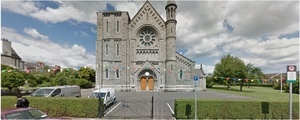
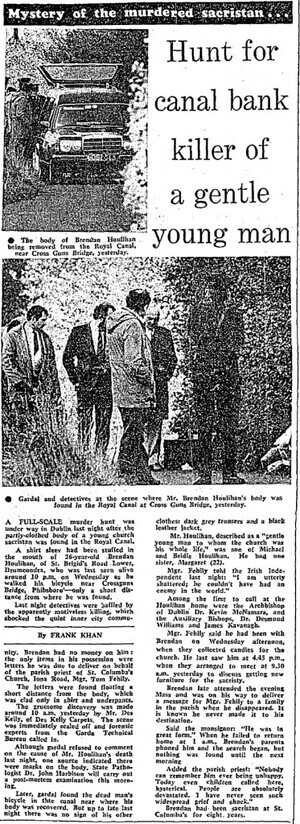
From top: St Columba’s Church, Iona Road, Glasnevin, Dublin 9; The Irish Independent, November 7, 1986

Following our post on the Philip Cairns case and a follow up post on the death of John Horgan many have asked about a sacristan mentioned in the Cairns timeline.

Thirteen days after Philip’s disappearance the body of Brendan Houlihan was discovered in the Royal Canal in Phibsborough, Dublin 7

Brendan, 26, was attached to St Columba’s Chuch, Iona Road, Glasnevin, Dublin 9.

A sacristan arranges the liturgical books, vestments, and other items necessary in the celebration of Mass.

Brendan had been sacristan for eight years at St Columba’s and, before that, an altar boy. News reports described him as ‘quiet and shy’.

On the afternoon of his death Brendan had been checking the baptismal register for Philip Cairns’ name, according to then parish priest Monsignor Tom Fehily.

Monsignor Fehily was the curate in charge of Pope John Paul II’s visit in 1979.

He was also well known for his work with Travellers. In 1975 he was instrumental in founding Trudder House, a refuge for Traveller children, in Newtownmountkennedy, County Wicklow.

Trudder House was eventually closed in 1995 and a Garda investigation commenced into allegations of child sexual abuse dating back to its founding.

The Cairns family and the Houlihans lived close to the church. Brendan lived, with his parents Michael and Bridie, on St Brigid’s Road while the Cairns lived on the parallel St Columba’s Road. The Cairns moved to Rathfarnham in 1978 when Philip was five.

Brendan left St Columba’s church on his bicycle at approximately 8.45pm on Wednesday, November 5, 1986, to deliver letters on behalf of Msgr Fehily to an unnamed family in the parish, according to the Monsignor.

Brendan’s body was discovered at 10am the next day, Thursday, November 6, in the Royal Canal at Cross Guns Bridge, Phibsborough, about two minutes’ cycle from his home.

Brendan had been beaten, stripped naked and gagged. His shirt was tied into a granny knot and placed in his mouth before he was thrown into the canal.

His body was discovered by businessman Des Kelly, of Des Kelly Carpets, according to reports in the Irish Independent and the Irish Press.

However during the eventual trial it was stated that the body was found by CIE workers while the inquest was told Brendan was discovered by gardaí with no mention of Mr Kelly.

In the afternoon, following the discovery of Brendan’s body, two brothers, John and Declan Kenna were arrested on a bus in Parnell Square, Dublin 1 for drunken behaviour.

A Garda detective later reportedly noticed one of the brothers wearing an anorak similar to that worn by Brendan when he was last seen.

That evening, at a special sitting of the District Court in the Bridewell prison John Kenna, aged 23, and Declan, aged 16, were charged with the murder of Brendan Houlihan.

Unusually, despite the savagery of the attack, both were freed on bail.

Then, in October, 1987, the murder trial at the Central Criminal Court before Justice Donal Barrington was stopped when Kevin Haugh SC, acting for the prosecution, told the court that the DPP had agreed to drop the charge of murder against John Kenna, who would instead plead guilty to the lesser charge of manslaughter.

Declan Kenna would be only charged for the robbery of clothing and a watch.

The law of manslaughter then and now – as defined by the Law Reform Commission in their Report on Homicide (2008) – recognises two types of manslaughter.

The first is voluntary manslaughter, where there is an intention to kill but the accused is either provoked or acting in self-defence.

The second is where there is no intention to kill on the part of the accused, but they have caused the death of another person as a result of a criminal act carrying with it the risk of bodily harm or in circumstances where they were grossly negligent as to that person’s life.

No evidence was put to the court that either of the Kennas were acting in self-defence. Nor was there any evidence proffered that their attack had been provoked in any way by Brendan Houlihan.

On the contrary, Mr Haugh informed the court that the brothers set upon Brendan as he cycled along the banks of the canal. They had drunk a ‘gallon of cider’ and demanded money from the sacristan.

In circumstances where the accused, no matter how drunk, had first badly beaten up a man and then thrown him into the canal gagged, it is hard to see how it could be argued that they did not have intention to kill.

Plea-bargaining is not a feature of Irish law and why it appears to have been engaged in in this case is as hard to understand as the apparently motiveless attack on Brendan Houlihan.

John Kenna was jailed for 10 years while Declan Kenna was jailed for three years on the robbery charge.

Pics: Irish Independent archive; Google maps

Previously: Philip Cairns And A Trail of Disinformation

The Devil Is In The Details
crossguns

Below is a detailed timeline before and after the death of Brendan Houlihan. We will correct any errors/omissions.

November 7, 1986: It’s reported that a ‘full-scale murder hunt’ is under way in Dublin following the death of 26-year-old Brendan Houlihan whose body was found partially clothed in the Royal Canal at around 10am on November 6.

Wearing just underpants and a shirt, Mr Houlihan, of St Brigid’s Road Lower in Drumcondra, had a shirt sleeve stuffed in his mouth when he was found by Des Kelly, of Des Kelly Carpets. His dark grey trousers and black leather jacket are reportedly missing.

It’s reported that he “was last seen alive around 10pm on Wednesday as he walked his bicycle near Crossguns Bridge, Phibsboro – only a short distance from where he was found”.

Elsewhere, it’s reported that Mr Houlihan “locked up the church around 9pm on Wednesday and went to deliver some church letters.”

Brendan didn’t have any money on him and the only items in his possession were the letters that he was delivering for the parish priest of St Columba’s Church, Iona Road, Monsignor Tom Fehily. These were reportedly found floating on the water around his body.

It’s reported that Mr Houlihan had attended evening mass on the night he died, but no time for the mass is given. It’s also said that he didn’t reach his destination before he died.

It’s also reported that Mr Houlihan’s parents called Monsignor Fehily at 1am on the morning of November 7 after he failed to return. Elsewhere it’s reported that after Mr Houlihan’s parents contacted the gardaí, a search of the area was carried out.

Mr Houlihan – the son of Michael and Bridie Houlihan and brother to Margaret, aged 22 – is described as a “gentle young man to whom the church was his whole life”.

Monsignor Fehily is quoted as saying:

“Nobody can remember him ever being unhappy. Today even children called here, hysterical. People are absolutely devastated. I have never seen such widespread grief and shock.”

November 8, 1986: It’s reported that John Kenna, aged 23, is charged at a special sitting of the District Court, in the Bridewell with the murder of Mr Houlihan.

November 13, 1986: John Kenna appears in Dublin District Court and is remanded to the Dublin Juvenile Court on November 17. It’s reported that he is charged with murdering Mr Houlihan between 7pm on November 5 and 10am on November 6. It’s further reported that John’s younger brother is also charged with the murder and will also appear in court on November 17.

November 22, 1986: It’s reported that, in the High Court in Dublin, a 16-year-old youth charged with Mr Houlihan’s murder is granted bail of 1,000 pounds, or two independent sureties of 500 pounds each.. John Kenna is freed on bail of 10,000 pounds.

December 6, 1986: A notice appears in the Irish Press in which the parents and sister of Mr Houlihan thanks those who shared in their loss. They extend special thanks to the Archbishop of Dublin Dr Kevin McNamara, his coadjutor bishops and Monsignor Fehily. The pupils of Iona Road School, who formed a guard of honour at Mr Houlihan’s funeral, the staff of CIE, the Gardaí and members of Dáil Éireann are also thanked.

October 20, 1987: It’s reported that the murder trial that was due to take place in the Central Criminal Court “came to an abrupt end when the State accepted a plea of manslaughter from one of two brothers accused of the murder of a sacristan [Brendan Houlihan].”

John Kenna, now described as 18, plead guilty to the manslaughter of Mr Houlihan before Mr Justice Donal Barrington and State prosecutor Mr Kevin Haugh, SC, told the court that, in accepting John Kenna’s plea, the State was entering a nolle prosequi [essentially dropping the charge of murder] against his brother Declan Kenna, aged 23.

It’s further reported that two brothers pleaded guilty to “the robbery of an anorak, a pair of trousers, a jumper, a pair of shows and a watch from Mr Houlihan on the same date.”

The two brothers are remanded in custody for sentencing.

October 21, 1987: It’s reported that John Kenna, now described as 24, is jailed for 10 years and given a concurrent four-year prison sentence for stealing Mr Houlihan’s clothes and watch. Declan Kenna, reported now as being 17, is jailed for three years after pleading guilty to robbery.

The Central Criminal Court hears Mr Houlihan was cycling along the banks of the Royal Canal when the Kenna brothers “who had consumed almost a gallon of cider and were drinking on the canal banks asked him for money”.

Mr Kevin Haugh SC told the court that John Kenna stripped Mr Houlihan of his clothes and used his shirt to gag him.

Superintendant Patrick MaGuinn, of Fitzgibbon Street, told the court that State Pathologist Dr John Harbison found “large areas of extensive bruising over all areas of Mr Houlihan’s body. He had suffered serious blows to the head and had six fractured ribs.” In addition “there were signs of asphyxiation and drowning and it appeared Mr Houlihan was in the process of asphyxiating when he was thrown or fell into the canal”.

While reportedly sentencing John Kenna, Justice Barrington says, “It is to say the least distressing that an innocent citizen could be going along the canal and meet somebody like you maddened by cider savagery.”

It’s further noted, “The judge told Declan Kenna that he had taken into account the fact that he was only 16 at the time of the attack and that his role had been minor.”

The court also hears that CIE workers found Mr Houlihan’s body.

December 4, 1986: An inquest into Mr Houlihan’s death, before Dr P.J.Bofin, hears that Mr Houlihan was found by gardaí and that “a granny knot in the shirt had been tied round his head and stuffed in his mouth. He had suffered broken ribs and a head injury”.

Dr Bofin recorded a verdict of death due to asphyxia and drowning.

In addition, it’s reported that “The court was told by a Garda that two people had been jailed in connection with the incident – one had been jailed for manslaughter for 10 years and another for four years, on a charge of robbery.”

April 24, 1988: It’s reported that “18-year-old” Declan Kenna who “was serving three years for a combination of offences, including robbery and was due for release next October” escaped from Mountjoy Prison on the night of April 23 during a prison officers’ strike.

It’s reported that he was carrying army identification at the time and that he must have had to produce the identification he was carrying at least twice before he got out of the prison. he is arrested later that day at his family home in Ballyfermot.

April 20, 1990: It’s reported that Declan Kenna, reported to be in this twenties, has been stabbed in the face with a kitchen knife after a row at his home on Cremona Road in Ballyfermot. Unnamed “local gardaí”, who were reportedly “earlier called to a disturbance at the house” are quoted as saying, “A bitter feud was behind the incident. Mr Kenna lost a lot of blood and was quickly taken to St James’s Hospital”.

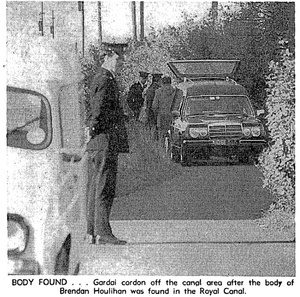
Pic via Irish Independent archive

Sources: BBC, RTÉ The Irish Examiner, The Irish Times, The Irish Independent, The Irish Daily Mail, Newstalk; The Irish press and Evening Press; Evening Herald, The Sunday World, Sunday Independent;  Court transcripts; Irish Newspaper Archives

Screen Shot 2016-06-29 at 17.06.52

Fianna Fáil TD Michael McGrath speaking in the Dáil this afternoon

“Fianna Fáil has been consistent in asking that all aspects of the Project Eagle sale be thoroughly examined and investigated. Last October, I moved a motion, on behalf of Fianna Fáil, calling for a Commission of Investigation under the terms of the 2004 Act. We called for this on the basis that the allegations were of such a serious nature, the public would demand nothing less than a comprehensive inquiry which would get to the truth and be able to make clear findings in relation to any wrongdoing on the part of individuals…”

“…In its evidence before the committee of public accounts, and in its public commentary on Project Eagle, Nama has argued consistently that no issue has arisen regarding the sale side of this transaction but, as I said last October, that is not an adequate answer. Ultimately, the decision to proceed with the sale of Project Eagle was made by Nama in Dublin and Nama must account for the entirety of that transaction.”

“Based on information and allegations currently in the public domain, surrounding Project Eagle, a Commission of Investigation is warranted. That remains the Fianna Fáil view. The question is whether a Commission would stand any chance of success, running in parallel with a criminal investigation that is clearly gathering pace.”

Our honest assessment is that a Commission of Investigation, established in the Republic now, in the heat of an accelerating criminal investigation in the North would most likely run into the sand very quickly. This would serve no purpose. Do we really think that key people involved in this transaction, living in Northern Ireland, would voluntarily cooperate with a Commission of Investigation in the Republic while arrests are being made in the North?”

“Almost a year ago the UK’s National Crime Agency commenced an investigation into Project Eagle. For a long time there were no updates on this investigation. Then, just last month, two arrests were made in Northern Ireland and the persons concerned have already been named in this house and have been again today – as Frank Cushnahan, former member of the Nama northern Ireland advisory committee and Ronnie Hanna, who was head of asset recovery at Nama during the Project Eagle sale.”

“Reports indicate that this presents a significant change in pace in the investigation. Both men are of course entitled to the presumption of innocence. It is not known if further arrests are planned but let there be no doubt about it. Those arrests represented a very significant development and followed searches in Co Down and the men concerned have been released on bail and it is part of a fraud investigation. Those are the facts that we know.”

There you go now.

Readers may wish to recall how the Irish News named Frank Cushnhan and Ronnie Hanna as the two men arrested on June 2 while Fianna Fáil leader Micheal Martin called for a Commission of Investigation as recently as June 15.

More to follow.

Earlier: Parties In Motion

Previously: ‘Something Rotten In The State Of Denmark’

UPDATE:

Screen Shot 2016-06-29 at 16.45.50

https://www.youtube.com/watch?time_continue=561&v=lKNDnrZ5vtU

Independents 4 Change TD Mick Wallace in the Dáil this evening

If it’s the last thing I do, I’m going to get to the truth of this and I’m going to expose what’s going on. We’re setting up an organisation called Namaleaks.ie. We’ve got help from the people who fixed up Snowden, The Intercept and we’re going to invite members of the public to come forward with information where they feel they’ve been badly treated by Nama, banks or investment funds.”

“We’re inviting insiders with information, we’ll have 100% confidentiality, to come send us documents that are truthful, in order to address this rotten, rottenness that exists in how we do business in this country. How they do business in northern Ireland.”

“You know what? They’re no worse up there than we are down here. There’s a pair of us in it. And our credibility and international level is going to suffer unless youse actually have the gumption and the balls to actually go after the truth. Cause you’re not showing any of it at the moment. And I’m really gutted that Fianna Fáil are not showing it either.

Independents 4 Change TD Mick Wallace speaking in the Dáil this afternoon.

Screen Shot 2016-06-29 at 15.19.25

Michael Lowry TD

Tipperary Star reports:

The modular hospital being proposed for South Tipperary General Hospital as an interim solution to over-crowding, could be up and running within six weeks of commencement, writes Noel Dundon.

The unit, which has been put forward following extensive behind-the-scenes work by Deputy Michael Lowry and senior consultants at the hospital would cost the HSE in the region of €60,000 per week, fully staffed etc.

It would mean the provision of forty en-suite rooms to be used for pre and post-op preparation and recovery according to Deputy Michael Lowry who has been conducting intensive behind the scenes negotiations with the HSE and Miister Simon Harris.

Modular hospital would be up and running in Clonmel in six weeks (Tipperary Star)

Laura Hutton/Rollingnews

A guy on Whatsapp writes:

If you go to Google translate EN>DE page and type in “a bad day for Europe” it outputs “a good day for Europe” in German. Not sure if its an AI source material scanning mistake or an easter egg from a rogue Google coder but it’s pretty odd – any other “a bad day for…” sentence gives the right translation.

Anyone?

Thanks Derek

Google Translate

90350024

I find it curious that acknowledging the increased numbers and aggressive nature of urban gulls provokes such smug hilarity if not outright contempt. The increased number of urban gull colonies in Ireland and the UK is readily acknowledged by ornithologists.

It seems at least plausible to me that bad waste management practices and conscious human interactions (deliberate provision of food) have led to a change in size and behaviour of the seagull population, not to mention their feathered counterpart, the urban pigeon.

Anyone who has tried to eat lunch in Heuston Station will be familiar with the pesky pigeons emboldened by easy meals from foolish people who think it’s cute to feed these flying pests. Meanwhile, outside on the Liffey the magnificent cormorants and herons are outnumbered by those awful scavenging gulls.

Paul Kean,
Dublin 8.

Seagulls (Irish Times)

Previously: Mean Gulls

Leah Farrell/Rollingnews

320920LOGO

The Irish Sun reports:

WOW air, Iceland’s low-cost airline, have announced fares from Dublin Airport to New York, via Reykjavik , Iceland, for as low as €129 one way.

The airline will begin flying to New York this winter beginning 25 November.

Flights will operate to New York, via Reykjavik Iceland, five days a week on Monday, Wednesday, Thursday, Friday and Sunday.

Wow! Flights from Dublin to New York from €129 one way (Irish Sun)

Screen Shot 2016-06-29 at 12.42.04

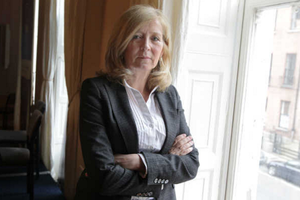
European Ombudsman Emily O’Reilly

European Ombudsman Emily O’Reilly spoke to Seán O’Rourke on RTÉ Radio One earlier today about the fallout of Brexit.

Unlike some of her colleagues, she was expecting the Leave side to win.

During the interview, she explained:

A lot of people here in Brussels were completely shocked and surprised by the result. I wasn’t that surprised. I was in the UK a few weeks ago and the atmosphere, to me, was much more Brexit-y if I could put it that way, rather than Remain. And I thought the narrative seemed to be going in a particular direction.

Those people that I spoke to, who might have been sort of on the sidelines or on the fence if you like, weren’t finding the arguments of the Remain people very convincing and I think they felt that, after years of the EU being blamed for virtually every ill that the UK was suffering that the people who are now urging them to Remain, they lacked credibility.

But also, mind you, closer to the actual day of the referendum and certainly in the wake of the murder of Jo Cox, I thought that that might change things and perhaps it changed the margin for the result but, obviously, ultimately it didn’t change things.

On the day of the referendum itself, putting my old political correspondent’s hat on, I noticed the turnout was very high and that generally means that people who are more excited or more involved, or more engaged on one particular side of the debate are more likely to vote and I judged that that would be people who wanted to leave the EU.

And also the weather was bad and, again people who aren’t that bothered to vote are likely to be swayed by that so, on that basis, I wasn’t really too surprised.

I think if you’re in Brussels for too long, I think a sense of dislocation happens and most people here, who work in the EU institutions obviously have skin in the game. And they’re not always looking completely rationally at the reasons why people vote in a particular way.

I know I’ve often said to my colleagues and I based it on our experience when the financial crash happened, and things changed so much and particularly I suppose for people who mightn’t have been expecting the outcome in terms of their incomes and so on and that would be the public servants and civil servants in Ireland and the degree to which their living standards plummeted and so on.

I said to my colleagues on a number of occasions, ‘don’t take anything for granted’, you know, ‘explore what’s happening in the UK, there is a possibility that the vote could go a particular way.

But I think because, when you come to Brussels, people get so wrapped up in the project, and some of them fall so much in love with the project that they find it incomprehensible that people, outside, the bubble might not be as in love with it either.

I think also there is a lack of awareness of the degree to which inequality still remains as a big issue, increasingly in many countries, including in the UK.

Of course the mistake is to blame the EU or what the EU does because very often it’s member state’s policies themselves, or globalisation generally that has created that.

But I think there is a lack of understanding and very often a lack of empathy for people who are on their uppers and who feel, certainly in some places in the UK, that they are competing for reduced public services with migrants – be they migrants from other EU countries or immigrants, people who are seeking asylum or refugee status in the UK.”

When I came here, people would talk about the second narrative. The first narrative sort of started in Auschwitz and ended with the creation of the EU if you like.

But that was a narrative for an older generation and I often make the point that young Irish women, like myself as I was in the 1970s, for my generation of young people but particularly young women, that the EU was a liberation for us because they brought in certain laws that made us more equal in the workplace and got rid of the ban on women, married women working in the workplace and so on and so forth.

So my experience and the experience of our generation, shall I say, was generally very positive. But that experience, if it isn’t being replicated among the young generations in eastern Europe, central Europe, even in the UK, then they’re going to become disillusioned with it.

But I thought it was interesting that one of the first meetings, in the flurry of meetings that have taken place all over Europe since last Thursday was one of the foreign ministers of the six founding countries of the EU and I think that was sort of sending out a signal perhaps, hinting at what you’re suggesting there that maybe the whole project has become a little bit strained that something has to happen, something has to give, a more modest union, a smaller union, whatever.

But that Brexit has been the key, perhaps, looking at it in the positive way, to reform that and is going to be positive and, you see, I’ve thought it so difficult now, when anybody mentions a Treaty change, a possible Treaty change, even over something trivial, everybody shivers because the idea that you would get 28 member states to agree on anything seems impossible. So you wonder how you can continue give that sort of strain on a process.

There’s always been a tussle here between the ever closer union people, the federalists and those who say, ‘look, let’s have a much narrower and less ambitious sort of, trading and humans rights and all of that, but let’s not try and strain this too far’ and that will continue.

But I think what we’re going to have over the next few months: a lot of politics has to happen on all sorts of levels before we can see what’s actually going to emerge at the end and no one can tell you definitively what that is.

You have the politics in the United Kingdom, the politics in Northern Ireland, in Scotland, we have our own skin in the game, very obviously and at the moment, Ireland is sort of like in a ‘torn between two lovers’ situation between the UK situation and membership of the European Union.

You also have the French presidential election next year, as you say, what’s happening in Germany, and all of that and then you have the general, ideological struggles or squabbles or whatever, political debate that goes on in relation to how Europe should develop.

But I had felt, personally, over the last while, since coming here, when you have the migration crisis and the financial crisis, you had Greece, you had this, you thought at some point, something had to give in order to rebuild, recast perhaps in a different way.

I made the point recently that, when people don’t understand, they feel stupid and when people feel stupid, the feel hostile towards those people who, inadvertently or otherwise, have made them feel stupid and so they resile and so they become much more isolated and I think the EU has an awful lot of work to do in relation to its transparency, its accountability, how it communicates with the 500 million citizens

Listen back to the interview in full here

Previously: Everything Must Change

Rollingnews