FIGHT!
Are Ya Having That writes:
‘LeatherJacketGuy’ plays Conor McGregor in ‘King Of Dublin‘…



Taoiseach Enda Kenny and US President Barack Obama
You may recall the Transatlantic Trade and Investment Partnership deal between the European Union and the US.
Part of the deal involves an ‘Investment Court System’.
Further to this…
Peter O’Dwyer, in today’s Irish Examiner, reports:
One of the most controversial aspects of the proposed deal is the inclusion of an investment court system (ICS), which critics argue would give corporations the power to sue sovereign states in trade disputes.
… Dublin-based senior counsel and former chairman of the Bar Council of England and Wales Matthias Kelly said the proposed investment court would “certainly infringe” upon the Irish Constitution in two areas and possibly three. In his opinion, the investment court system would:
Possibly infringe on Article 15.2.1 which vests sole power to make law in the Oireachtas;
Certainly infringe on Article 34.1 which vests the power to dispense justice in the Irish domestic courts;
Certainly infringe on Article 34.3.2 which makes the High Court and Appellate Courts above it the sole court in which a law may be questioned.
‘Referendum required’ in transatlantic trade deal (Peter O’Dwyer, Irish Examiner)
Previously: Luke’s TTIP


From top: Luas drivers Neil MacDonnell and Alan Kavanagh at the picket line at the Sandyford Luas Depot last week; Glenn Fitzpatrick
Luas drivers plan to strike for full days on Friday, May 20 and Friday, May 27.
They also plan to hold four-hour stoppages on Thursday, May 26; and on June 2, 3, 7, 8, 9 and 10.
Further to this…
Glenn Fitzpatrick, of The Young Celts, writes:
If you landed on planet earth last week for the very first time and picked up a newspaper, you might be inclined to think that the workers who operate the LUAS trams were responsible for the economic woes of the entire country.
The vitriol, of which they’ve been on the receiving end, has ticked almost all of the boxes.
There have been calls from respected, supposedly middle-of-the-road journalists to take a leaf from Ronald Reagan’s book and simply ‘sack them all’ or ‘bring in the army to drive the trams’ while the entire business community has been rolled out to accuse them of putting a nation’s economic recovery at risk.
I’m not going to get into a back and forth about the legitimacy of the pay claim lodged by SIPTU, on behalf of the drivers.
I believe in fruitful industrial relations processes that lead to compromise and which avoid strike action 99% of the time.
Their starting point of seeking increases of up to 52% has received much criticism.
None of this of course is nuanced or considerate of the fact that these claims are usually inclusive of other terms of employment, such as pay levels for new entrants and access to maternity leave.
Everyone has become an industrial relations correspondent over the last few months. Everyone has an opinion on just how much a LUAS driver is entitled to earn, the level of skill required to operate a tram and the gross unfairness of the situation, relative to the earnings of doctors, nurses and the Gardai.
Of course given the accelerated nature of discourse, particularly on Twitter and Facebook, everyone feels that their opinion should count for something.
Somewhat oddly, I don’t recall the same people standing up for the pay of Gardaí and nurses when it was on the chopping board in 2010.
Of course, if Transdev had any interest from the beginning in entering a fruitful industrial relations process, the public would have continued with their lives largely unaware of anything.
Negotiations involve both sides getting to ‘Yes’. These conversations belong at a negotiating table (with a mediator if needs be).
They do not belong on the airwaves, in the newspapers or on Twitter.
Unfortunately, this transnational company (which has a turnover of €Bns) never had any interest in entertaining a fruitful industrial relations process.
Instead, they opted to side-step our weak legislation on workers’ rights and collective bargaining, threw the baby out of the bathwater and commenced a media war instead – knowing full well that once they did that, the rest would inevitably look after itself.
When it comes to playing out a media war, some will point out that Union spokespeople get invited onto the airwaves to give their side of the story.
Others will point at out that the narrative has to be fair to commuters who have been affected by the dispute.
There is an element of truth to both of these notions – just an element. Unfortunately throughout this whole saga, voices in support of the dispute appear against a primary definition of the issue by the employer, someone from the Dublin Chamber, IBEC etc.
Suggesting that the coverage of the dispute has been fair to both sides is like saying a schoolyard fight between four bullies and one victim is acceptable grounds for a scrap, purely because the victim has a pair of fists.
It is hard to find one LUAS related story that does not frame it as a disruption to commuters. We’ve all heard at this stage about how the drivers are ‘holding commuters to ransom’.
This amounts to gross hyperbole.
All you have to do, to see through this tripe, is look at two simple statistics; Ireland is terrible at strategic public transport. One quarter of people who use public transport in Ireland use it for travelling to college or work – this is the second lowest usage in the EU.
Further to this, the LUAS lines make up for about 20% of Dublin’s daily commuters. People found ways in and out of the city before the LUAS existed and strike days are always accompanied by sufficient notice to make alternative arrangements.
So sorry, Sean, from the Aran Islands, no one is holding you to ransom.
Naturally, it has never been factored into the media’s framing of the dispute that 52% was actually a starting point for negotiations.
Imagine your Union representative’s starting point being the compromised position? Set your sights that low and you’ll never be disappointed. The media also opted to omit the fact that we have pretty regressive laws when it comes to collective bargaining and trade union recognition.
Under more robust laws, employers would be obliged to sit down and talk, regardless of what the employees’ starting point for talks is. So before you go off on one and say how you’ve read all the facts, it is worth bearing in mind that what the media chooses not to highlight is often as, if not more important, to the narrative.
Most of the media outlets used to carry industrial relations correspondents. Most disputes are now under the banner of ‘business and industry’.
No profit-driven news outlet is going to upset their advertisers by running an information campaign about how the right to strike is sacrosanct and a pillar of any democratic society. So perhaps it is not all that surprising that a lot of commentary has a smell of fascism off it.
One of the great illusions of our day is that it is natural for people to think that the media reflects the general will of society at large. Nothing could be further from the truth.
Yes, we have some excellent journalists and I don’t want to tar them all with the same brush but ultimately, the entire media spectrum is dominated by consumer interests.
You’d be forgiven for thinking that Brexit is almost entirely an economic issue, given that it seems to only be the place of finance and business interests to comment.
On everything from decent work to housing provision, those who seek to extract as much profit from society as possible get to define the issue. Alternative voices exist but ultimately, the weighting is so heavy against them that they become lost.
Some would argue that, regardless of how skewed the narrative is, media doesn’t possess the power to control what we think. Of course it doesn’t. I’m not suggesting that.
However, it’s naïve to look at the economics of media ownership and to think that it doesn’t cultivate how we think. The parameters for which debate can take place are shaped and perhaps the biggest mark of naivety of all is to think that the interests of consumer media and a transnational corporation are aligned with those of society at large.
This is how soft power works and while this is certainly at the extreme end of things, this is how the vast majority of transport disputes are framed. Before a member of the picket line could even get a word in edgeways, the consumer media kicked into gear and did what it always does.
What resulted was a chilling effect on solidarity and a level of dehumanisation that no cohort of workers should ever have to go through.
Unfortunately, opinion polls that are only ever going to get one answer are plentiful and this is what outlets consider journalism, rather than meaningful contributions to this saga such as distinguishing between a starting salary and the top end of a scale.
I suppose the latter doesn’t sell papers or gather clicks.
I suspect many may have stopped reading by now but for those of you inclined to support the drivers, for those of you who understand that a domino effect on wage rises would be a good thing, for those of you who think that workers should be able to ask for a bigger slice of the pie, we need to do more.
As of this morning, parties that seek to court the union man/woman’s vote that have come out in support of the Luas workers are Sinn Féin, AAA-PBP and most recently, the Social Democrats.
The silence from ‘Connolly’s party’ is absolutely damning in the wake of them latching on to his legacy once more but, at this stage, it is not surprising.
Attempts are now being made by those who have no time for workers’ rights campaigns to apply selective solidarity to trade disputes, suggesting that the Tesco workers are worthy of our sympathies but the Luas drivers are not.
This could soon become a political question for the trade unions and workers nationwide.
Related: Luas operator Transdev suspends sick pay scheme (RTE)
Previously: Luas Across City
Sam Boal/Rollingnews

[soundcloud url=”https://api.soundcloud.com/tracks/263927803″ params=”color=ff5500″ width=”100%” height=”166″ iframe=”true” /]
You may recall the trailer for Gemma O’Doherty’s forthcoming documentary Mary Boyle: The Untold Story.
The trailer featured Bryan McMahon who was arrested and questioned for the disappearance of Mary Boyle.
The questioning occurred while he was serving a two-year sentence in Portlaoise Prison for the sexual assault of a young boy and for the indecent assault of the boy’s brother.
Last Friday Mr McMahon spoke on Ocean FM’s show North West Today – which was presented by Niall Delaney – about how he came to be a suspect in Mary’s disappearance.
Journalist Gemma O’Doherty also took part in the interview.
Niall Delaney: “Can we got back to, it was last year? You were arrested?”
Bryan McMahon: “2014.”
Delaney: “2014, sorry, two years ago, what happened exactly Bryan?”
McMahon: “Yeah, I was serving time, two years in fact, in Portlaoise for indecent assaults levelled against me by a member of the Garda Síochána and his brother. They levelled the charges against me, however…”
Delaney: “You were convicted in that case?”
McMahon: “I was..”
Delaney: “You were sentenced to two years I think.”
McMahon: “Convicted and sentences to two years with a year and a half for remission. And the gardaí arrived, I thought, you know, all I had to do now was just do my sentence, regardless of whether I fought my case or not. You know, I wasn’t able to fight my case with regards to the indecent assault because I wasn’t able I was just completely stressed out and weak, too weak. I was disappointed by the fact that the barrister and my solicitor said that the DPP, I pleaded not guilty to the first case and the second case, they said they want, now they want a guilty plea and I wasn’t able. I wasn’t able to pull myself together.”
Delaney: “OK.”
McMahon: “You know, however, the gardaí, however, arrived in January 2014…”
Delaney: “And you’d just been released from prison at this stage, is that right?”
McMahon: “No, I was still in…”
Delaney: “You were still in…”
McMahon: “I was still in prison, that’s right and they said that they wanted to interview me in relation to the disappearance of Mary Boyle, from her home. And I just thought, you know, that they just wanted to eliminate me from the enquiries and I thought nothing more about it. And how and ever, they came back again in July of that year and they said that they discovered that there was a lot of inconsistencies in my statement. Sure I didn’t actually make a statement at all. All they were doing was piecing together where I was and so forth. And these inconsistencies, one included the fact that they weren’t able to find out, through records in Finner Camp (?) as to where I was on that particular day but I explained very clearly to them that I was partial to the drop and that I was incapable of going out on any search.”
Delaney: “OK, well let’s put this in context. You were in, a member of the Irish Army, based in Finner Camp, near Ballyshannon, around that time, back in 1977.”
McMahon: “That’s right.”
Delaney: “Ok, so, when you were first questioned about Mary Boyle’s disappearance, obviously, you were surprised but you weren’t surprised because there was a Ballyshannon connection, isn’t that right?”
McMahon: “That’s right, it didn’t surprise me at all at least because I knew that everybody who had that connection with that area would be inevitably interviewed, you know, to…”
Delaney: “So there were inconsistencies they say, even though you say you didn’t give a statement but there were inconsistencies in your story.”
McMahon: “That’s right, yeah, that’s right.”
Delaney: “In what way?”
McMahon: “Well I think they only just said that as, you know, as a matter of fact, you know, I don’t think there was any, there was no grounds behind it, you know, because I know for a fact, it was just a few little pieces of information that I provided to them.”
Delaney: “Yeah.”
McMahon: “And then they said then that the Irish Army’s records stated that I was on annual leave but, in actual fact, I wasn’t on annual leave, I was on what was called a week’s patrol leave, where you do a week’s patrol on the border or for another other call, you could be called out for any other reasons, prison escorts which were on the agenda at the time. This patrol leave meant that I was on a week’s patrol and I was then off for a week’s patrol and when you’re off on a week’s patrol, when you’re off, as it were, you were free from duties but, nonetheless, you were still on standby in the event of something taking place.”
Delaney: “Ok and do you remember Mary Boyle’s disappearance and that incident? Is it clear in your memory?”
McMahon: “Oh it is of course, it’s very clear in my memory, yeah.”
Delaney: “Did you know the Boyle family? You knew…”
McMahon: “No, I didn’t know the Boyle family. I didn’t know the Boyle family who lived, Charlie, I believe was her father’s name, who lived down in some part of the lower end of Donegal. I only knew her mother who lived in Cashelard.”
Delaney: “OK.”
McMahon: “And her mother’s brothers and sisters.”
Delaney: “OK, so in July 2014, you were arrested, is that right?”
McMahon: “I wasn’t arrested then until October…”
Delaney: “October.”
McMahon: “2014.”
Delaney: “And the gardaí weren’t happy with aspects of your story so you were arrested – tell us about that.”
McMahon: “They arrived at the prison early in the morning and they wavered a document and they informed me that I was now being arrested under such and such an act, in relation to the kidnapping and disappearance of Mary Boyle from her home and at that very moment I thought I was just going to have a complete breakdown. And I just turned around and said to the prison officer in charge of that particular duty, I said to him, ‘no’, says I, ‘that’s not true’. I said, ‘I didn’t have anything whatsoever to do with her disappearance’ and I didn’t turn to the guards to say it because I had an inclination that something was amiss here, something wasn’t right. And then they said they were taking me to Mullingar, or the prison officers said, ‘you’re being taken to Mullingar for questioning’. Now I was very disappointed about that fact because I believed they shouldn’t have sent me with these three detectives to Mullingar, they should have provided me with a prison escort.”
Delaney: “OK.”
McMahon: “To and fro from Mullingar.”
Delaney: “You were quite upset by this?”
McMahon: “I was very, very upset, I actually thought I’d never recover from it and I was very, very unwell the whole way up to Mullingar.”
Delaney: “Yeah.”
McMahon: “And they just took this all very, very lightly of course, you know, and kind of, more or less, told me to pull myself together.”
Delaney: “And were you very worried?”
McMahon: “I was very, very worried, I was very worried because I said, ‘this is the last straw in my life’. I said, you know, I said, ‘I’ll never recover from this, I said the whole world, I thought in my own mind, would turn completely against me. Now I’m being convicted of killing a child, an innocent six-year-old child. So however, anyway, we arrived at the Mullingar Garda Station and they tried to contact a solicitor that I nominated and that solicitor wasn’t available, that solicitor actually was out on holidays abroad somewhere. And then it was up to them to nominate a solicitor from the local area in Mullingar, to which they did. And I was very satisfied with her. Except for one matter that I was questioned was she, she brought the two detectives who were interviewing me in the interrogation room out into a corridor. Now I was very disappointed about that, that this was done underhanded, I should have been informed of what that represented but she didn’t.”
Delaney: “You spent 48 hours in custody Bryan, is that right?”
McMahon: “That’s right, yeah. And, furthermore, on that evening, when they retired from questioning me, the doctor was called in and I suffer from a chronic ailment and I’m on medication constantly for this ailment and the doctor came in and, lo and behold, he forgot the medication. I thought that was an absolute disgrace because I thought it was another method of weakening me, my whole system down, I was weak enough as it were, as it were, you know.”
Delaney: “OK, well obviously, there was that Ballyshannon connection but was there a direct link do you think or was part of the reason your arrest the fact that you did serve time in prison for indecent assault.”
McMahon: “This would be the case, no doubt, that these people that levelled these allegations against me, that that was partially the connection but I don’t think so, I think this was only just an excuse.”
Delaney: “You still have, well I’ll come back to you about the Mary Boyle case in a moment, I want to bring Gemma O’Doherty in, whom we spoke to earlier in the week. Gemma, good morning to you again.”
Gemma O’Doherty: “Good morning, Niall.”
Delaney: “Thanks for joining us. You’ve interviewed Bryan as part of your documentary which will be aired shortly, we were watching the trailer about it. What do you make of Bryan’s arrest and his detention and questioning?”
O’Doherty: “Well there are so many aspects of this case that have shocked me since I took it on about a year and a half ago but probably Bryan’s whole involvement in it is one of the most disturbing aspects because we are looking at the appalling vista of a citizen being framed by our police force for the murder of a six-year-old child. I’ve got to know Bryan McMahon and what he hasn’t told you about is how in the early days of his childhood, as a young boy, he was put into a foster home in Cashelard where he was physically abused by a woman who has been deemed unsuitable to look after children and as a result of that and other care, well so-called care, that he received at the hands of this State, he received a compensation from the Redress Board. Bryan was a very vulnerable citizen, having endured that abuse, how he has come out the other end of it, I do not know, but he has, and he’s got on with his life. And another very shocking aspect of this is the fact that the chief suspect in this case, the man that Ann Doherty, Mary’s identical twin, believes is responsible for her sister’s rape and murder has never been arrested by An Garda Siochana and this is the person that senior officers, who were the first on the scene, believe was responsible, why has that man, never to this day been arrested and why has another individual who had absolutely nothing to do with the child’s murder been arrested? These are all questions the public have a right to know about.”
Delaney: “Bryan, you had a difficult past, as Gemma pointed out, you…”
McMahon: “Well it was difficult but now, when I realise that the terrible suffering that Mary Boyle endured, apparently in the last moments of her tender life, it makes me feel very wimpish to start complaining about the journey that I went on, you know? It was my journey, I suppose, in comparison to Mary’s, was very piecemeal, I would imagine.”
Delaney: “Why are you still interested in the Mary Boyle case. A lot of people who would have undergone the experience that you had to go through would say, ‘well, that’s the end of that. I don’t want to ever hear about that case again. I don’t want to be involved. I’ve been questioned, I wasn’t charged, it’s just a bad memory in my mind’. Why do you still, why are you still interested in the Boyle case?”
McMahon: “Yeah because I’m the very man now who’s the number one suspect in this case.”
Delaney: “Do you still think you’re the number one suspect?”
McMahon: “Oh I am without a doubt. Well, for example, the other day, the gardai arrived at my door, they were there in the morning but I didn’t make it out to the door on time because there’s no bell on the door and they requested a DNA sample from me. I got a shock when I heard that because I knew that this was not right and even, because, for the simple reason being there was a DNA sample taken from me in the interrogation room in Mullingar and I’m not sure that the man who took the sample was qualified to do so. He was one of the detectives involved in the investigation and, you know, whilst I recorded all this stuff but I was unable to speak out, my mind about it, in relation to that and then these detectives on the 9th or 10th of May there past, it was afterwards then they provided me with a document in relation to that sample.”
Delaney: “Some will say they’re doing their job, they’re trying to get to the bottom of this very disturbing case. A young girl went missing, has been missing since 1977.”
McMahon: “Yeah, they may be doing their job certainly but I’m the man that’s still in the forefront of their mind and I’m very disappointed at this point in time that two years have elapsed and the Garda Commissioner has never come into the scene on this matter. Now I would hope that the Garda Commissioner would now, sooner than later, come in, in other words, if you like, to rescue me.”
Delaney: “That’s the way you see it: you need rescuing?”
McMahon: “That’s how I see it Niall and there’s no other way around it. And when I arrived back that evening, from Mullingar, the 48 hours interrogation, the doctor, Dr McFadden was very, very concerned for my well being and brought me in immediately, requested that the prison officers bring me in immediately, very early in the morning which is unheard of in the prison and ask me if I was OK. And she also told me, she said, ‘Well Bryan, you know, I have been in contact with a friend of mine who has a connection, who has a connection with Charlie Doherty, or Charlie Boyle, and they had said that Bryan McMahon is no way involved in this whatsoever. And she says you can be reassured on that matter, Bryan.”
Later
Delaney: “Bryan, I mentioned earlier, in the early 1980s, you were, you ran this amusement arcade in Sligo, isn’t that right? Called the Jam Pot which many people will remember.”
McMahon: “That’s true, Niall, that’s true and it was at that point in time, in fact, that I was recovering from alcohol for years of alcohol abuse. I just got as it were, an inner knowing with regard to my dilemma and I just stopped drinking there and then and I went to Alcoholics Anonymous for quite a number of years and I got great support there and met a lot of friends there. But still, and I must say, truthfully, that my personality was very badly distorted, you know, from the formative years of my life, I carried that with me to this day, I can’t change the person who I’ve become my personality, until the day I die, will always be…”
Delaney: “And was that you think part of the reason why you ended up in court for indecent assault of two young boys?”
McMahon: “That I’d say, no, I’d imagine, I would imagine that this whole set-up was starting to build up a momentum and I believe that it started after I received that sum from the Redress Board. Because it’s very, very ironic that shortly after I received the money, two gardai arrived on my door and informed me that I was being arrested on suspicion of indecent assault.”
Previously: Mary Boyle’s Untold Story

Children from the Tenters, Dublin 8 taking part in the Dublin Inner City Games, 1978
Donger writes:
Your help would be greatly appreciated. I’m considering buying a house in the Tenters [a section of The Liberties], Dublin 8. I’m familiar with some of the surrounding neighbourhoods but not so familiar with the Tenters. I have noticed various posts over the years featuring the area so I’m guessing some of your readers do or have lived there. Any feedback, or thoughts on the area would be great.
Anyone?
Pic: Dublin City Council
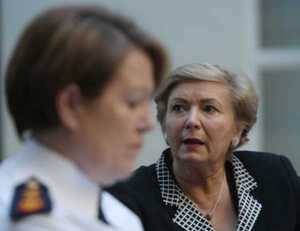
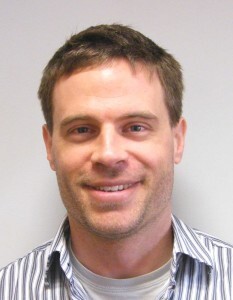
Garda Commissioner Noiriin O’Sullivan and Justice Minister Frances Fitzgerald; Dr Julien mercille
The O’Higgins report and the prosecution of water charges protesters illustrate the double standards in policing in Ireland.
Dr Julien Mercille writes:
Last week, the O’Higgins report was released. It marked the culmination of an investigation into garda practices emerging out of allegations made by whistleblower Sergeant Maurice McCabe.
The report details instances of incompetence and failings by gardai in handling a number of cases under their remit. Of course, those who ultimately paid the price were the victims of the crimes and operations described in the report.
The report is important because it brings a modicum of accountability to the police. Yet, as a number of observers have noted, while the report pointed to a number of failings, in essence, the leadership of our police forces walk away absolved, unfortunately.
As the Sunday Business Post summarised it, the O’Higgins report “establishes what we already knew — several garda investigations in the Cavan/Monaghan division were mishandled”.
Yet, no findings of corruption were made. “The former garda commissioner Martin Callinan and former justice minister Alan Shatter walk away absolved. Senior gardai emerge broadly unscathed”.
Fintan O’Toole also noted that we are yet again paying the price for the lack of accountability in our country as the O’Higgins report concludes that disciplinary proceedings that might arise out of its findings “would not be helpful”.
Really? Why?
Reports of police corruption surface every now and then. On one hand, they are important because they highlight malpractice or incompetence within the police.
However, one thing should be underlined. It is that whatever “failings” and “corruption” one can find by individual guards, their superiors, or politicians overseeing them, there is a more fundamental issue. It is the fact that in many respects, the police forces are used by the State to control and repress dissent.
The behavior of those who challenge power is invariably closely scrutinised. But a blind eye is often turned to crimes committed by those in power, such as their involvement in war crimes by allowing US military aircraft to go through Shannon airport, or “failings” such as cutting funding to women’s shelters, rape crisis centres, and a range of vital support services on which we depend. There’s also little accountability for those who have completely mishandled the chaos in the health care system, which leads to deaths.
A few examples of the ongoing cases related to the prosecution of water charges protesters illustrate the double standards in policing.
Sean Doyle and Eamon McGrath are two elderly men who took part in a water protest in Kilcoole last Monday.
The two men, who are in their 70s, went to court, both on crutches, and were put in custody until they appear before Cloverhill District Court on 24 May.
We thus have a situation where two men with health issues are detained by the “Justice” bureaucracy for protesting austerity measures.
A few politicians have issued a statement condemning the imprisonment of the two men. They are Clare Daly TD, Cieran Perry (Deputy Lord Mayor), Mick Wallace TD, Eoin O’Broin TD, David Cullinane TD, Gino Kenny TD, Jonathan O’Brien TD, Thomas Pringle TD, Joan Collins TD, Richard Boyd Barrett TD and Catherine Connolly TD.
Their statement reads: “We condemn the criminalisation of protesters and the imprisonment of two elderly people who were the victims in this incident”.
Moreover, only a few days ago, a 16-year-old boy became the first Jobstown protester to be jailed, for 6 months. He was 15 at the time of the Jobstown protest.
There have been other arrests of water charges protesters, including the case of Joan Collins TD and a group of nine others. Joan Collins’ case was recently dismissed; the judge rejected the State’s charges and criticised gardaí’s handling of the protest.
But the charges against the remaining defendants continue.
This comes on top of the prosecution of Paul Murphy TD and 17 other protesters in relation to the events at Jobstown when Joan Burton remained stuck in her care for two hours in November 2014. Their trial is set for May 2017 and will then take place over four weeks.
This means that the whole process will have lasted at least two and a half years.
Think about all the money, energy and human resources spent on that. Yet, our politicians constantly call for “efficiency” and “belt tightening” while in fact the government is big waster of resources. Prosecuting water protestors is political and there is never any shortage of money to repress dissent.
In short, inquiring about garda corruption and failings is one important task, but we must also understand the role of police forces in protecting this country’s power structure.
Julien Mercille is a lecturer at University College Dublin. Follow him on Twitter: @JulienMercille
Rollingnews

Minister for Social protection Leo Varadkar
Young Leo once said that a prole,
Gets paid far too much on the dole
He had the intent
To cut twenty percent
But will he now he’s in control?
John Moynes
Rollingnews

What you may need to know:
1. Two convenience store clerks (Lilly-Rose Depp & Harley Quinn Smith) discover a plot to kill film critics with mini anus-crawling Nazis made from bratwurst.
2. It’s Kevin Smith everybody. Cracking himself up since 1994.
3. No doubt the starring role for his daughter played a big part in persuading dog-smuggling Johnny Depp to continue further down the path of career suicide.
4. Yoga Hosers is the middle part of a trilogy, because such quality demands a trilogy. Next up… Moose Jaws.
5. Smith is responsible for 98% of worldwide ice hockey jersey sales. Fact. A Mumu can’t be far.
6. A lot of folks still rate Smith. A lot of folks are wrong.
7. Broadsheet prognosis: Rhymes with trite. A big, steaming pile of trite.
Release Date: July 29.
(Mark writes about film and TV at WhyBother.ie)

Yesterday afternoon.
From Dún Laoghaire pier.
Save Poolbeg!
(Thanks John Gallen)
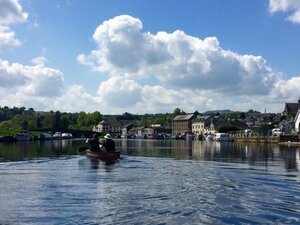
Graiguenamanagh, as seen from the River Barrow.
(Thanks Sheila Larkin)

Tom Creans tweetz:
Amazing ship the National Geographic Explorer, docked in Dingle